






Pinned Tweet
A thesis should take you somewhere new.
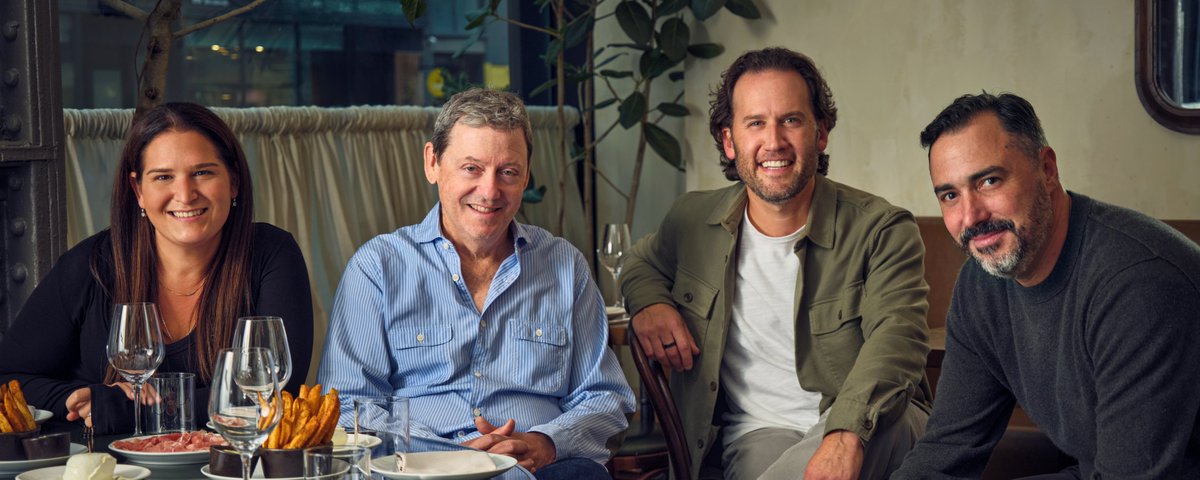
Ours began with the possibilities of the open internet. Today, it reaches across AI, energy, financial markets, and the physical world.
We’re evolving USV alongside it, with $900M in new funds to lead more rounds, back founders for longer, and support the scale of their ambitions.
@mignano on the next chapter of USV.

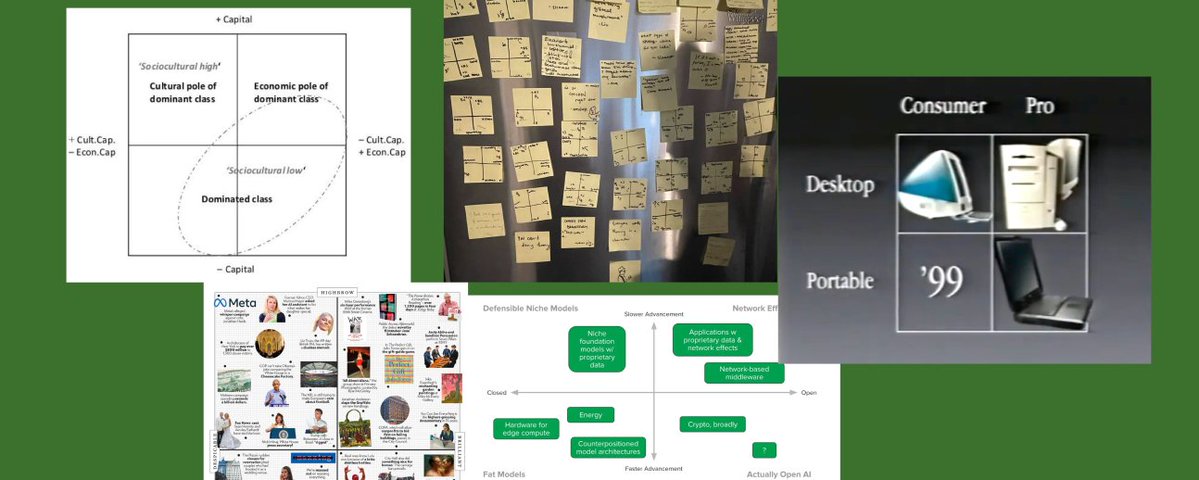
We’re looking for founders making the internet stronger as more agents come online.
1) Eliminating whole classes of bugs
2) Turning each attack into better defenses
3) Building security into apps and developer tools
If that’s what you’re building, reach out.


USV retweeted

Can The U.S. Out-Build China?
According to @IsembardGroup CEO @AFitzgerald1992 the west won't rebuild its industrial base by copying the Chinese playbook.
Instead, our biggest opportunity is to leverage the power and spirit of the entrepreneur.
🤖 Made with AI

How do we build a billion useful robots?
Tutor Intelligence @tutorintel announced a $75M funding round yesterday. Isembard @IsembardGroup has opened 16 factories in just a year.
Their founders, @joshgruenstein and @alexfitzgerald, sat down for our latest founder chat on building robot intelligence in the real world and scaling the industrial base around it.
They discuss franchising factories, why McDonald’s might be the greatest manufacturing business ever built, differences between the U.S. and China, and how AI is already changing what’s possible on the factory floor.
More below on the work underway to make a more abundant world a reality.
00:00 Preview
01:55 Meet Josh and Alex
02:05 Building robot intelligence in the real world
04:25 Franchising factories and the McDonald’s playbook
08:13 China’s manufacturing model vs. a distributed industrial base
10:09 How much of the robotics stack should you own?
12:12 A robot’s first day: birthday cake and a hairnet
14:43 Robot labor as a utility
16:45 What reindustrialization means for prosperity and security
18:12 Finding exceptional people and building roles around them
20:10 Raising the floor: what robotics can do for people today
21:13 What will it take to build a billion robots?
25:11 Vibe coding, factory software, and operational bottlenecks
27:21 Isembard’s ambitions beyond components
29:10 If you could build any product in history…
Further evidence from @tutorintel that deploying robots in the field accelerates learning.
With TRACE, a few human demonstrations become a simulated task where compute can drive further improvement. Each deployment creates valuable training data, and now Tutor has a new way to compound what robots learn from it.


USV retweeted

In 2021 I wrote a piece called "Bitcoin as Battery" and got absolutely skewered.
But as @Melt_Dem points out, since then, the link between energy and compute has only grown in importance.

The companies building superintelligence have the business model of an oil refinery.
GPUs turn energy into compute, labs turn compute into tokens. As these commodities scale, new financial markets get built around them.
My latest Slow Hunch is w/@CrucibleCap founder @Melt_Dem.
Meltem started in oil and gas, was early to Bitcoin, and has spent years thinking about the relationship between energy, compute, materials, and markets.
We get into the AI infrastructure boom, the coming neo-cloud shakeout, compute as a new asset class, and what happens when agents become economic actors.
Its markets all the way down, and maybe all the way forward.
Chapters
00:00 AI is a commodities business
01:50 Meltem’s slow hunch: energy, compute, and markets
06:25 From Bitcoin mining to the energy-to-compute thesis
10:03 The founding thesis behind Crucible
15:03 Why commodities and capital markets matter
20:18 The economics of the AI infrastructure boom
26:06 Debt, neo-clouds, and the coming compute shakeout
30:58 Compute and energy as the commodities of the AI era
34:43 Agents as traders and economic actors
37:47 What an agent-native economy might look like
40:34 Why markets may be the best way to distribute AI’s gains
USV retweeted
Abundance is often built on unpopular infrastructure.
@Melt_Dem on why today’s backlash to data centers and AI looks a lot like yesterday’s backlash to energy infrastructure.
The companies building superintelligence have the business model of an oil refinery.
GPUs turn energy into compute, labs turn compute into tokens. As these commodities scale, new financial markets get built around them.
My latest Slow Hunch is w/@CrucibleCap founder @Melt_Dem.
Meltem started in oil and gas, was early to Bitcoin, and has spent years thinking about the relationship between energy, compute, materials, and markets.
We get into the AI infrastructure boom, the coming neo-cloud shakeout, compute as a new asset class, and what happens when agents become economic actors.
Its markets all the way down, and maybe all the way forward.
Chapters
00:00 AI is a commodities business
01:50 Meltem’s slow hunch: energy, compute, and markets
06:25 From Bitcoin mining to the energy-to-compute thesis
10:03 The founding thesis behind Crucible
15:03 Why commodities and capital markets matter
20:18 The economics of the AI infrastructure boom
26:06 Debt, neo-clouds, and the coming compute shakeout
30:58 Compute and energy as the commodities of the AI era
34:43 Agents as traders and economic actors
37:47 What an agent-native economy might look like
40:34 Why markets may be the best way to distribute AI’s gains
USV retweeted
Check out the full episode
YT: youtube.com/watch?v=ehCRfZEJ…
Apple Podcasts: podcasts.apple.com/us/podcas…
Spotify: open.spotify.com/episode/6lo…

USV retweeted
"Everybody is lying their faces off"
@Melt_Dem of @CrucibleCap on the coming K-shaped shakeout in AI infrastructure.
The companies building superintelligence have the business model of an oil refinery.
GPUs turn energy into compute, labs turn compute into tokens. As these commodities scale, new financial markets get built around them.
My latest Slow Hunch is w/@CrucibleCap founder @Melt_Dem.
Meltem started in oil and gas, was early to Bitcoin, and has spent years thinking about the relationship between energy, compute, materials, and markets.
We get into the AI infrastructure boom, the coming neo-cloud shakeout, compute as a new asset class, and what happens when agents become economic actors.
Its markets all the way down, and maybe all the way forward.
Chapters
00:00 AI is a commodities business
01:50 Meltem’s slow hunch: energy, compute, and markets
06:25 From Bitcoin mining to the energy-to-compute thesis
10:03 The founding thesis behind Crucible
15:03 Why commodities and capital markets matter
20:18 The economics of the AI infrastructure boom
26:06 Debt, neo-clouds, and the coming compute shakeout
30:58 Compute and energy as the commodities of the AI era
34:43 Agents as traders and economic actors
37:47 What an agent-native economy might look like
40:34 Why markets may be the best way to distribute AI’s gains
USV retweeted
In Japan, it’s not uncommon to host farewell ceremonies for machines after retiring from decades of service.
In the U.S., apparently it’s not unheard of to give them birthday cake on their first day.
🤖 Made with AI
How do we build a billion useful robots?
Tutor Intelligence @tutorintel announced a $75M funding round yesterday. Isembard @IsembardGroup has opened 16 factories in just a year.
Their founders, @joshgruenstein and @alexfitzgerald, sat down for our latest founder chat on building robot intelligence in the real world and scaling the industrial base around it.
They discuss franchising factories, why McDonald’s might be the greatest manufacturing business ever built, differences between the U.S. and China, and how AI is already changing what’s possible on the factory floor.
More below on the work underway to make a more abundant world a reality.
00:00 Preview
01:55 Meet Josh and Alex
02:05 Building robot intelligence in the real world
04:25 Franchising factories and the McDonald’s playbook
08:13 China’s manufacturing model vs. a distributed industrial base
10:09 How much of the robotics stack should you own?
12:12 A robot’s first day: birthday cake and a hairnet
14:43 Robot labor as a utility
16:45 What reindustrialization means for prosperity and security
18:12 Finding exceptional people and building roles around them
20:10 Raising the floor: what robotics can do for people today
21:13 What will it take to build a billion robots?
25:11 Vibe coding, factory software, and operational bottlenecks
27:21 Isembard’s ambitions beyond components
29:10 If you could build any product in history…
AI demand is growing but how we build and finance the infrastructure is far from settled.
Energy and compute markets are taking shape amid political resistance, tighter credit, and questions about who can deliver.
@nickgrossman and @Melt_Dem talk about what happens next.
The companies building superintelligence have the business model of an oil refinery.
GPUs turn energy into compute, labs turn compute into tokens. As these commodities scale, new financial markets get built around them.
My latest Slow Hunch is w/@CrucibleCap founder @Melt_Dem.
Meltem started in oil and gas, was early to Bitcoin, and has spent years thinking about the relationship between energy, compute, materials, and markets.
We get into the AI infrastructure boom, the coming neo-cloud shakeout, compute as a new asset class, and what happens when agents become economic actors.
Its markets all the way down, and maybe all the way forward.
Chapters
00:00 AI is a commodities business
01:50 Meltem’s slow hunch: energy, compute, and markets
06:25 From Bitcoin mining to the energy-to-compute thesis
10:03 The founding thesis behind Crucible
15:03 Why commodities and capital markets matter
20:18 The economics of the AI infrastructure boom
26:06 Debt, neo-clouds, and the coming compute shakeout
30:58 Compute and energy as the commodities of the AI era
34:43 Agents as traders and economic actors
37:47 What an agent-native economy might look like
40:34 Why markets may be the best way to distribute AI’s gains
USV retweeted

Check out the conversation between @IsembardGroup founder and CEO @AFitzgerald1992 and @tutorintel
founder @joshgruenstein on robotics, future of manufacturing and more
How do we build a billion useful robots?
Tutor Intelligence @tutorintel announced a $75M funding round yesterday. Isembard @IsembardGroup has opened 16 factories in just a year.
Their founders, @joshgruenstein and @alexfitzgerald, sat down for our latest founder chat on building robot intelligence in the real world and scaling the industrial base around it.
They discuss franchising factories, why McDonald’s might be the greatest manufacturing business ever built, differences between the U.S. and China, and how AI is already changing what’s possible on the factory floor.
More below on the work underway to make a more abundant world a reality.
00:00 Preview
01:55 Meet Josh and Alex
02:05 Building robot intelligence in the real world
04:25 Franchising factories and the McDonald’s playbook
08:13 China’s manufacturing model vs. a distributed industrial base
10:09 How much of the robotics stack should you own?
12:12 A robot’s first day: birthday cake and a hairnet
14:43 Robot labor as a utility
16:45 What reindustrialization means for prosperity and security
18:12 Finding exceptional people and building roles around them
20:10 Raising the floor: what robotics can do for people today
21:13 What will it take to build a billion robots?
25:11 Vibe coding, factory software, and operational bottlenecks
27:21 Isembard’s ambitions beyond components
29:10 If you could build any product in history…
USV retweeted

We need an "Antifragile Internet" built for the agentic era.
The hacks over the past few days (PHP, Railway, eMudhra, LiteLLM etc) show how fragile the existing Internet has become. AI agents are challenging the Internet's structure in 3 distinct ways:
1/ On the offense side, agents are a weapon - AI finds and exploits bugs on a scale not seen before, and the cost of attack asymptotes to 0. Bugs that used to take human experts weeks and months are easily found, adapted, and exploited by AI agents. Decades of legacy code that ran on "security by obscurity" no longer holds against agents.
2/ On the defense side, agents are a target - AI generated code is often bug-prone. AI agents themselves, as machines of unconstrained output are liable to prompt injections and other types of attacks that can leak keys, PII, and other pieces of information.
3/ On the identity side, agents are dominating Internet activity - this year, machine traffic has already passed human traffic, and may continue to grow 1000x over the next few years. Content and webpages used to human requests and behavior are breaking with agents, and it is increasingly difficult to tell human content from AI content.
All this means we will need to see a ground-up redesigning of the Internet, one with more cryptographic verifiability, identity protocols, rule-enforcement, and other security primitives that eliminate bug categories rather than simply patch them - an "Antifragile Internet" that gets stronger and more secure as more agents participate in it.
This is an emerging thesis area for us at @usv, if you're building in the space please reach out!
More thoughts soon.


USV retweeted
“The greatest manufacturing business ever built is McDonald’s.”
@IsembardGroup founder @AFitzgerald1992 has opened 16 factories in the last year by applying the McDonald’s franchising playbook.
He thinks it as an essential strategy to re-industrializing the west and expects AI will lead us to see a lot more franchise style businesses in the near future.
More in his chat with @joshgruenstein below on robotics and the next industrial revolution.
How do we build a billion useful robots?
Tutor Intelligence @tutorintel announced a $75M funding round yesterday. Isembard @IsembardGroup has opened 16 factories in just a year.
Their founders, @joshgruenstein and @alexfitzgerald, sat down for our latest founder chat on building robot intelligence in the real world and scaling the industrial base around it.
They discuss franchising factories, why McDonald’s might be the greatest manufacturing business ever built, differences between the U.S. and China, and how AI is already changing what’s possible on the factory floor.
More below on the work underway to make a more abundant world a reality.
00:00 Preview
01:55 Meet Josh and Alex
02:05 Building robot intelligence in the real world
04:25 Franchising factories and the McDonald’s playbook
08:13 China’s manufacturing model vs. a distributed industrial base
10:09 How much of the robotics stack should you own?
12:12 A robot’s first day: birthday cake and a hairnet
14:43 Robot labor as a utility
16:45 What reindustrialization means for prosperity and security
18:12 Finding exceptional people and building roles around them
20:10 Raising the floor: what robotics can do for people today
21:13 What will it take to build a billion robots?
25:11 Vibe coding, factory software, and operational bottlenecks
27:21 Isembard’s ambitions beyond components
29:10 If you could build any product in history…
USV retweeted
Robots could help us colonize the stars. They could also make it easier to afford a home and put food on the table.
I love that @joshgruenstein always brings it back to raising the floor for everyone.
He’s spent a lifetime building robots to help us reach our most basic needs and in the process making things cheaper, better, and more available.
How do we build a billion useful robots?
Tutor Intelligence @tutorintel announced a $75M funding round yesterday. Isembard @IsembardGroup has opened 16 factories in just a year.
Their founders, @joshgruenstein and @alexfitzgerald, sat down for our latest founder chat on building robot intelligence in the real world and scaling the industrial base around it.
They discuss franchising factories, why McDonald’s might be the greatest manufacturing business ever built, differences between the U.S. and China, and how AI is already changing what’s possible on the factory floor.
More below on the work underway to make a more abundant world a reality.
00:00 Preview
01:55 Meet Josh and Alex
02:05 Building robot intelligence in the real world
04:25 Franchising factories and the McDonald’s playbook
08:13 China’s manufacturing model vs. a distributed industrial base
10:09 How much of the robotics stack should you own?
12:12 A robot’s first day: birthday cake and a hairnet
14:43 Robot labor as a utility
16:45 What reindustrialization means for prosperity and security
18:12 Finding exceptional people and building roles around them
20:10 Raising the floor: what robotics can do for people today
21:13 What will it take to build a billion robots?
25:11 Vibe coding, factory software, and operational bottlenecks
27:21 Isembard’s ambitions beyond components
29:10 If you could build any product in history…
USV retweeted

Both @IsembardGroup and @tutorintel are building foundational companies to power an intelligent physical world.
Most of all, @AFitzgerald1992 and @joshgruenstein are two of the best there are and seeing them compare notes is awesome.
How do we build a billion useful robots?
Tutor Intelligence @tutorintel announced a $75M funding round yesterday. Isembard @IsembardGroup has opened 16 factories in just a year.
Their founders, @joshgruenstein and @alexfitzgerald, sat down for our latest founder chat on building robot intelligence in the real world and scaling the industrial base around it.
They discuss franchising factories, why McDonald’s might be the greatest manufacturing business ever built, differences between the U.S. and China, and how AI is already changing what’s possible on the factory floor.
More below on the work underway to make a more abundant world a reality.
00:00 Preview
01:55 Meet Josh and Alex
02:05 Building robot intelligence in the real world
04:25 Franchising factories and the McDonald’s playbook
08:13 China’s manufacturing model vs. a distributed industrial base
10:09 How much of the robotics stack should you own?
12:12 A robot’s first day: birthday cake and a hairnet
14:43 Robot labor as a utility
16:45 What reindustrialization means for prosperity and security
18:12 Finding exceptional people and building roles around them
20:10 Raising the floor: what robotics can do for people today
21:13 What will it take to build a billion robots?
25:11 Vibe coding, factory software, and operational bottlenecks
27:21 Isembard’s ambitions beyond components
29:10 If you could build any product in history…
USV retweeted
How do we build a billion useful robots?
Tutor Intelligence @tutorintel announced a $75M funding round yesterday. Isembard @IsembardGroup has opened 16 factories in just a year.
Their founders, @joshgruenstein and @alexfitzgerald, sat down for our latest founder chat on building robot intelligence in the real world and scaling the industrial base around it.
They discuss franchising factories, why McDonald’s might be the greatest manufacturing business ever built, differences between the U.S. and China, and how AI is already changing what’s possible on the factory floor.
More below on the work underway to make a more abundant world a reality.
00:00 Preview
01:55 Meet Josh and Alex
02:05 Building robot intelligence in the real world
04:25 Franchising factories and the McDonald’s playbook
08:13 China’s manufacturing model vs. a distributed industrial base
10:09 How much of the robotics stack should you own?
12:12 A robot’s first day: birthday cake and a hairnet
14:43 Robot labor as a utility
16:45 What reindustrialization means for prosperity and security
18:12 Finding exceptional people and building roles around them
20:10 Raising the floor: what robotics can do for people today
21:13 What will it take to build a billion robots?
25:11 Vibe coding, factory software, and operational bottlenecks
27:21 Isembard’s ambitions beyond components
29:10 If you could build any product in history…
Deploy, learn, improve, repeat.
We applied that thesis to robotics with @tutorintel and then to manufacturing with @IsembardGroup.
We asked the two CEOs to share notes about how they're rapidly scaling intelligence in the physical world.
How do we build a billion useful robots?
Tutor Intelligence @tutorintel announced a $75M funding round yesterday. Isembard @IsembardGroup has opened 16 factories in just a year.
Their founders, @joshgruenstein and @alexfitzgerald, sat down for our latest founder chat on building robot intelligence in the real world and scaling the industrial base around it.
They discuss franchising factories, why McDonald’s might be the greatest manufacturing business ever built, differences between the U.S. and China, and how AI is already changing what’s possible on the factory floor.
More below on the work underway to make a more abundant world a reality.
00:00 Preview
01:55 Meet Josh and Alex
02:05 Building robot intelligence in the real world
04:25 Franchising factories and the McDonald’s playbook
08:13 China’s manufacturing model vs. a distributed industrial base
10:09 How much of the robotics stack should you own?
12:12 A robot’s first day: birthday cake and a hairnet
14:43 Robot labor as a utility
16:45 What reindustrialization means for prosperity and security
18:12 Finding exceptional people and building roles around them
20:10 Raising the floor: what robotics can do for people today
21:13 What will it take to build a billion robots?
25:11 Vibe coding, factory software, and operational bottlenecks
27:21 Isembard’s ambitions beyond components
29:10 If you could build any product in history…
More on what we're looking for from @rebeccakaden:
xitter.twitterapi.xyz/rebeccakaden/status/20…


3
505