

Head Public and International Relations at https://xitter.twitterapi.xyz/t.co/c3adHsNYhg| A proponent of Socially Responsible business practices | Tweets reflect personal views
ibbossa@ucc.co.ug
Joined November 2013
- Tweets12.6K
- Following383
- Followers6.7K
- Likes8.3K





Good day, Gerald menelik
@geraldmenelik
Let me clarify something important.
Unlimited internet doesn't always mean unlimited speed. Many home internet packages operate under a Fair Usage Policy (FUP). For example, a package may offer 100 Mbps up to a certain data limit, after which your speed reduces, although you can still access the internet.
That's why I encourage you to carefully read the Fair Usage Policy attached to your subscription, particularly the data limits, speed reductions and renewal conditions.
However, this is where consumer protection comes in: These restrictions must be clearly disclosed before you subscribe. If your speeds were reduced in a way that violates the agreed terms, you have every right to question it.
A telecom licence is not a blank cheque to treat customers unfairly.
Please include your package details and usage history in a complaint to your provider so they can review the circumstances. #Tulinamwe

These same Guys capped my unlimited WiFi 5days before renewal day! Now after payments they reduce my data speed and @Bbossa @UCC_ED @UCC_Official cant talk about this day robbery from these foreign thugs yet have authority to to torture youth trying to service Mutama boy

Good day, Patriot
@KejengeR
It’s genuinely frustrating when your phone keeps buzzing with alerts, flashing pop-ups, and promo texts you never asked for.
To put it plainly: No, neither @UCC_Official nor the law gives MTN Uganda or any telecom a free pass to bombard you with unsolicited commercial messages. In fact, the law specifically restricts such messages.
WHEN CAN AN OPERATOR LEGALLY SEND MESSAGES WITHOUT PRIOR OPT-IN?
Although commercial spamming is illegal, specific legal exceptions may authorise an operator or even require one to notify you:
Direct Service & Network Management (Transactional Alerts): When you buy a bundle, load airtime, run low on data, or request your service balance, the telecom is legally carrying out the service contract you initiated. Notifications about account deductions or expiry aren’t considered "unsolicited spam”; they’re necessary for managing the service.
Public Interest, Emergencies & State Directives: Under Regulation 2(2) of the Text and Multimedia Messaging Regulations, 2019, messages initiated by the government, emergency services, or persons formally authorised by @UCC_Official in the public interest, such as for epidemic alerts, national security, or natural disasters, are exempt.
Mandatory Consumer Notices: Under regulations such as the Uganda Communications (Centralised Equipment Identification Register) Regulations, 2019 (Regulation 12), telecoms are legally required to send SMS notifications about counterfeit phones, unregistered devices, or IMEI validation.
WHY ARE YOU STILL GETTING PROMO TEXTS?
Telecoms often hide things in the fine print. When you register a SIM card or review the standard terms of service, clauses are often tucked away where you "agree" to receive company updates and partner promotions.
Even if you agreed earlier, you can withdraw your consent at any time. Regulation 12 of the Text and Multimedia Messaging Regulations gives every subscriber the absolute right to opt out easily. Operators must keep records of these requests and honour them.
WHAT YOU CAN DO RIGHT NOW
Send an opt-out request: Reply STOP to promotional short codes or use MTN’s USSD opt-out menus (or the industry-standard *196# / *100#) to block bulk promotional notifications.
Demand Consent Disclosure: Under Regulation 12(8) of the Text and Multimedia Messaging Regulations, you have the explicit legal right to ask the operator to explain exactly how they obtained your contact details and where they recorded your consent.
Escalate to the Regulator: If the operator ignores your opt-out requests or continues flooding your device, Regulation 18 allows any subscriber to file a formal complaint directly with the UCC Consumer Affairs desk @ConsumerUCC.
Under Section 5(1)(j) & (k) of the Uganda Communications Act, 2013, @UCC_Official is authorised to investigate consumer complaints, order operators to stop non-compliant practices, and impose significant administrative fines. #Tulinamwe

@Bbossa is @mtnug authorised by @UCC_Official @UCC_ED to frequently send unsolicited messages/notifications to its subscribers?!

1
4
551
Bro, @AchieMiggz, I hear you, and you’ve raised an important point. Someone who has invested millions isn’t just looking for a commission. You've built a business, and that investment deserves recognition.
But here's an important point: @UCC_Official isn’t saying every hotspot entrepreneur has to become a commission-based agent.
Your business can follow one of three pathways to achieve compliance, depending on how it operates.
1. Public Service Provider (PSP) Licence: For entrepreneurs looking to operate as independent internet service providers, subject to applicable licensing requirements, this lets you pursue your own business model instead of simply earning commissions.
2. Communal Licence: For eligible operators providing connectivity to a defined community, subject to the conditions of that licence.
3. Agency Authorisation: For those who prefer to work under an arrangement with a licensed provider. The commercial terms, including any commissions, would depend on the agreement.
So, agency is an option, not the only option.
The next important step is to determine which pathway best fits your operations, existing investments, and business ambitions, then engage the relevant licensed providers where needed.
The Minister has given operators until 10 November 2026 to regularise their operations.
The aim isn’t to turn every entrepreneur into an agent, but to help legitimate businesses find a lawful way to operate, grow, and serve Ugandans. #Tulinamwe

Forcing an independent entrepreneur to work for commission is unreal bro. Imagine someone has equipment bought and expensive in this economy, tech support some of us have have tech companies on contract as support, UEDCL, Salaries, rent, pay capacity, heavy maintenance working
1
283
Dear Patriot
@KejengeR
I understand your frustration. When you pay for home internet advertised as unlimited but experience slower speeds, it's natural to feel cheated.
But here's an important distinction. Unlimited data doesn't always mean unlimited speed. Some packages have a Fair Usage Policy (FUP), under which speeds may be reduced after a specified amount of data is consumed to manage network capacity.
However, that policy must be disclosed clearly before you subscribe, not buried in the fine print.
I can’t confirm Airtel's specific package terms or whether @UCC_Official approved the restriction without reviewing the offer.
Please share the package details and the speed restrictions you experienced with our Consumer Affairs team, @ConsumerUCC, so they can conduct a proper examination.
#Tulinamwe
@Bbossa @UCC_Official @UCC_ED so you authorised @Airtel_Ug to cap data speeds for their home broadband packages which use simcards with loaded data!!!!
But it seems like telecom companies have a lot freedom in Uganda, they just do whatever they wish, because they pay a LICENSE!
Dear kaweesi..
@hnry_kws
Thank you for raising this.
The Minister gave hotspot operators until 10 November 2026 to regularise their businesses. A temporary suspension of service deactivation was also discussed, but formal confirmation is still pending. I have not yet seen any formal communication confirming it.
Therefore, I cannot say that all enforcement was officially stopped. That said, @UCC_Official paused enforcement.
#Tulinamwe

@UCC_Official @UCC_ED @Bbossa
Good evening
Y'all said that the enforcement against hotspots was stopped, but I know someone I Kawala who was raided, with police, had their equipment confiscated and taken to police.
Please tell us the truth
4
1
364
JOB OPPORTUNITY!
Ready to shape Africa's digital future? The African Advanced Level Telecommunications Institute invites applications for the position of Director, based in Nairobi, Kenya, to provide strategic leadership and drive the Institute's growth in ICT capacity development, training, research, consultancy and innovation across English-speaking Africa. Details: erp.ucc.co.ug/jobs.
Deadline: 30 November 2026.
Apply now!
#ConnectedUg2030 | #DigitalUganda

This quoted post is unavailable.
117
Dear Juz Sula
@JuzSula
Let me be clear: the work behind WiFi hotspot businesses deserves recognition. You’ve invested your savings, built technical skills, and brought connectivity to people who need affordable access. Those contributions matter.
I believe a well-designed agency model could be the most practical option for many small hotspot businesses, though it won’t suit everyone.
Why? Because it can combine two strengths: a WiFi Hotspot reseller’s knowledge of the neighbourhood and a licensed provider’s network, systems and support.
Imagine a hotspot owner with equipment, a technician, and loyal customers. With proper authorisation, the entrepreneur could keep providing local access while the provider offers a package designed specifically for resale. Clear terms would define earnings, capacity, customer support, and each party’s compliance responsibilities.
That could spare every small seller from taking on the full administrative burden of becoming an independent ISP. It could also help the upstream provider plan capacity more effectively and give customers a clearer path to support.
Mobile money and agency banking show how local businesses can earn income through established service networks. They offer valuable lessons, but the telecommunications arrangement must still meet its own requirements.
But “agency” alone guarantees nothing. The agreement must also protect the entrepreneur by ensuring fair earnings, transparent charges, clear ownership of equipment, reasonable termination terms, and clarity about customer relationships. It should not be used to capture someone’s investment cheaply or lock everyone into one provider.
Independent licensing remains an option for businesses able to meet its requirements.
Supporting hotspot enterprises means taking their economics seriously and helping build a dependable foundation for growth. For many smaller operators, a well-structured agency arrangement can preserve their local advantage while keeping responsibilities manageable.
Your work has shown there’s demand. The opportunity now is to build on it lawfully, fairly, and sustainably. #Tulinamwe

3
149
Webaale Mukulu @projectmiv2105
Bwe mbadde nnyonnyola ensonga eno, kye njagala mutegeele kiri nti eby’empuliziganya kye kimu ku bitongole ebisinga okufugibwa amateeka n’ebilagilo ebikakali mu nsi yonna.
Eyo y’emu ku nsonga lwaki si buli muntu nti amala gagiyingiramu. Kiringa eby’ensimbi, entambula y’ennyonyi, amasannyalaze n’amaanyi ga nukiliya: byonna byetaaga obwegendereza n’okugoberera amateeka.
Kinnuma okuwulira nga abo abaabasooka mu mulimu guno bayitibwa “babbi,” ate nga baayingira ne bagoberera amateeka agabaweebwa. Si kya bwenkanya okubasalila omusango ogwo, oba okulowooza nti abakaayingila be bokka abalina amazima.
Mu ndowooza yange, tusooke twekenneenye amateeka n’omutindo ogwateekebwawo okutambuza eby’empuliziganya. Bwe tunaabitegeera, tujja kusobola okulaba engeli buli omu gy’ayinza okukoleramu n’okuganyulwamu ng’agobelela amateeka.
Ekisinga obukulu, ffenna tulina okutambulila ku mateeka n’okukuuma omutindo. Bwe tunaaleka buli muntu okukola nga bw’ayagala, eby’empuliziganya biyinza okugwa mu kavuyo ng’ako ke tulaba mu ntambula ya bodaboda mu bitundu bingi eby’eggwanga.
Ate kino kitukwatako ffenna: abasuubuzi, abakozesa empeeleza n’eggwanga lyonna. #Tulinamwe

Nze sikuwakanya muzeeyi, naye ndowooza omukulembeze omulungi yafa ku bakulembera, naye muli mukwagala kututeera babbi
2
708
Ssebo, @projectmiv2105, ensonga yo ngitegeera. Wabula, kikulu okwawula ebikwekweto by’ekitongole okussa amateeka mu nkola ku nsonga eno, n’ebikolwa bya bannannyini mikutu okukuuma ebyuma n’emikutu gyabwe.
Akulila ekitongole ekilungamya eby’empuliziganya, Hon. Nyombi Thembo, bwe yasisinkana abasuubuzi nga bakulembeddwamu abakiise ba WiFi Hotspot resellers, yeeyama okuyimirizaamu ebikwekweto by’ekitongole okusobozesa enteseganya okugenda mu maaso. Ekyo kyakolebwa.
Wabula, okuyimirizaamu ebikwekweto ebyo tekitegeeza nti bannannyini mikutu nabo balina okuleka abantu okukozesa ebyuma n’emikutu gyabwe awatali lukusa oba endagaano. Ekitongole ekilungamya eby’empuliziganya kirina amateeka n’ebilagiro ebifuga engeri abasuubuzi gye bateeseganya ku kugabana n’okukozesa ebyuma n’emikutu gy’abalala.
Ebikolwa by’oyogerako byakolebwa bannannyini mikutu nga bagamba nti waliwo aba WiFi Hotspot resellers abaali bakozesa ebyuma n’emikutu gyabwe awatali lukusa, ne bakosa emirimu gyabwe.
N’olwekyo, si kye kimu n’okugamba nti ekitongole kyali kiteesa bwe kikweka “ekibooko wansi w’emmeeza.” Ebikwekweto by’ekitongole byayimirizibwamu nga bwe kyasuubizibwa; ebikolwa bya bannannyini mikutu byo nsonga ya njawulo.
My last concern mr Bbosa, lwaki nga enteseganya zigenda mumaaso, mutees a mulina kibooko wansi we mmenza, muteesa naye nga bwemwonoona ebimtu bya baana,
4
2
335
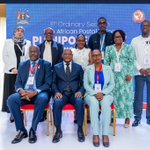
At the inaugural Universal Postal Union Development Forum in Bern, Switzerland, @UCC_ED issued a call: let us renew our recognition of the postal sector's role in inclusive economic and social development, supporting financial inclusion, MSMEs, trade and access to essential services in underserved communities.
Postal networks, digital services and national addressing systems can transform connectivity and service delivery. The post is not dying; it is evolving!
#ConnectedUg2030
#DigitalUganda

Inaugural Universal Postal Union (@UPU_UN) Development Forum
Uganda has called for renewed recognition of the postal sector’s role in inclusive economic and social development, including supporting financial inclusion, MSMEs, trade and access to essential services in underserved communities.
The call was made by @UCC_ED, Hon. Nyombi Thembo, at the inaugural Universal Postal Union (UPU) Development Forum in Bern, Switzerland, where discussions highlighted the potential of postal networks, digital services, and national addressing systems to improve connectivity, trade, and service delivery.
#ConnectedUg2030 #DigitalUganda
@MoICT_Ug @JustineLumumba @GideonSsekidde @Posta_Ugand @Bbossa #GoldenPosts

Dear Patriot @KejengeR
I understand the anger, especially when someone’s equipment is at stake. The incident deserves a clear explanation.
But we must separate hotspot licensing enforcement and infrastructure protection. A reported pause in one does not automatically settle the others.
The Uganda Communications Commission’s guidelines on infrastructure deployment and sharing protect all qualifying operators.
Provisions 9(2) and 11(1) require infrastructure access on fair, reasonable, and non-discriminatory terms for duly authorised operators, while Provision 13 requires formal sharing agreements. Together, these provisions establish a framework for regulating coexistence.
For example, attaching equipment to another provider’s infrastructure requires the right arrangement. A licensing discussion alone does not grant permission. If there are allegations of unauthorised installation, you can predict how the story will end.
However, provision 16 allows infrastructure-sharing disputes to be referred to @UCC_Official for guidance on resolving them.
Please submit the incident’s date and location, the persons involved, and any police reference through our website complaint channel or toll-free number. We need these details to establish who acted, what was alleged, and whether the applicable instructions were followed.
Your choice matters. The same framework must protect smaller authorised businesses and ensure established providers are accountable. #Tulinamwe
@Bbossa why in all this so called ISP protection, it's only MTN making arrests despite the suspension, and as a proud regulator, u simply look on as U r blind!!!
Soon, U will force every Ugandan to MTN fiber service, maybe if they don't report more losses!!!
243
DearNkurunungi Gideon @qoolunungi
Thank you for helping operators understand what it takes to run a business. When people invest their savings, training and clear guidance can help them avoid costly mistakes.
Registration, a suitable contract and regulatory authorisation each serve a different purpose. Registration identifies the operator. A contract explains what the ISP permits and what each party is responsible for delivering. Authorisation determines whether the service can legally operate. None replaces the others.
Consider congestion: when several customers stream through the same connection, they share its capacity. Performance may suffer if demand exceeds what the connection can handle. Whether this affects the wider provider network depends on its design and available capacity, so it should be assessed rather than assumed.
You’re right that contracts deserve serious attention. But contracts aren’t the only issue when authorisation and customer safeguards are still unresolved.
A useful next step is to review actual packages, agreements and network arrangements with operators and ISPs. Their experience can help shape a lawful business model they can realistically sustain. #Tulinamwe

Hey @Bbossa
We guided the Hotspot Community
a) To Be Trained and Register (this I hope they do register
b) To urgently know that their work has risks on the network congestion for MNOs and ISPs
c)Their issue is contractual not just asking for a new license.
Mukulu kaweesi..
@hnry_kws
You know this situation well, and you understand that this is a highly regulated sector. Regulation helps protect consumers while also creating space for entrepreneurs to grow. ISPs need predictable rules and fair commercial terms. Hotspot owners need a clear way to comply, and customers need affordable, reliable access.
The options discussed, including independent licensing, agency arrangements with existing providers, and qualifying not-for-profit community networks, are all worth considering. Their success will depend on clear requirements, manageable costs, and timely decisions.
The law remains the foundation. @UCC_Official can help clarify what options are available, what questions remain unresolved, and what happens next. Operators and providers should also test these arrangements under real business conditions. #Tulinamwe
This whole dilemma proves how incompetent our government is.
You have failed to work to help both your people and your entrepreneurs (ISPs)
4
1
495
Dear Tech Select Hotspot Owners Network
@hotspotowners
I hear you. You built a business and want to remain its owner, not feel pushed into an arrangement you don't understand or trust. That concern deserves respect.
You can reject agency as your preferred model, but you must still meet the legal requirements for whichever model you choose. The regulatory framework also offers independent Public Service Provider licensing as another route to explore.
Mobile money offers a lesson in finding regulated ways to coexist. It began as a Value Added Service (VAS) regulated under a telecommunications licence. So this comparison alone does not mean an independent hotspot business can operate without the required authorisation.
Communications is one of the world’s most heavily regulated sectors, and for good reason: it carries emergency calls, financial transactions, and private information. Providers rely on interconnected networks and shared radio frequencies, meaning one business’s failure can affect its customers and other networks.
Think of building a house: you can challenge an unreasonable building rule, but your preferred design doesn’t automatically exempt you from structural safety requirements.
Operators are fully entitled to propose better rules, and @UCC_Official will listen. But any proposal must serve the public interest and meet legal obligations, not merely preserve an existing business model. #Tulinamwe

When telecoms introduced mobile money, they refused to become agents of the banks, instead, they discovered a way to coexist. Why are UCC & telecos pushing us toward a model that we do not want? We do not want to be agents, period.
3
559
Good day, Tech Select Hotspot Owners Network
@hotspotowners
Those ISPs’ interests deserve a hearing, just as hotspot owners’ investments and customers’ need for affordable access do. But a provider’s willingness to sell capacity does not, by itself, settle how the downstream service should be authorised.
A regulatory framework gives everyone predictable rules, rather than a separate bargain for whoever asks.
Consider banking. Banks offer different products and serve different customers, but imagine each setting its own rules for protecting deposits, identifying customers, and handling complaints. One might cut costs by skipping safeguards, while another pays to maintain them. Customers would struggle to know how their money is protected.
That uncertainty would hurt both responsible businesses and the public.
Communications needs the same principle: clear responsibilities for authorisation, customer protection, equipment, security and reporting. Common standards can accommodate different business models and proportionate requirements without forcing every provider into the same commercial arrangement.
The agency model is one possible route. ISPs that prefer to supply capacity should offer a workable alternative that explains who is authorised to serve customers and who is responsible for each obligation.
Their commercial interests should be given fair consideration, but they must not override those responsibilities. The aim is to create a framework where providers and hotspot entrepreneurs can make business decisions with confidence, while customers remain protected regardless of which service they choose. #Tulinamwe
You should also be aware that most ISPs are ok with the current status quo of providing capacity. They don't want to go into the agency model that is being pushed by UCC and just a few ISPs.
Those ISPs interests should also be protected.
9
7
827
Dear Patriot @KejengeR
No, agency is one proposed option, not an instruction to work for MTN or give up your business. Other pathways to compliance also include independent licensing and, for qualifying not-for-profit groups, Communal Access licensing.
I understand the anxiety. You bought equipment, found customers and built something. You deserve to know whether the next arrangement protects that investment.
Consider a shopkeeper who adds mobile money or agency banking. They contribute premises, working capital, and customer relationships, while the regulated provider supplies its platform and established service framework.
Customers get a nearby place to transact, the agent earns income, and the provider reaches more people. That’s why agency is a tried-and-tested approach, though telecommunications has its own requirements.
For a hotspot owner, a well-structured partnership could work similarly: a licensed ISP provides resale capacity, and the parties agree on earnings, training, and clear customer and compliance responsibilities.
The entrepreneur contributes local knowledge and delivery without necessarily taking on the full burden of becoming an independent ISP.
But yes, the agreement must benefit both sides. It should clearly define equipment ownership, pricing, earnings, support, customer relationships, and exit terms. Agency must never be an excuse for exploitation.
Some WiFi hotspot resellers know networking well but entered the business without clear guidance on their legal obligations. Technical expertise and regulatory knowledge are different things. @UCC_Official and providers will help bridge that gap respectfully.
The opportunity is to pair your enterprise with an accountable operating structure. Fair terms and proper authorisation can make it workable, without depending on one company.
#Tulinamwe
Dear Fajian Funkie,
@fajian_funkie
You are right to ask for practical help; repeated explanations without clear next steps can feel like being ignored.
There is nothing wrong with licensing eligible hotspot businesses. That is the outcome the engagements today should aim for.
But we must distinguish between lacking authorisation and refusing to comply, because many of you are asking exactly how to become compliant.
The requirement is authorisation to provide telecommunications services. An ISP subscription alone does not cover a separate public resale business.
A licence must also establish the permitted service, suitable supply arrangements and responsibility for customers, equipment and other applicable obligations.
@UCC_Official will explain today which routes are available now and resolve the gaps where existing arrangements do not adequately serve small operators. The multi-stakeholder committee will deliberate on this today.
The task is to turn the willingness to comply into lawful, viable businesses while preserving affordable access wherever a compliant model can support it. #Tulinamwe

You spend so much time justifying urselves instead of helpn out nearly 2M ugadans relying on that service . What is wrong with giving them liscence and incoperating them into the legal framework. When you say illegal , what are the legal means they have refused to follow ?
274
Dear Sir Harden,
@dickson_duros
Your frustration is understandable. When your savings and daily income are involved, “get a licence” is not enough, and I am with you on that; you need to know which arrangement fits your business and how to qualify.
The requirement is authorisation before providing telecommunications services. The difficulty of fitting a small hotspot business into existing categories does not remove that requirement.
Equally, @UCC_Official is working with other stakeholders, including representatives from the WiFi hotspot resellers, to address that difficulty.
Today’s discussion should help connect those two responsibilities: upholding the law and finding workable arrangements for eligible operators. The questions include who supplies connectivity, who is responsible for customers, and how compliance costs can reflect business scale.
The aim is a dependable operating structure that small entrepreneurs can realistically participate in.
We should let the meeting reach its conclusions before we get anxious. I agree that you deserve clear decisions and practical next steps. #Tulinamwe

You are right, @geraldmenelik, that hotspot businesses are not automatically illegal. The question is whether the service has the required authorisation.
Section 22 of the Uganda Communications Act requires a Commission-issued licence to provide telecommunications services.
Section 78 makes operating a telecommunications system or service without that licence an offence, punishable on conviction by a fine of up to 96 currency points, with further fines of up to 15 currency points per day or part-day for continuation after conviction.
Receiving payments through MTN or Airtel Money does not grant that authorisation. The payment platform processes the transaction; it does not license the business receiving the funds. Any revenue those companies earn from processing payments is a separate matter.
Your call to regulate, collect applicable revenue and protect jobs deserves practical attention. But collecting tax cannot replace licensing, and enforcement must follow due process.
The opportunity is to create practical, lawful arrangements for eligible operators, with clear responsibilities and requirements proportionate to their role. #Tulinamwe
Hotspot businesses aren’t automatically illegal. Customers pay via MTN and Airtel Money, benefiting these giants. Regulate hotspots, collect revenue, and protect jobs instead of destroying businesses! Look for people like @regesa and @kacita_uganda
I understand the concern, @geraldmenelik: we are talking about savings and livelihoods. But investment and potential tax revenue do not make unlawful activity legal.
Consider the customs process and how it treats illegitimate goods: no matter how much has been invested in uncustomed goods, they are liable to forfeiture if declared contraband.
That comparison concerns principle; it does not automatically make hotspot equipment contraband or justify its destruction.
Please note, however, that no one may establish a telecommunications station, provide telecommunications services, or construct, maintain, or operate telecommunications apparatus without a licence issued by the Commission.
That said, the work of the multi-stakeholder committee meeting on wi-fi hotspot reselling is expected to offer an opportunity to develop lawful arrangements for eligible operators.
The goal should be to support viable businesses to meet their responsibilities. #Tulinamwe