

Architecture | Real Estate | Sustainability
San Diego, California
Joined October 2024
- Tweets734
- Following31
- Followers9
- Likes652





It’s official.
The 2026 F1 season finale is happening in Abu Dhabi.
Yas Marina. December 6.
After all the uncertainty, the Middle East gets the final say.
Who’s going to turn up?

1
36
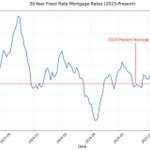
Rates just ticked up again. Every extra quarter point knocks a chunk of first-time buyers out. SDSU classmates who graduated with me are still renting three-deep in North Park.

1
124
Dubai’s H1 project pipeline already hit ~AED 275bn — including Emaar’s ~AED 200bn “city within a city” planned for ~150,000 people.

106
We live on a border. Rules have to mean something or the whole thing falls apart. Same time, snatching parents outside an elementary school is a sloppy way to run enforcement. Measured beats theatrical. City Heights made that point yesterday.

49
Walked National Ave this morning and that Roscoe’s sign is finally up. Ten years later and folks still arguing if the neighborhood even wants it. Parking’s gonna be a mess either way.
8
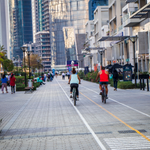
Dubai is actively transforming into a more walkable and cyclable city, taking big steps toward modern, smart urban living. Sustainable infrastructure and human centric design are shaping the future of UAE communities.

52
Abu Dhabi’s real estate market keeps climbing despite the regional conflict, driven by growth corridors and steady demand. Real estate remains a major pillar of economic strength and opportunity in the UAE.

Performance under those conditions is pure systems reliability. When the variables stack against you, the difference between controlled and catastrophic comes down to how the whole thing was put together.
34
You can fit a surprising amount of function into almost nothing when the plan refuses to waste a single corner. I keep coming back to how little we actually need once the layout does the work.
66
Imagine adapting that interlocking shape to hempcrete or other plant-fiber mixes. You get the same dry-stack ease and flex for seismic zones, but with way lower carbon footprint, better breathability, and insulation. Especially for local production.

These bricks were developed by Spanish architects. They don’t need mortar and can easily lock together.
Their flexibility also makes them more resistant to earthquakes.
131
What I'm beginning to realize is that obody gets into urban studies because they love zoning codes. You get in because you watched your neighborhood change growing up and wanted to understand why. The codes came later.
46
What's amazing is that they're all so influenced and intertwined with each other, you could never have one style without the other.

In 1840, Thomas Cole compressed thousands of years of architecture into a single painting.
ARCHITECTURE IN PAINTINGS — 04
The Architect’s Dream combines Egyptian, Greek, Roman and Gothic forms in one imagined landscape. A Gothic church rises in the foreground, classical temples line the water, a Roman rotunda crowns the terraces and an Egyptian pyramid fades into the distance—turning the painting into a visual journey through architectural history.
The Architect’s Dream
Thomas Cole, 1840
Toledo Museum of Art, Ohio
#ArchitectureInPaintings #ArtHistory

54
Hard to believe something that practical and quiet just disappeared. We overcomplicate surfaces so much now.

A heady mixture of terracotta and turquoise tiles in this apartment building design in Urmia, Iran
It’s not built (yet!), but the architecture is designed by Nima Safdari and Sahar Kamaleddin


50
The high-end property market in Dubai is still humming along even with all the regional noise in the news. Deals that were already in the works before things heated up are getting done, and new ones keep coming through every day.
The factors that always drew people here haven’t gone away, so if you’ve been sitting on the fence about buying or making the move, I'd say this is a good moment to stop waiting and act.
bloomberg.com/news/articles/…
79
Beautiful, functional and simple. Every building should be designed with as much thought as this.

This is the kindergarten that teaches through the building itself, before a single lesson starts.
In Soa, near Yaoundé, Urbanitree designed African Flow Kindergarten across four zones named Mountain, Village, Savanna, and Forest, each shaping how children move, play, and learn. Walls are rammed earth and azobé wood, perforated in patterns that pull in light and air without a single fan. Wooden steps double as seating, storage, and stage, letting a classroom become an amphitheater in seconds. Even the water tower runs on solar, built to survive an area where outages are routine. Local laborers built it, regional suppliers sourced the wood, and the skills stayed in the community long after construction ended.
This is what happens when a school is designed to hold culture, not just curriculum.
African Flow Kindergarten | Urbanitree, Vicente Guallart & Daniel Ibáñez
Soa, near Yaoundé, Cameroon | 2024 | Photographs: Adrià Goula


32
Genuinely excited to see this. I love that Gehry's designs aren't even alien to Abu Dhabi like they are in other places cause the UAE is so open to contemporary, experimental designs.

Guggenheim Abu Dhabi, a landmark museum of modern and contemporary art, will open on 11 December 2026. The Frank Gehry-designed institution will serve as a cornerstone of the Saadiyat Cultural District, offering new perspectives on art from the 1960s to the present.


31
It would be so nice to be in a hospital bed and look out onto greenery and not onto the city or a random street.
A one-kilometre green ring will wrap around this hospital.
The winning design for Brescia’s new Main and Children’s Hospital reorganizes the existing medical campus around a continuous landscaped loop called the “CareRing.” Below ground, it will carry logistics, technical infrastructure and hospital services. Above ground, it becomes a public landscape of therapeutic gardens, tree-lined squares and green corridors.
Led by Park Associati, CRA–Carlo Ratti Associati and Politecnica Building for Humans, the €274 million project will provide more than 745 beds across approximately 60,500 m². Its prefabricated timber-and-steel structure is designed to reduce embodied carbon, shorten construction time and allow the hospital to be reconfigured as medical needs change.
Construction is expected to begin in 2028.

32
Riyadh right now feels like a bet on where the region is headed, not where it's been. Foreign ownership rules just opened up, some companies are relocating there, and the ambition behind Vision 2030 is real, even if some of the giga-projects are still years away from being lived in, not months. You're betting on the destination, knowing the road there isn't a straight line.
Dubai is a different kind of bet. It's been through 2008, through COVID, through more than one round of regional tension and every single time, it wobbled, then came back stronger than before. That's not luck. That's a market that's been tested enough times to actually know how to hold itself together.
And that's really the story right now. Everyone's talking about tension in the region like it's some kind of red flag for real estate. But if you actually look at how Dubai's market has behaved through every rough patch, the pattern is always the same; a pause, not a collapse. People sell off nerves, not property.
So if you're a buyer, it's less about picking the "safe" one and more about picking the one that matches your patience. Riyadh could reward people willing to wait for a market to mature. Dubai rewards people who want in on something that's already proven it can take a hit and keep growing.
Two different plays, same underlying bet: this region isn't going anywhere.

67
Stunning. The US is filled with abandoned industrial structures. We could use some of this.
These were once GIANT GAS TANKS. Today, they contain apartments, offices and cultural spaces.
Redeveloped in the early 2000s, Vienna’s Gasometers preserve their 19th-century industrial shells while inserting new buildings and covered courtyards inside.
📷 jeroenvandam

28
The UAE has perhaps become one of the best places to build ambitious, experimental architecture.
Museum of the Future, Al Wasl Plaza, the Louvre Abu Dhabi, Burj Khalifa. These aren't safe buildings. They're formal risks that would take a decade of hearings almost anywhere else.
It works because decision making is centralized, so there's no city council and no NIMBY veto standing in the way. Capital comes from the state and doesn't need to justify itself to a committee. There's a national incentive to signal ambition through the skyline. Permitting moves fast enough to compress years into months.
Elsewhere, unless it's a pavilion, a building this bold gets sanded down by zoning boards, heritage committees, budget offices, and lawsuits before it's even poured. In the UAE, if leadership wants it built, it gets built.
The best architects in the world are given real budgets and real freedom to build the most ambitious version of their ideas, not a watered down one. That combination of capital, speed, and openness to outside vision is rare anywhere else on Earth.
