

"I gather rare revelations that carve the soul's immortal ledger, born where the divine meets the mortal heart in quiet depth." Art/Film/Poetry - Curator
England
Joined December 2025
- Tweets8.2K
- Following169
- Followers8.7K
- Likes34.8K


Pinned Tweet
O Faithful Women of Iran
O faithful women of Iran,
you are the living border of this ancient land.
Your hands, henna-kissed and strong,
hold the map of Persia not as paper,
but as heartbeat, as silk, as unbroken song.
You stand around her like a crown of roses and flame,
shoulders draped in turquoise and saffron,
eyes carrying the depth of the Caspian and the fire of the Zagros.
You do not merely adorn the map,
you are the map:
the rivers of your resilience,
the mountains of your dignity,
the gardens of your quiet defiance blooming in every season of hardship.
In your embrace, Iran breathes.
In your gaze, she remembers every poet, every scholar, every mother who sang lullabies over centuries of storm.
You carry the scent of saffron and rosewater,
the eternal echo of Ferdowsi and the great Persian soul,
the stubborn grace that turns siege into symphony.
O faithful women of Iran,
you are the guardians of light in veiled times,
the weavers of tomorrow’s tapestry,
the ones who teach daughters that a nation lives
not only in soil and stone,
but in the unbowed posture of its women.
May your voices rise like nightingales over the Alborz,
may your strength be the wind that turns every closed gate into an open sky.
Iran rests her head in your lap,
and the world, whether it sees or not,
is watching beauty and courage become one.
You are not the fringe.
You are the beating heart.
You are the eternal Persia,
dancing, enduring, blooming still.
— Zara Zhar

Zara Zhar retweeted

At this very moment, Nasser Hospital in Gaza City has been targeted.
Hospitals across Gaza are under attack.

Zara Zhar retweeted
"Hind 335 bullets"
This artwork is part of the HeART of Gaza traveling exhibition, a therapeutic arts initiative featuring drawings created by children and youth living in the Gaza Strip.
Specifically, this piece is titled "Hind 335 bullets" and was created by Qamar Timraz and Misk Timraz (age 14/15). The drawing depicts a yellow car surrounded by IDF military tanks, reflecting the harrowing realities and trauma witnessed firsthand during the murder of Hind and her family in Tel al-Hawa neighborhood of Gaza City


Zara Zhar retweeted

You missed it live? That’s no problem:
Resistance Media Report 9 w/Laith Marouf youtube.com/live/0EU6yf1fqAw… via @YouTube


Zara Zhar retweeted

Urgent fundraiser for a Sudanese refugee student who is struggling to cover her tuition fees and needs our support to continue her education.
She needs $2,700 in total, and $500 has already been raised, leaving just $2,200 to go.
If you’re able to contribute, any amount would make a difference. If you can’t donate, please share this fundraiser to help us reach more people and get her the support she needs.
!!!WRITE THAT ITS FOR TUITION!!!
PayPal: paypal.me/BSonblast
Cash App/Venmo: BSonblast
#KeepEyesOnSudan


Zara Zhar retweeted
HASSAN SALAMEH: BETWEEN LIFE AND DEATH
Estimated reading time: 12 minutes
Thirty years in Israeli prisons. Five thousand days in solitary confinement. A memoir smuggled beyond prison walls, and disturbing new revelations about an assault that has left Palestinian prisoner Hassan Salameh's life in danger.
📍3 November 2026
For thirty years, Palestinian prisoner Hassan Salameh has lived behind Israeli prison walls. More than thirteen of those years were spent in solitary confinement, in cells he described as graves for the living, where the distance between life and death seemed to grow smaller with each passing day.
Now, at 55 years old, his life is once again in grave danger.
On 3 November 2026, the Palestinian Prisoners' Club raised an urgent alarm following revelations that Salameh had been subjected to gunfire inside his isolation cell at Janut Prison on 15 September, the same day Israeli National Security Minister Itamar Ben-Gvir entered his cell and threatened him with execution.
According to testimony conveyed through his lawyer and his wife, Ghufran Zamel, Israeli prison personnel severely beat Salameh before Ben-Gvir's visit. Later that afternoon, guards returned, assaulted him again and fired nine shots at him.
Ghufran says he suffered nine gunshot injuries. His lawyer has not yet been able to establish the ammunition type or the precise location and extent of those injuries.
The Palestinian Prisoners' Club has confirmed receiving information about gunfire inside his cell, while Palestinian prisoners' organisations have condemned the incident as an attempted execution.
It is a terrifying development, but to understand the man at the centre of this story, we must look beyond the latest assault and into the extraordinary testimony he has preserved throughout three decades of Israeli imprisonment.
His story begins long before Janut Prison.
📍From Khan Younis to thirty years in captivity
Hassan Abdul Rahman Salameh was born on 9 August 1971 in Khan Younis refugee camp in Gaza.
His family originally came from al-Khayma, a Palestinian village in the Ramla district, from which Palestinians were displaced during the Nakba of 1948.
Like so many children born into refugee families, Hassan inherited the memory of a homeland his family had been forced to leave behind.
He became politically active during the First Intifada and subsequently joined the Izz ad-Din al-Qassam Brigades, the military wing of Hamas, working alongside figures including Mohammed Al-Deif and Yahya Ayyash.
Following Israel's assassination of Ayyash in January 1996, Salameh became involved in organising a series of retaliatory attacks, including bombings. The operations became known within Hamas as the Holy Revenge.
On 17 May 1996, Israeli forces captured him in Hebron after shooting and wounding him. According to Palestinian prisoners' organisations, he subsequently endured approximately four months of interrogation involving severe torture.
In 1997, an Israeli court sentenced him to 48 life terms.
He was only 24 when arrested.
Thirty years later, he remains imprisoned, having spent more of his adult life behind bars than he ever lived outside them.
Whatever sentence a prisoner is serving, no judicial ruling grants a state the right to torture, deliberately neglect, humiliate or threaten to execute someone in its custody.
Yet the conditions described by Hassan Salameh reveal an existence in which even the most elementary aspects of human dignity have repeatedly been denied.
📍Five Thousand Days in the World of Barzakh
In October 2022, a remarkable book began reaching Palestinian readers.
Its title was Five Thousand Days in the World of Barzakh, the memoirs of Hassan Salameh, written during more than thirteen years of solitary confinement.
The 224-page work was published by the Al-Zaytouna Centre for Studies and Consultations in Beirut.
Barzakh, in Islamic understanding, refers to the intermediate state between earthly life and the Hereafter.
For Salameh, it became the closest description of the world into which he had been confined: neither fully living nor dead, but suspended somewhere between the two.
In his memoir, he describes solitary confinement as an existence increasingly removed from ordinary life, a place where each passing moment draws the prisoner closer to what he calls the world of Barzakh.
The book itself is an extraordinary achievement.
It took years to write, and its pages had to be smuggled beyond prison walls in tiny, carefully folded bundles wrapped in plastic, known among Palestinian prisoners as capsules.
These small packages were concealed and carried out piece by piece, until fragments of a life that Israel had attempted to isolate from the outside world could finally be assembled into a manuscript.
Within its pages are accounts of hunger, illness, humiliation, loneliness and the psychological torment of prolonged isolation.
But there is also humour, tenderness, faith and an astonishing determination to preserve the ordinary experiences that make us human.
Salameh describes cells measuring approximately two metres by one, infested with insects and rodents.
At first, he attempted to rid himself of the creatures sharing his confinement. Eventually, he reached an almost comical accommodation with what he jokingly regarded as the cell's original inhabitants.
In another unforgettable passage, he recalls receiving half a slaughtered pigeon from a fellow prisoner.
With nothing but salt to season it, he cooked and ate the bird, bones included.
He remembered it as an exceptional occasion.
Imagine the deprivation required for half a pigeon to become a feast.
Such details tell us more about the realities of isolation than any prison statistic could.
They reveal a world in which ordinary life has been reduced to its smallest fragments, and where the simplest pleasure can become a cherished memory.
📍The mother who told him to hold his head high
One of the most powerful passages in Salameh's memoir concerns his mother, Khadija.
During one of the rare occasions she was permitted to visit him, Israeli prison personnel brought her son into the visiting area with his hands restrained behind his back and his legs shackled.
But Khadija refused to allow the sight of those restraints to break her spirit.
She greeted him with affection and told him not to worry.
If his captors were not afraid of him, she said, they would not have restrained him so heavily.
Then came the words that stayed with him:
“Stay steadfast, Hassan, and hold your head high.”
In that moment, the mother became the one offering strength to her imprisoned son.
Her words lifted his spirits, and years later he preserved them in his memoir.
There is something profoundly moving about a Palestinian mother who, having already endured the dispossession of her people and the imprisonment of her child, could still find the strength to encourage him.
Khadija died in March 2024.
Hassan was denied the chance to embrace her one last time, to sit beside her in her final days or to attend her funeral.
May she rest in peace.
📍A love that changed the meaning of the moon
Perhaps the most unexpected chapter of Salameh's memoir is titled Isolation with the Taste of Love.
It tells the story of Ghufran Zamel, a Palestinian woman who had herself experienced Israeli imprisonment and who chose to build a relationship with a man serving 48 life sentences.
Their story began when Ghufran expressed her wish to marry Hassan.
The message reached him through fellow Palestinian prisoner Ahlam Tamimi and a lawyer.
At first, he refused.
He knew that marriage to a man serving multiple life sentences would bring separation, uncertainty and profound hardship.
He had previously married shortly before his arrest, but that marriage had ended because of his imprisonment.
He did not wish to condemn another woman to the same existence.
But Ghufran persisted.
She wrote to him, explaining that she understood his circumstances and that her decision was neither impulsive nor made without consideration of the future.
Eventually, Hassan agreed.
He later recalled that her arrival transformed his experience of isolation.
Other prisoners began noticing the change, observing that Hassan before Ghufran was not quite the same man as Hassan after Ghufran.
And then came one of the most beautiful recollections in his memoir.
Before their engagement, Hassan had paid little attention to the moon.
Afterwards, he began sitting beside the narrow opening of his cell window at night, searching the sky for it.
He would contemplate its beauty, sometimes awakening fellow prisoner Ahmad Sa'adat, secretary-general of the Popular Front for the Liberation of Palestine, to share the moment.
He began reading novels by Algerian author Ahlam Mosteghanemi, drawing inspiration from their language when writing letters to Ghufran.
Love had changed the way he saw the world, even from inside a prison cell.
The moon was no longer merely light in the darkness. It had become a reminder that even prison walls could not keep love from reaching him.
Their marriage contract was formalised in 2010, yet Israeli prison authorities continued to prevent Ghufran from visiting him as his wife.
Their marriage has survived largely through letters, photographs and messages carried between prison and the outside world.
There have been no ordinary mornings together, no shared household, no simple privilege of sitting beside the person you love.
And yet, across those years of separation, the relationship endured.
📍The prisoners' secret Facebook
Salameh's memoir also reveals how prisoners devised ingenious methods of communicating with one another despite the restrictions imposed upon them.
In Ayalon Prison, men held in neighbouring isolation cells discovered they could speak through small bathroom windows.
They affectionately named this improvised communication system the prison section's Facebook.
Through these openings, prisoners exchanged news, discussed politics, shared poetry and listened for messages from loved ones broadcast over Palestinian radio.
On occasion, they even coordinated Friday prayers, despite being physically separated by the walls.
Imagine men who could not see one another, sharing verses of poetry or news from Palestine through the smallest openings in their cells.
These were not grand gestures.
They were acts of ordinary human connection in an environment designed to deny precisely that.
For Hassan, such moments interrupted the crushing silence of isolation and reminded him that he still belonged to a community beyond the walls.
📍What happened inside Janut Prison?
On 15 September 2026, Israeli National Security Minister Itamar Ben-Gvir entered Hassan Salameh's isolation cell at Janut Prison.
The footage he subsequently released showed the minister confronting Salameh and openly threatening him with execution.
According to Ghufran Zamel, the video did not show the full confrontation.
She says Hassan challenged Ben-Gvir directly, declaring:
“I am Palestinian, and I have the right to defend my people and my land.”
He went on to challenge the minister over Israel's actions in Gaza, accusing him of recognising Israeli suffering while refusing to acknowledge what Palestinians had endured.
These words were conveyed through Ghufran following a lawyer's visit. They were not included in the published recording.
According to her account, prison personnel had already beaten Hassan before the minister entered.
At approximately four o'clock that afternoon, guards returned to the cell.
They assaulted him again and fired nine shots at him.
Ghufran says he sustained nine injuries and was denied adequate treatment.
Three days later, he was taken for medical imaging, but she says he received little more than pain relief before being returned to isolation.
On 2 November, a lawyer was finally able to visit him and convey the details of what had happened.
The following day, the Palestinian Prisoners' Club issued an urgent warning, describing the escalating threats to Palestinian prisoners held in solitary confinement, particularly in Janut and Megiddo.
The Prisoners' Committee of the National and Islamic Forces in Gaza condemned what happened to Salameh as an attempted execution and demanded urgent international intervention, including access to independent medical care.
The exact nature of the ammunition and the full extent of his injuries remain unclear.
But the testimony, the public threats made against him and the continuing denial of adequate independent medical examination raise profoundly serious questions about his safety.
A prisoner, already restrained and entirely under the control of the authorities detaining him, must never be subjected to such treatment.
📍A life reduced to deprivation
The September assault did not occur in isolation from the conditions Salameh had already been describing.
In July 2026, correspondence from Janut Prison revealed the severe deprivation he was enduring.
He described persistent hunger caused by drastically reduced food portions, prolonged gastrointestinal illness without proper medical investigation, inadequate dental care and continuing physical assaults during transfers and cell searches.
He was permitted limited exercise in a confined space without proper sunlight.
His eyesight had deteriorated to the point that he struggled to read the Qur'an because he lacked the spectacles he needed.
For a man who had preserved his thoughts through literature, letters and religious study, even reading had become another struggle.
In September, further testimony described an earlier transfer to Ramla hospital, where he said he had been beaten rather than given the medical attention he expected.
These accounts reveal a pattern of deprivation and violence extending far beyond the latest incident.
And they concern a man now in his mid-fifties, whose body has endured decades of imprisonment, prolonged isolation and torture.
📍The man behind the prison number
When Ghufran finally saw the video released by Ben-Gvir in September, it was the first time in approximately three years that she had seen Hassan's face.
She was shocked by his physical deterioration.
The long years of imprisonment had left their marks.
But there was something she recognised immediately.
His eyes.
The same familiar gaze she remembered from years before.
As she reflected upon the footage, she spoke of the strength she still saw in him, despite everything he had endured.
The same Hassan.
There is something deeply affecting about that recognition, and about the pages of a memoir written under circumstances intended to separate a human being from the ordinary world.
Five Thousand Days in the World of Barzakh is more than an account of prison conditions.
It is a testimony to memory, loneliness, humour, faith, family, friendship and love.
It tells of a mother who refused to lower her head before her son's captors. Of prisoners exchanging poetry through bathroom windows. Of half a pigeon becoming a cherished meal. Of a man who began searching for the moon because he had fallen in love.
And now, thirty years after his arrest, that same man remains isolated inside an Israeli prison, while his family and Palestinian prisoners' organisations raise urgent fears for his life.
His safety must be guaranteed. He must receive independent medical examination and treatment, and the circumstances of the shooting inside his cell must be thoroughly investigated.
No prisoner should be beyond the protection of the law. No prison wall should conceal torture or shield those responsible from accountability.
Beyond the walls of Janut Prison, Ghufran continues to wait.
And somewhere within the pages of Five Thousand Days in the World of Barzakh, there remains the memory of a prisoner sitting beside a narrow window, looking for the moon.
- Zara Zhar
Based on Hassan Salameh's published memoir, Palestinian prisoners' organisations and Arabic-language reporting through 3 November 2026.
📍Recommended reading: Five Thousand Days in the World of Barzakh: Memoirs of Palestinian Prisoner Hassan Abdul Rahman Salameh in Solitary Confinement in Israeli Prisons (2022), published by Al-Zaytouna Centre for Studies and Consultations.


"أنا كفلسطيني من حقي أدافع عن شعبي وعن أرضي، وأنت بعد كل اللي عملته بغزة ما بطلعلك تحاسبني".
بهذه الكلمات العزيزة وقف الأسير القائد حسن سلامــö شامخاً أمام التافه بن غفير الذي اقتحم عليه زنزانته بعزل سجن "جانوت" بتاريخ 15/9/2026. نشر بن غفير بعدها مقطع فيديو يظهر فيه محتمياً بجنود مدججين بالسلاح، يوجّه التهديدات لحسن المريض والمعزول، منهك الجسد، لكن عظيم الروح والإرادة.
ضرب السجانون سلامة أمام بن غفير، ثم عادوا بعد ساعات فاعتدوا عليه بوحشية وأطلقوا عليه 9 رصاصات، لم تتمكن خطيبته غفران الزامل من معرفة نوعها. ورغم صعوبة إصابته وتدهور وضعه الصحي والهزال الذي يعانيه، لم يقدّم له الاحتلال أي علاج، واكتفى بإعطائه بعض المسكنات.
اليوم الإثنين، وبعد 48 يوماً على الاعتداء، تمكنت المحامية من زيارة سلامة، فوجدته في حالة صعبة جداً، وما زال يعاني من آثار الإصابة.
يمارس الاحتلال على سلامة، وعلى أكثر من 9 آلاف أسير وأسيرة غيره، وفي مقدمتهم معتقلو غزة ورموز الحركة الأسيرة، أعتى أشكال التنكيل والتعذيب. وخلال الأعوام الثلاثة الأخيرة استُشــ Hـد العشرات منهم، وأُصيب المئات بالرصاص المطاطي وقنابل الصوت والضرب بالهراوات وهجمات الكلاب والصعق الكهربائي وغيرها. وتمرّ كل هذه الاعتداءات دون محاسبة، وغالباً دون توثيق.

Zara Zhar retweeted

طلعت اسرائيل متنفذه بالحزب الطليعي وواشنطن ماتحررت من الصهيونية ولاشي ، له له صدمة والله .

Today’s acts of betrayal from Democrats:
1) 11 Democrats all funded by pro-Israel PACs couldn’t be bothered to show up to impeach war criminal Pete Hegseth.
2) Top House Democrats are threatening new members for daring to serve the people.
All that liberal euphoria on election night for nothing to fundamentally change.
Buckle up for 2 years of excuses from Democrats for why they can’t deliver for the people as they collude with Republicans to deliver for the donor class.
When you’re ready to fight for something better we will be here! The real resistance has always been the people who take on both parties and agitate for a better party, system, and world that puts people over profits.


Zara Zhar retweeted

I've written before about Israeli settler attacks as part of a deliberate, organized campaign to impoverish the West Bank and choke the life out of its economy, pushing Palestinians to leave.
Two nights ago, settlers attacked an industrial area in Beita, south of Nablus.
Yesterday, the same group hit garages and auto-parts shops in Al-Luban Al-Sharqiya, south of Nablus.
The Israeli army and political leadership back these plans, clear the way for them, and provide direct protection when needed—never arrests, never accountability. This is a standing government policy to crash the West Bank's economy and freeze its financial life.
The political leadership has shown this many times through its moves. Ignoring settler attacks on farms and factories. Abolishing administrative detention for settlers. Withholding the clearance funds that let the Palestinian Authority pay tens of thousands of workers, freezing financial life. Restricting dealings with Palestinian banks. The shekel crisis—the Israeli currency Palestinians are forced to use. Barring Palestinian workers from jobs in the occupied interior. Setting up checkpoints with long inspection lines between cities. A severe fuel crisis. Rising prices. Destroying homes and expelling thousands of families from camps and neighborhoods. Spreading fear through nightly arrest raids.

كنت قد تحدثت عن هجمات المستوطنين الإسرائيليين ضمن نهج متبع ومنظم لإفقار الضفة الغربية وتضييق حياة الأهالي الاقتصادية، مما يدفعهم للرحيل.
فقبل ليلة الأمس، هاجم المستوطنون منطقة صناعية في بلدة بيتا جنوب نابلس.
وهي المجموعة ذاتها من المستوطنين التي هاجمت بالأمس ورشاً للمركبات وقطع الغيار في بلدة اللبن الشرقية جنوب نابلس.
فالجيش الإسرائيلي وقادة سياسيون هم من يدعمون تلك الخطط، ويسهلون عملهم، ويقدمون الحماية المباشرة لهم عند الحاجة ، لا للمحاسبة والاعتقال؛ وهي ضمن سياسة حكومية متبعة لإسقاط الاقتصاد في الضفة وإنهيار الحركة المالية. وكانت القيادة السياسية قد عبرت عن ذلك عدة مرات من خلال خطواتها: (تجاهل تام لهجمات المستوطنين على المنشآت الصناعية والزراعية، الغاء الاعتقال الإداري للمستوطنيين ،عدم تحويل أموال المقاصة للسلطة الفلسطينية مما يعجزها عن دفع رواتب عشرات الأولاف وتوقف الحركة المالية، تقييد التعامل مع البنوك الفلسطينية، أزمة الشيكل -وهي العملة المالية الإسرائيلية المستخدمة قسراً من الفلسطينيين-، منع دخول العمال الفلسطينيين للعمل في الداخل المحتل، نشر الحواجز وطوابير الانتظار الطويلة للتفتيش بين المدن، أزمة وقود حادة، ارتفاع الأسعار، تدمير المنازل وطرد آلاف العائلات من المخيمات والأحياء، نشر الخوف والاعتقالات اليومية الليلية).

Zara Zhar retweeted

On Hezbollah Martyr’s Day, a quick reminder of The Martyr Association that provides social, educational, psychological, financial, housing, and healthcare support to the families of Resistance Martyrs.
Every contribution counts.
No contribution is too small

Artwork: “Behind the Wall” (2026) by Palestinian artist Sara Khayat
Paired with “Defying the Universe” by Palestinian poet Samah Sabawi.
DEFYING THE UNIVERSE
Are your loved ones trapped behind the wall
Do they need the army’s permission
For their prayers to reach the sky
For their love to cross the ocean
And touch your thirsty heart
Are your loved ones trapped
Do you yearn to be in your family home
And when you call them
Do they always say
“we are well, alhamdollelah”
Does it surprise you
That they are whole
But you… you are broken
Must they always worry about you
Urge you to have faith in your exile
Must they pity you
For not breathing the air
Of your ancestors’ land
Must they always comfort you
Even when the bombs are falling
Do you ever wonder who is walled in
Is it you, or is it them
And when it finally dawns upon you
That their dignity sets them free
Do you feel ashamed of your liberty
Are your loved ones trapped behind the wall
Do they tell you stories
Of how they survive
The trees they’ve replanted
The homes they’ve rebuilt
Do they assure you life goes on
Old men still fiddle with their prayer beads
Mothers still bake mamoul on Eid
Families still gather under the canopies
With loaded bunches of grapes
Dangling above their heads
They nibble on watermelon seeds
They drink meramiah tea
Women perfect the art of match-making
Men talk of freedom and democracy
Children climb on a sycamore tree
Lovers woo in secrecy
And no matter how the conditions are adverse
Do your loved ones defy this universe
Your loved ones defy this universe
— Samah Sabawi
Sabawi wrote this poem in the aftermath of Israel's 2008–2009 assault on Gaza. It explores the pain of Palestinian exile, particularly the strange reversal in which those living under occupation sometimes find themselves comforting relatives who are physically free but separated from their homeland.

Zara Zhar retweeted

Today, 11 November 2026, Hizbu’llah Secretary-General Sheikh Naim Qassem delivered an address commemorating Shahīds’ Day, broadcast to ten designated gathering places across Lebanon, including the Sayyid al-Shuhadāʾ Complex in Beirut’s southern suburbs.
Qassem discussed the continuing Zionist aggression against Lebanon, the American project for restructuring the region, and the Islamic Republic of Iran’s confrontation with the United States and 'Israel'. Of particular importance were his remarks on the Palestinian cause, the Resistance Axis, and the unity of the fields (waḥdat al-sāḥāt), which he defended as a necessary form of cooperation among resistance movements confronting occupation. He emphasized that the resistance in Lebanon and Palestine needs the support of Iran, Yemen, Iraq, and all free peoples, and called for a broader, more inclusive front of resistance.
I have translated selected passages from the speech in full below:
"We have named this day the 'Day of the Living' this year, for it is the day of the living shahīds. The shahīds live on in our lives through their example and their sacrifices. They live on in their families, their children, and their relatives. They remain alive in the path of Islam, alongside the People of the Cloak, Muhammad, Ali, Fatima, al-Hasan, and al-Husayn, and in the path of Wilāya. They live on through the continuity of the resistance and the sacrifices of the shahīds, and in a society founded upon resistance, pride, dignity, liberation, and sovereignty. They are alive and joyful, rejoicing over us and reassuring us: 'Do not fear and do not grieve, for the future belongs to you.' Shahāda is in the cause of God, in the cause of the homeland and the liberation of the land, in the cause of humanity and truth, in the cause of Palestine, and in the cause of dignity. All of these causes are one and the same: the cause of God Almighty.
[...]
On this day, I call upon everyone to read the biographies of the shahīds and acquaint themselves with their lives so that they may witness their greatness. Today, as I mentioned, we commemorate Shahīds’ Day and remember the families of the shahīds, the wounded, the prisoners, all those missing, and everyone who stands alongside the resistance.
Turning to political affairs, the Israeli aggression against Lebanon and the region, which enjoys the full support of the United States, forms part of a vast and dangerous project. We are witnessing a phase in which the United States seeks to restructure the region through the establishment of 'Greater Israel'. Tyrannical America, which exercises hegemony over our region and the world, supports this project as part of its conviction that the region must be reorganized under complete American control.
Some might say: 'But it was the Palestinians who initiated the Al-Aqsa Flood in 2023.' No. Britain initiated it. The arrogant powers initiated it with the establishment of 'Israel', this usurping entity, in 1948. That was the beginning. The beginning lies there. From the outset, the project was one of genocide. They killed people, displaced them, altered the entire infrastructure of Palestine, and drove millions from their homes to establish this usurping entity. That is where the aggression began.
Consider what has happened in Gaza today: 250,000 men, women, and children have been killed or wounded, homes have been destroyed, and 2.5 million people within Gaza face an immense catastrophe. All of this unfolds before the eyes of the world, yet no one lifts a finger. On the contrary, they gather to support 'Israel' and insist that it has the right to defend itself. No one speaks of the suffering of those people, civilians who have every right to live. Where is the international voice? Where is the voice of the peoples? Where is the voice capable of exercising real influence?
Certainly, there are people who have taken action, and we thank them deeply. There have been demonstrations, expressions of political positions, declarations, and similar efforts. But where are the states? Where is the United Nations? Where are the great powers that claim to defend human rights? This is an unmistakable crime that continues to unfold. It is there that we must direct our attention, rather than toward the Palestinian people who are defending themselves.
In Lebanon, they tell you: 'The problem is that the resistance entered the War of Support.' No, that is not the problem. Lebanon remains occupied, and attacks against Lebanon have continued since 1948. In 1978, 'Israel' occupied part of Lebanon, and in 1982, the usurping Israeli entity reached Beirut. Even before the War of Support, we still had the Shebaa Farms, the Kfar Shouba Hills, and several disputed points. The occupation already existed. It has continually attacked us and sought to expand. The War of Support is not the cause of the problem. The occupation is the cause. The resistance arose in response to that occupation. It confronts the occupier and liberates the land.
Consider the Islamic Republic of Iran today. What accusation do they level against the Islamic Republic? They allege that it enriches uranium, although there was an agreement with the United States in 2015, and the Islamic Republic has the right under international law to enrich uranium for peaceful purposes. Yet they want to deprive Iran of this right. They want to strip it of its rights and impose their control upon it. Listen to what they themselves say: they want to change the regime, seize the oil, and control all the resources that exist there. Thus, the issue is not whether someone has violated international law or poses a danger to others. The issue is American tyranny and Israeli criminality, and their desire to attack Iran. In any case, it was the United States and 'Israel' that initiated the aggression against Iran. They attacked it before the eyes of the entire world, and this is perfectly clear. Iran therefore has the right to confront them.
When I announced the 'unity of the fields', what did I mean by this expression? I meant cooperation among those engaged in resistance to expel the occupier. Some condemned this and asked: 'How can you come together in this way? How can you accept that one of you supports the other?' Do they not see that America, the hegemonic power of the world, seeks allies and compels both great and small states to enter alliances with it for the purpose of aggression? Yet these same people condemn the resistance fighters for cooperating with one another and strengthening one another's resolve. This cooperation is a natural right. Indeed, the arena of resistance must become considerably broader and more inclusive, bringing many states and peoples into its fold. The resistance in Lebanon and Palestine needs Iran, Yemen, Iraq, and every free and honorable person. They are not the ones who need us. Rather, we are the ones who need them.
First, how should we approach the situation in which we find ourselves in Lebanon? We maintain that Lebanon needs a national effort. How does patriotism manifest itself? It manifests itself when we cooperate with one another, defend our land, protect our sovereignty, and refuse to allow our enemies to control us. We must pursue all of this within the framework of the Constitution and the law, without foreign tutelage and without surrendering any of our rights.
[...]
Today, we have a good opportunity before us. Trump has suffered defeat in the elections. Some argue: 'American policy remains the same, whether the Democrats or the Republicans are in power.' My friend, whether it remains the same or not, did he take a beating? Was he humiliated? Did he suffer a resounding defeat? An earthquake has struck America today. This is the very power that confronts us in Iran, Lebanon, Palestine, Yemen, and all these other places, spreading destruction throughout the world, even in Canada and everywhere else. That power has suffered defeat, and its defeat certainly carries positive implications for us. How positive are those implications? That is not important. What matters is that this power has been broken. Its project can no longer proceed as it did before, and that is a positive development.
Netanyahu, too, has been broken. They tell you: 'Israeli policy remains the same.' Very well, whether it is one policy, two policies, or three makes no difference. What matters is that the man who appointed himself an emperor, imagining that he could do whatever he pleased, has been broken. How he was broken is of no consequence. When even his own people bring him down and prevent him from returning as prime minister, it means that they themselves could no longer bear him or tolerate his actions, whether those actions concern us or concern them. Their consequences are felt both internally and externally.
Yes, we can say that Trump has been defeated and Netanyahu has been defeated. This resounding defeat represents a victory for the Islamic Republic, for the resistance in Palestine and Lebanon, for all resistance fighters in Yemen and Iraq, and for all free peoples. It is also a victory for every cry raised by the free people of the world and every demonstration held, even in Western countries and the United States. All of them have achieved success through this resounding downfall. As for whoever now emerges upon their ruins, we shall see how to deal with the matter."


Zara Zhar retweeted
Another panel (No1) by artist/activist Jaime Scholnick's "GAZA: Mowing the Lawn" series which is comprised of 52 small panels documenting the 2014 assault by the Israeli military with airstrikes followed by a ground assault.
The images that came across my newsfeed through social media were horrific. At first, I was angry at these postings and would pass them by. After 2 days I stopped and made myself look. I felt the need to document this latest atrocity on the part of the Israeli military. "Mowing the Lawn" is a term coined by the Israeli military to describe the periodic assaults they conduct in GAZA thus keeping the Palestinians under control.
By covering these images with multiple lines and colors, the imagery becomes easier to look at, not less horrific. Israeli art critic and curator, Sagi Rafael, wrote, in an essay for the upcoming book of the same title: Jaime Scholnick’s “Gaza: Mowing the Lawn” may be one of the most significant politically charged artworks of recent years.
Not only because of the direct reference to one of the world’s endless and violent ethnic and religious conflicts between the Israelis and Palestinians but because of its precise capture of the current Zeitgeist in the spirit of the era. It seems that we are at a high point in history, where we can know so much, yet prefer not to know as much, and easily turn a blind eye.


"Silence for Gaza,"
by Mahmoud Darwish (penned in 1973)
Painting "GAZA: Mowing the Lawn" by activist/artist Jaime Scholnick
Gaza is far from its relatives and close to its enemies, because whenever Gaza explodes, it becomes an island and it never stops exploding. It scratched the enemy’s face, broke his dreams and stopped his satisfaction with time.
Because in Gaza time is something different.
Because in Gaza time is not a neutral element.
It does not compel people to cool contemplation, but rather to explosion and a collision with reality.
Time there does not take children from childhood to old age, but rather makes them men in their first confrontation with the enemy.
Time in Gaza is not relaxation, but storming the burning noon. Because in Gaza values are different, different, different.
The only value for the occupied is the extent of his resistance to occupation. That is the only competition there. Gaza has been addicted to knowing this cruel, noble value. It did not learn it from books, hasty school seminars, loud propaganda megaphones, or songs. It learned it through experience alone and through work that is not done for advertisement and image.
Gaza has no throat. Its pores are the ones that speak in sweat, blood, and fires. Hence the enemy hates it to death and fears it to criminality, and tries to sink it into the sea, the desert, or blood. And hence its relatives and friends love it with a coyness that amounts to jealousy and fear at times, because Gaza is the brutal lesson and the shining example for enemies and friends alike.
Gaza is not the most beautiful city.
Its shore is not bluer than the shores of Arab cities.
Its oranges are not the most beautiful in the Mediterranean basin.
Gaza is not the richest city.
It is not the most elegant or the biggest, but it equals the history of an entire homeland, because it is more ugly, impoverished, miserable, and vicious in the eyes of enemies. Because it is the most capable, among us, of disturbing the enemy’s mood and his comfort. Because it is his nightmare. Because it is mined oranges, children without a childhood, old men without old age and women without desires. Because of all this it is the most beautiful, the purest and richest among us and the one most worthy of love.
We do injustice to Gaza when we look for its poems, so let us not disfigure Gaza’s beauty. What is most beautiful in it is that it is devoid of poetry at a time when we tried to triumph over the enemy with poems, so we believed ourselves and were overjoyed to see the enemy letting us sing. We let him triumph, then when we dried our lips of poems we saw that the enemy had finished building cities, forts and streets. We do injustice to Gaza when we turn it into a myth, because we will hate it when we discover that it is no more than a small poor city that resists.
We do injustice when we wonder: What made it into a myth? If we had dignity, we would break all our mirrors and cry or curse it if we refuse to revolt against ourselves. We do injustice to Gaza if we glorify it, because being enchanted by it will take us to the edge of waiting and Gaza doesn’t come to us. Gaza does not liberate us. Gaza has no horses, airplanes, magic wands, or offices in capital cities. Gaza liberates itself from our attributes and liberates our language from its Gaza's at the same time. When we meet it - in a dream - perhaps it won’t recognize us, because Gaza was born out of fire, while we were born out of waiting and crying over abandoned homes.
It is true that Gaza has its special circumstances and its own revolutionary traditions. But its secret is not a mystery: Its resistance is popular and firmly joined together and knows what it wants (it wants to expel the enemy out of its clothes). The relationship of resistance to the people is that of skin to bones and not a teacher to students. Resistance in Gaza did not turn into a profession or an institution.
It did not accept anyone’s tutelage and did not leave its fate hinging on anyone’s signature or stamp.
It does not care that much if we know its name, picture, or eloquence. It did not believe that it was material for media. It did not prepare for cameras and did not put smiling paste on its face.
Neither does it want that, nor we.
Hence, Gaza is bad business for merchants and hence it is an incomparable moral treasure for Arabs.
What is beautiful about Gaza is that our voices do not reach it. Nothing distracts it; nothing takes its fist away from the enemy’s face. Not the forms of the Palestinian state we will establish whether on the eastern side of the moon, or the western side of Mars when it is explored. Gaza is devoted to rejection. . . hunger and rejection, thirst and rejection, displacement and rejection, torture and rejection, siege and rejection, death and rejection.
Enemies might triumph over Gaza (the storming sea might triumph over an island. . . they might chop down all its trees).
They might break its bones.
They might implant tanks on the insides of its children and women. They might throw it into the sea, sand, or blood.
But it will not repeat lies and say “Yes” to invaders.
It will continue to explode.
It is neither death, nor suicide. It is Gaza’s way of declaring that it deserves to live.
It will continue to explode.
It is neither death, nor suicide. It is Gaza’s way of declaring that it deserves to live.

Zara Zhar retweeted
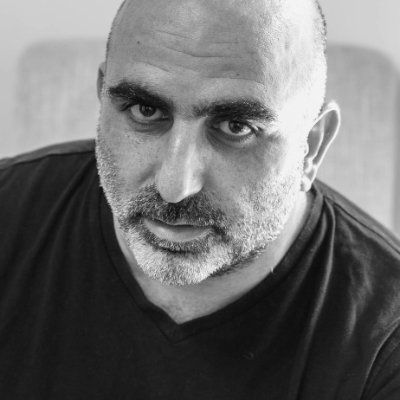
I wholeheartedly agree with Alastair Crooke here: Iran understands there will be no deal as American hands are tied by Israel, and the arrogant US cannot admit defeat after so much hype and bluster.
A new round of war will happen. There is no other way for Iran to achieve freedom and dignity and break the Zionist-Western attempt to stranguate and end it.
We are headed for the most spectacular display of force in history.
-
It has been my stance since day 1, over 3 years ago: there would be no agreement. Neither with Hamas nor with Iran (or Lebanon, or Syria). No agreement. Israel and its net of international support is in an amok state. They cannot relent. They have to be brought down. It is written in stone: there is no other end to this but great violence

Iran will not accept a ceasefire - Former British diplomat and MI6 officer Alastair Crooke
He describes how Iran has grown tired of the endless cycle of partial peace and partial war.
Tehran is no longer interested in another round of talks that never settle anything. In his analysis, Iran now sees itself in position to land a lasting blow that permanently changes the region in its favor.