

Los Angeles, CA
Joined November 2014
- Tweets70.8K
- Following1.9K
- Followers69.7K
- Likes37.1K




Byron Wan retweeted
💥 On Nov 5, President Trump authorized a crack down on companies suspected of diverting Nvidia's advanced AI chips to China for the third time this year — even consulting Elon Musk before giving the go-ahead.
One administration official has repeatedly stood in the way: Commerce Secretary Howard Lutnick.
That day, as the spy scandal rocked the administration, Lutnick met in the Situation Room with Treasury Secretary Scott Bessent, Defense Secretary Pete Hegseth, US Trade Representative Jamieson Greer and National Security Adviser and Secretary of State Marco Rubio.
During the meeting, Bessent confronted Lutnick about why his department has resisted implementing the export controls, particularly on Megaspeed, the company at the center of the spy scandal. The group sided with Bessent.
Lutnick appeared to agree, but then muttered under his breath, "I need to check with the president."
Lutnick's seemingly innocuous comment raised concerns, because officials have repeatedly believed the Commerce Department would impose the export controls, only to have nothing happen.
"He's stalling it out," said one official, describing how Lutnick had previously met privately with the president to change his mind about the export limit.
"This is an ongoing concern with Howard and this issue," said another.
This time, one person in the room called his bluff by saying: "Great. Why don't we do it today?"
Around 5pm, the group headed to the Oval Office.
Trump called tech advisor Elon Musk and agreed to move forward. Musk supported Rubio, Bessent, Greer and Hegseth's case to impose the controls while Lutnick warned it "will start a trade war with China."
“Everyone argued back that China is already doing to us what Lutnick warned would happen.”
With Lutnick the lone holdout, Trump made his decision: "Let's get it done." But once everyone was outside of the Oval Office, Lutnick proposed a new delay tactic.
"I'll develop some options and come back," he said.
"Everyone was like: 'No, no, the decision's been made. Go fucking execute. Well, it still hasn't happened."
On at least three separate occasions — in May, in Aug, and on Nov 5 — Trump approved taking action against suspected diversions of Nvidia chips to China.
But Lutnick and Commerce Undersecretary Jeffrey Kessler resisted pressure from Bessent and others to move forward.
In May, a highly classified memo warning about Jensen Huang's relationship with Alice Huang, a Megaspeed employee suspected by US intelligence of being a Chinese agent, was shared with the president and other officials.
In a subsequent meeting, Bessent, Director of National Intelligence Jay Clayton, Hegseth and White House officials pressed Lutnick and Kessler to act, "and they were refusing."
The Trump administration last year announced it would loosen export controls on Nvidia H200 chip sales to China — something Nvidia has lobbied hard for.
Trump has taken a more lax approach to export controls on China, agreeing to allow sales of Nvidia's H200 chips, which are older but still powerful, in exchange for a 25% tariff.
Long before the affair with Alice Huang, Jensen Huang has pushed for tapping into the Chinese market.
The CEO at the center of an AI boom Trump is dead set on winning has largely been successful at convincing Trump and Lutnick that selling less powerful chips to China is good for national security because it prevents China from developing its own alternatives and keeps the adversary dependent on the US.
While Lutnick oversees the department squarely at the center of export control policy, Trump is the ultimate decider.
axios.com/2026/11/11/trump-l…


💥 Nvidia’s general counsel Tim Teter intervened in a US government probe of suspected smuggling of AI chips by Megaspeed, questioning whether the Trump administration played a role in detaining 🇨🇳 Alice Huang.
In late summer 2025, Teter called Commerce Under Secretary Jeffrey Kessler, who oversees US chip export curbs, to ask about the Megaspeed investigation.
Specifically, Teter wanted to know whether Kessler’s Bureau of Industry and Security was involved in the Singapore government’s recent detention of Alice Huang. Singapore police had brought Alice in for questioning and restricted her from leaving the country. BIS was not involved in that action.
An Nvidia spokesperson said that Teter was unaware of the affair at the time he called Kessler about Alice’s detention in Singapore.
It’s unclear whether Teter made any specific requests of Kessler related to his agency’s investigation into Megaspeed, which was separate from Singapore’s. But in the weeks that followed, BIS staff were muzzled in their ability to look into the company, including a mandate that they route all requests of Nvidia through Kessler or seek his approval for outreach — a highly unusual step that remains unique to the chipmaker. They were also told not to mention Megaspeed or Speedmatrix, the company’s Malaysian subsidiary, in external communications.
Teter, meanwhile, reached out directly to the agency’s staff, including requesting a meeting with one of them. That BIS employee declined the meeting, and Teter responded that he didn’t understand why his request was spurned, since Kessler had granted him permission to communicate with BIS employees. It’s unclear exactly what Teter wanted to discuss with these individuals.
The employees forwarded the email to Kessler, who told them hours later to continue handling the case by the book, to which the employees responded: “10-4. Thank you.” Kessler didn’t otherwise weigh in on how the employees should proceed with the case.
In late 2025, the Justice Department, which was working on the case with BIS — standard practice for any BIS investigation that turns into a criminal probe — requested that BIS pause its efforts. BIS has not made any progress since then, despite the agency having enough evidence to move forward.
It’s an extraordinary episode that raises questions about Nvidia’s ability to influence US investigations into breaches of China chip curbs, as well as what exactly Teter sought to do with any additional information about Alice’s detention in Singapore.
In the months after Teter’s initial call with Kessler, Nvidia gave BIS an incomplete account of its business with Megaspeed. After several visits to Megaspeed’s data centers — 12 facilities owned by eight companies across three countries in Southeast Asia — Nvidia had sent inventory checks to the agency and declared in mid-Nov 2025 that everything was where it should be.
The company also said at the time that it had asked the US government whether it needed to cut off business with Megaspeed, and was told no.
But Nvidia’s tabulations, as relayed to the US government, undercounted the number of chips it had sold to Megaspeed via hardware partners by 50,000 units — worth billions of dollars. After being pressed about the gap, Nvidia said in Dec 2025 that it had checked additional Megaspeed warehouses that contained the missing hardware, while declining to state exactly how many chips it found in those facilities or provide any further details.
Nvidia also declined to comment on significant additional discrepancies in Megaspeed’s data center footprint, including that two of the eight data center operators Nvidia told officials in Washington it had visited said they did not, in fact, have Megaspeed’s hardware — and that Megaspeed boasts something of a Chinese corporate twin.
1/n
bloomberg.com/news/articles/…
nytimes.com/2026/11/09/busin…

Byron Wan retweeted
💥 Nvidia’s board is preparing to oust CEO Jensen Huang, its founder and chief executive after he had two extramarital affairs, including one with a suspected Chinese spy.
The board is preparing to meet as soon as Nov 11 to determine his future. His departure would bring down the curtain on an era during which he stoked the global AI boom and became a geopolitical star. It would leave one of the world’s most valuable companies in need of a new leader.
Huang, a co-founder of Nvidia, is seen by many as the face of the AI arms race. Known for his leather jackets and near-constant appearances at conferences and events all around the globe, he spoke with the confidence of a salesman who had just what the world wanted — and he did. Nvidia’s GPUs, high-powered computer processors packed with billions of transistors, are the central component behind what many believe is the next industrial revolution.
The chipmaker’s importance to global customers made Huang a worldwide celebrity. He frequently met with top US and Chinese officials, and was regularly mobbed by adoring fans when he visited Taiwan, his birthplace and the global manufacturing hub of the chip industry.
Then, on Sun Nov 8, Huang acknowledged in a letter to staff that he had been unfaithful to his wife and apologized for violating his family’s and his employees’ trust. That affair involved Alice Huang, an executive at the Singapore-based data company Megaspeed, which has been a major Nvidia customer and who US intelligence officials believe is working for China’s intelligence services.
The Nvidia CEO also had an affair with an employee.
Nvidia’s latest proxy statement warns that it is “highly dependent on the services of our longstanding executive team” and that the failure to ensure effective succession planning could “hinder our strategic planning, execution, and long-term success.”
Huang, who had roughly 60 direct reports, has said he doesn’t believe in succession planning and that leaders should continuously pass on knowledge and information as they have it. It wasn’t immediately clear who would succeed him.
Megaspeed was one of several companies using Nvidia chips to set up AI data centers in Southeast Asia and suspected of diverting some of the products to China. It had been under investigation by the Commerce Department since late 2024.
The Justice Department is now leading multiple investigations involving Alice Huang.
Trump approved shipments of Nvidia chips to China despite security concerns and adopted many of the Nvidia CEO’s policy positions, moves that are now under scrutiny from lawmakers and other officials.
Huang’s charisma and arguments about the AI boom boosting the economy impressed Trump and made Huang a mainstay at the White House.
wsj.com/business/nvidia-is-p…

Jensen Huang also had an extramarital relationship with an executive who reports to him. The relationship, which has not been previously reported, was with Kimberly Powell, Nvidia’s vice president of health care. Under Nvidia’s code of conduct, employees are told to “avoid situations where our actions create conflict” including “personal relationships,” and the company states that it “promptly investigates reports of misconduct.” Many corporations have policies against managers having relationships with subordinates.
Huang and Powell, 48, were captured on video being affectionate at a San Jose, Calif., hotel during a Nvidia conference in March.
Both Huang and Powell are married to other people.
Huang, who co-founded Nvidia in 1993 and has turned it into the premier supplier of AI chips, has been under intensifying scrutiny. Last month, Alice Huang, a Chinese executive he had become close to, had been identified by US officials as a Chinese intelligence asset.
This month, after Huang acknowledged the affair, Nvidia’s board opened an investigation into the matter that is being led by the law firm Wachtell, Lipton, Rosen & Katz. The Republican leaders of three influential House committees have also asked Huang to appear for a closed-door briefing on his interactions with Alice Huang.
When reached by phone on Nov 11 and asked about his relationship with Powell, Huang said, “I don’t think you should be talking to me directly.” He then hung up.
Huang’s relationship with Powell has been discussed inside the company.
Powell joined Nvidia in 2008. She oversees programs that could apply Nvidia’s chip technology to higher education and health care, particularly medical imaging devices.
Powell has risen through Nvidia’s ranks. She was promoted to senior director of artificial intelligence business development in 2016, according to her LinkedIn. By late 2017, she was appointed vice president of health care. She attends technology conferences around the world, and delivers speeches on behalf of the company.
In March, Powell appeared at GTC, Nvidia’s annual developer conference in San Jose, where she spoke about using AI to aid in breakthroughs in health care and biology. Her presentation used cartoon depictions of Huang.
During the conference, Nvidia executives were at a nearby hotel for meetings. Huang and Powell were seen being affectionate at the hotel. One bystander captured the interaction on their phone.
Huang’s security witnessed the bystander with their phone and sequestered them. They made the person an offer to sign a nondisclosure agreement.
Huang is among a long list of chief executives of American companies who have had relationships with subordinates. Brian Krzanich resigned in 2018 from Intel after acknowledging a “past consensual relationship” with an employee.
The following year, McDonald’s removed Steve Easterbrook as its chief executive and later sued him after learning he had violated corporate policies by maintaining sexual relationships with multiple employees.
nytimes.com/2026/11/11/techn…

Byron Wan retweeted
Jensen Huang also had an extramarital relationship with an executive who reports to him. The relationship, which has not been previously reported, was with Kimberly Powell, Nvidia’s vice president of health care. Under Nvidia’s code of conduct, employees are told to “avoid situations where our actions create conflict” including “personal relationships,” and the company states that it “promptly investigates reports of misconduct.” Many corporations have policies against managers having relationships with subordinates.
Huang and Powell, 48, were captured on video being affectionate at a San Jose, Calif., hotel during a Nvidia conference in March.
Both Huang and Powell are married to other people.
Huang, who co-founded Nvidia in 1993 and has turned it into the premier supplier of AI chips, has been under intensifying scrutiny. Last month, Alice Huang, a Chinese executive he had become close to, had been identified by US officials as a Chinese intelligence asset.
This month, after Huang acknowledged the affair, Nvidia’s board opened an investigation into the matter that is being led by the law firm Wachtell, Lipton, Rosen & Katz. The Republican leaders of three influential House committees have also asked Huang to appear for a closed-door briefing on his interactions with Alice Huang.
When reached by phone on Nov 11 and asked about his relationship with Powell, Huang said, “I don’t think you should be talking to me directly.” He then hung up.
Huang’s relationship with Powell has been discussed inside the company.
Powell joined Nvidia in 2008. She oversees programs that could apply Nvidia’s chip technology to higher education and health care, particularly medical imaging devices.
Powell has risen through Nvidia’s ranks. She was promoted to senior director of artificial intelligence business development in 2016, according to her LinkedIn. By late 2017, she was appointed vice president of health care. She attends technology conferences around the world, and delivers speeches on behalf of the company.
In March, Powell appeared at GTC, Nvidia’s annual developer conference in San Jose, where she spoke about using AI to aid in breakthroughs in health care and biology. Her presentation used cartoon depictions of Huang.
During the conference, Nvidia executives were at a nearby hotel for meetings. Huang and Powell were seen being affectionate at the hotel. One bystander captured the interaction on their phone.
Huang’s security witnessed the bystander with their phone and sequestered them. They made the person an offer to sign a nondisclosure agreement.
Huang is among a long list of chief executives of American companies who have had relationships with subordinates. Brian Krzanich resigned in 2018 from Intel after acknowledging a “past consensual relationship” with an employee.
The following year, McDonald’s removed Steve Easterbrook as its chief executive and later sued him after learning he had violated corporate policies by maintaining sexual relationships with multiple employees.
nytimes.com/2026/11/11/techn…
💥 Nvidia’s general counsel Tim Teter intervened in a US government probe of suspected smuggling of AI chips by Megaspeed, questioning whether the Trump administration played a role in detaining 🇨🇳 Alice Huang.
In late summer 2025, Teter called Commerce Under Secretary Jeffrey Kessler, who oversees US chip export curbs, to ask about the Megaspeed investigation.
Specifically, Teter wanted to know whether Kessler’s Bureau of Industry and Security was involved in the Singapore government’s recent detention of Alice Huang. Singapore police had brought Alice in for questioning and restricted her from leaving the country. BIS was not involved in that action.
An Nvidia spokesperson said that Teter was unaware of the affair at the time he called Kessler about Alice’s detention in Singapore.
It’s unclear whether Teter made any specific requests of Kessler related to his agency’s investigation into Megaspeed, which was separate from Singapore’s. But in the weeks that followed, BIS staff were muzzled in their ability to look into the company, including a mandate that they route all requests of Nvidia through Kessler or seek his approval for outreach — a highly unusual step that remains unique to the chipmaker. They were also told not to mention Megaspeed or Speedmatrix, the company’s Malaysian subsidiary, in external communications.
Teter, meanwhile, reached out directly to the agency’s staff, including requesting a meeting with one of them. That BIS employee declined the meeting, and Teter responded that he didn’t understand why his request was spurned, since Kessler had granted him permission to communicate with BIS employees. It’s unclear exactly what Teter wanted to discuss with these individuals.
The employees forwarded the email to Kessler, who told them hours later to continue handling the case by the book, to which the employees responded: “10-4. Thank you.” Kessler didn’t otherwise weigh in on how the employees should proceed with the case.
In late 2025, the Justice Department, which was working on the case with BIS — standard practice for any BIS investigation that turns into a criminal probe — requested that BIS pause its efforts. BIS has not made any progress since then, despite the agency having enough evidence to move forward.
It’s an extraordinary episode that raises questions about Nvidia’s ability to influence US investigations into breaches of China chip curbs, as well as what exactly Teter sought to do with any additional information about Alice’s detention in Singapore.
In the months after Teter’s initial call with Kessler, Nvidia gave BIS an incomplete account of its business with Megaspeed. After several visits to Megaspeed’s data centers — 12 facilities owned by eight companies across three countries in Southeast Asia — Nvidia had sent inventory checks to the agency and declared in mid-Nov 2025 that everything was where it should be.
The company also said at the time that it had asked the US government whether it needed to cut off business with Megaspeed, and was told no.
But Nvidia’s tabulations, as relayed to the US government, undercounted the number of chips it had sold to Megaspeed via hardware partners by 50,000 units — worth billions of dollars. After being pressed about the gap, Nvidia said in Dec 2025 that it had checked additional Megaspeed warehouses that contained the missing hardware, while declining to state exactly how many chips it found in those facilities or provide any further details.
Nvidia also declined to comment on significant additional discrepancies in Megaspeed’s data center footprint, including that two of the eight data center operators Nvidia told officials in Washington it had visited said they did not, in fact, have Megaspeed’s hardware — and that Megaspeed boasts something of a Chinese corporate twin.
1/n
bloomberg.com/news/articles/…
nytimes.com/2026/11/09/busin…
Byron Wan retweeted
🇨🇳 Northwestern Polytechnical University — an institution with deep ties to the PLA — bought two Nvidia H200 chips last month for 874,700 yuan ($123,000), according to an Oct 21 procurement record on its website.
Northwestern is a member of the "Seven Sons of National Defense" group of Chinese universities under US sanctions and with a history of conducting defense-related research for Beijing.
The chips were purchased for its management school from Shaanxi Bosuan Network Technology rather than directly from Nvidia.
Northwestern Polytechnical also bought access this year to H200 chips and other powerful Nvidia AI processors through five contracts for rented computing capacity from Chinese companies, procurement records show.
Northwestern Polytechnical conducts research related to military aircraft, missiles and satellites. The US Commerce Department added the university to the Entity List in 2001 over its alleged involvement in missile-proliferation activities and military research. It tightened the restrictions in 2019, making licences for exports of controlled US technology to the university subject to a policy of denial in most circumstances.
Northwestern Polytechnical's purchases show how Chinese institutions with military ties continue to obtain US AI computing power through domestic suppliers, either by buying chips outright or renting access to servers containing them.
A review of 26 Chinese procurement and corporate records from this year found universities and research institutions buying US-restricted Nvidia chips or renting access to Nvidia-powered computing services that use such chips through domestic suppliers. Several had close links to China's defence industry or military research.
In addition to the management school's outright purchase of the two H200 chips, procurement records show the university's cybersecurity school awarded two seven-month contracts in Jan for access to servers containing eight H200 chips each. The contracts, worth 441,700 yuan and 441,000 yuan, covered fine-tuning AI models and reinforcement-learning training.
It also rented access to servers containing 8 Nvidia A100 chips and 8 A800 chips. The A100 and A800 are banned from export to all Chinese entities, though the H200 is the most advanced of those cited in Northwestern Polytechnical's procurement records.
In April, another university institute bought computing services requiring at least 24 A100 chips in a 375,000 yuan contract for structural and fluid-dynamics simulations.
The awards went to several little-known Chinese technology suppliers. The records offered scant information about where the processors originated or where the rented servers operated.
Under Chinese law, public procurement agencies must verify that suppliers can fulfil orders before announcing winning bidders and signing contracts.
The procurement records show a wider market for restricted Nvidia AI chips and computing services at Chinese universities.
Shenzhen University bought three H100 processors, another high-end Nvidia AI chip banned by the US, for 769,800 yuan in Sep. Wuhan University of Technology bought a server containing an H100 chip for 355,000 yuan in June and four A100 chips in a separate 344,000 yuan purchase.
Beihang University, another of the Seven Sons of National Defense universities, bought four A800 processors for 489,000 yuan in April. Beihang has close ties to China's aerospace and defence industries and conducts research for military aviation and space programmes.
Two government procurement announcements in July and Sep named suppliers selected to provide computing services using Nvidia H800 and A800 chips restricted from export to China to the University of Chinese Academy of Sciences. One listed H800 access at 10 yuan per chip-hour. A separate January procurement award named a supplier of six A100 chips worth 484,800 yuan for a Shenzhen-based public institution.
reuters.com/world/pla-linked…

Byron Wan retweeted
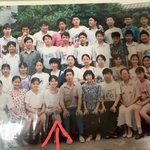
💥 This is reportedly a photo of Alice Huang, with Chinese name 黄乐 (Huang Le), taken when she was in Jiangnan Middle School (now Jiangnan School) in Xiangtan, Hunan province…
She was reportedly born in 1977…


💥 On Nov 5, President Trump authorized a crack down on companies suspected of diverting Nvidia's advanced AI chips to China for the third time this year — even consulting Elon Musk before giving the go-ahead.
One administration official has repeatedly stood in the way: Commerce Secretary Howard Lutnick.
That day, as the spy scandal rocked the administration, Lutnick met in the Situation Room with Treasury Secretary Scott Bessent, Defense Secretary Pete Hegseth, US Trade Representative Jamieson Greer and National Security Adviser and Secretary of State Marco Rubio.
During the meeting, Bessent confronted Lutnick about why his department has resisted implementing the export controls, particularly on Megaspeed, the company at the center of the spy scandal. The group sided with Bessent.
Lutnick appeared to agree, but then muttered under his breath, "I need to check with the president."
Lutnick's seemingly innocuous comment raised concerns, because officials have repeatedly believed the Commerce Department would impose the export controls, only to have nothing happen.
"He's stalling it out," said one official, describing how Lutnick had previously met privately with the president to change his mind about the export limit.
"This is an ongoing concern with Howard and this issue," said another.
This time, one person in the room called his bluff by saying: "Great. Why don't we do it today?"
Around 5pm, the group headed to the Oval Office.
Trump called tech advisor Elon Musk and agreed to move forward. Musk supported Rubio, Bessent, Greer and Hegseth's case to impose the controls while Lutnick warned it "will start a trade war with China."
“Everyone argued back that China is already doing to us what Lutnick warned would happen.”
With Lutnick the lone holdout, Trump made his decision: "Let's get it done." But once everyone was outside of the Oval Office, Lutnick proposed a new delay tactic.
"I'll develop some options and come back," he said.
"Everyone was like: 'No, no, the decision's been made. Go fucking execute. Well, it still hasn't happened."
On at least three separate occasions — in May, in Aug, and on Nov 5 — Trump approved taking action against suspected diversions of Nvidia chips to China.
But Lutnick and Commerce Undersecretary Jeffrey Kessler resisted pressure from Bessent and others to move forward.
In May, a highly classified memo warning about Jensen Huang's relationship with Alice Huang, a Megaspeed employee suspected by US intelligence of being a Chinese agent, was shared with the president and other officials.
In a subsequent meeting, Bessent, Director of National Intelligence Jay Clayton, Hegseth and White House officials pressed Lutnick and Kessler to act, "and they were refusing."
The Trump administration last year announced it would loosen export controls on Nvidia H200 chip sales to China — something Nvidia has lobbied hard for.
Trump has taken a more lax approach to export controls on China, agreeing to allow sales of Nvidia's H200 chips, which are older but still powerful, in exchange for a 25% tariff.
Long before the affair with Alice Huang, Jensen Huang has pushed for tapping into the Chinese market.
The CEO at the center of an AI boom Trump is dead set on winning has largely been successful at convincing Trump and Lutnick that selling less powerful chips to China is good for national security because it prevents China from developing its own alternatives and keeps the adversary dependent on the US.
While Lutnick oversees the department squarely at the center of export control policy, Trump is the ultimate decider.
axios.com/2026/11/11/trump-l…
💥 Nvidia’s general counsel Tim Teter intervened in a US government probe of suspected smuggling of AI chips by Megaspeed, questioning whether the Trump administration played a role in detaining 🇨🇳 Alice Huang.
In late summer 2025, Teter called Commerce Under Secretary Jeffrey Kessler, who oversees US chip export curbs, to ask about the Megaspeed investigation.
Specifically, Teter wanted to know whether Kessler’s Bureau of Industry and Security was involved in the Singapore government’s recent detention of Alice Huang. Singapore police had brought Alice in for questioning and restricted her from leaving the country. BIS was not involved in that action.
An Nvidia spokesperson said that Teter was unaware of the affair at the time he called Kessler about Alice’s detention in Singapore.
It’s unclear whether Teter made any specific requests of Kessler related to his agency’s investigation into Megaspeed, which was separate from Singapore’s. But in the weeks that followed, BIS staff were muzzled in their ability to look into the company, including a mandate that they route all requests of Nvidia through Kessler or seek his approval for outreach — a highly unusual step that remains unique to the chipmaker. They were also told not to mention Megaspeed or Speedmatrix, the company’s Malaysian subsidiary, in external communications.
Teter, meanwhile, reached out directly to the agency’s staff, including requesting a meeting with one of them. That BIS employee declined the meeting, and Teter responded that he didn’t understand why his request was spurned, since Kessler had granted him permission to communicate with BIS employees. It’s unclear exactly what Teter wanted to discuss with these individuals.
The employees forwarded the email to Kessler, who told them hours later to continue handling the case by the book, to which the employees responded: “10-4. Thank you.” Kessler didn’t otherwise weigh in on how the employees should proceed with the case.
In late 2025, the Justice Department, which was working on the case with BIS — standard practice for any BIS investigation that turns into a criminal probe — requested that BIS pause its efforts. BIS has not made any progress since then, despite the agency having enough evidence to move forward.
It’s an extraordinary episode that raises questions about Nvidia’s ability to influence US investigations into breaches of China chip curbs, as well as what exactly Teter sought to do with any additional information about Alice’s detention in Singapore.
In the months after Teter’s initial call with Kessler, Nvidia gave BIS an incomplete account of its business with Megaspeed. After several visits to Megaspeed’s data centers — 12 facilities owned by eight companies across three countries in Southeast Asia — Nvidia had sent inventory checks to the agency and declared in mid-Nov 2025 that everything was where it should be.
The company also said at the time that it had asked the US government whether it needed to cut off business with Megaspeed, and was told no.
But Nvidia’s tabulations, as relayed to the US government, undercounted the number of chips it had sold to Megaspeed via hardware partners by 50,000 units — worth billions of dollars. After being pressed about the gap, Nvidia said in Dec 2025 that it had checked additional Megaspeed warehouses that contained the missing hardware, while declining to state exactly how many chips it found in those facilities or provide any further details.
Nvidia also declined to comment on significant additional discrepancies in Megaspeed’s data center footprint, including that two of the eight data center operators Nvidia told officials in Washington it had visited said they did not, in fact, have Megaspeed’s hardware — and that Megaspeed boasts something of a Chinese corporate twin.
1/n
bloomberg.com/news/articles/…
nytimes.com/2026/11/09/busin…
💥 Nvidia’s board is preparing to oust CEO Jensen Huang, its founder and chief executive after he had two extramarital affairs, including one with a suspected Chinese spy.
The board is preparing to meet as soon as Nov 11 to determine his future. His departure would bring down the curtain on an era during which he stoked the global AI boom and became a geopolitical star. It would leave one of the world’s most valuable companies in need of a new leader.
Huang, a co-founder of Nvidia, is seen by many as the face of the AI arms race. Known for his leather jackets and near-constant appearances at conferences and events all around the globe, he spoke with the confidence of a salesman who had just what the world wanted — and he did. Nvidia’s GPUs, high-powered computer processors packed with billions of transistors, are the central component behind what many believe is the next industrial revolution.
The chipmaker’s importance to global customers made Huang a worldwide celebrity. He frequently met with top US and Chinese officials, and was regularly mobbed by adoring fans when he visited Taiwan, his birthplace and the global manufacturing hub of the chip industry.
Then, on Sun Nov 8, Huang acknowledged in a letter to staff that he had been unfaithful to his wife and apologized for violating his family’s and his employees’ trust. That affair involved Alice Huang, an executive at the Singapore-based data company Megaspeed, which has been a major Nvidia customer and who US intelligence officials believe is working for China’s intelligence services.
The Nvidia CEO also had an affair with an employee.
Nvidia’s latest proxy statement warns that it is “highly dependent on the services of our longstanding executive team” and that the failure to ensure effective succession planning could “hinder our strategic planning, execution, and long-term success.”
Huang, who had roughly 60 direct reports, has said he doesn’t believe in succession planning and that leaders should continuously pass on knowledge and information as they have it. It wasn’t immediately clear who would succeed him.
Megaspeed was one of several companies using Nvidia chips to set up AI data centers in Southeast Asia and suspected of diverting some of the products to China. It had been under investigation by the Commerce Department since late 2024.
The Justice Department is now leading multiple investigations involving Alice Huang.
Trump approved shipments of Nvidia chips to China despite security concerns and adopted many of the Nvidia CEO’s policy positions, moves that are now under scrutiny from lawmakers and other officials.
Huang’s charisma and arguments about the AI boom boosting the economy impressed Trump and made Huang a mainstay at the White House.
wsj.com/business/nvidia-is-p…
Jensen Huang also had an extramarital relationship with an executive who reports to him. The relationship, which has not been previously reported, was with Kimberly Powell, Nvidia’s vice president of health care. Under Nvidia’s code of conduct, employees are told to “avoid situations where our actions create conflict” including “personal relationships,” and the company states that it “promptly investigates reports of misconduct.” Many corporations have policies against managers having relationships with subordinates.
Huang and Powell, 48, were captured on video being affectionate at a San Jose, Calif., hotel during a Nvidia conference in March.
Both Huang and Powell are married to other people.
Huang, who co-founded Nvidia in 1993 and has turned it into the premier supplier of AI chips, has been under intensifying scrutiny. Last month, Alice Huang, a Chinese executive he had become close to, had been identified by US officials as a Chinese intelligence asset.
This month, after Huang acknowledged the affair, Nvidia’s board opened an investigation into the matter that is being led by the law firm Wachtell, Lipton, Rosen & Katz. The Republican leaders of three influential House committees have also asked Huang to appear for a closed-door briefing on his interactions with Alice Huang.
When reached by phone on Nov 11 and asked about his relationship with Powell, Huang said, “I don’t think you should be talking to me directly.” He then hung up.
Huang’s relationship with Powell has been discussed inside the company.
Powell joined Nvidia in 2008. She oversees programs that could apply Nvidia’s chip technology to higher education and health care, particularly medical imaging devices.
Powell has risen through Nvidia’s ranks. She was promoted to senior director of artificial intelligence business development in 2016, according to her LinkedIn. By late 2017, she was appointed vice president of health care. She attends technology conferences around the world, and delivers speeches on behalf of the company.
In March, Powell appeared at GTC, Nvidia’s annual developer conference in San Jose, where she spoke about using AI to aid in breakthroughs in health care and biology. Her presentation used cartoon depictions of Huang.
During the conference, Nvidia executives were at a nearby hotel for meetings. Huang and Powell were seen being affectionate at the hotel. One bystander captured the interaction on their phone.
Huang’s security witnessed the bystander with their phone and sequestered them. They made the person an offer to sign a nondisclosure agreement.
Huang is among a long list of chief executives of American companies who have had relationships with subordinates. Brian Krzanich resigned in 2018 from Intel after acknowledging a “past consensual relationship” with an employee.
The following year, McDonald’s removed Steve Easterbrook as its chief executive and later sued him after learning he had violated corporate policies by maintaining sexual relationships with multiple employees.
nytimes.com/2026/11/11/techn…
💥 Nvidia’s general counsel Tim Teter intervened in a US government probe of suspected smuggling of AI chips by Megaspeed, questioning whether the Trump administration played a role in detaining 🇨🇳 Alice Huang.
In late summer 2025, Teter called Commerce Under Secretary Jeffrey Kessler, who oversees US chip export curbs, to ask about the Megaspeed investigation.
Specifically, Teter wanted to know whether Kessler’s Bureau of Industry and Security was involved in the Singapore government’s recent detention of Alice Huang. Singapore police had brought Alice in for questioning and restricted her from leaving the country. BIS was not involved in that action.
An Nvidia spokesperson said that Teter was unaware of the affair at the time he called Kessler about Alice’s detention in Singapore.
It’s unclear whether Teter made any specific requests of Kessler related to his agency’s investigation into Megaspeed, which was separate from Singapore’s. But in the weeks that followed, BIS staff were muzzled in their ability to look into the company, including a mandate that they route all requests of Nvidia through Kessler or seek his approval for outreach — a highly unusual step that remains unique to the chipmaker. They were also told not to mention Megaspeed or Speedmatrix, the company’s Malaysian subsidiary, in external communications.
Teter, meanwhile, reached out directly to the agency’s staff, including requesting a meeting with one of them. That BIS employee declined the meeting, and Teter responded that he didn’t understand why his request was spurned, since Kessler had granted him permission to communicate with BIS employees. It’s unclear exactly what Teter wanted to discuss with these individuals.
The employees forwarded the email to Kessler, who told them hours later to continue handling the case by the book, to which the employees responded: “10-4. Thank you.” Kessler didn’t otherwise weigh in on how the employees should proceed with the case.
In late 2025, the Justice Department, which was working on the case with BIS — standard practice for any BIS investigation that turns into a criminal probe — requested that BIS pause its efforts. BIS has not made any progress since then, despite the agency having enough evidence to move forward.
It’s an extraordinary episode that raises questions about Nvidia’s ability to influence US investigations into breaches of China chip curbs, as well as what exactly Teter sought to do with any additional information about Alice’s detention in Singapore.
In the months after Teter’s initial call with Kessler, Nvidia gave BIS an incomplete account of its business with Megaspeed. After several visits to Megaspeed’s data centers — 12 facilities owned by eight companies across three countries in Southeast Asia — Nvidia had sent inventory checks to the agency and declared in mid-Nov 2025 that everything was where it should be.
The company also said at the time that it had asked the US government whether it needed to cut off business with Megaspeed, and was told no.
But Nvidia’s tabulations, as relayed to the US government, undercounted the number of chips it had sold to Megaspeed via hardware partners by 50,000 units — worth billions of dollars. After being pressed about the gap, Nvidia said in Dec 2025 that it had checked additional Megaspeed warehouses that contained the missing hardware, while declining to state exactly how many chips it found in those facilities or provide any further details.
Nvidia also declined to comment on significant additional discrepancies in Megaspeed’s data center footprint, including that two of the eight data center operators Nvidia told officials in Washington it had visited said they did not, in fact, have Megaspeed’s hardware — and that Megaspeed boasts something of a Chinese corporate twin.
1/n
bloomberg.com/news/articles/…
nytimes.com/2026/11/09/busin…
Byron Wan retweeted
🇨🇳 DeepSeek and other leading AI companies in China together generate only around one-tenth of the combined revenue of US rivals OpenAI and Anthropic, estimates show, as competition pushes already low Chinese fees further down.
Chinese AI companies have gained ground with open-weight models that anyone can download and use, while OpenAI and Anthropic offer closed versions of their most advanced models that cannot be downloaded.
As of Sep, Anthropic and OpenAI's estimated annualized revenue run rates totaled $105 billion, compared with a combined $11 billion for six Chinese companies.
The Chinese total is made up of cloud-related revenue at Alibaba and ByteDance, in addition to the revenue run rates of DeepSeek, Z.ai, Moonshot AI and MiniMax.
ByteDance, the largest among the Chinese companies in terms of revenue, took in only $4 billion.
In Sep, it was reported that DeepSeek's annualized revenue run rate had doubled to reach $1 billion. It shows rapid growth but remains far behind OpenAI and Anthropic.
Development costs are lower for Chinese AI companies. DeepSeek's V4.1-Flash-1017 model released in Oct is said by the company to outperform OpenAI's GPT-5.6 Sol and Anthropic's Claude Opus 5 by some measures, but costs roughly 5%-8% of what the American companies charge.
On US-based OpenRouter, a platform that lets users switch among multiple AI models, open models account for more than 70% of token usage. This may seem beneficial to developers of these models but actually creates a source of price competition.
As of Sep 16, eight providers on OpenRouter offered services based on Z.ai's GLM-5 model, with several of them charging less than Z.ai itself. Over a 24-hour-period, third-party services accounted for 75% of GLM-5 token usage.
DeepSeek's V4 Pro was being offered by third parties for 87% less than the official price as of the same date.
AI companies' funding needs include money for model development, graphics processing units and data centers. DeepSeek and Moonshot AI are looking to raise money from investors and potentially go public.
Their US competitors are targeting far larger sums of capital. Anthropic, which is preparing for an IPO, could raise $100 billion. Revenue totaled $33.2 billion in the nine months through Sep, 13 times the year-earlier level, company disclosures show.
Z.ai and MiniMax went public in Hong Kong in January. But shares in both companies have slumped around 80%-90% from their peaks. Both reported net losses for the six months through June on heavy investment costs.
Though Chinese AI companies generate less revenue than their US counterparts, they have held down development costs and used less computing resources. Gross profit margins are estimated to be in the 20%-40% range.
They also are looking for additional revenue streams. Z.ai has signed a contract with Amazon to make the Chinese company's flagship GLM-5.3 model available through Amazon's cloud services.
Moonshot AI is charging licensing fees for large-scale commercial deployment of its Kimi K3 model.
asia.nikkei.com/business/tec…

Byron Wan retweeted
Jaguar Land Rover representatives have raided the offices of 🇨🇳 BYD in a legal row with its Chinese rival over its “copycat Defender” vehicle.
Bailiffs acting on behalf of the JLR seized digital records from BYD’s Dutch offices in Schiedam and Hoofddorp this summer.
A Dutch court will this week decide whether the Chinese firm has a case to answer over allegations that its Ti7 SUV infringes on the intellectual property of the Land Rover Defender.
Undercutting the Defender by more than £20,000, BYD’s Ti7 will cost from £47,995 when it launches in the UK in January. Commentators have referred to the Ti7 as the “Chinese Defender clone”, saying it bears “more than a passing similarity” to JLR’s global bestselling vehicle.
The row comes as Chery, another of China’s large carmakers, makes inroads into the UK car market with the Jaecoo 7. The Jaecoo car has been dubbed the “Temu Range Rover” because of its similarities to the JLR model; it starts at more than £10,000 less than the British-made vehicle. The Jaecoo 7 was the bestselling car in the UK in Oct.
The Netherlands raid was conducted by court-ordered bailiffs in August. The suspicion in the JLR camp is that BYD has stripped down its Defender to reverse engineer some of the technology that could be used in the Ti7. JLR is understood to have pressed to secure the digital records before they could be destroyed.
Prior to the raid, BYD claimed it had done everything in its power to cooperate with requests for information from JLR. Lawyers for the Chinese company attacked the British firm’s move as a “fishing expedition” and claimed that “too many files were seized”.
JLR’s legal advisers claimed that BYD attempted to stonewall the seizure of the digital files. The bailiffs are said to have alleged that the Chinese company’s delaying tactics were unprecedented.
The raid is seen as the start of a broader spat between JLR and BYD over the British rival’s intellectual property. The case is thought to have been brought in the Netherlands because it has historically been more favourable to claims of intellectual property theft.
A preliminary ruling in The Hague has been scheduled for Nov 11, and is expected to decide whether or not BYD has a case to answer.
Chinese carmakers have taken western markets by storm. Five years ago, they had just 2.5% of Britain’s new car market; in Sep, 23% of new UK registrations were Chinese-owned brands.
MG, owned by Shanghai Automotive Industry Corporation, announced on Nov 5 that it sold 86,767 vehicles in the first ten months of the year — surpassing the company’s previous full-year record.
JLR has largely ceded control of its Freelander model to Chery, its Chinese joint venture partner. Launched in the late 1980s, the Freelander proved popular among drivers wanting a compact 4×4.
The car was phased out in 2014, only to be revived as an electric vehicle built in China by Chery Jaguar Land Rover (CJLR). It was launched in China in Sep and will be rolled out in the Middle East in the first half of next year, before a right-hand-drive version is made available in the UK later in 2027.
thetimes.com/business/compan…

🇨🇳 Northwestern Polytechnical University — an institution with deep ties to the PLA — bought two Nvidia H200 chips last month for 874,700 yuan ($123,000), according to an Oct 21 procurement record on its website.
Northwestern is a member of the "Seven Sons of National Defense" group of Chinese universities under US sanctions and with a history of conducting defense-related research for Beijing.
The chips were purchased for its management school from Shaanxi Bosuan Network Technology rather than directly from Nvidia.
Northwestern Polytechnical also bought access this year to H200 chips and other powerful Nvidia AI processors through five contracts for rented computing capacity from Chinese companies, procurement records show.
Northwestern Polytechnical conducts research related to military aircraft, missiles and satellites. The US Commerce Department added the university to the Entity List in 2001 over its alleged involvement in missile-proliferation activities and military research. It tightened the restrictions in 2019, making licences for exports of controlled US technology to the university subject to a policy of denial in most circumstances.
Northwestern Polytechnical's purchases show how Chinese institutions with military ties continue to obtain US AI computing power through domestic suppliers, either by buying chips outright or renting access to servers containing them.
A review of 26 Chinese procurement and corporate records from this year found universities and research institutions buying US-restricted Nvidia chips or renting access to Nvidia-powered computing services that use such chips through domestic suppliers. Several had close links to China's defence industry or military research.
In addition to the management school's outright purchase of the two H200 chips, procurement records show the university's cybersecurity school awarded two seven-month contracts in Jan for access to servers containing eight H200 chips each. The contracts, worth 441,700 yuan and 441,000 yuan, covered fine-tuning AI models and reinforcement-learning training.
It also rented access to servers containing 8 Nvidia A100 chips and 8 A800 chips. The A100 and A800 are banned from export to all Chinese entities, though the H200 is the most advanced of those cited in Northwestern Polytechnical's procurement records.
In April, another university institute bought computing services requiring at least 24 A100 chips in a 375,000 yuan contract for structural and fluid-dynamics simulations.
The awards went to several little-known Chinese technology suppliers. The records offered scant information about where the processors originated or where the rented servers operated.
Under Chinese law, public procurement agencies must verify that suppliers can fulfil orders before announcing winning bidders and signing contracts.
The procurement records show a wider market for restricted Nvidia AI chips and computing services at Chinese universities.
Shenzhen University bought three H100 processors, another high-end Nvidia AI chip banned by the US, for 769,800 yuan in Sep. Wuhan University of Technology bought a server containing an H100 chip for 355,000 yuan in June and four A100 chips in a separate 344,000 yuan purchase.
Beihang University, another of the Seven Sons of National Defense universities, bought four A800 processors for 489,000 yuan in April. Beihang has close ties to China's aerospace and defence industries and conducts research for military aviation and space programmes.
Two government procurement announcements in July and Sep named suppliers selected to provide computing services using Nvidia H800 and A800 chips restricted from export to China to the University of Chinese Academy of Sciences. One listed H800 access at 10 yuan per chip-hour. A separate January procurement award named a supplier of six A100 chips worth 484,800 yuan for a Shenzhen-based public institution.
reuters.com/world/pla-linked…
Byron Wan retweeted
💥 Nvidia CEO Jensen Huang began working with crisis communications firm Heller, which is known for handling public scandals, a year before he admitted to having an extramarital affair with Alice Huang, a woman suspected by US intelligence of being a Chinese spy. Heller has handled Huang’s behind-the-scenes communications since at least Oct 2025.
Risa Heller, the firm’s founder, has built a reputation as a fixer for powerful men facing allegations of sexual misconduct and other personal controversies, according to a 2023 New York magazine profile. Her past clients and people who have sought her advice include former congressman Anthony Weiner, chef Mario Batali, and writer Jeffrey Toobin. Heller also handles corporate communications and issues unrelated to personal controversies for its clients.
Heller’s public relations consultants were initially believed to be hired for matters related to Huang’s personal life, including his family’s philanthropic endeavors. The firm frequently communicated with Huang and his daughter Madison, a product marketing director at Nvidia who has become an increasingly prominent figure within the company. It’s not clear whether Heller’s early work with the Huang family involved Huang’s affair.
In 2024, Huang began appearing in public with a woman who goes by Alice Huang, a former executive at the Singapore-based chip buyer Megaspeed. Megaspeed was created when it split off from a Chinese gaming and cloud computing firm in 2023, a few months after the US government began restricting exports of advanced semiconductors to China, including those developed by Nvidia. A subsidiary of Megaspeed later became a major buyer of Nvidia chips.
In early Oct 2025, Jensen Huang’s business dealings with Megaspeed and his connection to Alice became public in a lengthy New York Times report, which alleged that the US Commerce Department was investigating whether the company was helping Chinese firms evade American export controls through its subsidiaries.
The report caused tensions to rise within Nvidia’s top ranks, and Jensen was rankled by the story. By the end of that month, Nvidia’s internal communications teams had been instructed to include Heller’s firm on any press inquiries about Huang, whether personal or professional.
US intelligence officials have determined that Alice (who has no known relation to Jensen) is a spy working for the Chinese government. Nvidia initially said that Jensen’s interactions with Alice were part of routine business with clients. But on Sunday Nov 8, Huang acknowledged that his relationship with her was romantic in nature. In an email to Nvidia staff, he said he owed them and his family an apology. “I was unfaithful to my wife. My actions hurt her and our children. There is no excuse for what I did. I am deeply sorry,” Huang wrote.
Nvidia’s board of directors announced it is opening an independent investigation into Jensen’s activities.
Before founding her firm, Risa Heller worked for Jane Harman, then a Democratic congresswoman from California, and later served as Democratic senator Chuck Schumer’s New York City press secretary. Nvidia’s head of public policy communications, John Rizzo, also previously worked for Schumer, serving as his deputy communications director.
wired.com/story/nvidia-ceo-j…

Byron Wan retweeted
💥 Nvidia’s general counsel Tim Teter intervened in a US government probe of suspected smuggling of AI chips by Megaspeed, questioning whether the Trump administration played a role in detaining 🇨🇳 Alice Huang.
In late summer 2025, Teter called Commerce Under Secretary Jeffrey Kessler, who oversees US chip export curbs, to ask about the Megaspeed investigation.
Specifically, Teter wanted to know whether Kessler’s Bureau of Industry and Security was involved in the Singapore government’s recent detention of Alice Huang. Singapore police had brought Alice in for questioning and restricted her from leaving the country. BIS was not involved in that action.
An Nvidia spokesperson said that Teter was unaware of the affair at the time he called Kessler about Alice’s detention in Singapore.
It’s unclear whether Teter made any specific requests of Kessler related to his agency’s investigation into Megaspeed, which was separate from Singapore’s. But in the weeks that followed, BIS staff were muzzled in their ability to look into the company, including a mandate that they route all requests of Nvidia through Kessler or seek his approval for outreach — a highly unusual step that remains unique to the chipmaker. They were also told not to mention Megaspeed or Speedmatrix, the company’s Malaysian subsidiary, in external communications.
Teter, meanwhile, reached out directly to the agency’s staff, including requesting a meeting with one of them. That BIS employee declined the meeting, and Teter responded that he didn’t understand why his request was spurned, since Kessler had granted him permission to communicate with BIS employees. It’s unclear exactly what Teter wanted to discuss with these individuals.
The employees forwarded the email to Kessler, who told them hours later to continue handling the case by the book, to which the employees responded: “10-4. Thank you.” Kessler didn’t otherwise weigh in on how the employees should proceed with the case.
In late 2025, the Justice Department, which was working on the case with BIS — standard practice for any BIS investigation that turns into a criminal probe — requested that BIS pause its efforts. BIS has not made any progress since then, despite the agency having enough evidence to move forward.
It’s an extraordinary episode that raises questions about Nvidia’s ability to influence US investigations into breaches of China chip curbs, as well as what exactly Teter sought to do with any additional information about Alice’s detention in Singapore.
In the months after Teter’s initial call with Kessler, Nvidia gave BIS an incomplete account of its business with Megaspeed. After several visits to Megaspeed’s data centers — 12 facilities owned by eight companies across three countries in Southeast Asia — Nvidia had sent inventory checks to the agency and declared in mid-Nov 2025 that everything was where it should be.
The company also said at the time that it had asked the US government whether it needed to cut off business with Megaspeed, and was told no.
But Nvidia’s tabulations, as relayed to the US government, undercounted the number of chips it had sold to Megaspeed via hardware partners by 50,000 units — worth billions of dollars. After being pressed about the gap, Nvidia said in Dec 2025 that it had checked additional Megaspeed warehouses that contained the missing hardware, while declining to state exactly how many chips it found in those facilities or provide any further details.
Nvidia also declined to comment on significant additional discrepancies in Megaspeed’s data center footprint, including that two of the eight data center operators Nvidia told officials in Washington it had visited said they did not, in fact, have Megaspeed’s hardware — and that Megaspeed boasts something of a Chinese corporate twin.
1/n
bloomberg.com/news/articles/…
nytimes.com/2026/11/09/busin…
💥 Nvidia CEO Jensen Huang began working with crisis communications firm Heller, which is known for handling public scandals, a year before he admitted to having an extramarital affair with Alice Huang, a woman suspected by US intelligence of being a Chinese spy. Heller has handled Huang’s behind-the-scenes communications since at least Oct 2025.
Risa Heller, the firm’s founder, has built a reputation as a fixer for powerful men facing allegations of sexual misconduct and other personal controversies, according to a 2023 New York magazine profile. Her past clients and people who have sought her advice include former congressman Anthony Weiner, chef Mario Batali, and writer Jeffrey Toobin. Heller also handles corporate communications and issues unrelated to personal controversies for its clients.
Heller’s public relations consultants were initially believed to be hired for matters related to Huang’s personal life, including his family’s philanthropic endeavors. The firm frequently communicated with Huang and his daughter Madison, a product marketing director at Nvidia who has become an increasingly prominent figure within the company. It’s not clear whether Heller’s early work with the Huang family involved Huang’s affair.
In 2024, Huang began appearing in public with a woman who goes by Alice Huang, a former executive at the Singapore-based chip buyer Megaspeed. Megaspeed was created when it split off from a Chinese gaming and cloud computing firm in 2023, a few months after the US government began restricting exports of advanced semiconductors to China, including those developed by Nvidia. A subsidiary of Megaspeed later became a major buyer of Nvidia chips.
In early Oct 2025, Jensen Huang’s business dealings with Megaspeed and his connection to Alice became public in a lengthy New York Times report, which alleged that the US Commerce Department was investigating whether the company was helping Chinese firms evade American export controls through its subsidiaries.
The report caused tensions to rise within Nvidia’s top ranks, and Jensen was rankled by the story. By the end of that month, Nvidia’s internal communications teams had been instructed to include Heller’s firm on any press inquiries about Huang, whether personal or professional.
US intelligence officials have determined that Alice (who has no known relation to Jensen) is a spy working for the Chinese government. Nvidia initially said that Jensen’s interactions with Alice were part of routine business with clients. But on Sunday Nov 8, Huang acknowledged that his relationship with her was romantic in nature. In an email to Nvidia staff, he said he owed them and his family an apology. “I was unfaithful to my wife. My actions hurt her and our children. There is no excuse for what I did. I am deeply sorry,” Huang wrote.
Nvidia’s board of directors announced it is opening an independent investigation into Jensen’s activities.
Before founding her firm, Risa Heller worked for Jane Harman, then a Democratic congresswoman from California, and later served as Democratic senator Chuck Schumer’s New York City press secretary. Nvidia’s head of public policy communications, John Rizzo, also previously worked for Schumer, serving as his deputy communications director.
wired.com/story/nvidia-ceo-j…
Byron Wan retweeted
Beijing wants any three-way summit among the leaders of the US, China and Russia to be a highly scripted affair, with each reading a prepared statement and little room for discussion.
But the Trump administration is pushing for a looser format that would allow more exchange among the three leaders instead of scripted monologues on the sidelines of the APEC summit to be held in Shenzhen during Nov 18-19.
The differences between Beijing and Washington on the ground rules and agenda raise doubts about whether the extraordinary meeting will happen, despite the US, China and Russia all expressing initial openness to the idea.
President Trump has made clear that he wants to raise the issue of nuclear arms control. China has a much smaller atomic arsenal than the US and Russia, although it is growing rapidly, and Beijing has long been reluctant to engage in any talks on the matter.
Secretary of State Marco Rubio has also said the potential summit would be an opportunity for the three major nuclear powers to discuss arms control at the leader level.
But for China, engaging in trilateral arms-control talks risks locking Beijing into a state of nuclear inferiority — a nonstarter for Xi, who has overseen the most significant expansion of China’s nuclear arsenal in its history. And a Chinese official said Beijing wouldn’t agree to participate.
The last major nuclear arms treaty between the US and Russia, dubbed New START, expired in Feb without replacement, leaving the world’s two largest nuclear arsenals unconstrained by any agreement for the first time in decades. The administration has argued that any successor deal must include China, whose arsenal is growing faster than either Washington’s or Moscow’s.
Putin’s pitch for a three-way meeting appeared designed to try to take advantage of Trump’s warming stance toward the Kremlin to make progress, with China’s help, toward ending the war in Ukraine on Russia-friendly terms — and without the involvement of Ukrainian President Volodymyr Zelensky.
The Chinese official said Beijing is willing to host the trilateral but only if the groundwork is done in advance to ensure an agreed-upon agenda and predetermined outcome.
China is willing to discuss Ukraine and other major issues in that format, the official said. Without that advance preparation, Beijing would prefer to hold separate bilateral meetings instead, the official said.
A senior administration official said Xi appeared unwilling to engage in unscripted exchanges with his counterparts, saying the format demand raised questions about whether Beijing is ready for direct engagement.
People close to Beijing’s decision-making say Xi wants the optics of a historic trilateral — the photos, the statements and the propaganda value — without the risk of an unpredictable conversation.
Beijing’s preferred approach — prepared remarks delivered sequentially — is a familiar playbook in Chinese diplomacy.
Xi’s meetings with foreign leaders are typically choreographed down to the minute, with talking points vetted in advance and little room for spontaneity. The caution is especially acute now as Xi prepares for a major leadership reshuffle at the Communist Party’s 21st National Congress, set for late 2027, where he is expected to install a new generation of loyalists in top positions.
At a moment when he is managing purges, personnel decisions and questions about succession, an unscripted encounter with Trump and Putin is the kind of unpredictable variable Xi’s system is built to avoid.
wsj.com/world/china/u-s-balk…

Byron Wan retweeted
University of Waterloo student 🇨🇳 Weiheng (Billy) Zeng has pleaded not guilty in a US federal court in a case a prosecutor described as involving "espionage-type activities."
Zeng, a Chinese citizen, is charged with making false statements following an FBI counter-intelligence investigation. He was arraigned in US District Court in Detroit on Nov 9.
Zeng was questioned by US federal agents as he tried to enter Michigan on Aug 23 after crossing the Ambassador Bridge from Windsor, Ont.
After three interviews, Zeng ultimately admitted accepting paid "taskings" on behalf of someone he believed was linked to the Chinese government.
Zeng has been in custody ever since.
On Nov 9, US Magistrate Judge Anthony Patti scheduled a bond hearing for next week.
A federal grand jury indicted Zeng last week on a single count of making false statements to US Customs and Border Protection agents. The move indicates jurors found there are reasonable grounds to believe a crime has been committed.
A self-described "photography lover" studying global business and digital arts, Zeng first raised US authorities' suspicions in April, after an incident captured on security video at Chicago's O'Hare International Airport.
At the time, FedEx employees spotted a man taking photos, climbing a forklift and attempting to open a locked delivery truck and a shipping container in the company's parking lot at the Chicago airport.
When he attempted to re-enter the US in Aug, Zeng provided conflicting reasons for trespassing and taking pictures. He initially told federal agents it was solely for hobby photography.
He later admitted the operation was carried out at the request of a shadowy "Chinese contact" who Zeng said he couldn't identify by name, but said he believed they worked for a Chinese government security agency.
Zeng told investigators his unnamed contact directed him to photograph aircraft and tail numbers, in exchange for $20-30 per picture.
Zeng recounted trespassing and taking pictures last year at a FedEx facility at Toronto's Pearson International Airport, at the request of the same, unidentified individual.
The allegations amount to “espionage-type activities”.
Zeng, who lives in Cambridge, Ont., also outlined to investigators a convoluted system he purportedly used to communicate with the unnamed individual, who paid him via bank transfer in yuan.
The "Chinese contact" would mail Zeng a new SIM card every four to five months, which he was directed to use in his Huawei cell phone.
“Zeng, at the direction of 'Chinese Contact,' would subsequently destroy the SIM cards, delete the conversations, and delete the photos he took.”
“The SIM card, which was from China Telecom, allowed Zeng to by-pass Canadian cellular network and connect directly with the Chinese provider network to send text messages to 'Chinese Contact.'”
Zeng's sister denied her brother was knowingly involved in espionage for Beijing.
"If my brother is a Chinese spy, then I'm Trump's father," Meixuan Wang wrote in a social media post in Sep.
cbc.ca/news/world/weiheng-ze…

🇨🇳 national Weiheng Zeng, aka Billy Zeng, is studying global business and digital arts at University of Waterloo. His twin sister Meixuan Wang (王美璇), aka Jade Wang, is studying ceramics at an art school in Chicago.
Their family went to Canada from Chengdu during the pandemic, when they were high-school students. They got their Canadian permanent residency status last month.
theglobeandmail.com/canada/a…

Byron Wan retweeted
A protective bund at the under-construction Tunnel-5 of Pakistan's 1,530MW Tarbela Dam 5th Extension (T5) Hydropower Project — the construction contract of which was awarded to 🇨🇳 Power Construction Corporation of China (PowerChina) — collapsed on Nov 9, triggering a massive surge of water from the dam's reservoir.
Byron Wan retweeted
Sir Michael Houghton, who won the 2020 Nobel Prize in Physiology or Medicine for the co-discovery of the hepatitis C virus, has launched a programme to develop the world’s first hepatitis C vaccine after joining Baptist University in Hong Kong, tapping the city’s research funding, access to Chinese strains of the virus and partnerships with Chinese drug makers. He joined Baptist University after more than four decades in North America, as the US and Europe had cut their science spending.
“President Trump and his ministers have really damaged the National Institutes of Health, and my research grant was cut. In Europe, economic problems because of inflation also mean less money goes to research,” said Houghton, who also leads the University of Alberta’s Li Ka Shing Applied Virology Institute in Canada.
Houghton was appointed chair professor of biology and named a co-founder of Baptist University’s Frontier Translational Medical Research Institute in 2025. He arrived in Hong Kong in October for a two-month stay to lead the vaccine work, and said he planned to spend more time in the city going forward.
No vaccine for the virus currently exists. Houghton noted that a successful jab could finally end a disease that often showed no symptoms for decades before causing liver scarring and cancer.
“Hepatitis C is a very bad virus. Some people can be infected for many years without knowing it. But once we have a vaccine, the virus can be eliminated, starting with newborns and other high-risk groups.”
While acute hepatitis C is typically asymptomatic and rarely life-threatening, with about 30% of patients clearing the infection naturally within six months, the remaining 70% develop chronic hepatitis, which can progress to cirrhosis and liver cancer.
About one in 200 people in Hong Kong carries the virus, most without symptoms, and infections through blood often become chronic when the body cannot clear them.
Globally, an estimated 47 million people live with chronic hepatitis C.
Houghton first connected with Baptist University during its bid to establish Hong Kong’s third medical school. The proposal was unsuccessful, but Houghton was drawn to the institution’s biomedical research vision and the chance to reunite with Professor Choo Qui-lim, who discovered the virus with him in 1989. Choo is currently a chair professor at the university’s biology department.
“We have already discovered the North American and European strains, but the Chinese strain is very different, so that is where we start.”
“The funding for medical research and translation here is also very good, and Shenzhen and Shanghai already have the industrial partners to translate the research into products.”
scmp.com/news/hong-kong/heal…

🇨🇳 DeepSeek and other leading AI companies in China together generate only around one-tenth of the combined revenue of US rivals OpenAI and Anthropic, estimates show, as competition pushes already low Chinese fees further down.
Chinese AI companies have gained ground with open-weight models that anyone can download and use, while OpenAI and Anthropic offer closed versions of their most advanced models that cannot be downloaded.
As of Sep, Anthropic and OpenAI's estimated annualized revenue run rates totaled $105 billion, compared with a combined $11 billion for six Chinese companies.
The Chinese total is made up of cloud-related revenue at Alibaba and ByteDance, in addition to the revenue run rates of DeepSeek, Z.ai, Moonshot AI and MiniMax.
ByteDance, the largest among the Chinese companies in terms of revenue, took in only $4 billion.
In Sep, it was reported that DeepSeek's annualized revenue run rate had doubled to reach $1 billion. It shows rapid growth but remains far behind OpenAI and Anthropic.
Development costs are lower for Chinese AI companies. DeepSeek's V4.1-Flash-1017 model released in Oct is said by the company to outperform OpenAI's GPT-5.6 Sol and Anthropic's Claude Opus 5 by some measures, but costs roughly 5%-8% of what the American companies charge.
On US-based OpenRouter, a platform that lets users switch among multiple AI models, open models account for more than 70% of token usage. This may seem beneficial to developers of these models but actually creates a source of price competition.
As of Sep 16, eight providers on OpenRouter offered services based on Z.ai's GLM-5 model, with several of them charging less than Z.ai itself. Over a 24-hour-period, third-party services accounted for 75% of GLM-5 token usage.
DeepSeek's V4 Pro was being offered by third parties for 87% less than the official price as of the same date.
AI companies' funding needs include money for model development, graphics processing units and data centers. DeepSeek and Moonshot AI are looking to raise money from investors and potentially go public.
Their US competitors are targeting far larger sums of capital. Anthropic, which is preparing for an IPO, could raise $100 billion. Revenue totaled $33.2 billion in the nine months through Sep, 13 times the year-earlier level, company disclosures show.
Z.ai and MiniMax went public in Hong Kong in January. But shares in both companies have slumped around 80%-90% from their peaks. Both reported net losses for the six months through June on heavy investment costs.
Though Chinese AI companies generate less revenue than their US counterparts, they have held down development costs and used less computing resources. Gross profit margins are estimated to be in the 20%-40% range.
They also are looking for additional revenue streams. Z.ai has signed a contract with Amazon to make the Chinese company's flagship GLM-5.3 model available through Amazon's cloud services.
Moonshot AI is charging licensing fees for large-scale commercial deployment of its Kimi K3 model.
asia.nikkei.com/business/tec…