

Paleolibertarianism. Anarcho-capitalism. Austrian economics. Substack: https://xitter.twitterapi.xyz/t.co/f8gja3K5n2
Considering leaving Britain
Joined October 2016
- Tweets111K
- Following2.4K
- Followers16.7K
- Likes73.2K








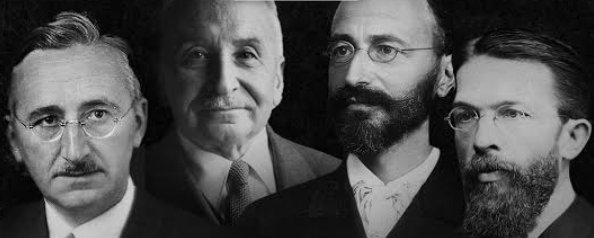
Capital is not a homogenous blob of resources; it is heterogenous productive resources with specific uses. Building on the work of Menger and Böhm-Bawerk, Austrian economist Ludwig Lachmann explained how.
Mainstream macroeconomic models usually treat capital as a single quantity, “K”, that can be added to, subtracted from and shifted between uses. Austrian economists argue that this hides a crucial aspect of capital: its diversity. The idea goes back to Carl Menger, who sorted goods into “orders.” Bread is a first-order good that consumers use directly. Flour, ovens and wheat are higher-order goods, valuable only because of what they help produce. Eugen von Böhm-Bawerk added the idea of roundabout production: longer, more capital-intensive methods produce more output, but they take time and require savings to sustain them.
Lachmann’s Capital and Its Structure (1956) completed the picture. Capital, he argued, is heterogeneous: a drilling rig, a pizza oven and a software licence can’t be added together in any meaningful way. Each capital good is specific to certain uses and only useful in combination with particular complementary goods. A crane needs steel, skilled operators and building projects. Capital forms a structure, an intricate pattern of plans across time that entrepreneurs constantly revise as conditions change.
This is why heterogeneity matters for the business cycle. When cheap credit draws resources into long-term projects, the result is not just “too much investment” but the wrong investments. Half-built housing estates can’t be turned into consumer goods. Recovery requires a painful restructuring, which monetary or fiscal stimulus can’t speed up.
Traditional economics reliance on aggregates is a systemic flaw. Spare resources cannot simply be activated. As Lachmann pointed out, central bankers cannot just pump money into the system and expect a bunch of mismatched parts to magically fit together.


What makes people happy?
Research into happiness consistently finds that the quality of the society around us matters as much as income or health. In particular, the degree to which people trust those they live among is a strong predictor of reported well-being: where generalised trust is high, people feel safer, cooperate more readily, and experience less of the friction that comes from constant caution.
This helps explain why the Nordic countries regularly occupy the top places in the World Happiness Report. Finland, Denmark, Iceland, Sweden and Norway score highly not only on material measures but on social support, low corruption and the expectation that strangers will behave decently. Experiments with lost wallets show both high expectations of return and high actual return rates.
It is worth noting how these patterns developed in societies that were, for most of their modern history, unusually homogeneous in language, culture and ethnicity. Shared norms reduced the cost of trusting people one did not know personally. But will large-scale immigration and the multiculturalism that accompanies it introduce a different set of conditions? Robert Putnam’s research on American communities found that ethnic diversity tends, in the short to medium term, to reduce social trust. Residents of more diverse neighbourhoods “hunker down”: they trust neighbours less, including those of their own background, and withdraw from community activities. Subsequent studies in Europe have produced mixed results. Some Danish work has found that greater ethnic heterogeneity at the local level is associated with lower trust, though other Scandinavian studies report overall stability in generalised trust even as immigrant shares have risen, often attributing resilience to strong institutions.
But what is clearer is that the high-trust equilibrium the Nordics achieved was not built under conditions of rapid demographic change. Sustaining it while populations become markedly more diverse requires successful assimilation into the existing culture of trust, an outcome that is far from automatic. Where parallel norms persist and contact remains limited, the informal foundations of trust that once supported high happiness rankings become much harder to maintain.

A good society is not assembled from abstract rights or economic mechanisms alone. It rests on the habits, restraints and shared judgments that people bring to one another before any law is written. Conservative thinkers have long insisted on this priority.
Edmund Burke treated manners and customs as the true foundation of civil order. Laws, he argued, can only work where people already possess the dispositions that make compliance natural rather than coerced. A society that loses the capacity to transmit those dispositions—respect for inherited institutions, restraint in the use of power, a sense of obligation to the unborn—will eventually find that its formal rules are insufficient. The partnership between the living, the dead and those yet to be born is sustained by values that outlast any single generation’s preferences.
Alexis de Tocqueville observed the same connection in the American context. Democratic liberty, he concluded, depends on “habits of the heart”: the everyday practices of association, religion and self-command that keep individuals from becoming either isolated or wholly dependent on the state. Where those habits weaken, citizens demand more from government precisely because they can no longer rely on one another. The result is not freer people but a more extensive administration.
Roger Scruton extended the argument into the realm of culture and aesthetics. A society that ceases to value beauty, continuity and the ordinary decencies of private life does not merely become uglier; it becomes less capable of mutual trust. When people no longer recognise themselves in their shared inheritance—its buildings, its forms of speech, its standards of conduct—the pre-political bonds that make political compromise possible begin to fray. Values are not decorative additions to a functioning order; they are the conditions under which order can be maintained without constant surveillance or coercion.
The connection is practical rather than sentimental. Good values do not guarantee prosperity or perfect justice, but they reduce the volume of conflict that institutions must resolve by force. They make it possible for people to keep promises, raise children, and forbear from exploiting every temporary advantage. A society that treats such values as optional, or as obstacles to be dismantled in the name of progress, discovers that the resulting vacuum is filled either by the state or by private predation. Conservative thought has therefore treated the cultivation of character and the preservation of cultural inheritance not as secondary concerns, but as the necessary ground of any durable political settlement.

“A good economist takes account both of the effects which are seen, and also of those which it is necessary to foresee; a bad economist pursues a small present good, which will be followed by a great evil to come, while the true economist pursues a great good to come, at the risk of a small present evil.”
The words are from Frédéric Bastiat’s 1850 essay “That Which is Seen, and That Which is Not Seen”, which contains one of the clearest and most powerful insights in economics. Bastiat observed that people - including policymakers - focus almost exclusively on immediate, visible results (the “seen”) while ignoring the hidden, long-term consequences (the “unseen”).
His famous broken-window parable describe how a shopkeeper’s window is smashed; the glazier is hired, earns money, and as he spends it elsewhere, onlookers declare the economy stimulated. What is seen is the new job and spending, but what is unseen is what the shopkeeper could have done with that same money - buying a new suit, repairing his roof or investing in his business. Society ends up with one window instead of a window plus a suit. Destruction does not create net wealth; it merely redirects it and conceals the loss.
Bastiat applied the same logic to government spending, public works, subsidies, and even war. Every franc taken in taxes or borrowed is a franc that cannot be used by individuals for their own purposes. The jobs “created” by the state are visible; the jobs, innovations, and goods never produced because resources were diverted are invisible. This single insight exposes why so many well-intentioned policies fail. Real prosperity grows from the unseen choices of free individuals, not from the visible hand of the state.

Socialism is most popular in rich, capitalist countries, where the wealth allows people the luxury of indulging it.
People who have actually experienced socialism hate it.
The cost of regulation is real but rarely considered.
“That Which Is Seen, and That Which Is Not Seen.” - Frédéric Bastiat

Government imposed policy costs make up 57% of the clearing price of a new flat in London and 42% of a new home in the Home Counties.
Despite a big housing shortage and positive planning reforms, new home starts in England are declining from 182,000 in 2022 to under 125,000 last year.
While the macroeconomic context has worsened with build cost inflation and high interest rates, the Government is imposing more burdens on new homes, not fewer.
Taxes, levies, planning, and mandates add over £440,000 to the cost of delivering a home in London and nearly £225,000 nearby, with several of these imposed recently like the Second Staircase, Future Homes Standard, Building Safety Levy, Biodiversity Net Gain and Residential Property Developer Tax.
Individually these may be justified, but together they are making new homes unviable.
As a result, large developers are buying less land and small builders are going out of business; nearly 4,000 construction firms went bust just last year.
If we want to build more homes, we should be easing the burdens on them, not adding more.
Making housebuilding viable again is the most important issue in housing policy and my co-author, Edward Donovan, has completed excellent modelling showing how big the challenge is.
Read the full report: cps.org.uk/wp-content/upload…
And simulate what changing the policies does with Edward's modelling here: easing-the-burdens.cps.org.u…


Why does the left frame every social issue - from war to employment contracts - as a struggle between oppressor and oppressed? Far from a fad, it is the product of a philosophical method that has shaped the left for more than two centuries: the dialectic.
Georg Wilhelm Friedrich Hegel started it. In the early nineteenth century, he argued that history advances through conflict between opposing forces - a thesis and its antithesis - which are then resolved in a higher synthesis. This movement, he believed, was the progressive unfolding of human freedom and reason.
Karl Marx retained the method but discarded its idealism, replacing the clash of ideas with the clash of economic classes. For Marx, history was driven by material contradictions within modes of production. Capitalism, he held, contained the seeds of its own destruction through class struggle, which would eventually produce a communist synthesis. The dialectic was no longer to be merely a way of understanding history; it became a justification for revolutionary action.
Of course, classical Marxism failed to generate the expected proletarian revolution in the West, but the Frankfurt School adapted the dialectic once more. Thinkers such as Adorno, Horkheimer and Marcuse shifted the focus from the economic base to the cultural superstructure. They developed Critical Theory as a form of permanent negative critique, aimed at exposing and undermining the contradictions they identified within liberal capitalist society - in family structures, sexuality, education and language.
This framework continues to shape progressive politics today. Identity-based activism follows a familiar pattern: identify an oppressive structure (thesis), mobilise a marginalised group against it (antithesis), and demand systemic transformation toward equity (synthesis). Because the dialectic treats conflict as the necessary engine of historical progress, it has little interest in stable institutions, incremental reform or the preservation of existing social order.
This is why progressive movements frequently set aside liberal norms of debate and tolerance. When politics is understood as an endless series of contradictions that must be resolved through struggle, the goal is no longer peaceful coexistence or mutual accommodation but the permanent transformation of society through continuous agitation. The dialectic has proved effective precisely because it supplies both a method of analysis and a standing justification for never-ending conflict.

In 2008, Los Angeles banned new fast-food restaurants across an area of mostly low-income residents. Then, in 2010 Colorado did the same. The former is real life. The latter is the storyline of a South Park episode.
In “Medicinal Fried Chicken” a new law restricting fast food in low-income areas shuts every KFC in the state, and South Park’s only branch becomes a medical marijuana dispensary.
Of course, banning chicken doesn’t end the craving - it just pushes it underground. Cartman joins an illegal KFC cartel, dealers cut the gravy with cheap Boston Market substitutes, and a deal-gone-wrong ends in a police shootout. Colonel Sanders turns into a drug lord, and his chief enemy is Jamie Oliver, the celebrity chef behind real-life campaigns against junk food.
Meanwhile, Randy shows how people respond when the state rations pleasure. Told that only the sick can buy marijuana, he gives himself testicular cancer by microwaving his scrotum so he can qualify. A rule meant to protect health ends up rewarding self-harm.
The ending is as funny as it is predictable. Colorado bans marijuana again and lets KFC reopen as “Medicinal Fried Chicken.” Neither ban has eliminated any demand. The state has simply swapped which vice it tolerates and put a medical label on it.
People know their own appetites better than legislators do. Prohibition creates black markets, distorts behaviour and turns ordinary consumers into criminals. Paternalism promises protection but delivers absurdity. Trey Parker and Matt Stone understood this. LA legislators didn’t.

You do not wash a rented car.
The reason is not really indifference but simply that the future condition of the vehicle is someone else’s problem. The residual value does not belong to you, so the cost of care falls entirely on the owner while the benefit of neglect stays with you. When the car is yours, however, the cost of damage is yours as well. The incentive to maintain it appears without instruction.
This simple insight is fundamental to the concept of private property. Secure title to land, capital or an enterprise attaches the consequences of use to the person who decides how it is used. The owner who neglects soil, equipment or reputation loses the value he would otherwise capture later. The owner who improves them keeps the gain. That link is what turns self-interest into stewardship. Without it, resources become common pools in which each user has reason to extract more and invest less. The result is not abundance shared equally but depletion borne by everyone.
Societies that protect this link have historically produced more of the goods that make ordinary life possible: reliable food, durable buildings, accumulating knowledge and the capital that multiplies labour. Those that weaken it- through insecure tenure, arbitrary seizure or the systematic conversion of private assets into collective claims - observe the opposite pattern. Maintenance declines, investment shortens its horizon, and the stock of productive assets grows more slowly or shrinks.
Private property ensures that people bear the results of their own decisions. When that condition is met, it becomes the practical foundation on which wider cooperation and rising living standards can rest.

How wild was the Wild West?
In fact, not that wild: the American West in the 19th century was mostly comprised of orderly societies based on law and respect for property rights.
In many frontier towns, property rights and voluntary cooperation maintained order long before the federal government arrived. Mining camps, cattle towns and farming settlements often established their own rules for land claims, water rights and livestock ownership, enforced through local associations, private protection agencies and community norms rather than distant federal authority.
Historians and economists who have studied this period, such as Terry Anderson and P.J. Hill, have shown that property rights emerged spontaneously and were generally well-respected. Disputes over claims were frequently settled through arbitration or local courts created by the settlers themselves. Violence certainly existed, but much of it was concentrated in specific places and often involved conflicts over resources that were poorly defined, rather than random lawlessness.
What made these communities function was not the presence of a powerful government, but the recognition that secure property rights were essential for trade, investment and long-term cooperation. Where clear ownership was established, people had strong incentives to respect the rules and resolve conflicts peacefully. Where it was absent or contested, disorder increased.
The Hollywood image of constant gunfights and chaos makes for great movies, but it obscures a more important historical lesson: order does not require a strong central state. It can arise when individuals have clear rights to their property and the freedom to create institutions suited to their circumstances. The American West, rather than being wild, provides a clear examples of this principle in action.

"Democracy and liberty are not the same. Democracy is little more than mob rule, while liberty refers to the sovereignty of the individual." - Walter E. Williams

May I suggest that politicians start paying attention to how the economy actually works rather than demanding that it does what they’d like?

Friedrich Hayek’s seminal book The Road to Serfdom is a warning against the dangers of government central planning, collectivism, and state control. It is a foundational text for modern libertarianism, but it also captured the imaginations of politicians and rival intellectuals.
John Maynard Keynes, Hayek’s chief macroeconomic rival, read the book while traveling to the Bretton Woods conference. Surprisingly, Keynes praised it as "a grand book," writing to Hayek that "morally and philosophically I find myself in agreement with virtually the whole of it."
Milton Friedman championed the book as a masterpiece of political philosophy. He frequently wrote introductions for its anniversaries, noting that The Road to Serfdom was essential for demonstrating that economic freedom is an indispensable prerequisite for political freedom.
Margaret Thatcher viewed the text as a moral awakening during her university days. It provided her with the philosophical ammunition needed to challenge the British post-war socialist consensus, ultimately defining her premiership's commitment to privatization and deregulation.
George Orwell also famously reviewed the book, offering unique praise. Orwell agreed with Hayek's thesis that state collectivism naturally breeds tyranny, noting that central planning gives "a small minority of bureaucrats" unprecedented power.
Hayek’s central message transcends ideological boundaries: even when well-intentioned, government planning sets a society on a path toward totalitarianism, tyranny, and the destruction of personal liberty.

Two points on Russell Brand:
1. As long as he was left wing and told the muppets what they wanted to hear, they all drooled over him.
It was only when he started to disagree with them that they saw him for what he was.
2. When he was left wing, he was a raving sex addicted rapist.
As he started his journey to the right, he settled down, found God and raised a family.
Make of that what you will...
Between 1918-1922, following the Marxist playbook of violent conflict between social classes, communist revolutionaries set out to eradicate the old ruling class.
Known as the Red Terror, the Bolsehvik regime carried out a state-sponsored campaign of political repression and mass killings during the Russian Civil War. Instigated shortly after the rise of Vladimir Lenin and formally decreed following an assassination attempt in August 1918, the campaign aimed to eliminate political dissidents, independent academics, counter-revolutionaries, and other perceived class enemies.
The primary instrument of this terror was the Cheka, the Bolshevik secret police led by Felix Dzerzhinsky. The Cheka operated outside traditional legal frameworks, holding the power to arrest, trial, and execute individuals without due process. Victims were chosen not necessarily for active resistance, but for their social background, profession, or wealth. Members of the former nobility, clergy, intellectuals, merchants, and striking workers were frequently targeted.
Methods of control included summary executions, arbitrary arrests, and the creation of early forced labor camps, which served as precursors to the later Gulag system. While official Bolshevik reports acknowledged a few thousand executions, modern historians estimate that the total death toll of the Red Terror ranges from 100,000 to over 500,000 victims. Beyond those directly executed, the campaign effectively silenced political opposition, destroyed independent press, and established terror as a fundamental mechanism of state control, laying the foundational authoritarian structures that Joseph Stalin would later expand.
While Stalin deservedly has a status as one of history’s great monsters, Lenin sometimes gets a pass, his wrongdoings somehow diminished by the scale of his successor’s crimes. But the Red Terror serves as a reminder that systematic violence, repression, and the elimination of individual liberties are inherent to communist rule from its very inception.

By the late 1980s Sweden’s high-tax, heavily regulated economy had run out of room. Marginal income-tax rates exceeded 80 per cent, credit was rationed by the authorities, and the public sector absorbed a growing share of output. The system had delivered low unemployment for a time, productivity growth had slowed, and the tax and regulatory structure distorted investment and labour supply.
Financial deregulation in the mid-1980s removed lending ceilings - but without a matching tightening of fiscal or monetary policy, credit expanded rapidly, asset prices rose, and a boom developed. When interest rates then increased and the property market turned, the boom collapsed into a banking crisis.
Between 1990 and 1993 GDP fell by roughly 5 per cent, open unemployment rose from around 2 per cent to near 9 per cent, and the budget deficit exceeded 10 per cent of GDP. Several major banks required state support. The fixed exchange rate was abandoned.
But the response was not a return to the earlier controls. A broad tax reform cut top marginal rates sharply and broadened the base. Fiscal consolidation reduced the deficit through spending restraint as well as some revenue measures. Product markets were opened to greater competition, the currency was allowed to float, and the central bank was given a clearer inflation mandate. Bank resolution was handled quickly and at limited net cost to the taxpayer once asset recoveries were counted.
Growth resumed in the mid-1990s and remained solid through the rest of the decade. Unemployment fell, public debt declined as a share of GDP, and Sweden re-established a reputation for macroeconomic stability.
The left somehow still imagine Sweden as some sort of socialist paradise - but the irony is that in fact, it is a great example of how deregulation and tax cuts can spark an economic recovery.

