

One morning in 2050, humanoid robots and humans stand at a crossroads. About humanoid robots: products,use cases, business ,HRI 📮cyberobooo@gmail.com
2050
Joined January 2023
- Tweets5.6K
- Following453
- Followers41.1K
- Likes6.2K





Pinned Tweet
Humanoid Robots
As intelligent automation systems, they are embedded within existing upstream and downstream processes, complementing and enhancing the capabilities of full-chain automation, such as production lines and warehouses.
As auxiliary assistants, collaborating with humans and participating in human-led work and life, humanoid robots are learning and evolving from their masters, evolving from passive to active.
As remote agents: Humans control robots through AR/VR and brain-computer interfaces, while humanoid robots act on their behalf, handling extreme tasks and meeting the human's needs.
As complete agents: Humans empower the robots(AI), understanding their intentions, patterns, and preferences, autonomously planning and executing tasks, and establishing a symbiotic relationship with them.
As human-machine symbionts: Humanoid robots' hands, legs, and other parts of the human body enhance the human being.
As a replica of the human, embedding human memories, knowledge, experience, ego, and superego,a digital copy,within the human body,a kind of superhuman and real-world immortality.

Humanoid robots sort parcels during China shopping festival peak
On Nov 10 at SF Express’s Chengdu Changxing Transfer Center, two RobotEra M7 humanoids were still being debugged and trained--
They’re sorting mixed parcels--small items, document bags, waterproof bags, and cartons,at 1,200 pieces per hour on continuous 24-hour shifts to handle China’s biggest annual Double 11 order surge.
400 bionic humanoids are heading into car showrooms…
Next time you shop for a car, your salesperson might be a bionic humanoid.
UBTECH signed a strategic deal with Yongda Auto, one of China's largest luxury car dealer groups. Yongda is buying 400 U1 Pro bionic humanoids, with delivery planned this year. UBTech calls it the first large order for this line, worth about 68M yuan(~$10M)at list price.
The robots will be used for product experience, sales and customer service. The two companies will also open a robot showroom center in Shanghai, explore store-in-store displays at Yongda dealerships, and sell and lease the robots to others.
A car dealer already knows how to sell, deliver and service expensive machines. That's exactly what humanoids need to reach ordinary customers.

Hand the tedious lab steps to a humanoid researcher.
GR00T 2 looks production-ready. It lets the robot run the full experiment end-to-end…very smooth.fully autonomous,1X.
Still, I want to see if it can do tomato-egg scramble or wrap dumplings…

Autonomous, uncut, 1x speed. This is GR00T 2 controlling real dexterous hands to perform a chemistry lab experiment (and clean up after itself) end to end.
Episode 1 of a new series! I’ll keep dropping real-time robot videos, with none of the “4x” or “8x” labels you usually see in the corner. No one can speed up reality, except Dr. Strange ;)
This feels almost surreal
A Unitree G1 wearing Antigravity Vision Goggles and holding a Motion Controller, operating an A1 360° drone.
The video is already 11 months old, but the idea still feels futuristic.
Imagine humanoid robots deploying drones for factory inspections, warehouse operations, or infrastructure monitoring…The humanoid handles the ground, while the drone provides an aerial view of places it cannot reach.
Ground robots and aerial robots working together could open up a whole new dimension of multi-robot collaboration.
Teach a robot a chore in 5 minutes
You wipe your kitchen table five times while a camera watches. Five minutes later, a robot is wiping it for you.
That's Steertuning, from Lerrel Pinto's group at NYU: 5 human demos, under 5 minutes, 71% success across 12 tasks in 12 new environments, including kitchens in real homes.
This is a wheeled semi-humanoid, a YOR mobile base with two Wuji dexterous hands, learning straight from how people use theirs.
Under it is a 400M-parameter diffusion policy pretrained on about 110 hours of first-person human video. Hands are erased from the footage and each scene becomes 5,000 3D points, so human motion transfers to robot hands.
A new task takes 2 minutes of finetuning. At deployment, the robot picks the demo closest to the scene in front of it and uses that trajectory to steer its actions as they're generated. Gemini ER 1.6 plans the bigger steps.
71% is still a research number. But show it a few times, and it learns. That's how robots start giving people their time back.
Humanoid robots: I need more, much more data…
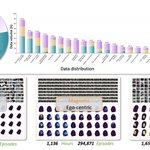
I just watched an interview with the Memories AI team. One thing really stood out to me: by next year, Physical AI data collection could be entering the 10-million-hour range.
The entire field is desperately hungry for real-world data.
Just a few months ago, the egocentric data volumes being discussed across the industry were still around 1 million hours. More recently, we've been seeing figures to 2 million hours.
But that's still not enough. Even 10 million hours may not be enough...
Across the Pacific, at the World Internet Conference in Wuzhen, China, Li Shuai, deputy director of the AI Center at China's Ministry of Industry and Information Technology's Fifth Electronics Research Institute, put the gap into perspective:
The core supply-demand gap in embodied AI data is roughly two orders of magnitude. Effective data stock is at the million-hour level, while leading companies estimate their demand at 100 million hours.
It's pretty clear that demand for data is far ahead of supply at the upstream end of Physical AI. This is becoming a genuine must-have business.
Look at what's happening--
On one side, companies are building dedicated humanoid robot data-collection and training facilities. China alone has more than 100 publicly disclosed embodied AI data centers and training bases. and like the NEURA's RoboGym with TUM in Germany, Apptronik's Robot Park in the US, and Tesla's Optimus Academy are all part of this push…
On the other side, NVIDIA, Google DeepMind and World Labs are pushing world models, synthetic data and simulation to expand the training pool. NVIDIA generates synthetic robot trajectories from human demonstrations. Google's Gemini Robotics 2.5 combines real-world demonstrations with simulated practice, while World Labs' Marble generates 3D environments for robot training and testing.
Then there's another layer: companies like Memories AI are building platform-based, one-stop data infrastructure to collect, organize and supply first-person real-world data at scale.
These three routes may look like different technical bets, but I think they will increasingly converge.We're already seeing this in models like Google's Gemini Robotics 2.5, NVIDIA's GR00T 2 and Skild AI's S1. They all bring together different combinations of human egocentric video, wearable demonstrations, robot teleoperation and simulation.
The boundaries between these data pipelines are becoming less distinct.
And there's another side to this race(this sounds rather unhumanistic)--access to real industrial environments, frontline workers, skilled technicians and service professionals around the world. Their practical experience is an enormous source of knowledge that robots need to learn from.
I've said this more than once…
This really is the gold rush for Physical AI data.
But data is not the goal.

Learning from human work can improve humanoid dexterity.
@memories_ai turns first-person video into searchable Physical AI training data, tracking each hand’s actions.
High-quality curated data at scale could shape humanoid robots performance.

I've watched this toothpaste-dispensing demo several times, and it got me thinking about what a truly capable home humanoid robot will need.
It needs to understand human intent, recognize objects, and know how to interact with them through touch.
A robot shouldn't just see a toothpaste tube. It needs to know how much pressure to apply, how the tube deforms, and when to adjust its grip and force.
This matters when helping a child or an older adult with limited mobility squeeze toothpaste without the tube slipping out of their hands and landing on the floor. (I'm sure most of us have done that at some point. Hahah)
Across Physical AI, egocentric and human activity datasets are already reaching millions of hours. Larger and more diverse human experience is helping robots learn and generalize better.
LingBot-Touch demonstrates what's possible with just 4,983 hours of tactile pretraining data.
Now imagine tactile datasets growing to hundreds of thousands or even millions of hours.
Could tactile intelligence follow a similar scaling curve? I don't know.
But combining richer tactile experience with vision, language and memory could fundamentally change how home robots understand and interact with the people around them.
Perhaps this is how home humanoids will eventually learn to understand the different needs of every family member, from elderly people,children to even pets.
1/
Twist a bottle cap with your eyes closed. Your fingertips already know when the cap is about to slip.
Humanoid robots will need that kind of touch before their hands can do real work. Robbyant (@robbyant_brain) just released LingBot-Touch, a model that helps robot hands make sense of what they touch.

Gemini Robotics 2.5 is now on the factory floor.
Google DeepMind released the new VLA model. In a POC with Apptronik and Mercedes-Benz, Apollo 2 picked automotive brackets from bulk bins and sorted them into trays in the right sequence for assembly. It hit 96% success after a few weeks of post-training, with almost no drop from the lab to the line.
The same model was also tested on 200+ tasks, including tying bows, serving food with tongs, and pipetting.
Gemini 4 Argon handled most of the practice by turning real camera views into digital twins, running thousands of simulated runs, and reviewing failure replays to tighten the training.

Learning from human work can improve humanoid dexterity.
@memories_ai turns first-person video into searchable Physical AI training data, tracking each hand’s actions.
High-quality curated data at scale could shape humanoid robots performance.
🤝 Paid partnership

Today we launch #MemoriesUpload.
Robots need internet-scale first-person video of how people get things done. Collecting this at high quality takes hardware, model and infra working together.
That's what we've spent over a year building. And already, 3 of the top 5 frontier robotics labs are training models with the data.
1/
Twist a bottle cap with your eyes closed. Your fingertips already know when the cap is about to slip.
Humanoid robots will need that kind of touch before their hands can do real work. Robbyant (@robbyant_brain) just released LingBot-Touch, a model that helps robot hands make sense of what they touch.
🤝 Paid partnership
2/
The hard part: touch sensors don't speak one language. A camera-based fingertip, a magnetic one and a pressure-sensitive one each measure something different.
LingBot-Touch maps all three onto a shared fingertip space and reads them as one set of tactile tokens, through a shared Haptic Transformer.
🤝 Paid partnership

1
272
Honestly, the big 3: Claude Fable 5.2, GPT-6 Astra, and Gemini Argon --feel like they’re sweeping through physical AI.
Foundation models are getting stronger at understanding, reasoning about, and interacting with the physical world. Their appetite for physical data looks like a black hole right now --still no clear answer on how much they actually need.
Data oil is still scarce, especially the VTLA kind DaimonRobotis is putting out.
Robot data’s gold rush is on, and the shovel sellers are already lining up. UMI /egocentric capture rigs, mocap systems, exoskeletons, tactile gloves, EMG wristbands, non-invasive BCI collection setups---all of it is getting pulled into the loop.
Where the data flows(Including infrastructure), and how the models get distributed, is starting to look more interesting...
I've shared quite a few examples of humanoid robots working in supermarkets, restocking shelves,picking products...
But handling soft plastic bags, rigid cartons and slippery bottles requires more than visual recognition. Robots need to regulate grip force, detect slipping and adapt to changing contact conditions.
Vision tells robots what they're picking up. Tactile feedback helps them understand how to handle it.
This is the data gap @DaimonRobotics is addressing with TacClaw-Infinity, a large-scale Vision-Tactile-Language-Action (VTLA) dataset for dexterous manipulation.
>Large Scale:10,000+ hours, 1,000+ task types and 1M+ manipulation trajectories.
>High Diversity: 20+ research institutions and 50+ collection sites worldwide.
>Omni-Modality: Integrating vision, tactile, language and action to capture both task context and physical interactions.
Using handheld tactile grippers, Daimon collects human demonstrations without relying on specific robot platforms, while contact-centered annotation preserves the physical structure of interactions.
Across three robot embodiments and two policy models, adding tactile data raised π0.5's average task success rate from 50% to 74%, with a maximum task-level gain of 44.7 percentage points.
TacClaw-Infinity is part of Daimon's broader tactile stack, spanning sensors, data infrastructure and the Daimon-TWM world model.
Tactile data may be less visible than vision, but it provides the physical evidence humanoid robots need to learn how the world actually behaves.
Bitter lesson on the robot side?
Foundation models and dedicated robot models might be getting one from frontier models like Claude Fable 5.2, GPT-6 Astra, and Gemini Argon...(soon, Deepseek)
Fable 5.2 hit 64.9% on RoboDojo’s bimanual sim benchmark -- more than double its 5.1 score of 27.6%, ahead of GPT-6 Astra at 29.8%, and past a lot of systems built for robot control. The arms solve a puzzle cube, unscrew a bottle cap, fit a gear, and draw on tasks the model hadn’t been explicitly trained for.
Embodied work spent the last couple of years stacking specialized VLAs, WAMs, and manipulation data...General frontier models are now closing some of those gaps zero-shot with stronger reasoning and code agents.


Elegant, smooth, stable
Boston Dynamics put wheels on Atlas.
Imagine it later moving fast through a modern car plant--warehouse aisles, shelves, production lines.
Right now though, it’s not a product. It’s a research testbed--they swapped the feet for wheels specifically to push the whole-body RL controller and the real actuators to their limits at the same time.
----
Anyway, the wheeled Atlas still opens up more possibilitie--as a material handler, an inspector, and whatever else a fast-moving robot can do in a plant.

When rubber meets the road, we have to get creative to ensure our robots will be reliable and performant outside of the lab! Putting wheels on Atlas let us test how faithfully an RL whole-body controller can work with real actuators running at the edge.
Learn more about this experiment: bostondynamics.com/blog/atla…
Join our team: bostondynamics.com/careers/
New robot brain GR00T 2 is here
At CoRL in Austin, NVIDIA unveiled GR00T 2, an open world action model built on Cosmos and trained on robot and human data, including 100,000 hours of egocentric human video. Partners are testing it on laundry handling and Ethernet cable swaps with a YAM arm.
Per NVIDIA, it completed 40 of 50 tasks at least once without task-specific demos, and averaged 71% success with one demo, 95% with five. It can also transfer skills between robot bodies.
Simulation is doing more of the heavy lifting too. Dyna is using Isaac Lab to train whole-body control for its semi-humanoid Taku.
UC Berkeley robotics professor Ken Goldberg called agentic robotics, where agents chain skills and learn from failures in sim, "the most exciting technological development since the internet in 1995."
I've shared quite a few examples of humanoid robots working in supermarkets, restocking shelves,picking products...
But handling soft plastic bags, rigid cartons and slippery bottles requires more than visual recognition. Robots need to regulate grip force, detect slipping and adapt to changing contact conditions.
Vision tells robots what they're picking up. Tactile feedback helps them understand how to handle it.
This is the data gap @DaimonRobotics is addressing with TacClaw-Infinity, a large-scale Vision-Tactile-Language-Action (VTLA) dataset for dexterous manipulation.
>Large Scale:10,000+ hours, 1,000+ task types and 1M+ manipulation trajectories.
>High Diversity: 20+ research institutions and 50+ collection sites worldwide.
>Omni-Modality: Integrating vision, tactile, language and action to capture both task context and physical interactions.
Using handheld tactile grippers, Daimon collects human demonstrations without relying on specific robot platforms, while contact-centered annotation preserves the physical structure of interactions.
Across three robot embodiments and two policy models, adding tactile data raised π0.5's average task success rate from 50% to 74%, with a maximum task-level gain of 44.7 percentage points.
TacClaw-Infinity is part of Daimon's broader tactile stack, spanning sensors, data infrastructure and the Daimon-TWM world model.
Tactile data may be less visible than vision, but it provides the physical evidence humanoid robots need to learn how the world actually behaves.
TacClaw-InfinityA Large-Scale Vision-Tactile-Language-Action Dataset
for Dexterous Manipulation
>paper:arxiv.org/pdf/2610.20320
>project:tacclaw-infinity.github.io/
>Github:github.com/tacclaw-infinity/…
>Hugging Face:huggingface.co/datasets/daim…
>ModelScope:modelscope.cn/datasets/daimo…
🤝 Paid partnership

Amazon is developing a home robot unlike anything we've seen...
According to CNBC, Amazon's new Personal Robotics Group is building around Fauna Robotics, maker of the Sprout humanoid, bringing together Fauna's team and much of the talent behind its original Astro project.
The group also draws on Lab126, Amazon's consumer hardware R&D unit behind Kindle and Echo, along with robotics research talent from MIT.
There's another side-->
Its Frontier AI & Robotics (FAR) team is developing foundation models and full-stack robotic systems, with research spanning locomotion, dexterous manipulation, multimodal learning and sim-to-real transfer. Its current deployment focus is largely on warehouse operations.
Together, these efforts bring different pieces of the robotics stack: Physical AI capabilities from FAR, humanoid hardware and engineering expertise from Fauna, and home navigation and human-robot interaction experience from Astro.
Amazon is also hiring UX designers and field support engineers, suggesting a focus on turning these technologies into products people can actually live with.
Amazon already operates more than one million robots across its fulfillment network. Bringing robots into homes presents a different challenge, with people, pets, furniture and unpredictable everyday tasks.
So, what will the next generation of home robots look like--bipedal or wheeled?
---
(video is Fauna's Sprout humanoid)
news source-->cnbc.com/2026/11/08/amazon-h…

China’s humanoid night-shift workers in Swiss supermarkets
Theseus Robotics’ Theo (Astribot S1 from Shenzhen) is now deployed in two Zurich supermarkets.
It restocks up to 400 items per hour overnight, handling unpacking, moving shelves, and placing products. During the day, it picks online orders for customers.
No store layout changes required.
The team uses off-the-shelf Chinese robot hardware, while building its own OS and AI stack, integrating product recognition, grasping, inventory systems, and store layouts.
Human operators can step in through VR when needed. Every intervention becomes training data to improve autonomy.
It’s hard to escape China’s humanoid robotics supply chain. In fact, it’s helping startups like Theseus bring robots into real-world deployment.

A milestone for personal humanoid robots.
PrimeBOT, which I covered earlier, has quietly rolled its 10,000th personal robot off the production line.
The pace is notable. After reaching 5,000 units on October 25, it doubled that number in just 14 days. Daily production capacity has now climbed to around 240 units.
The video showcases the entire production process, from core components and robot assembly to automated manufacturing and quality testing, illustrating how PrimeBOT is scaling up production and bringing its vision of "robots building more robots" to life on the factory floor.
Both of them are small-sized humanoid robots--
The Q1 is a compact humanoid that can fold into a backpack, while the T1 can transform between a wheeled humanoid and a quadruped configuration to adapt to different environments---designed around home companionship, interactive entertainment and learning experiences.(Yeah, it can’t do the housework for you.)
PrimeBOT also reports a monthly active rate above 98%, average daily online time of three hours, and more than 100 interactions per user per day.
The first personal humanoid robot of 2026
Standing at only 0.8 meters tall, the Q1 is from PrimeBOT, a joint venture between AgiBOT and Shangwei New Materials.
It can dance, provide intelligent companionship, and engage in social interaction. It is completely open-source, allowing individuals without programming skills to design its language style, personality, behaviors, customize its skin, head, and even 3D print its casing... The Q1 is aimed at students, geeks, individual developers, and for home education.
The price has not yet been announced. However, as a small, full-body humanoid robot for personal use, it is likely to be much cheaper than many other humanoid robots.
Low-cost, small-sized humanoid robots with low barriers to entry may be key to widespread adoption. While larger humanoid robots can participate in more real-world tasks, smaller ones have significant market development potential.