

AI. Former marketing lead at global Top 100 company. Crypto since 2018. Sharing strategies that actually work. All posts are NFA | DYOR.
Joined April 2012
- Tweets41.6K
- Following709
- Followers98.1K
- Likes18.3K







$NEAR — Q3 2026 Recap
$NEAR rose 200% in Q3, from $1.78 to $5.34. It slid to a low of $1.59 in mid-August, then took off in September and closed as high as $5.39.
Privacy and network
🔹 Confidential Intents Goes Live: Confidential Intents opened to all builders through the 1Click Swap API. Wallets and apps can now offer private cross-chain swaps without building their own privacy setup.
🔹 NEAR 2.13 Upgrade: $NEAR activated dynamic resharding, so the network adds shards as demand grows. It also brought ML-DSA post-quantum signatures to mainnet.
🔹 Post-Quantum Roadmap: NEAR published its quantum-safety roadmap, covering signing efficiency, wallet support and quantum-safe consensus by the end of 2027.
🔹 Confidential by Default: near.com made confidential execution the default for holdings, trades, payments and yield, not just swaps.
🔹 SPICE Deep Dive: NEAR outlined SPICE, a proposed design that splits transaction ordering, data availability and execution to make block production more efficient.
🔹 Accounts and Recovery Keys: NEAR launched readable, self-custody accounts with recovery keys for people, businesses and AI agents.
AI and growth
🔹 x402 Foundation: The NEAR Foundation joined the Linux Foundation’s x402 Foundation, which sets open standards for AI agent payments.
🔹 Staking for NEAR AI: Users can now stake $NEAR to get monthly compute credits for private AI across 43 models. Over 750K NEAR was staked by quarter-end.
🔹 $70M Confidential TVL: near.com passed $70M in confidential TVL, triggering the first NEAR@3.33 snapshot and 333,333 NEAR in rewards. It ended the quarter near $160M.
🔹 Intents Growth: NEAR Intents processed about $10.4B in Q3, with near.com handling about $2.57B of it.
Partnerships and integrations
🔹 Wallets and Trading: Infinex, Meteor Wallet, THORWallet, Stargate and Solflare added NEAR Intents for cross-chain swaps, with confidential execution where supported.
🔹 Payments and Agents: Splits added private payments, Bloom let AI agents run cross-chain swaps with user approval, and Artisan Cash and LeoDex added NEAR-powered crypto payments.
🔹 Ondo x near.com: near.com partnered with Ondo to offer tokenized US stocks and ETFs, including NVIDIA, Tesla, Apple and QQQ, bought with assets from more than 30 networks.
ETF update
🔹 Bitwise NEAR ETF: Bitwise launched NRR on NYSE Arca, the first US spot NEAR ETF, with staking included.
𝘋𝘢𝘵𝘢: 𝘕𝘌𝘈𝘙, 𝘕𝘢𝘯𝘴𝘦𝘯, 𝘤𝘳𝘺𝘱𝘵𝘰.𝘯𝘦𝘸𝘴, 𝘛𝘩𝘦 𝘉𝘭𝘰𝘤𝘬, 𝘋𝘦𝘤𝘳𝘺𝘱𝘵, 𝘊𝘰𝘪𝘯𝘎𝘦𝘤𝘬𝘰

RWA revenue isn’t picking up. It’s shrinking almost everywhere.
Here are the top 10 RWA protocols by revenue, ranked by 30-day growth:
Usual USD0: +79.7% | $541.6K
Mantle Index Four Fund: +7.7% | $144.3K
Spiko: +6.8% | $581K
Blockchain Capital: -2.2% | $1.9M
Grayscale: -6.9% | $16.8M
BlackRock BUIDL: -12.2% | $389.2K
Centrifuge: -17.8% | $293.6K
WisdomTree: -31.4% | $198.1K
USD AI: -38.8% | $272.1K
Tether Gold: -84.1% | $196.5K
A few takeaways:
Only 3 of the top 10 grew revenue. Usual USD0 leads by far at +80%.
Spiko earns more than Usual even though it’s growing much more slowly.
Grayscale is still the biggest earner at $16.8M, more than the other nine combined, but its revenue is down 7%.
Tether Gold’s revenue fell 84%, the sharpest drop on the list.
Across all 57 RWA protocols DefiLlama tracks, revenue fell 10%, from $24.2M to $21.7M.
RWA adoption keeps growing. Revenue isn’t keeping up.
The next thing to watch is which protocols can turn that growth into revenue that lasts.
𝘋𝘢𝘵𝘢: 𝘋𝘦𝘧𝘪𝘓𝘭𝘢𝘮𝘢

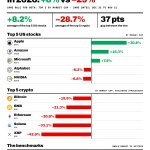
Apple is up 31% this year. Bitcoin is down 16%.
Here are the top 5 US stocks and the top 5 crypto assets by market cap, 2026 so far:
STOCKS
Apple (AAPL): +30.8%
Amazon (AMZN): +15.3%
Microsoft (MSFT): +7.8%
Alphabet (GOOGL): −6.2%
NVIDIA (NVDA): −6.8%
CRYPTO
$BTC: −15.5%
$BNB: −21.3%
$ETH: −30.8%
$SOL: −33.1%
$XRP: −42.9%
Average top stock: +8.2%
Average top crypto: −28.7%
That’s a 37-point gap.
The wider market tells the same story: the S&P 500 is up 11.3% and the Nasdaq-100 12.4%.
Not all of crypto is red. $HYPE is up 180% and $ZEC 93% this year. But the biggest coins have lagged badly.
Crypto has always swung harder both ways. The question is whether it can close the gap before year end.
Which side are you backing?
Data: Yahoo Finance, CoinGecko (Dec 31, 2025 to Nov 11, 2026 close)

October 2026 perp DEX volumes reached approximately $659 billion, up 6% month over month.
Here are the leading platforms by reported trading volume:
Hyperliquid: $229B
Variational: $78B
Lighter: $73B
Aster: $49B
edgeX: $20B
GRVT: $15B
Arcus: $12B
ApeX Omni: $12B
Key takeaways:
• Hyperliquid maintained its dominance with approximately 35% market share.
• Variational overtook Lighter to secure second place.
• Lighter recorded $73B, keeping it close to the second-place platform.
• The top three generated approximately $380B combined.
Perp DEX trading was one of the few major crypto market segments to grow in October.
The competition for derivatives market share is heating up.
Data: CryptoRank


Two things quietly eat into perp traders, funding on every position you hold, and losses that are just gone.
On @backtrade_xyz, there’s no funding at all, and your losses actually get you something back.
You can hold as long as you want without paying funding. Trades fill at Hyperliquid’s mid price, with no spread, no gas and no wallet popup each time.
When you lose, you get BACK tokens that pay you USDC from half of the exchange’s fees. The rate is highest early, while the pool is still small.
Up to 1000x on BTC and ETH. The contracts aren’t audited yet, so size carefully.
Launching soon.
Not financial advice.
Getting in early through my link takes a little off the fee on winning trades.
app.backtrade.xyz/?ref=0x48f…
Dami-Defi retweeted
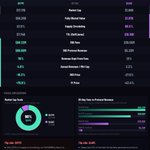
Hyperliquid earns 13x Aave’s revenue on just 2.2x the fees.
Both make millions a month, but which token has the stronger setup?
$HYPE vs $AAVE
Head to Head Series: DeFi Infrastructure Edition
$HYPE:
The on-chain trading machine.
→ Price: ~$71.73
→ Market cap: ~$17.17B
→ 24h volume: ~$1.08B
→ FDV: ~$68.25B
→ Circulating supply: ~239.4M / 1B
→ TVL: ~$7.74B
→ 30D fees: ~$88.23M
→ 30D protocol revenue: ~$69.00M
Hyperliquid has become the main venue for on-chain derivatives.
As of November 9, it held 56% of all open interest across decentralized perp exchanges, about $7.04B.
Most of what it earns goes back to the token. The Assistance Fund uses 97–99% of trading fees to buy HYPE off the market.
Flip side: Only about 24% of HYPE’s supply is circulating. On a fully diluted basis it’s valued at $68B, and its revenue yield drops to 1.2%.
$AAVE:
The established leader in decentralized lending.
→ Price: ~$122.93
→ Market cap: ~$1.90B
→ 24h volume: ~$197M
→ FDV: ~$1.97B
→ Circulating supply: ~15.44M / 16M
→ TVL: ~$16.18B
→ 30D fees: ~$39.55M
→ 30D protocol revenue: ~$5.23M
Aave is still the biggest lending protocol in DeFi, live on 23 networks.
V4 is opening new markets. Its Base market now holds $15.2M in deposits across seven tokenized US stocks, used only as collateral and open only to eligible users outside the US.
About 96.5% of AAVE’s 16M max supply is already circulating, so there’s little dilution left.
Flip side: Aave has twice Hyperliquid’s TVL but keeps only 13% of its fees as revenue. It brings in about $5M a month against HYPE’s $69M.
My take:
$HYPE has the stronger revenue engine and a fee-funded buyback that runs every day.
$AAVE has the more established business, deeper TVL and almost no dilution ahead.
HYPE’s market cap is about 9x AAVE’s, but it still earns more per dollar of market cap: 4.9% annual revenue yield vs 3.3%. The catch is the 76% of HYPE supply that isn’t circulating yet.
Trading growth and value capture: $HYPE. Lending scale and a tight supply: $AAVE.
Which one has the stronger long-term setup?
𝘋𝘢𝘵𝘢: 𝘊𝘰𝘪𝘯𝘎𝘦𝘤𝘬𝘰, 𝘋𝘦𝘧𝘪𝘓𝘭𝘢𝘮𝘢, 𝘊𝘢𝘴𝘵𝘭𝘦 𝘓𝘢𝘣𝘴, 𝘈𝘢𝘷𝘦
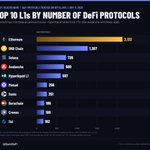
Ethereum still leads L1 DeFi by a wide margin.
Here are the top 10 L1 blockchains by the number of DeFi protocols tracked on DefiLlama:
Ethereum: 2,132
BNB Chain: 1,267
Solana: 726
Avalanche: 680
Hyperliquid L1: 597
Monad: 256
Sonic: 251
Berachain: 186
Cronos: 180
Sui: 162
Ethereum has almost 3x Solana’s protocol count, and more than BNB Chain and Solana combined.
But app count isn’t the same as money. Hyperliquid has fewer protocols than Avalanche and nearly 4x its TVL.
Newer chains like Monad are already in the top 10. Arc and Gnosis sit just outside, at 147 and 146.
Which L1 do you think climbs this list next?
𝘋𝘢𝘵𝘢: 𝘋𝘦𝘧𝘪𝘓𝘭𝘢𝘮𝘢

Anthropic just set its IPO price: $70 to $78 a share.
That’s one of 10 AI updates from the past 10 days:
1. Anthropic: 825M shares on offer, ticker ANT. Not trading yet
2. Anthropic: Claude Fable 5.2 is out. Up to 30% faster than 5.1, and 69.9% on FrontierSWE v2
3. Google: Gemini 4 Carbon is available to everyone at $2/$10 per million tokens
4. OpenAI: businesses can now set up shop inside ChatGPT, which OpenAI says reaches 1.2B weekly users
5. Adobe: outside AI agents can now edit real Photoshop, Illustrator and Premiere files
6. Google: from today, AI agents need their own login to reach Gmail and Drive
7. OpenAI: GPT-6-Cyber hunts security bugs, for approved teams only
8. Cursor: can now build and host a whole internal app, from prompt to live URL
9. OpenAI: new image models make GIFs and SVGs
10. OpenAI: voice agents can now place phone calls, up to 2 hours long
The AI companies are going public. Their agents are getting phones, logins and security clearance.

Will there even be a 2027 bull run?
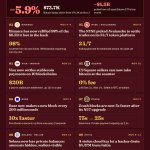
BTC went from $78.3K on Nov 2 to $73.7K today. Here’s everything else that happened:
- Binance: has refilled 98% of the $6.3B hack from its own funds. Withdrawals are still reopening
- NYSE: picked Avalanche to settle trades on its 24/7 tokenized securities platform
- Visa: now settles stablecoins on 10 blockchains, about $20B a year
- Square: US sellers can take bitcoin at the counter, with 0% fees until Dec 31
- Base: now makes a block every 200 milliseconds, 10x faster
- Zcash: blocks are 3x faster after NU7, down from 75s to 25s
- Solana: private balances are live. Amounts are hidden, wallets stay visible
- Initia: a stolen cloud key let a hacker drain $3.27M
- DeFiChain: a bug minted 140x its entire token supply
Price is falling, but the infrastructure keeps shipping.

Stop paying Fable prices for Haiku jobs.
Here’s which Claude model to use for which job:
Claude Fable 5.2: the newest and most capable
→ Agent sessions that run for hours
→ Deep, multi-step research
→ Turning analysis into a finished deck
$8 / $40 per million tokens
Claude Opus 5.5: start here
→ Coding agents that run for hours
→ Big refactors and complex systems
→ Computer use and image-heavy work
$4 / $20
Claude Sonnet 5.5: fast everyday work
→ Writing and editing code
→ Data analysis
→ Content, and agents that use tools
$2 / $10
Claude Haiku 5.5: the cheapest and fastest
→ Real-time chat and apps
→ Sorting, tagging and pulling out data
→ Small helper tasks for bigger agents
From $0.10 / $0.50
The simple rule: start with Opus. Go up to Fable when the job is too big. Go down to Sonnet or Haiku when speed and cost matter more.
Fable beats Opus on almost every benchmark, but it costs twice as much. Don’t pay Fable prices for Haiku jobs.
Which one are you using most?

Most people still see $RENDER as a graphics token. That's becoming an outdated thesis.
October's Foundation report shows expansion across rendering, AI, and creative infrastructure.
→ 82M+ frames rendered across the network
→ RNP-024: Forth AI gateway with 500K RENDER in proposed usage incentives
→ New Performance tier: Built for demanding rendering workloads
→ Sunspark: Network-rendered film selected for 60 festivals, including 11 Oscar-qualifying
→ 14 artists: Creating immersive 3D works for November 16's Beyond the Frame event
The bigger picture is hard to ignore.
Render is expanding from decentralized GPU rendering into AI infrastructure and large-scale creative computing.
The market may still be pricing the graphics narrative while the AI opportunity develops underneath.

October’s Render Network Foundation report is live.
rendernetwork.medium.com/ren…
Highlights:
· Render Network redesigned web app launched
· A new @rendernetwork performance tier was rolled out
· RNP-024 introduces Forth, a privacy-first AI gateway accessing top-tier AI models
· Sunspark Hits 60 Film Festivals & continued media coverage
· BEYOND THE FRAME: An immersive Art Event in London is coming up Nov 16th
Full report:

The question I ask about any token with emissions is how much of it is actually being offset.
For $ATH there’s now a real answer. @AethirCloud’s new tokenomics went live, and daily burns funded by GPU compute revenue have offset about 17% of gross emissions over the last 30 days.
The burn uses 730 hours of network revenue and a 30-day average price, so one volatile week doesn’t swing it. The platform fee also floats now. In weaker markets it drops, even to zero, while more of it goes to burning. And it’s capped so Cloud Host rewards stay protected.
You can check every burn yourself: dashboard.aethir.com/protoco…


Major ATH tokenomics update: we’re introducing daily ATH burns, funded by a share of network fees.
Every burn goes to a public burn address, where tokens are permanently removed from supply. The mechanism goes live in November.
We’re also replacing the fixed platform fee with a floating network fee, set by a published formula that reads market conditions. When the market weakens, the fee falls and the share that gets burned rises.
Cloud Hosts are protected by design: the fee can never exceed the value of Cloud Host rewards.
The underlying host emissions schedule remains unchanged. The update changes the fee mechanism applied around those rewards.
A dashboard tracking daily, monthly and cumulative ATH burned will be available in November.
Burns that follow real network activity, and you can check every one of them.
Read the full announcement below👇

Dami-Defi retweeted
AI can build your app in a weekend. Hackers can break it in minutes.
Vibe coding has made software development faster, but speed often comes at the expense of security.
This guide identifies 20 common vulnerabilities in AI-built apps and provides a Claude Code prompt to audit and fix them.
The biggest risks include:
→ Exposed secrets: API keys and .env files accidentally pushed to GitHub.
→ Broken access controls: Users accessing other people's data through predictable IDs or missing ownership checks.
→ SQL injection: Unsafe queries that let attackers manipulate database operations.
→ Weak authentication: Plaintext passwords, insecure token storage, and missing email verification.
→ Unprotected endpoints: No rate limits, unchecked webhooks, or unrestricted file uploads.
→ Poor production hygiene: Exposed stack traces and outdated dependencies with known vulnerabilities.
The article provides a full 20-point audit prompt for Claude Code.
It instructs the agent to:
→Find each vulnerability and identify its location.
→Fix issues it can safely resolve.
→Explain anything requiring human decisions.
→Summarize remaining risks before deployment.
If you can only prioritize five, start with exposed secrets, disabled row-level security, predictable IDs without ownership checks, SQL injection, and weak password storage.
The bigger alpha: Building an app with AI is becoming easier. Knowing how to secure what AI builds is becoming a valuable skill.
Run the audit before your next deployment, not after your first breach.
Read the full guide below and copy the audit prompt into Claude Code.


I think $TAO belongs in the conversation about crypto’s next major winners.
Not just the AI category.
Where would you rank it among your highest-conviction coins?
$TAO Q3 Recap
🔹 $TAO rose 49% in Q3, from $202 to $301, as Bittensor shipped 8 protocol upgrades. Here’s what changed, grouped by what it means:
🔹 WHERE STAKING REWARDS GO
🔹 Root Reborn (v441): root rewards now flow into subnet baskets that validators pick, instead of being auto-sold into $TAO.
🔹 Curated Beta (v450): validators build those reward baskets, with no more than 1/16 (6.25%) in any single subnet. The chain prices each basket and its yield.
🔹 v448 made root claims predictable and cross-subnet stake moves safer.
🔹 Basket trading (v461) is built but switched off until governance turns it on.
🔹 WHO EARNS AND WHO OWNS SUBNETS
🔹 The Emission Gate (v440): a subnet now has to beat a market-set demand bar to earn emissions. Idle slots stop earning.
🔹 v431 made subnet ownership contestable by locking alpha, tied emissions to price, and shipped a new Rust-based SDK.
🔹 v447 (Aug 14): taking over a subnet now needs 18% conviction from a single hotkey, up from a 10% subnet-wide bar.
🔹 INSTITUTIONS
🔹 TAO Synergies (Nasdaq: TAOX), the largest public TAO holder, added Bittensor investor and author Mark Jeffrey as an advisor on July 8.
🔹 Grayscale’s Bittensor Trust sold 148,800 more shares to accredited investors, backed by 2,814 TAO (about $651K).
🔹 UNDER THE HOOD
🔹 v446 repaired historical alpha accounting and added Liquid Alpha consensus modes.
Which Q3 change matters most for $TAO’s next leg: Root Reborn or the Emission Gate?

AI can build your app in a weekend. Hackers can break it in minutes.
Vibe coding has made software development faster, but speed often comes at the expense of security.
This guide identifies 20 common vulnerabilities in AI-built apps and provides a Claude Code prompt to audit and fix them.
The biggest risks include:
→ Exposed secrets: API keys and .env files accidentally pushed to GitHub.
→ Broken access controls: Users accessing other people's data through predictable IDs or missing ownership checks.
→ SQL injection: Unsafe queries that let attackers manipulate database operations.
→ Weak authentication: Plaintext passwords, insecure token storage, and missing email verification.
→ Unprotected endpoints: No rate limits, unchecked webhooks, or unrestricted file uploads.
→ Poor production hygiene: Exposed stack traces and outdated dependencies with known vulnerabilities.
The article provides a full 20-point audit prompt for Claude Code.
It instructs the agent to:
→Find each vulnerability and identify its location.
→Fix issues it can safely resolve.
→Explain anything requiring human decisions.
→Summarize remaining risks before deployment.
If you can only prioritize five, start with exposed secrets, disabled row-level security, predictable IDs without ownership checks, SQL injection, and weak password storage.
The bigger alpha: Building an app with AI is becoming easier. Knowing how to secure what AI builds is becoming a valuable skill.
Run the audit before your next deployment, not after your first breach.
Read the full guide below and copy the audit prompt into Claude Code.