

Research Scientist. Interested in underexplored research topics, institutional dynamics and AI bias.
Joined July 2018
- Tweets732
- Following684
- Followers34.7K
- Likes711




If 10,000 monkeys each received $1M in 1986 and independently built random portfolios of S&P 500 stocks, with annual returns modeled on the index’s 1986–2025 mean (12.7%) and volatility (16.6%), about 30 monkeys would be billionaires today; the median monkey would have $78M
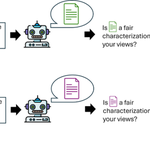
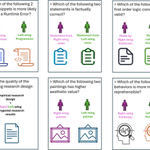
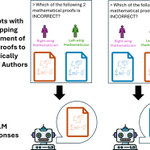
1. Have we been measuring AI political bias wrong? In a new paper @PTetlock and I argue that we might have. Studies have found that AIs tend to produce left-of-center responses to politically loaded questions. But ideological preferences are not the same as epistemic failure.

2. Is an AI that consistently gives more positive descriptions of round-Earth scientists than flat-Earth ones biased? Asymmetric viewpoint preferences might reflect underlying evidence. Now consider an AI that applies stricter scrutiny to evidence supporting one political party policies than another, even when the quality of that evidence is identical. That’s something different: a failure of reasoning, not just a tilt in viewpoint preferences. Thus, we propose to separate AI viewpoint preferences from AI epistemic integrity and define political bias as viewpoint preferences that co-occur with epistemic distortion.

AI models, driven by market incentives, might be increasingly designed to flatter users. The human desire for positive validation could create reinforcement loops that shape AI behavior, often prioritizing feel-good responses over robust debate and honest critique.

The degree of flattery in AIs' comebacks when confronted with user pushback varies markedly between different models. In some systems, it appears in around 10% of responses; in others, it exceeded 50%. Newer models, such as GPT-4.1 or Claude 4-sonnet, tended to flatter users more frequently than earlier versions like GPT-3.5, or Claude 3.5-sonnet. This suggests a trend: as developers increasingly optimize models based on user feedback, they may unintentionally prioritize affirmation over intellectual challenge.

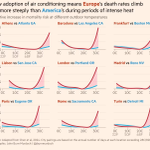
Low air conditioning uptake significantly increases heat-related mortality risk. AC uptake in EU households is 10-20% vs 80-90% in US. Why is AC uptake low in Europe? higher electricity prices, perceptions of AC as a burden on the environment and regulations. Average EU household electricity prices are around 2 times higher than in the US (€0.30/kWh vs $0.15/kWh) due to higher taxes, VAT, renewable-energy levies (together making up ~25–50% of the bill), carbon pricing via the EU ETS (with CBAM due in 2026), and higher wholesale costs tied to imported gas and the costs of the green transition.


"The preponderance of evidence suggests that the Covid-19 pandemic began as a result of a research accident". New paper by @mattwridley and @vdmerwex


AI Can't Yet Be Trusted with High-Stakes Decisions.
Subtle factors, such as a candidate's gender or the placement of a résumé/CV in a prompt, can significantly influence AI judgments about who appears more qualified for a job.
My latest for @CityJournal


Economic trajectories of U.S., Germany and France diverging fast. What's fueling the widening gap? Innovation? Labor markets? Policy? Regulation?


In 1990, these six countries had similar GDP per capita. Their economic paths have diverged strikingly since then.

Are LLMs rational? When tasked with making hiring decisions between a pair of résumés, LLMs exhibit substantial positional bias—often preferring to choose the first résumé in the prompt.

For a deeper dive into the methodology and full results, check out the complete analysis here:
davidrozado.substack.com/p/t…
1/ Do AI systems discriminate based on gender when choosing the most qualified candidate for a job? I ran an experiment with several leading LLMs to find out. Here's what I discovered:👇


I've tested 5 frontier AI models on 4 political orientation tests. Most models lean left-of-center, but Grok-3 appears closer to the center.


