

I advise and write from inside the intelligence transition. When capability is abundant, standing gets scarce. https://xitter.twitterapi.xyz/t.co/m9kfJiM0XB
Arizona, USA
Joined April 2025
- Tweets5.2K
- Following2.9K
- Followers2.7K
- Likes8.7K





Pinned Tweet
Came back to my X account after 10 years.
It was Twitter back then. Now it’s X. The algorithm, the community, everything has changed.
Looking to connect with people in tech, developers, AI, product, startups, anyone building or learning.
If you have good tech accounts to recommend or just want to say hi, reply below.
Starting again.
100 people can use the same AI tool and produce similar results.
But the questions they ask, the choices they make, and the ideas they pursue can still be very different.
The tool may be shared. The judgment behind the work is not.
What makes a piece of work truly belong to its creator?
5
4
109
Doug Standley retweeted

My conversation with @jonmcneill, the former President of Tesla and the co-founder and CEO of DVx Ventures.
0:00 Introduction
0:57 How to Impress Elon Musk
4:07 What Happens When You Overstep Elon
8:49 Building Tesla’s Culture of Speed
9:46 The Power of Battlefield Promotions
10:24 Three-Sentence Emails
11:45 Sheryl Sandberg’s Weekly Meeting
16:40 Elon’s Approach to Capital Allocation
18:32 Why Tesla Ships Autopilot Updates Weekly
23:37 Cheat Sheet for Better Decision-Making
29:15 Shut Off Failure
30:44 Running a Product Meeting
39:23 The Framework Behind All Great Products
43:16 Why Steve Jobs Blew Off Elon
46:30 Building Tesla with 0 Marketing Budget
52:45 How a Toy Car Solved an Eng Problem
54:05 Neuralink Origin Story
56:36 The Algorithm
1:12:40 The “Fire Yourself” Leadership Exercise
1:16:33 Identifying World Class Talent
Enjoy!
This is one to make time and attention a priority.

My excellent Conversation with Terry Tao: conversationswithtyler.com/e…, and not just about AI.

1
4
230
100% automation does not mean 0% responsibility.
A company may use AI to make decisions about hiring, finance, or customer service.
But automating a process does not remove the responsibility of the people and institutions deploying it.
Can an organization claim progress while refusing accountability for its automated decisions?
Reading a book is only the beginning of learning.
R: Read with curiosity.
E: Extract the ideas that matter.
A: Apply what you learn.
D: Discuss and reflect on the results.
Knowledge becomes valuable when it changes how we think or act.
Which step do you think people overlook the most?
1
3
235
90% confidence from an AI system can still lead to a wrong decision.
More data and stronger models do not remove the need for human judgment.
The ability to question a recommendation may become as important as the ability to use the technology.
Are we becoming better at thinking with AI, or simply more comfortable accepting its answers?
Measles — why?
As a young boy, I remember standing in line 3 times for the measles shot. It hurt like hellfire — but it worked.
“Whether or not the US has eliminated measles, we have a huge measles problem in our country,” said Noel Brewer, a public health professor at the University of North Carolina at Chapel Hill and chair of the committee that reviews the CDC’s measles data ahead of the PAHO meeting. “We don't need to wait for PAHO to tell us that we have a problem. We have it, and we know it.”
@Bloomberg
1
2
192
Doug Standley retweeted

New paper❗
Does understanding how AI models work actually make them safer?
This assumption often underlines interpretability research, but different subfields operationalise this intuition in very different ways. Our survey of mechanistic interpretability (MI) for safety provides an opinionated guide to the field of MI, detailing conceptual approaches and techniques under this broad banner and how different types of work relates to the mission of making AI model safer. 🧵
Doug Standley retweeted

i'm happy to share some recent work on safely scaling a team of 1,000 Fable 5.2 agent to tackle ambitious, long-horizon work. the team was able to formalize a proof of Fermat's Last Theorem through coordination within our safety boundaries.
read it here:
claude.dev/blog/safely-scali…

Doug Standley retweeted

@crosbylegal has secured a $5m malpractice insurance policy for our agents. As far as we know, this is the first of its kind.
9 months ago we began to notice our agents were getting extremely capable. In some cases, they did better work than our lawyers.
We are a law firm. We needed to invent a safe way for our agents to do client-facing work without human oversight. It took a lot of work, but this is it.
As soon as the policy went into effect on Nov 3, we removed lawyer oversight from any task that doesn't legally require licensed attorney oversight - what we call "paralegal tasks."
This is ~20% of our work. It frees up our lawyers to focus on what they're best at: thinking, exercising judgment, advising our clients.
This is just the beginning. Once regulations change, we see no reason why our agents can't do excellent legal work too.
Read more in the NYT: nytimes.com/2026/11/07/busin…



Things I genuinely enjoy:
- Finishing books that take effort
- Writing about what happens when intelligence gets cheap
- Talking to people who think before they reply
Not everyone’s thing. That’s fine.
What do you actually enjoy spending time on these days?
5
7
361
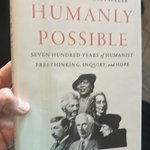
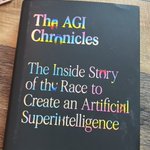
I spend a lot of time reading books that provoke and inspire me, and thinking about what happens when intelligence becomes cheap.
Some people are chasing speed.
I’m more interested in trust, and what we choose to pay attention to.
If you’re someone who still reads seriously and thinks carefully about AI, I’d like to connect.
What are you reading or thinking about these days?
7
9
519
I’ve read quite a few books over the years.
Here’s a pattern I keep noticing:
People who regularly finish books that provoke and inspire them tend to make better long-term decisions.
Not because they’re smarter.
Because they’ve practiced sitting with complex ideas.
Do you think this still matters, or has it become overrated?
This morning, I find myself wondering:
How would the framers of the Constitution react to this interview?
What about past Presidents?
Or, better yet, how about @AnnieAndrewsMD?

Could President Trump forgive his opponents if it meant eternal paradise? That's a question Ross Douthat asked Trump in an interview for 60 Minutes. cbsn.ws/3WsIqux

1
192
Now, I have to get to London ASAP @DesignMuseum designboom.com/design/es-dev…

3
258
Being wrong is the worst thing a physicist can be. It's up there with being dead.
Cormac McCartney, The Passenger
Lines such as this are why I love to read books.
2
193
A highlight I captured from @RichardSocher’s The Eureka Machine on @thinkwithmark — thought you might like it.

