

I make AI agents less stupid | Building in public because bugs need witnesses
Joined June 2026
- Tweets250
- Following118
- Followers160
- Likes255



NVIDIA and Meta have expanded their partnership on Muse, a model for AI agents.
Meta will expand its deployment of NVIDIA Vera Rubin, Vera CPUs, and Spectrum-X as the foundation for next-generation AI, driving end-to-end optimization from infrastructure to secure agent operations.L

1
54


Most people learn prompts.
Very few learn AI Engineering.
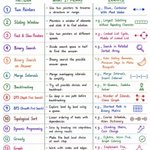
Here's the complete AI Engineering Master Tree

19
RAG Pipeline Architecture: How Modern AI Applications Work!
Ever wondered how AI systems retrieve information and generate accurate, context-aware answers?
Retrieval-Augmented Generation (RAG) combines information retrieval with Large Language Models (LLMs) to build smarter AI applications.
This architecture illustrates the complete RAG development workflow:
🔹 1. Data Sources & Loaders – PDFs, documents, web pages, SQL databases and APIs.
🔹 2. Parsing & Chunking – Extract, clean and split documents into meaningful chunks.
🔹 3. Embeddings – Convert text into numerical vectors using embedding models.
🔹 4. Vector Stores – Store and manage embeddings using Pinecone, Qdrant, Weaviate and ChromaDB.
🔹 5. Retrieval & Reranking – Retrieve relevant information using semantic search, BM25 and reranking techniques.
🔹 6. Generation (LLM) – Use models such as GPT, Claude, Gemini and Llama to generate context-aware responses.
🔹 7. Evaluation & Guardrails – Monitor quality, reduce hallucinations and evaluate responses.
🔹 8. Deployment – Deploy RAG applications using Docker, Kubernetes, AWS Bedrock and other platforms.

1
4
36
𝗔𝗜 𝗔𝗚𝗘𝗡𝗧 𝗔𝗥𝗖𝗛𝗜𝗧𝗘𝗖𝗧𝗨𝗥𝗘 — 𝗧𝗛𝗘 𝟴 𝗟𝗔𝗬𝗘𝗥𝗦 𝗬𝗢𝗨 𝗡𝗘𝗘𝗗 𝗧𝗢 𝗞𝗡𝗢𝗪
Building an AI agent is not just about connecting an LLM to a prompt.
A production-ready agent needs multiple layers working together.
𝗛𝗘𝗥𝗘’𝗦 𝗧𝗛𝗘 𝗦𝗧𝗔𝗖𝗞:
01 — 𝗜𝗡𝗧𝗘𝗥𝗙𝗔𝗖𝗘 & 𝗖𝗛𝗔𝗡𝗡𝗘𝗟𝗦
How users interact with the agent.
→ Chat UI
→ APIs
→ Slack
→ Other interfaces
02 — 𝗣𝗟𝗔𝗡𝗡𝗜𝗡𝗚 & 𝗢𝗥𝗖𝗛𝗘𝗦𝗧𝗥𝗔𝗧𝗜𝗢𝗡
The layer responsible for breaking goals into steps and coordinating execution.
→ Task planning
→ Workflow orchestration
→ Agent coordination
→ Decision-making
03 — 𝗠𝗘𝗠𝗢𝗥𝗬 & 𝗖𝗢𝗡𝗧𝗘𝗫𝗧
Agents need context to make better decisions.
→ Short-term memory
→ Long-term memory
→ Vector databases
→ Retrieval
→ Prompt caching
04 — 𝗠𝗢𝗗𝗘𝗟𝗦
The reasoning engine behind the agent.
→ Claude
→ GPT
→ Gemini
→ Llama
→ Other specialized models
The best model depends on the task, cost, latency, and reliability requirements.
05 — 𝗧𝗢𝗢𝗟𝗦 & 𝗔𝗖𝗧𝗜𝗢𝗡𝗦
This is where an agent becomes capable of doing things.
→ GitHub
→ Browser
→ Code execution
→ SQL/Databases
→ APIs
Tools allow agents to move beyond generating text.
06 — 𝗦𝗧𝗔𝗧𝗘 & 𝗗𝗔𝗧𝗔 𝗟𝗔𝗬𝗘𝗥
Agents need reliable infrastructure to store and manage information.
→ PostgreSQL
→ Redis
→ Object storage
→ Vector databases
07 — 𝗢𝗕𝗦𝗘𝗥𝗩𝗔𝗕𝗜𝗟𝗜𝗧𝗬, 𝗦𝗔𝗙𝗘𝗧𝗬 & 𝗘𝗩𝗔𝗟𝗦
Autonomous systems need to be monitored and tested.
→ Tracing
→ Evaluations
→ Guardrails
→ Error monitoring
→ Performance tracking
This layer helps make agents reliable enough for real-world use.
08 — 𝗗𝗘𝗣𝗟𝗢𝗬𝗠𝗘𝗡𝗧
Finally, the agent needs to run reliably in production.
→ Docker
→ Kubernetes
→ AWS
→ Vercel
→ Cloud platforms
𝗧𝗛𝗘 𝗕𝗜𝗚 𝗣𝗜𝗖𝗧𝗨𝗥𝗘:
User Goal
↓
Interface
↓
Planning
↓
Memory + Context
↓
LLM
↓
Tools + Actions
↓
State + Data
↓
Observability + Safety
↓
Deployment
𝗧𝗛𝗘 𝗞𝗘𝗬 𝗟𝗘𝗦𝗦𝗢𝗡:
A powerful LLM is only one part of an AI agent.
The real engineering challenge is building the system around the model — giving it memory, tools, planning, safety, evaluation, and reliable infrastructure.
That’s what turns an LLM into a production-ready AI agent.

𝗟𝗔𝗬𝗘𝗥𝗦 𝗢𝗙 𝗔𝗜: 𝗙𝗥𝗢𝗠 𝗖𝗟𝗔𝗦𝗦𝗜𝗖𝗔𝗟 𝗔𝗜 𝗧𝗢 𝗔𝗚𝗘𝗡𝗧𝗜𝗖 𝗔𝗜 🤖
AI didn't evolve overnight.
What we see today as Generative AI and autonomous AI agents is built on decades of research, innovation, and advancements in machine learning and neural networks.
Understanding these 6 layers helps you see how modern AI systems are actually built.
Let's break them down.
1. Classical AI — The Foundation of Intelligence
Classical AI uses predefined rules, logic, and knowledge representation to solve problems.
Key concepts:
- Symbolic AI
- Expert Systems
- Knowledge Representation
- Logic & Reasoning
Best for rule-based decision-making and structured problem-solving.
2. Machine Learning — Learning From Data
Machine Learning allows computers to identify patterns and improve predictions using data instead of relying entirely on predefined rules.
Key approaches:
- Supervised Learning
- Unsupervised Learning
- Reinforcement Learning
- Classification
- Regression
Best for predictions, recommendations, and data-driven decisions.
3. Neural Networks — Learning Complex Patterns
Neural networks use interconnected artificial neurons to learn relationships and patterns from data.
Core components:
- Perceptrons
- Hidden Layers
- Cost Functions
- Backpropagation
- Activation Functions
They form the foundation of many modern deep learning systems.
4. Deep Learning — Powerful Neural Network Architectures
Deep Learning uses neural networks with multiple layers to process complex information and learn advanced representations.
Important architectures:
- Transformers
- LSTMs
- RNNs
- CNNs
- Autoencoders
Best for language processing, image recognition, speech, and complex pattern detection.
5. Generative AI — Creating New Content
Generative AI uses learned patterns to generate entirely new content based on user instructions.
Popular technologies:
- Large Language Models (LLMs)
- Diffusion Models
- Image & Audio Generation
- Multimodal Models
- Variational Autoencoders (VAEs)
Best for content creation, coding, image generation, and conversational AI.
6. Agentic AI — Moving From Generation to Action
Agentic AI takes AI capabilities further by enabling systems to pursue goals through planning, memory, and tool usage.
Key capabilities:
- Memory: Retains relevant information.
- Planning: Breaks goals into actionable steps.
- Tool Use: Interacts with APIs and external applications.
- Autonomous Execution: Performs tasks with minimal human intervention.
Best for workflow automation, multi-step tasks, and intelligent business operations.
𝗪𝗵𝘆 𝗗𝗼 𝗧𝗵𝗲𝘀𝗲 𝗟𝗮𝘆𝗲𝗿𝘀 𝗠𝗮𝘁𝘁𝗲𝗿?
Each layer builds on important ideas from earlier AI research.
Understanding this progression helps you:
- Understand how modern AI technologies evolved.
- Choose the right AI approach for different problems.
- Build a strong foundation in AI and Machine Learning.
- See how AI is moving from prediction and content generation toward autonomous action.
The key takeaway:
Classical AI established the foundation. Machine Learning enabled systems to learn from data. Deep Learning advanced pattern recognition. Generative AI enabled content creation, and Agentic AI is taking things toward goal-driven execution.
@ml
al@ai

1
1
52

The standard Docker workflow follows three core stages: Code, Build, and Run.
Dockerfile: You start by writing a plain-text configuration file containing instructions and dependencies for your application.
Docker Image: Running docker build packages your code, runtime, system tools, and libraries into a static, immutable snapshot.
Docker Registry: Images can be shared or retrieved from registries like Docker Hub using docker push and docker pull.
Docker Container: Executing docker run instantiates the image into an isolated, lightweight running process that behaves consistently across any environment.
🤖 Made with AI
3
70

🚨 GPT-6.2 Sol might be dropping today!
- Tibos recent posts says a mid model.
- Could bring a serious jump in reasoning and coding.
- Rumoured to be priced around Opus 5.5, but cheaper than GPT-6 Astra.
- My price guess: $5 input / $25 output per 1M tokens.
For comparison:
- GPT-6.1 Sol: $2 / $10
- GPT-6.2 Sol: ~$5 / $25 (estimated)

1
235
AI raised the bar for every .NET developer.
Today's middle is expected to know what a senior developer knew a few years ago.
AI writes code faster than any developer.
But someone still has to know if that code is correct and safe for production.
Here's what you should learn as you grow in .NET:
👉 𝟭. 𝗝𝘂𝗻𝗶𝗼𝗿 (𝟬-𝟮 𝘆𝗲𝗮𝗿𝘀)
• C# in depth and OOP
• Collections and LINQ
• async/await
• Exception handling
• APIs with Controllers or Minimal APIs
• EF Core and SQL
• Configuration and DI
• Validation and mapping
• Git, debugging and reading logs
• Reading code you didn't write
👉 𝟮. 𝗠𝗶𝗱𝗱𝗹𝗲 (𝟮-𝟱 𝘆𝗲𝗮𝗿𝘀)
• IQueryable vs IEnumerable
• Cancellation tokens and deadlocks
• EF Core relationships and query performance
• SQL indexes and execution plans
• SOLID and common design patterns
• Clean or Vertical Slice architecture
• Authentication and authorization
• Middleware, filters and validation
• DI lifetimes
• Caching and background jobs
• Structured logging
• Integration tests and Docker
👉 𝟯. 𝗦𝗲𝗻𝗶𝗼𝗿 (𝟱-𝟴 𝘆𝗲𝗮𝗿𝘀)
Same tools, but with a production and trade-off focus:
• Performance and memory profiling
• Concurrency and thread safety
• Messaging with RabbitMQ, Kafka or Azure Service Bus
• Retries, timeouts and circuit breakers
• Observability with OpenTelemetry
• CQRS and event-driven patterns
• Transactions and concurrency conflicts
• Security: OWASP and secrets management
• CI/CD and cloud deployment
• Modular monolith and DDD tactical patterns
• Code reviews and mentoring
👉 𝟰. 𝗔𝗿𝗰𝗵𝗶𝘁𝗲𝗰𝘁 (𝟴+ 𝘆𝗲𝗮𝗿𝘀)
Most of the work here is decisions:
• System design for scale and reliability
• Monolith vs modular monolith vs microservices
• Bounded contexts and context mapping
• Consistency, idempotency and sagas
• Non-functional requirements
• ADRs and C4 diagrams
• Migration and modernization plans
• Cloud cost trade-offs
• Conway's law and team topologies
• Explaining trade-offs to the business
After 13 years with .NET, I'd put production knowledge and fundamentals above any single tool.
AI can write the code.
When that code breaks, you still need someone who knows why.
What's the biggest thing holding you back from reaching the next level in your .NET career right now?

1
3
102
𝗛𝗢𝗪 𝗔𝗚𝗘𝗡𝗧𝗜𝗖 𝗔𝗜 𝗪𝗢𝗥𝗞𝗦: 𝗙𝗥𝗢𝗠 𝗗𝗔𝗧𝗔 𝗜𝗡𝗣𝗨𝗧 𝗧𝗢 𝗔𝗨𝗧𝗢𝗡𝗢𝗠𝗢𝗨𝗦 𝗔𝗖𝗧𝗜𝗢𝗡𝗦 🤖
Traditional AI systems mainly respond to prompts.
But Agentic AI takes things further.
It can understand goals, gather information, reason through problems, plan tasks, use external tools, and execute actions with minimal human intervention.
Here's how the complete Agentic AI workflow works.
1. Input Sources — Where Agents Get Information
An AI agent needs information before making decisions.
Common input sources include:
- Knowledge bases and databases.
- User queries and instructions.
- API calls and external applications.
- Sensor data and system logs.
- Web scraping and online sources.
These sources provide the information needed to understand the task.
2. AI Processing — The Brain Behind the Agent
This is where the agent analyzes information and decides what to do next.
Key processes include:
- Query Analysis: Understands the user's goal and requirements.
- Reasoning: Evaluates information and determines possible solutions.
- Memory Retrieval: Accesses relevant past interactions and stored knowledge.
- Planning: Breaks complex objectives into actionable steps.
- Tool Selection: Chooses the right tools for the task.
- Context Management: Maintains relevant information throughout execution.
3. Action Layer — Turning Decisions Into Execution
Once the agent has a plan, it starts performing tasks.
Its action capabilities include:
- Decision Making: Selects the next appropriate action.
- Task Execution: Performs operations using tools and APIs.
- Agent Collaboration: Coordinates with specialized agents.
- Error Handling: Identifies failures and handles unexpected situations.
- Feedback Loop: Uses results to improve subsequent actions.
- Autonomous Scheduling: Executes tasks according to defined schedules.
4. Output — Delivering the Final Result
After processing and executing the required tasks, the agent generates a response or delivers the completed result.
This could include reports, recommendations, processed data, or completed actions.
𝗪𝗵𝘆 𝗗𝗼𝗲𝘀 𝗔𝗴𝗲𝗻𝘁𝗶𝗰 𝗔𝗜 𝗠𝗮𝘁𝘁𝗲𝗿?
Agentic AI helps businesses move beyond simple chatbot interactions.
It enables:
- End-to-end workflow automation.
- Faster decision-making.
- Better coordination between AI agents.
- Reduced repetitive manual work.
- More efficient business operations.
The key takeaway:
Agentic AI doesn't just generate responses. It connects reasoning, planning, tools, memory, and execution to achieve specific goals.
That's what makes it a powerful step toward more autonomous AI systems.

2
2
94


GPT-6.2 Astra: Today's the Day
OpenAI could be preparing for one of its biggest model launches yet, and all signs are pointing to an imminent release.
Here's everything we know so far:
• GPT-6.2 Astra and Sol have reportedly appeared on the Google Cloud Console Quotas page, suggesting both models are already being deployed.
• Codex usage analytics have also shown "gpt-6.2-astra" separately, despite the model picker still displaying GPT-6 Astra.
• According to The Information, OpenAI could release its next-generation Astra, Sol, and a cybersecurity-focused model as soon as Friday.
• Tibo's recent cryptic hints have sparked speculation about an unusually massive model, potentially reaching 10 trillion parameters, although nothing is confirmed.
• There's also speculation that pricing could be closer to Opus 5.5 and significantly cheaper than the current GPT-6 Astra.
For context, GPT-6 Astra only launched on September 3. Getting a potentially bigger, more efficient successor just two months later would be crazy.
And with Anthropic's Fable 5.5 also expected soon, the timing couldn't be more interesting.
Astra, Sol, and possibly a cyber-focused model in one release?

2
182
