








Rider retweeted

JUST IN: SpaceX to build a $24,000,000,000.00 AI data center & natural gas power plant in Starbase, Texas.
Rider retweeted

We have signed a major supply contract with SINGULUS to create a durable option for advanced solar cell manufacturing to support more than 100 GW of equipment as we accelerate the production of our Starmind satellites in Bastrop, Texas → singulus.com/2026/11/10/spac…


Rider retweeted

BOOM 🚨 Nikkei reports that Elon Musk’s Terafab team just flew to Japan and gave chip toolmakers delivery deadlines measured in months, not years 🔥
According to the report, several Terafab procurement officials made a confidential visit to Japan earlier this month. They met with local equipment suppliers, laid out their ordering plans, and started working through the details of moving tools into the fab.
Terafab is the joint chip project of Tesla and SpaceX in Texas, and the urgency comes from the target Elon set last month: mass production in the second half of 2028.
One Japanese equipment maker told Nikkei that Terafab set a delivery deadline just a few months away. They admitted the request is unreasonable, but said they will do as much as they can to meet it.
Elon has openly called his 2028 timeline very aggressive. A leading-edge fab typically takes at least three years to go from planning to mass production, and even after the tools are installed, it takes time to bring defect rates down.
He is already pulling every lever he has. On SpaceX’s October 20 earnings call, he thanked ASML and its partners for moving equipment delivery dates earlier.
The suppliers are leaning in too. When Elon unveiled Terafab in March, many insiders doubted how serious he was.
Now that real orders are taking shape, more suppliers see it as a genuine business opportunity. One supplier executive put it bluntly: the biggest topic in chips right now “isn’t Kioxia or Rapidus. It’s Elon Musk.”
And the prize is huge. Terafab reportedly told suppliers this fall that it plans to reach 1 million wafers per month after 2032, which Nikkei notes is 40 times the capacity of the Rapidus plant in Hokkaido.
Seven months ago, Terafab was still collecting price quotes and reportedly offering to pay well above them to jump the queue. Now it is handing out delivery dates, and Japan’s toolmakers are doing everything they can to meet them.
Whether 2028 holds or slips, the companies that build the machines that make chips are already moving at Elon’s pace.


Rider retweeted

The fact that China targeted Jensen underscores the geopolitical significance of AI leadership.
That means both Democrats and Republicans will need to build lots of data centers. $NVDA
Rider retweeted

Updated @Tesla Robotaxi geofence sizes (in square miles):
• Austin: 443 (63% increase today)
• San Antonio: ~275 (New city launch today)
• Houston: 254
• Fort Worth: 143
• Dallas: 81
• Miami: 31
• Orlando: 26
• Tampa: 24
All of these areas are fully autonomous/unsupervised robotaxis only.

Rider retweeted
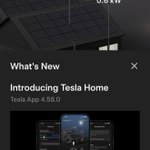
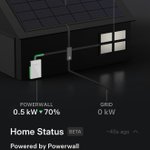
Powerwall stores energy from solar or the grid so you have power during storms and blackouts.
Rider retweeted
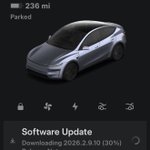
APP NEWS 🚨 Tesla gave its iOS app 4.62.5 a one-line release note, but a look inside the app bundle reveals five changes worth talking about:
✅ Scan your driver’s license right in the app
Tesla added a registration flow that scans both sides of your license, pulls out the details, and checks them.
If you’re eligible, that could mean less typing and a quick prompt to try again if the scan fails.
✅ Get more done in a single support chat
The app adds separate messages from bots and human advisors, along with controls for attachments, voice input, and feedback.
You could share more context and keep the conversation in one place. For Tesla, it’s a way to automate routine questions while keeping advisors in the loop.
✅ Give Phone Key a smarter way to recover
If Bluetooth reports that the car dropped the pairing, the app can ask the car whether it still recognizes your key before clearing the saved connection.
That could save you from resetting a key your car still trusts and give you a clearer path to pairing it again when you need to.
✅ See what your Tesla Energy system is doing
The app adds a check to confirm whether a Smart Breaker command went through. It also adds code to show how power moves between your solar panels, battery, grid, home, and vehicle.
You could see whether the breaker did what you asked and where your power is going.
✅ Handle more of the paperwork in the Tesla app
Tesla added code to request Shop returns with attachments, submit trade-in requests to a partner, find nearby service locations, and pull up next steps for energy support cases.
That could mean fewer trips between the app, the web, and customer support.
Rider retweeted
BOOM 🚨 Elon Musk just announced a 40 kWh pack that squeezes 19% more Cybercabs out of the same cells, plus a liquid silver finish to break up the sea of gold 🔥
There's no date on either one yet, but there's a lot packed into those two lines.
🔋 A SMALLER PACK THAT BUILDS MORE CABS
Cybercab is already a lean machine. Its EPA filing lists a 47.6 kWh pack, and with an industry-leading 165 Wh per mile, it squeezes out an estimated 293 miles.
Now Elon wants to go down to 40 kWh. That's about 16% less battery. According to Elon, efficiency improvements will get it there, but he didn't spill which ones.
Here's the simple math on what's at stake. Range is just battery size times miles per kWh, so at today's efficiency, a 40 kWh pack still gets you around 245 miles. To keep the full 293 miles, Cybercab would need to sip about a sixth less energy per mile, roughly 137 Wh per mile.
Honestly, 245 miles is already plenty for a city robotaxi. A Cybercab working city streets can head back to charge between rides, so it doesn't need road-trip range.
But range isn't even the real prize.
Every gigawatt-hour of cells builds about 21,000 Cybercabs at 47.6 kWh each. Drop to 40 kWh, and those same cells build 25,000.
There's the 19% from the headline, and it comes from the exact same battery supply!
The car gets lighter, too. At the energy density listed in the EPA filing, the 7.6 kWh Tesla leaves out weighs about 110 lbs.
🥈 A NEW COLOR WITHOUT A PAINT SHOP
Elon wants silver so the fleet doesn't get too monotonous, and it's easy to see why. Texas already had 573 Cybercabs on its roster by late October, and Tesla has only shown them in gold.
But here's the twist: Cybercab doesn't have a paint shop. So how do you give it a new color?
The magic is in how the body gets made. Tesla shapes the exterior panels with reaction injection molding, mixing the pigment right into the polymer. Every panel pops out of the mold already colored. Tesla says this cuts paint cycles from hours to minutes and wipes out paint VOCs completely.
So a new color is basically a recipe change, not a whole new factory. Lars Moravy hinted at exactly this back in 2025, saying Tesla only planned one color but could in theory inject any color it wanted.
Tesla hasn't revealed how it'll nail that liquid shine yet. But if the process can already turn out a glossy gold, silver is the natural next move.
There's a sweet bonus for a car that works all day, too. Since the color runs all the way through the panel instead of sitting on top, a shallow scratch won't reveal a different-colored layer underneath.
🚀 BOTH CHANGES POINT THE SAME WAY
A 40 kWh pack frees up the cells. The battery that builds six Cybercabs today could build seven tomorrow.
Now put that next to liquid silver, and it all clicks. The smaller pack puts more Cybercabs on the road, and the second color keeps that growing fleet from turning into a sea of gold.
That worry about a monotonous fleet tells you exactly how huge Tesla expects this one to get. Tesla isn't building a niche robotaxi; it's building the car Elon says will PROFOUNDLY transform terrestrial transport.

There are efficiency improvements coming that will allow for a 40kWh Cybercab pack. We will make this in liquid silver, so the colors are not too monotonous.
The biggest thing most people fail to understand is that there are a very limited number of smart, dedicated people! They can only do so many things.
If we have to maintain a complex production line, supply chain and allocate engineering for Cybertruck, we can’t use those people or factory space and machinery for scaling Cybercab, which is the vehicle that will PROFOUNDLY transform the world of terrestrial transport!

Rider retweeted
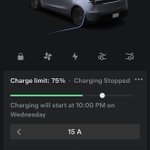
With Powerwall & Wall Connector, Smart Charging looks at your solar, home goals & driving needs, then automatically charges your EV at the best times
2 modes:
– Savings Mode: unlocks Low-Cost Charging which factors in solar production & utility rates
– Self-Powered Mode: unlocks Charge on Solar which sends excess solar energy to your vehicle instead of back to the grid
Now compatible with any EV – part of Tesla Home in your app


Rider retweeted
BIG NEWS 🚨 SpaceX just tapped Qualcomm to help build its own nationwide cell network to take on AT&T, Verizon and T-Mobile 🔥
This deal didn't come out of nowhere.
For the past year, SpaceX has been quietly building a phone company, one piece at a time.
First, it locked down the airwaves. A $17 billion deal for EchoStar's spectrum gave Starlink Mobile the mid-band capacity every real carrier needs.
Then it claimed the sky. On October 6, the FCC approved 15,000 next-generation direct-to-cell satellites.
Two days later, it went after the walls. SpaceX agreed to buy nationwide 800 MHz spectrum, the low-band signal that punches deep inside buildings.
Today, SpaceX brought the fight down to the ground.
It just signed a multi-year deal with Qualcomm to build tens of thousands of cell sites across the U.S., with deployment kicking off in 2027.
Qualcomm says it's the biggest 5G project in its history.
Every site runs on Qualcomm's Dragonwing platforms. The QRU100 drives the radio up on the tower, while the QDU100 crunches the heavy processing behind it.
The real magic is 64T64R Massive MIMO, which means 64 antennas sending and 64 receiving.
Instead of blasting signal in every direction, a single tower can fire focused beams at many phones at once. The same airwaves stretch further and serve far more people.
The chips are built to sip power, too. Multiply every watt saved across tens of thousands of sites, and the savings get serious.
The hardware handles multiple spectrum bands, so it's ready for the different airwaves SpaceX has been collecting.
It even lays the groundwork for AI-native 6G, which means these sites are built for the next generation, not just this one.
SpaceX's goal is bold: the first fully integrated nationwide satellite and terrestrial mobile network.
AT&T, Verizon and T-Mobile built their networks tower by tower, and every one of them still has spots where your bars drop to zero.
SpaceX can put towers where the crowds are and let satellites cover everything in between.
Sure, this won't happen overnight. Tens of thousands of sites is a multi-year build, and the 800 MHz deal still needs FCC approval.
But for the first time in years, the big three are staring down a challenger with its own spectrum, its own ground network and its own satellites.
For decades, the battle for your phone has been fought on the ground.
Now AT&T, Verizon and T-Mobile have to look up 🆒




Rider retweeted
Your heat pump is one of the biggest electrical loads in your home
Heat Pump Optimization allows your Powerwall to boost heating when there's surplus solar or energy is inexpensive, helping you save money when rates are high - available with Powerwall 3 & Powerwall 3P in Europe


