

Partner @AmplifyPartners, writing https://xitter.twitterapi.xyz/t.co/LSbi0EEiHU
San Francisco, CA
Joined October 2011
- Tweets3.4K
- Following976
- Followers19.4K
- Likes10.4K




Pinned Tweet
Announcing Amplify Bio 🧬
I've joined Amplify Partners to help build a $200M fund dedicated to technical founders in bio.
This has been part of a long evolution—from writing code as a computational biologist, to writing >200k words about this sector in The Century of Biology, to getting the chance to write checks backing great bio founders with Packy at Not Boring.
This has also been a long evolution for Amplify. Since 2012, Amplify has exclusively focused on helping researchers and engineers become great founders. Amplify partnered with category-defining infrastructure and AI companies like Datadog, Fastly, Runway, and Temporal from the very beginning.
The focus on technical founders led Amplify towards bio—partnering with founders like Chris Gibson, Brandon White, Alex Beatson, John Chodera, and Theofanis Karaletsos.
But we're just getting started. Despite the chaos in the public markets, we believe it's a great time to start bio companies.
Here's why: amplifypartners.com/blog-pos…

Cool new result from AlphaGenome 2 paper:
AlphaGenome 1 accepted only 1 Mb of DNA sequence. The new model accepts condition (tissue, cell line, cell type, or cell state) and species as additional context. And they trained on both bulk and single-cell data.
They showed that they can now resolve much more granular regulatory mechanisms. A beautiful functional genomics paper from 2024 did a ton of experimental work to show how a genetic variant associated with several autoimmune diseases was over-activating an immune regulatory gene 290 kb away. The model picked up that signal as clear as day, entirely computationally.
Exciting to see continued improvements in AI for regulatory genomics. Kudos to @adamgayoso, @Avsecz, and the DeepMind team!


AlphaGenome 2: Deciphering how cells read DNA to better understand disease: deepmind.google/blog/alphage…

Very happy for Cam, Josh, and the UNP team!
Pretty remarkable journey from spinning out of UC Santa Cruz as first-time founders in 2016, to building a world-class AI-native macrocyle platform, striking multiple large discovery deals, and ultimately joining a great strategic home in Argenx for up to $1.15B.
I'm grateful that @packyM and I got to be a small part of the story as investors!
It was a chance to see great technical founders in action, and it was one of the sources of inspiration to build a home for these types of founders at Amplify.

MACROCYCLE SUPERCYCLE
argenx is acquiring not boring portfolio company Unnatural Products for up to $1.15B
huge congrats to Cam & co and props to the bio🐐 @ElliotHershberg for convincing me we should invest (& explaining what a macrocycle is)
endpoints.news/argenx-to-acq…

Luke (@Dr__Riggan) is a rockstar.
Hardcore scientist, deeply personable, and a doer.
The Amplify Bio dream team is assembling!

Welcoming Luke Riggan to Amplify Bio:
amplifypartners.com/blog-pos…

3
353
We've been busy at Amplify Bio!
It's a privilege to be in business with the technical founders transforming the life sciences.
And, personally, it's a privilege to work alongside this team every day. If you've spent time with Sunil, David, Luke, or Madelyn, you'll know exactly what I mean.
If you haven't, we've got a whole slate of programming intentionally designed for this ecosystem in the New Year, so we'll see you there!


Xinchen is a highly underrated thinker at the intersection of AI and Bio.
Worth reading the motivations + strategy for Waypoint's platform they've built in pursuit of out-of-distribution medicines!

AI in biology may have a data problem before it has a model problem.
It’s easy to use AI to make drug discovery faster & more efficient. The much harder challenge is discovering impactful medicines humans would never have found.
AI models are only as useful as the data they learn from, and it’s especially hard in biotech. The biggest and most valuable goals in AI in biotech are to cure diseases we haven’t been able to cure and design therapeutics capable of doing things that haven’t been possible before. By definition, these goals aren’t represented in our training data.
For our second essay at Waypoint Bio, we wrote about the data we think we’ll need to build out-of-distribution medicines: waypointbio.com/writings

“That's part of what makes frontier drugs worth pursuing. You may need to invent both the molecule and the way to discover it. If you succeed, you can leave behind more than one medicine: you can make a whole class of problems look more tractable.”
Great post by @srikosuri. One of the most exciting applications of all the new tools in biology is to go after the biggest unsolved problems.
This is why we need more biotechs led by deeply technical founders!


We're hosting an evening event for engineers, researchers, and builders at the intersection of AI in Biology.
If you're in the area on 9/24, come join us!
luma.com/byiw9j9u

Major props to @lennypruss who was Temporal's first ever investor.
Technical founders can build massive businesses!

We are incredibly excited to announce Temporal's Series E.
It wasn't so long ago that we met Max and Samar working on open source Cadence at Uber.
Fast forward and they're at 4K+ paying customers, a $12.55B valuation, 200%+ NDR 🔥
1
14
3,603
Notes on what comes *after* intismeran (Moderna's personalized cancer vaccine):
I've been very excited about the early data for this program and the potential of what it could become. But it's also got some clear room for improvement that creates exciting opportunities for founders and investors.
Two investments we've made at @AmplifyPartners along these lines:
1. As many have pointed out, this program aims to prevent disease *recurrence* — it's not a "cure" or even a monotherapy. @btnaughton and @DevinScannell are building Decade Inc., which is an applied AI research lab making the next generation of personalized cancer drugs. their approach has the same broad applicability of mRNA vaccines but is designed to be dramatically more potent. More to come in time...
2. There's still a lot of room for improvement in the combination setting to prevent recurrence. The name of the game is to identify the right antigens, the right delivery vector for T cell activation, and the right clinical setting. We're very excited about how Infinitopes is tackling this equation. Their first clinical trial is underway.
For scientists, engineers, investors, and pharmas exploring this space, reach out!


After yesterday's Moderna pop, I decided to look back through the Century of Biology "portfolio"
Some dates of when I covered topics/drugs/companies:
- Personalized cancer vaccines (covered BioNTech March 16, 2025, then Moderna's Ph2 intismeran data on Jan 18, 2026 and again April 12, 2026)
- BridgeBio (deep dive on Feb 16, 2025. Share price up ~2.39x since then.)
- DNA Synthesis (deep dive on April 17, 2022 highlighting Twist, which is up ~3.35x since then)
- AbCellera (covered their strategy in an essay April 14, 2024. They are up ~2.67x since then. Same essay would give ~1.63x for Alnylam.)
- Verve Tx (wrote about June 2, 2024, acquired by Lilly for ~2-2.57x since then.)
On the private company side: Enveda, Manifold, Dyno, Living Carbon, and others have been doing amazing things!
Worst performing stocks I've heavily featured are probably Ginkgo and Intellia—but the story is far from over on both!
"CoB is for entertainment purposes only, not investment advice," yada yada, and it's much easier to blog about this stuff then to return $$ running a hedge fund. I'm just a simple early-stage VC!
But it's fun to think about the "score card" for the various topics I've covered and predictions I've made on my little corner of the Internet over the years.
Which Way, Western Biotech?
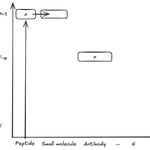
One reductionist model of drug discovery is that it's a heroic search across an NxN grid. Along one dimension, there are the modalities in our therapeutic arsenal. On the other, the known target hypotheses with varying levels of biological evidence. (Another dimension is indication, but we're simplifying here!)
In this framing, the anxiety for American biotechs is that Chinese biotechs are increasingly sampling this grid at an alarming rate—from molecular discovery to first-in-human studies.
It's definitionally zero sum: the grid is finite! So protectionists argue that we should regulate like we are guarding a scarce resource.
If this is the whole story, there is a real reason to be worried about the future of American biotech! The asymmetry in speed of search is multifactorial. (cc @MWCvitkovic)
China has:
1. Favorable policy (and state-level planning)
2. Favorable labor economics
3. A much more intense work culture
4. An integrated ecosystem across R&D, manufacturing, and hospitals
5. A way bigger population (big deal for trials)
But I don't think it *is* the whole story. American biotech has a beautiful blend of true off-the-grid thinking and risk capital to support these ideas.
What is off the grid? Wholly new modalities. New biology. Or even ideas that reject the grid altogether: like AI-powered personalized medicines that defy any conception of a singular target.
The positive sum view of biotech's future is still extraordinary hopeful for America.


I'm not sure you can conclude that biotech in Boston/Cambridge is on the right track right now. Some responses I've gotten this summer about the local ecosystem:
On China: "We'll just out-innovate them" (Not sure how that happens when both home-grown and US-trained Chinese scientists are doing world-class science)
On AI: "It's just a bubble and tech investors will move out of biotech once it pops" (The same plan brick-and-mortar stores had during the dot-com boom)
Feels like the best-case default is SF becomes the US leader for biotech just like semiconductors did in the last century. Worst-case is the US misses out entirely and the world's biotech R&D runs through China. Either way, Boston isn't in the picture unless we start experimenting with new models now
P.S. We should still invest in making FIH studies faster in the US, and rebuilding / on-shoring critical biotech infrastructure!
P.P.S One major flaw of the reductionist grid description is that it can be easy to imagine all cells on the grid are equal. They aren't! There are entire regions of the grid that require new technology for successful exploration. These regions don't have the same zero-sum dynamic where search speed is the primary competitive advantage.
1
7
559
Data that still lives rent free in my head after CSHL AI in Bio:
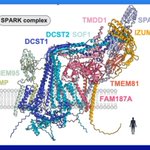
In silico prediction of the ten-subunit complex that appears to control sperm-egg fusion. Done with AlphaFold Multimer. Absolutely stunning.
This complex is so gnarly that this group hasn't been able to empirically validate the structure yet, but every single line of experimentation supports this structural model being correct.
It's like the AI model is a molecular microscope that can see what we can't even detect.
For me, it reframed the upper bounds of where molecular machine learning is going in next ~2-3 years. We're just getting started!

The full preprint is really worth checking out. Stunning basic research accelerated by AI.
doi.org/10.64898/2026.05.13.…
Lots of interesting conversation on the evolution of biotech VC the past few days.
Risk tolerance has gone way down. A huge emphasis on mitigating “go to zero” risk across portfolios—which is a very different philosophy than tech VC.
One argument for this is that tech and biotech have very different return profiles. But this can be a self-fulfilling prophecy. Returns can suffer from gripping the bat too tightly.
At @AmplifyPartners, our deeply held belief is that we are leaning into the thesis that has delivered the best *historical* returns in the industry: betting on technical founders with big visions in the midst of technological paradigm shifts.
As biotech VC has become specialized and professionalized, this can be challenging. Some tech VCs turn their brain off when asked to underwrite therapeutic risk. And some biotech VCs turn their brain off when they hear “AI” or see founders outside the usual roster from their network.
But we have conviction that partnering with ambitious, risk-on biotechs is a truly generational opportunity right now.
There’s so much left to build!

CSHL: AI in Biology
centuryofbio.com/p/cshl
Since 1933, @CSHL has hosted an annual Symposium on Quantitative Biology.
At first, "quantitative biology" meant the use of chemical, physical, and mathematical techniques. This conference became the Schelling point for the pioneers of molecular biology. Watson first presented the structure of DNA at the 1953 Symposium.
This year, the topic for this famous conference was AI in Biology.
For five days, the top researchers in this field gathered from around the world to present their latest work. I went, and have done my best to summarize some of the major themes and results from the Symposium.
It was a lot of fun attempting to synthesize ideas from superstars including @pushmeet, @Avsecz, @zhou_jian, @Micro_Yunha, @pkoo562 @anshulkundaje, @Prof_Lundberg, @recursus, @ZhongingAlong, @marinkazitnik, @lecong, and more!
I hope you enjoy reading—it was one of my favorites conferences I've ever been to. Some truly beautiful research on display.

Excellent writeup on the intuition behind Waypoint Bio's pooled screening platform.
My favorite part: drawing the connection between forward genetics and modern pooled screening. It's the same underlying logic, but now we have the tools to collapse the time to identify signals in the screens from years to days!
This post is like a sneak peek of a conversation with Xinchen and Dave. They are deeply technical but have a unique ability to zoom out and explain what they are doing in intuitive and powerful ways.
Check it out!
Two weeks ago, we announced our new raise at Waypoint Bio. Today, we're sharing a first look under the hood at our spatial pooled screening platform.
Pooled screens are one of biology's most powerful tools - but conventional technologies are confined to a single readout, and destroy the spatial context. For complex, multi-factorial diseases - cancer, neurodegeneration, autoimmunity - that "where" inside a tissue is the critical question.
Here's how we're recovering the missing dimension:

Absolutely rooting for this team and mission. Onwards!!

on day 1 @newlimit, we imagined it would take 10+ years to invent real medicines.
our recent results have accelerated the timeline to next year. we've raised a Series C led by @foundersfund alongside @ThriveCapital, @Greenoaks, and many others to bring therapies to the clinic.
medicines for aging are among the most valuable possible technologies. we are grateful to our partners for the opportunity to pursue this mission.
I'm pretty excited about AI in Biology.
I bet my research career on it. And now I'm betting my investment career on it!
But somehow, spending this past week at CSHL's 90th symposium—which was exclusively dedicated to this topic this year—made me even more bullish!
One of the most electric conferences I've been to in a while... maybe ever. Back-to-back talks from the top scientists and industry leaders in this field. Even though my job is to cover this domain, it was a visceral reminder of how quickly things are moving.
Fantastic job curating and organizing by @pkoo562 and @TonyZador.
My plan is to get some notes up on what I saw in the next week or two on CoB! 🧬


Cell therapies of the future will be more complex.
CAR T has delivered extraordinary results for blood cancers. The new frontier is to achieve similar outcomes for solid tumors. This is a massive challenge that will require more genetic modules—and even combinations of different modules working together.
Waypoint is building a platform to enable this level of engineering complexity. We led their Series A to help scale their engineering efforts and to run their first clinical studies.
I wrote about some of the intuition behind the design of their platform:
1. In order to efficiently navigate a large space of possible designs, we can't test new ideas in serial. Waypoint tests thousands of designs in parallel in each experiment by using pool screening.
2. Typically, pooled screening requires a trade-off in the resolution of the measurement captured. Waypoint solved this by inventing techniques to capture powerful spatial readouts from each experiment.
3. High-throughput experiments with high-resolution readouts creates an embarrassment of riches. It's hard for even the best human minds to reason about where to go next in design space. Waypoint built an AI design system that has already generated hypotheses that intrigue cell therapy experts.
You can read more about these ideas here: amplifypartners.com/blog-pos…

Really proud to partner with Waypoint Bio.
Xinchen Wang and David Phizicky are brilliant technical founders. They've built a radically efficient AI-powered discovery platform for cell therapy. And they've paired this with a clinical development strategy that enables them to move faster into the clinic and run multiple studies.
But the goal isn't just to have a faster/cheaper engine to do more of the same. They're pointing this platform at one of the hardest and most important problems: pushing the frontier of cell therapy for solid tumors.
Much more to come from this team in the coming days/weeks/months!
Excited to announce that Waypoint Bio has closed $20M in funding led by Amplify Partners, with participation from General Catalyst, Time BioVentures, Lux Capital, Mitsui & Co. Global Investment, Inc. and existing investors including Hummingbird Ventures.
In vivo CAR T therapies are showing early but exciting promise for liquid tumors and for broader patient access. Translating that success to solid tumors is still a big challenge that would be transformative for cancer treatment.
We've been pairing AI-powered CAR T & in vivo delivery vector designs with our in-house spatial pooled in vivo screening platform to test how different payloads reshape the complex tumor microenvironment in vivo, and to learn which ones translate. AI is incredibly powerful at exploring complex design spaces, and we’ve built the validation layer to figure out which designs actually matter.
We’re entering the clinic later this year with our first program designed with this approach, and building out the platform for more in vivo CAR T targets and more modalities.
More to come soon!
endpoints.news/waypoint-bio-…
