GoRedforWomen (@GoRedForWomen) header
GoRedforWomen (@GoRedForWomen) profile picture

Passion. Purpose. Power. That's what it means to Go Red for Women. Join us as we unite against the No. 1 killer of women, cardiovascular disease.

Joined December 2008
Photo by GoRedforWomen (@GoRedForWomen)Photo by GoRedforWomen (@GoRedForWomen)Photo by GoRedforWomen (@GoRedForWomen)Photo by GoRedforWomen (@GoRedForWomen)Photo by GoRedforWomen (@GoRedForWomen)Photo by GoRedforWomen (@GoRedForWomen)Photo by GoRedforWomen (@GoRedForWomen)Photo by GoRedforWomen (@GoRedForWomen)Photo by GoRedforWomen (@GoRedForWomen)Photo by GoRedforWomen (@GoRedForWomen)
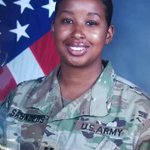
After multiple ER visits for painful headaches, 25-year-old Army 1st Lt. Brittney Saunders Graves was finally diagnosed: her brain was bleeding. In 2018, Brittney had migraines and neck pain. An ER scan showed nothing. “Over the course of the next few weeks, the symptoms got worse,” she said. “I had trouble sleeping. I had trouble eating. I couldn't really turn my head because I had the pain in my neck as well as the headache.” She saw multiple doctors, including a rheumatologist, and returned to the ER. Still no answers. She showed up at her neurology clinic two days early, begging to be seen: “I feel like my head is about to explode, and I feel like I'm going to die.” She was turned away. She was stopped by a receptionist. “She looked at me and said, ‘We need to go to the patient advocate.' Later she told me that my face was drooping and swollen, and that it looked like my eyes were bulging out of my face.” Friends had noticed changes too, but didn't want to upset her. After filing a complaint, Brittney was told she'd be admitted at her next ER visit. Hours later, she returned with intense pain and vomiting. She was finally admitted after three hours. A CT scan showed brain bleeding. And after being transferred to another hospital, an MRI revealed half her brain was clotted. She had a rare stroke: dural venous sinus thrombosis (DVST). She spent 5 days in the ICU and months in therapy. “Recovery was hard, because I was an active-duty soldier and instantly that was taken away,” she said. “I tried to go back to my normal self… but I couldn't even push myself up.” She returned to active duty and promoted to captain but was later medically discharged. She later earned her master's in clinical mental health counseling with a 4.0. “I do feel like my stroke was a second chance at life,” she said. “Although we aren't the same as we were before our experience, we have the opportunity to live life better.” Now she's a stroke survivor, advocate and mental health counselor. Brittney is a previous member of the American Heart Association's Go Red for Women Class of Survivors.
4
459
Nearly half of women age 20 and older are living with some form of cardiovascular disease. "Awareness and education can help box out our risks," said UCLA Women's Basketball Head Coach Cori Close, whose family has a history of heart disease. As a member of our Hearts on the Court Collective, Coach Close is helping Go Red for Women reach student athletes and fans with lifesaving information about women's greatest health threat: cardiovascular disease. Know your numbers like blood pressure and cholesterol and talk to your doctor about your risk factors. Hearts on the Court Collective x @coachcoriclose
1
1
165
Shortly after college, Mary Wiley realized a desk job wasn’t for her. She joined the Army, became a combat medic, earned a graduate degree and was commissioned as an intelligence officer. At 28, married and 10 weeks pregnant, she collapsed during a workout at an Army gym. “It just looked like I had dropped dead,” she said. Two soldiers performed CPR for 13 minutes. The AED didn’t work. A medical team shocked her heart and rushed her to a hospital, then airlifted her to Anchorage from her more remote installation in Alaska. “I woke up about a week later and my parents were there and they had to tell me what happened,” she said. Doctors implanted an ICD to monitor and correct her heart rhythm. She returned to work, ran 5Ks and was told her baby was fine. A year later, the Army found out she had an ICD, and medically retired her. It was devastating. “That’s what I wanted to do. I wanted to go all the way. That was me. Mary was in the Army,” she said. She had a second child but struggled with identity and failure. During the pandemic, she trained for a half-marathon. Her ICD was firing—her heart was still unstable. She received an upgraded device and was told to stop running. Mary again felt a loss. Eventually, she took a job in Maryland, and also became a CPR trainer. Sharing her story in class helped her heal. “For a large part of my journey, I acted like nothing had happened,” she said. “As I moved into the next chapter in my life, I’ve embraced what has happened, and that’s where I found the ability to truly heal from it.” Though no longer a CPR instructor, she urges everyone to learn it. “Don’t think so much, just act because it works, and it saves lives. It dramatically changes somebody’s outcome with just something so simple as even compressions only,” Mary said. “Someone has literally given me a gift. They said, ‘Hey, you get another go. Your go is going to be different, but you get another go.’” Mary was a part of the Go Red for Women 2024 Class of Survivors.
3
398
Heart disease is the leading health threat for women, and your heart story starts long before symptoms appear. From periods and pregnancy to menopause, every stage of life can offer clues about future heart health. These are the five things every woman should know.
2
3
135
Angela had her first heart attack at 35. Doctors weren’t quite sure why. She didn’t have any blockage in her arteries. A few weeks later, she had a second heart attack. A few months later, she had a stroke. Angela was diagnosed with congestive heart failure. Her heart was too weak to efficiently pump blood. Doctors suspected cardiomyopathy, a condition that weakens and damages the heart muscle. Angela also had atrial fibrillation, an irregular heartbeat. Angela’s doctor mentioned the possibility of a heart transplant in the future. She started medication to strengthen her heart and reduce fluid buildup. Over the next several years, Angela had two more strokes and a third heart attack. About 10 years after that first heart attack, it was time for a new heart. While waiting for a match, she received a left ventricular assist device, or LVAD, that does the pumping for the left side of her heart. About two years later, a donor heart was found. Within weeks of the transplant, Angela felt stronger than she had in decades. Now, 16 years later, Angela is 63 and taking full advantage of her second chance. She takes exercise classes at her church, goes to the gym and spends as much time as possible with her eight grandchildren and great-granddaughter. “I’ve seen my grandchildren get their degrees,” she said. “You just have to have faith and believe. I was determined to stay positive.” Angela also volunteers with the American Heart Association. She’s especially involved in Go Red for Women, helping spread awareness about heart disease. The Go Red movement also supports research into women’s heart health, which has come a long way in the three decades since Angela’s problems began. Research has shown that women are more likely than men to have certain types of heart attacks that occur without a major blockage in the coronary arteries. So if Angela’s story were playing out today, it would likely be handled very differently. “I Go Red,” she said, “to let people know God is still performing miracles.” Read Angela’s Story From the Heart: heart.org/en/news/2026/09/03…
1
206
Beth Opel knew she was having a heart attack and knew what to do. She urges everyone to know the signs of a heart attack and seek care quickly.
2
2
528
Tracking aortic stenosis symptoms can help you and your health care team know if your condition is getting better or worse. Note if these symptoms occur never, occasionally, often or always and share with your doctor at your next appointment.
1
2
2
140
When you work out, are you doing too much or not enough? There’s a simple way to know: Your target heart rate A wearable activity tracker makes it super easy to track your heart rate or take your pulse on the inside of your wrist. If your heart rate is too high, you’re straining. If your heart rate is too low, you may want to push yourself a little harder, especially if you’re trying to lose weight.
1
3
147
Good intentions matter. Turning them into real support matters, too. Whether you’re caring for someone you love or looking for better ways to support a caregiver in your life, join us Nov. 17 for a House Calls Meetup about caregiving, connection and support. Sign up for the Nov. 17 House Calls Meetup: bit.ly/4kxhX8W
1
127
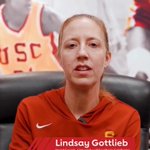
The battle off the court: cardiovascular disease. It's the leading cause of death for women, but we still don't fully understand how it impacts us. Why? Historically, women haven't been equally represented in research. "We can't understand our risks or hope to treat them, or be aware of the symptoms and diagnoses, if women don't participate in the research," said University of Southern California Women's Basketball Head Coach Lindsay Gottlieb. As a member of our Hearts on the Court Collective, Coach Gottlieb is calling on women to join Go Red for Women's Research Goes Red, an online platform calling on women to contribute to research to help uncover our unique risks, symptoms and treatments. "This can stop with us." Hearts on the Court Collective x @coachlindsayg
2
4
217
Her heart journey began at 17 when Lori Sepich found out she had extremely high blood pressure. After ignoring medications and symptoms for years, she suffered two heart attacks. Her world changed when she attended a Go Red for Women luncheon, where she found a sense of community and felt empowered.
1
1
268
Heart disease is the leading health threat for women, and your heart story starts long before symptoms appear. From periods and pregnancy to menopause, every stage of life can offer clues about future heart health. These are the five things every woman should know.
4
1
6
246
Many heart attacks start with chest pain, but there can be other signs of a heart attack too, especially for women. Know the signs 💔 and call 911 when they're present.
5
8
385
Recovery from heart disease or stroke changes more than one life. If you're helping someone through recovery, every day can bring new questions, new victories and new challenges. You don't have to figure it out alone. Connect with people who understand the journey at the Support Network. supportnetwork.heart.org
148
It’s a thriller, thriller night! 👻🧟👹 Have fun, be safe, and don’t forget ⬇️ If you see a teen or adult collapse, call 911 and push hard and fast in the center of the chest.
2
3
199
Caregiving is rewarding, but difficult, work. Show a stroke caregiver how much you appreciate them and all they do by nominating them for a Stroke Hero Award. stroke.org/heroaward
1
129
Nine days after giving birth, Erin Adelekun had a massive stroke. She's now thriving and wants other women to advocate for their heart health throughout all stages of motherhood. #WorldStrokeDay
1
213
Stroke can happen at any age but the risk increases with age. 📈 One in five women between the ages of 55 and 75 will have a stroke. #WorldStrokeDay
3
2
165
Fast action from her husband helped save Alex Wilson-Garza when she started having a stroke. Her own experience in the hospital improved the way she now relates to her patients. #WorldStrokeDay
129
Strokes happen suddenly. Knowing what to look for and acting quickly saves lives. Learn the B.E. F.A.S.T. signs and if you see any of them, call 911 right away. #WorldStrokeDay
126