

Evidence over ideology. Explaining science in context, exposing harmful misinformation, sharing references—and posting reminders the world is beautiful.
Joined August 2011
- Tweets115K
- Following6.5K
- Followers12.1K
- Likes11K




Pinned Tweet
What happened to America’s health and science institutions—and how do we establish who was responsible?
Since Democrats control both chambers of Congress, they should investigate the decisions made by RFK Jr., Elon Musk, and other administration officials: what they authorized, what evidence they relied on, and what consequences can be demonstrated.
Claims of efficiency deserve testing. So do claims of harm.
Part I of a three-part series: establish the record, protect essential institutions, and rebuild with stronger safeguards. 🧵
🤖 Made with AI

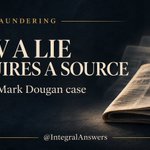
What if the “news report” supporting a viral allegation was created to make that allegation look credible?
Meet John Mark Dougan: a former Florida sheriff’s deputy linked to a Russian disinformation network.
His story illustrates source laundering—and new investigations offer a closer look at how it works. 🧵
🤖 Made with AI

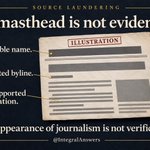
9/ Before sharing the next explosive “report,” ask:
• Where did the allegation first appear?
• Is the outlet and its journalist identifiable?
• Can the document, witness or recording be authenticated?
• Did later coverage independently verify anything?
• Or does every link lead back to the same origin?
These questions apply equally to claims we welcome and claims we dislike.
A published allegation is still an allegation.
Repetition alone is not corroboration. Look for independent evidence that actually supports the claim.
🤖 Made with AI

1
123
Sources / further reading:
• NewsGuard’s investigation of Dougan’s network, including its verification of the Highgrove fabrication, May 2024:
newsguardtech.com/special-re…
• CORRECTIV on the election-influence operation, January 2025:
correctiv.org/en/fact-checki…
• EU sanctions record, December 2025:
eur-lex.europa.eu/eli/reg_im…
• The Insider’s investigation, November 10, 2026:
theins.press/en/inv/299417
• CORRECTIV’s investigation, November 11, 2026 (German):
correctiv.org/aktuelles/hybr…
136
IntegralAnswers retweeted

Democrat Scott Colom will win US Senate seat in deep-red Mississippi, CNN projects cnn.com/2026/11/11/politics/…
1/ An udder is not a clinical trial.
If someone drinks raw milk and notices more hair, that doesn’t establish cause and effect. Where’s the comparison group? The objective measurement?
“Trust me, it’s growing” is a testimonial. Even with a bow tie. 🐄

5/ Pasteurization means controlled heating to kill harmful germs, without significantly changing milk’s nutritional quality.
You still get protein and calcium. Raw milk doesn’t cure lactose intolerance, either.
Enjoy your dairy. Choose pasteurized.
Keep the moo. Skip the microbial roulette.

Sources, because “a cow told me” isn’t a citation:
CDC: Raw milk risks
cdc.gov/food-safety/foods/ra…
FDA: Raw milk myths and evidence
fda.gov/food/buy-store-serve…

IntegralAnswers retweeted

This is truly abhorrent. Pete Hegseth doesn't know how to conduct himself, even at The Tomb of the Unknown Soldier at Arlington National Cemetery.
His behavior is unbecoming of any visitor to the Tomb, let alone that which comes from a Secretary of Defense.
If the administration’s rural healthcare investment is such a success, why shouldn’t a reporter ask whether it offsets the losses created by the same law?
Gray Media’s Molly Martinez asked Dr. Mehmet Oz that question. He accused her of repeating “talking points” that were “deliberately duplicitous.”
The exchange was real. But the viral meme describing it needs corrections—and the criticism is stronger when we get the details right.
Here is the funding picture:
• The 2025 reconciliation law created a $50 BILLION Rural Health Transformation Program, allocated over five fiscal years, 2026–2030.
• KFF estimated that the law would reduce federal Medicaid spending in rural areas by $137 BILLION over TEN years, compared with spending expected without the legislation.
• KFF therefore estimated that the rural Medicaid reductions would exceed the entire new fund by approximately $87 billion.
Those figures describe different time periods and different funding mechanisms. They are not interchangeable annual budgets. Grants supporting rural healthcare do not automatically replace Medicaid coverage or the revenue providers receive from treating insured patients.
The $137 billion is also a projection—not money already removed. It concerns rural Medicaid spending broadly, not exclusively payments to rural hospitals. Congress passed the legislation and Trump signed it; Oz did not personally enact those cuts.
One more correction: Martinez did NOT expose a contradiction using “his own administration” as her source. She cited the Center for American Progress and the Congressional Budget Office. CBO serves Congress, independently of the executive branch. The specific $137 billion rural estimate comes from KFF.
These distinctions matter. They also leave the central question standing:
How will a temporary $50 billion grant program compensate for a larger projected reduction in Medicaid spending serving rural communities?
Oz can challenge the estimate’s assumptions, explain where he believes it misrepresents the effects, or show evidence that the grants will deliver better outcomes.
Calling the question duplicitous does none of those things.
Thank you, Molly Martinez, for pressing for an answer.
References:
Gray Media’s report localnewslive.com/2026/10/09…
KFF’s rural Medicaid analysis kff.org/medicaid/how-might-f…
CMS program details cms.gov/newsroom/fact-sheets…
Reported exchange and Martinez’s named sources mediaite.com/media/news/deli…
What CBO is cbo.gov/about/overview

