

Qualified & Experienced enough to critically voice my opinions H&SC/EDU #Safeguarding Aditus Potens AF™ #SexNotGender #LetWomenSpeak All views are my own ❤️
United Kingdom
Joined August 2014
- Tweets79.1K
- Following13K
- Followers12.9K
- Likes352K






Pinned Tweet
Males have a significant physical advantage over females. That is just science. No hormones or surgery can negate the advantage. #TruthIsNotACrime #TruthIsNotAHateCrime #FactIsNotHate #MenAreNotWomen #WomenAreNotMen


#Science The genetic differences between men and women - A study analysed the expression of 20,000 genes in the body tissues of donors. They found that 6,500 of them are expressed differently in men and women


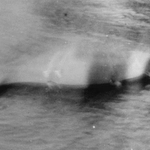
12 NOVEMBER 1933 🦕The day the Loch Ness Monster was supposedly caught on camera for the very first time!
In November 1933, a Scottish man named Hugh Gray took a photograph that would help turn a Highland legend into an international sensation.
Gray, who worked at the British Aluminium Company near Foyers, on the eastern side of Loch Ness, claimed to have spotted something extraordinary in the water while out walking. Fortunately, he had his camera with him. He reportedly took five photographs, but only one produced a recognisable image.
And what an image it was! A strange, blurred shape appeared on the surface of the loch. Was it a large unidentified creature? An ordinary animal? Or simply an illusion created by movement, water and a camera?
When the photograph appeared in newspapers in December 1933, it caused enormous excitement. Experts examined the negative, and contemporary reports said photographic specialists had found no evidence of tampering. But that was not the same as proving the existence of a monster!
Not everyone was convinced. Professor Graham Kerr, a zoologist at Glasgow University, questioned whether the indistinct photograph demonstrated anything resembling the extraordinary animal being described. Over the decades, people have suggested all sorts of explanations: an otter, a swan, a dog swimming with a stick, or even a floating object. None has been conclusively established.
And there's another interesting historical wrinkle. Although Gray's photograph is traditionally dated 12th November 1933, a newspaper report published that December gives 26th November as the date of his encounter. So even the precise date has become part of the mystery!
The photograph emerged during an extraordinary year for Loch Ness. Reports of strange sightings had attracted growing newspaper attention, and improvements to the road along the loch had made it easier for motorists and visitors to see its waters. The following April, the famous Surgeon's Photograph would add still more excitement. That particular picture was eventually exposed as a hoax, but Gray's earlier image continues to attract debate.
Nearly a century later, nobody has produced convincing scientific evidence of a prehistoric monster living in Loch Ness. Yet the legend survives. Perhaps that's because a little mystery is irresistible, especially when it involves a deep Scottish loch, an old photograph and something that might... just might be lurking beneath the surface!

2
2
237

Jennifer Thetford-Kay retweeted

Surrogacy is a crime againt humanity.

This single man from America bought not one baby but two, from a woman in Mexico.
He paid $70,000 and the mother received an “additional bonus for carrying twins”. This was a double embryo transfer so twins - a boy and a girl - were the ultimate objective, despite the additional risk for an already risky #surrogacy pregnancy.
In his post reviewing the agency who facilitated this transaction, he thanks the mother but recommends removing her name from the birth certificate.
These newborns were removed from their mother at birth and were in the US with passports and identity documents within 16 days.
These babies will never know their mother.

ALT Single commissioning father wears a blue hospital gown, cap and mask holding two newborn babies, wrapped in blue blankets, one in each arm.
Jennifer Thetford-Kay retweeted

Great result!

In Leeds today the council overwhelmingly passed a motion “Zionism is NOT racism” to reject the antisemitic @TheGreenParty policy. They can yell all they want outside but the city stood up to Jew-hate and I am so grateful 🙌

Jennifer Thetford-Kay retweeted

A fundamentally dishonest headline. The study had 42% loss to follow-up
🧵
1/ Playing fast & loose with stats about catastrophically damaging medical interventions on children & young ppl is par for the course. Look at the Dutch Protocol, which gave birth to this grisly practice>

NEW: The overwhelming majority of people who transitioned as teens don't regret it as adults.
That's according to a new study, the largest yet to examine satisfaction and regret in people who transitioned before they reached adulthood.
washingtonpost.com/nation/20…

WORLD PNEUMONIA DAY 12 NOVEMBER 2026 🫁
Pneumonia isn't simply a bad cold and some common misconceptions could delay people getting the help they need. Every year on 12th November, World Pneumonia Day raises awareness of an illness that can affect anybody, from newborn babies to older adults.
Pneumonia is inflammation of the lungs, usually caused by infection. Deep inside our lungs are millions of tiny air sacs called alveoli, which allow oxygen to pass into the bloodstream. When someone develops pneumonia, these air sacs can become inflamed and fill with fluid, making breathing more difficult.
Most people recover, but pneumonia can also cause serious illness, particularly in babies, older adults and people with certain existing health conditions.
So let's correct some common myths.
❌ MYTH: Pneumonia is just a bad cold.
✅ FACT: Pneumonia affects the lungs themselves. Symptoms can include a cough, breathlessness, chest pain, fever, extreme tiredness and loss of appetite. It may begin after another respiratory infection, but it is a distinct condition that sometimes requires urgent medical treatment.
❌ MYTH: Only elderly people get pneumonia.
✅ FACT: People of any age can develop pneumonia, including otherwise healthy adults. However, babies, older people and those with certain long-term conditions or weakened immune systems are more vulnerable to serious complications. Worldwide, pneumonia remains a major cause of death among young children.
❌ MYTH: Pneumonia is always caused by bacteria, so everyone needs antibiotics.
✅ FACT: Pneumonia can be caused by bacteria, viruses and, less commonly in healthy people in the UK, fungi. Viruses such as influenza, RSV and COVID-19 can cause pneumonia. Antibiotics treat bacterial infections, not viruses. Nevertheless, doctors may prescribe antibiotics when bacterial pneumonia is suspected, including where the exact cause has not been established. The right treatment depends on the patient's condition and clinical assessment.
❌ MYTH: You always have a high temperature.
✅ FACT: Symptoms vary. Some people, particularly older adults, may not develop a typical high fever. New or sudden confusion, worsening breathlessness or an unexplained deterioration in general health can be particularly important warning signs.
❌ MYTH: If you've had pneumonia once, you're immune.
✅ FACT: Pneumonia is not one single infection caused by one germ. Different organisms can cause it, and having pneumonia previously does not guarantee protection against another episode.
❌ MYTH: Vaccines prevent every case of pneumonia.
✅ FACT: Vaccination can substantially reduce the risk from several infections that cause pneumonia, but no vaccine prevents every possible case. Depending on age, medical circumstances and eligibility, vaccines against pneumococcal disease, influenza, RSV and COVID-19 can provide important protection. Good respiratory hygiene, avoiding smoking and managing existing medical conditions can also help reduce risk.
⚠️ WHEN SHOULD YOU SEEK HELP?
The NHS advises seeking an urgent GP appointment or NHS 111 assessment if you have concerning symptoms such as breathlessness, chest pain when breathing or coughing, or worsening respiratory symptoms.
Call 999 or attend A&E immediately for severe difficulty breathing, blue or blotchy lips or skin, sudden severe confusion, or other emergency warning signs.
Babies and vulnerable adults may deteriorate quickly, so don't delay seeking medical advice when something is seriously wrong.
And remember that recovery can take time. Although many people improve within two to four weeks, some experience tiredness and other symptoms for longer.
World Pneumonia Day isn't about frightening people. It's about recognising symptoms, understanding prevention and making sure illness is taken seriously when it needs to be. Awareness, timely medical assessment and appropriate treatment can save lives.
#WorldPneumoniaDay

1
116
Bonus myth:
❌ MYTH: Going outside with wet hair or getting caught in the cold causes pneumonia.
✅ FACT: Wet hair, cold weather and getting soaked in the rain do not directly cause pneumonia. Pneumonia is usually caused by an infection, commonly involving bacteria or viruses, not by having damp hair or forgetting your coat!
There is a little more to the story, though. Cold weather can contribute indirectly to respiratory infections. People spend more time indoors in close contact with others, some respiratory viruses spread more readily in colder conditions, and cold, dry air can affect the respiratory tract's natural defences.
But going outside with wet hair does not, by itself, give you pneumonia. So while your mum or grandma probably meant well when they insisted you dry your hair before leaving the house, the real culprits are usually infectious organisms, not a chilly head!
How many of you grew up hearing this warning? 😂

38
12 NOVEMBER 1944 The day RAF Lancaster bombers finally sank one of Nazi Germany's most feared battleships.
On the morning of 12th November 1944, RAF crews flying Avro Lancaster bombers approached the Norwegian coast on a mission that would bring years of attempts to destroy the German battleship Tirpitz to a dramatic conclusion.
The operation was codenamed Operation Catechism. Tirpitz, named after German admiral Alfred von Tirpitz, was the sister ship of the more famous Bismarck. She was an enormous battleship, equipped with eight 15-inch guns, heavy armour and formidable anti-aircraft defences.
For much of the Second World War, her presence in Norwegian waters threatened Allied shipping, particularly the Arctic convoys carrying vital supplies to the Soviet Union. Even when she remained in harbour, the possibility of her putting to sea forced the Royal Navy to commit valuable ships and resources to containing the threat.
The Allies had tried repeatedly to disable or destroy her. In September 1943, British midget submarines damaged Tirpitz during Operation Source. Further attacks followed, including strikes by the Fleet Air Arm. In September 1944, RAF Lancasters carrying enormous 12,000lb Tallboy bombs inflicted serious damage during Operation Paravane. But Tirpitz remained afloat. By November, she had been moved to an anchorage near Tromsø in northern Norway.
The RAF was determined to finish the job.
Aircraft from No. 9 Squadron and No. 617 Squadron, the latter already famous for the Dambusters raid, were sent to attack. The mission was led by Wing Commander James Brian 'Willy' Tait of 617 Squadron.
Their weapon was the Tallboy, developed by British engineer Barnes Wallis. Designed to penetrate heavily protected targets and produce devastating shock effects, it was very different from an ordinary bomb.
As the Lancasters approached, the battleship's anti-aircraft guns opened fire. The crews pressed home their attack. According to the RAF Museum, 28 Tallboy bombs were dropped in approximately 90 seconds, with two, possibly three, scoring direct hits.
Other bombs exploded close enough to inflict further damage. The enormous battleship began to list, then capsized. Tirpitz had finally been destroyed.
Around 1,000 German sailors lost their lives, a reminder that even a strategically important military success involved terrible human loss. The sinking removed a longstanding threat to Allied naval operations and brought to an end one of the most determined campaigns against a single warship during the Second World War.
It was also a demonstration of the extraordinary skill required to fly heavy bombers over long distances and attack a heavily defended target with specially designed weapons. Today, the RAF Museum preserves objects and records associated with Tirpitz, including material from the battleship itself. An extra salute to my grandad ( a Lancaster Air Gunner during WW2) and to every other member of the RAF and armed forces who gave so much to ensure we had the freedoms we enjoy today. 🫡


Jennifer Thetford-Kay retweeted
If there are two people the #ConversionBill committee need to speak to, it's Sue & Marcus Evans. It would be a grave mistake not to invite them to give evidence

Thanks @me2intheuk @sueevansprotect and I have both submitted papers to the committee. Sue writes from the perspective of having spoken to hundreds of distressed parents since 2019. I write from the perspective of having been in charge of the department running the largest psychotherapy training in the country for over 20 years. We have both taught and written about the clinical issues, including two books and many papers.
We have also seen individuals who have regretted transition and who were not helped by superficial assessments that bypassed underlying difficulties. This is the real danger of passing a bill that will have a chilling effect on the thorough assessments designed to prevent such misadventures.
We hope the committee will be interested in our views.
@SexMattersOrg @Transgendertrd @CanSG_org @genspect @RosieDuffield1 @NazShahBfd @ABarrosCurtis @oliviabaileymp @Jebadoo2
Jennifer Thetford-Kay retweeted

1/ Serious Law firms are now raising problems with the conversion bill.
I’m really concerned the deadline for submitting evidence is this coming Monday16th at 5PM
This is an absurdly short timescale for people just getting to understand it.
irwinmitchell.com/news-and-i…

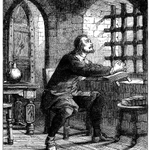
12 NOVEMBER 1660 The English writer who spent around 12 years in prison rather than give up preaching...
On 12th November 1660, John Bunyan, the English preacher and future author of The Pilgrim's Progress, was arrested while addressing a religious gathering at Lower Samsell, near Pulloxhill in Bedfordshire.
His offence? Preaching at an unauthorised religious meeting.
Bunyan had been born in 1628 at Elstow, near Bedford, and worked as a tinker, repairing pots and other metal household goods. He had served in the Parliamentary army during the English Civil War and later became associated with a nonconformist Christian congregation in Bedford. By the late 1650s, he was preaching regularly. But England's political and religious landscape was changing.
In May 1660, Charles II had returned to the throne, ending the period of republican government that followed the Civil Wars. The Restoration also brought renewed support for the established Church of England and increasing restrictions on forms of worship conducted outside its authority. Bunyan's preaching had attracted the attention of local magistrate Francis Wingate. A warrant was issued under an Elizabethan law directed against unauthorised religious gatherings.
Despite warnings that he might be arrested, Bunyan went ahead with the meeting. He was taken into custody and appeared before Wingate the following day. In January 1661, he faced magistrates accused of maintaining unlawful religious meetings and failing to attend the established church. Bunyan could potentially have secured his freedom by undertaking not to continue preaching.
But he refused to abandon what he believed to be his religious duty. He remained imprisoned, with some limited periods of liberty, until his release in 1672. His imprisonment caused enormous hardship for his family. His second wife, Elizabeth, made efforts to secure his release, while Bunyan remained deeply concerned about his children, particularly his blind daughter.
Yet prison did not silence him. During his years of confinement, he continued writing, producing works that included Grace Abounding to the Chief of Sinners, published in 1666. He is also traditionally associated with composing The Pilgrim's Progress during imprisonment, although the precise circumstances of its composition remain debated.
First published in 1678, The Pilgrim's Progress became one of the most influential works of English religious literature. Its central character, Christian, travels from the City of Destruction towards the Celestial City, facing temptation, despair, danger and doubt along the way. Places such as the Slough of Despond and Vanity Fair became part of the English literary imagination. Bunyan's story is particularly striking because he was not imprisoned for committing a violent crime.
He was imprisoned for participating in religious worship that the authorities regarded as unlawful. His experience raises enduring questions about freedom of conscience, the power of the state and the right to express beliefs peacefully.
Bunyan died in 1688, but his writing continued to reach readers across the world....


But perhaps the most uncomfortable question raised by Bunyan's imprisonment is how much has really changed.
More than 360 years later, Britain has legal protections for freedom of religion, conscience and expression. Yet people are still arrested or challenged by police over street preaching. In recent years, some arrests of Christian preachers have ended without prosecution, while others have resulted in compensation or legal challenges over the actions of the police.
And the controversy extends beyond preaching.
Under legislation governing safe access zones around abortion clinics, even silent prayer may fall within the scope of an offence, depending on the circumstances.
The law today is very different from that of 1660. Religious freedom is expressly protected, although the public manifestation of belief can be subject to lawful and proportionate restrictions, including those designed to protect others from harassment and intimidation.
But Bunyan's story invites us to ask an enduring question....Where should the boundary lie between protecting people from genuinely harmful conduct and protecting their freedom to express beliefs that others may strongly disagree with?
Freedom of religion and expression means little if it protects only opinions that everybody finds acceptable. Bunyan refused to surrender his conscience to the authorities of his day. More than three centuries later, the balance between individual liberty and state power remains an important subject of public debate.


1
35
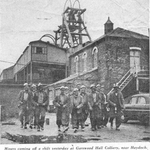
12 NOVEMBER 1932 - A devastating mining disaster near Wigan claimed the lives of 27 men.
In the early hours of Saturday 12th November 1932, a terrible explosion tore through the underground workings of Garswood Hall No. 9 Colliery at Edge Green, Ashton-in-Makerfield, near Wigan in Lancashire. It was approximately 3am.
Men working deep beneath the Lancashire countryside were carrying out their duties in the Ravin coal seam when an explosion of firedamp; a potentially explosive mixture of gases, principally methane, devastated part of the mine.
For the miners caught in its path, there was little warning. Above ground, families and fellow workers would soon face the news that every mining community dreaded. Rescue teams entered the damaged workings despite extremely dangerous conditions.
The effort to recover those trapped was described in Parliament as having been carried out with extraordinary courage in the face of danger.
On 14 November, the House of Commons was informed that 25 men had died. But the tragedy was not yet over. Two more men subsequently succumbed to their injuries, bringing the final death toll to 27.
A formal investigation followed. Sir Henry Walker, His Majesty's Chief Inspector of Mines, conducted an inquiry that heard evidence from 47 witnesses between 6 and 17 December 1932. His findings identified an electrical spark from the mine's signalling system as the ignition source for accumulated firedamp.
Ventilation deficiencies were also central to the disaster. The tragedy demonstrated the terrible consequences when explosive gas and an unsafe electrical system combined underground.
And this was not the first fatal disaster at Garswood Hall. Thirty years earlier, in April 1902, 14 men had lost their lives in an accident during shaft-sinking operations at the same colliery. Mining built communities across Lancashire, supplying the coal that powered factories, railways, homes and industries.
But that contribution came at an enormous human cost. Behind every colliery disaster were families, colleagues and communities whose lives were changed forever.
It is easy to remember industrial history through machinery, production figures and the buildings that survive.
It is much more important to remember the people.
Today, 94 years later, we remember the 27 men who died following the Garswood Hall disaster of 12 November 1932, and the courage of those who risked their own lives during the rescue and recovery operations.
Their lives mattered. Their work mattered. Their stories deserve to be remembered.


Jennifer Thetford-Kay retweeted

Dortmund's official supporters group has criticised their star player Felix Nmecha simply for a goal celebration honouring Jesus Christ - Felix taking his crown off and laying it at Jesus' feet. They say that this is homophobic and transphobic.
It is shocking that even simple displays of Christianity are now interpreted as hateful and intolerable.
We cannot allow these tyrants to win.
Jesus is King.

12 NOVEMBER 1035 King Cnut the Great died... but was he really the foolish king who tried to stop the tide?
On 12th November 1035, King Cnut, also known as Canute, died at Shaftesbury in Dorset. He had ruled England since 1016 and had become one of the most powerful rulers in northern Europe, establishing authority over England, Denmark and Norway, with influence extending into parts of the Baltic world.
Yet ask most people what they know about King Canute, and they'll probably mention one thing. He tried to command the sea to stop coming in! Except the familiar story doesn't mean quite what many people think.
Cnut was a Danish warrior-king who gained the English throne following a prolonged struggle involving King Æthelred II and his son Edmund Ironside. After Edmund's death in November 1016, Cnut became king of all England. He subsequently strengthened his power in Scandinavia, becoming king of Denmark and, in 1028, Norway.
For a period, England formed part of a remarkable North Sea empire, connected through trade, warfare, diplomacy and royal authority. Cnut was not simply a foreign invader who seized the throne and departed. He governed England for almost two decades, worked with established English institutions, issued laws and sought the support of the Church. He also married Emma of Normandy, the widow of Æthelred II, strengthening connections with the previous English royal dynasty.
But what about those waves? According to the famous story, Cnut placed his throne beside the sea and commanded the incoming tide not to wet his feet.
Naturally, the water ignored him. Today, the tale is often used to suggest that Cnut was so arrogant he believed himself powerful enough to control nature.
But the traditional account actually makes the opposite point. In the version recorded by the medieval chronicler Henry of Huntingdon, Cnut used the incoming tide to demonstrate that even a mighty king possessed limited power.
Only God, he argued, could command the natural world. Henry was writing more than a century after Cnut's death, and there is no contemporary evidence proving that the incident actually happened. So the story may be a later moral lesson rather than an accurate account of a real event.
What we do know is that Cnut died in 1035 and was buried at Winchester. His death marked the beginning of a troubled succession. His sons Harold Harefoot and Harthacnut both subsequently ruled England, but the family's hold on the English throne did not last. By 1042, Edward the Confessor, son of Æthelred and Emma, had become king.
Just 24 years after Cnut's death, England would face another enormous turning point: the Norman Conquest of 1066. Cnut's remarkable story reminds us how easily a historical figure can become remembered for one popular anecdote rather than a lifetime of achievement.


Jennifer Thetford-Kay retweeted

12th November, 2008
Marine Neil David Dunstan, aged 32 from Bournemouth, and Marine Robert Joseph McKibben, aged 32 from County Mayo, were killed on patrol, by an IED blast in Garmsir District, Helmand Province, Afghanistan
Lest we Forget these brave Royal Marines 🇮🇪 🇬🇧

Jennifer Thetford-Kay retweeted
12th November 2006
Staff Sergeant Sharron Elliott, age 34
Royal Marine, Corporal Ben Nowak, age 27
Royal Marine Jason Hylton, age 33
Warrant Officer Class 2 Lee Hopkins, age 35
All were killed by an IED blast whilst on the Shatt Al-Arab River, Basra, Iraq
Lest we Forget 🇬🇧

Jennifer Thetford-Kay retweeted

Why has this petition stalled at 12K sigs?? EVERYONE knows that using SEX-SPECIFIC language is the correct description, and resulting PROPER UNDERSTANDING. I will, I will, I will re-tweet: whitehouse.gov/presidential-… @JenKteach

Please read, sign and share the petition:
petition.parliament.uk/petit…
Closes 9 March 2027

Really looking forward to tomorrow's important discussion with Professor Alice Sullivan on how we collect data on sex and gender identity.
Accurate sex-based data isn't just a statistical issue. It matters for clinical decisions, patient safety, safeguarding, research, equality monitoring and the provision of single-sex facilities.
We cannot properly identify needs, assess risks or evaluate outcomes if the information we collect is unclear or unreliable.
An important conversation for everyone working in health, social care, safeguarding and public policy.
📅 Thursday 12 November, 1–2 pm
🎟️ Free online UCL lecture: booking essential.
Apparently only a few tickets left, so do register!
ucl.ac.uk/events/events/2026…

I’d strongly encourage safeguarding leads, NHS and social care professionals, researchers, academics, policymakers, MPs and anyone working with health data to attend this FREE event.
Professor Alice Sullivan has done vital work examining why sex matters in data, research and public policy and what happens when sex and gender are conflated or poorly recorded.
In healthcare, that matters for evidence, diagnosis, treatment, safeguarding, research and patient communication.
An important discussion hosted by SEEN in Health and completely free to attend. Please share it with everyone... especially colleagues who should be in the room. 👇ucl.ac.uk/events/events/2026…
