

Following H5N1, pandemics, our response, & the response environment, since Qinghai in 2005. Enjoying afternoon tea until civilization falls.
Joined August 2012
- Tweets38K
- Following2.9K
- Followers2.2K
- Likes175K



K-in-CT 😷😷😷 retweeted

wow -- CNN broadcast footage of an Arlington guard yelling at a group with Pete Hegseth to "MAINTAIN SILENCE ... PAY RESPECT!" after someone in his entourage started laughing at the Tomb of the Unknown Soldier
Recommend seeing the new Godzilla movie.
It contains a devastating Hiroshima scene.
Which is followed by dreams of revenge.

President Donald Trump says that it was time for the US to secure a complete victory in its war against Iran, at a Veterans Day event in Arlington, Virginia.
🔴 LIVE updates: aje.news/42mj4g

3
172
#H5N1
➡️ Avian flu re-emerges in northwest European poultry
-A trickle of new cases of highly pathogenic avian influenza in Europe during October has become a slow but steady flow over the past two weeks.
- Article Summary:
- Highly pathogenic avian influenza H5N1 has re-emerged in northwest Europe after a summer break, with confirmed outbreaks reported in Germany, Norway, the United Kingdom, the Netherlands, France, and Denmark affecting thousands of poultry across commercial farms.
- As of November 4, 2026, Europe has recorded 328 commercial poultry outbreaks this year, with Germany leading at 43 cases, prompting authorities to reinstate biosecurity measures and protection zones.
- H5N1 confirmed in four German states, Norway, UK, Netherlands, France, and Denmark since late October
- 328 commercial poultry outbreaks recorded in Europe this year, with Poland historically highest at 143 cases
- Control measures reinstated: Avian Influenza Protection Zones activated in England and Scotland; containment protocols in Netherlands
- 2,788 wild bird outbreaks confirmed across 33 European countries, with Germany recording 1,538 cases
- Risk levels raised in France and UK as authorities tighten biosecurity requirements for poultry farms
<snip>
By Jackie Linden
wattagnet.com/poultry-meat/d…

#H5N1
➡️ Bird flu hits Oregon dairy herd as virus strikes Northwest
- A dairy ➡️ herd in Morrow County in Oregon has been infected by bird flu, the USDA Animal and Plant Health Inspection Service confirmed Nov. 10, as the virus continues to strike the Northwest.
- “While this detection is significant, it is not unexpected given the continued spread of (avian influenza) among dairy cattle nationally,” State Veterinarian Ryan Scholtz said in a statement.
- USDA and the Oregon Department of Agriculture are collecting information on the farm, USDA said. Prior to the detection of bird flu, ➡️ milk from the herd was being routinely tested for the virus. Oregon’s only previous case of bird flu was two years ago in the livestock of a backyard producer.
- Bird flu has infected 1,232 dairy herds in 22 states since the outbreak began in March 2024. ➡️ USDA confirmed two new cases in Idaho on Nov. 6, bringing ➡️ the state’s total cases to 180, the second-most in the U.S. behind California.
- ➡️ Washington has had all 43 of its cases confirmed since Oct. 8.
- ➡️ Nationwide, USDA has confirmed the virus in 50 dairy herds in five states in the past 30 days. ➡️ The virus continues to spread despite efforts by USDA to control cattle movements.
- ➡️ The National Association of State Departments of Agriculture and National Assembly of State Animal Health Officials are ➡️ urging USDA to immediately allow willing states to implement voluntary vaccination programs.
- ➡️ USDA has not licensed a vaccine. Researchers, however, have reported success in immunizing dairy cattle from the virus.
By Don Jenkins
capitalpress.com/2026/11/10/…

#H5N1
➡️ Washington: Monroe bird flu: Two fish and wildlife workers exposed to infected birds
- The Washington Department of Fish and Wildlife has confirmed bird flu is present in birds at Lake Tye Park in Monroe, the city announced in a social media post Monday.
- ➡️ Two workers from the fish and wildlife department were exposed to the infected birds, according to Snohomish County Health Department spokesperson Jeff Hodson. ➡️ The health department is in contact with the workers to monitor their symptoms for signs of possible infection. ➡️ The workers were wearing proper personal protective equipment and are also self-monitoring their symptoms.
- Bird flu is a type of influenza A virus that is widespread in wild birds. The disease can cause severe illness and death in wild and domestic birds and can also infect other animals, including livestock.
- The risk of infection to the general public is low, Hodson said, and transmission to humans is uncommon. There is no evidence of human-to-human transmission. People at greater risk include people who have prolonged contact with infected animals, such as poultry and dairy workers.
- There is no evidence of broader community risk, Hodson said, and the health department is not aware of any other bird flu cases in the county.
- The city of Monroe is reminding residents to not handle wild birds that are obviously sick or found dead. If you come in contact with a sick bird, you should disinfect shoes and clothes to prevent the spread of diseases.
- If you see a sick, injured or dead bird, report it to the fish and wildlife department at bit.ly/ReportAvianFlu. If the bird is at a city park, you can notify your local parks department. In Monroe, the contact is 360-863-4559.
- If the bird is on private property, you should follow the state’s instructions for disposing of a dead animal, which can be found at bit.ly/AvianFluDisposal. Double-bag the carcasses and keep them in a cooler with ice until the Washington State Department of Agriculture can arrange for sampling.
- In 2023, at least 70 geese died at Lake Tye Park from suspected bird flu.
By Jenna Peterson
heraldnet.com/2026/11/09/bir…

#H5N1
[These are wild birds.]
➡️ WDFW confirms presence of bird flu in Monroe, WA.
- The Washington Department of Fish and Wildlife has confirmed the presence of bird flu in birds ➡️at Lake Tye Park in Monroe, the city said on Monday.
- :On Nov. 3, FOX 13 reported that wildlife officials detected bird flu in western Washington. Earlier that week, officials also detected the disease in central Washington, which led to someone dying after they were exposed to infected cattle at a dairy facility.
- Then, ➡️ officials located several birds that were ➡️ either dead or showing symptoms of bird flu in Monroe, prompting WDFW officials to investigate the matter.
- On Monday, the presence of bird flu was confirmed, and the city urges the community to continue to report sick, injured or dead birds to WDFW or to the Monore Parks Department.
- If the animal is found on private property, the Washington State Department of Health has instructions for how to dispose of it, which can be found here.
<snip>
By Aydian Ahmad
fox13seattle.com/news/wdfw-b…

#H5N1
➡️ Maryland: Breaking: Avian influenza detected in Worcester County chicken flock
By Keith Demko
- State laboratory testing has detected a case of highly pathogenic H5N1 avian influenza in Worcester County. Following routine surveillance, poultry at the affected ➡️ commercial broiler operation have preliminarily tested positive for the virus.
delmarvanow.com/story/news/l…

K-in-CT 😷😷😷 retweeted

Trump's ICE thugs used her credit card while she was in ICE 🧊 custody!
Hanne Engan, a Norwegian citizen living in California with Type 1 diabetes.
#HoldTheCrooksAccountable
ICE confiscated her continuous glucose monitor & insulin causing her blood glucose to spike over 500 mg/dL, alongside a 10-pound weight loss & infections.
#H5N1
➡️ Bird flu has caused catastrophic die-offs – could a wave of extinctions follow?
- As the IUCN global conservation body prepares to update its red list of endangered species, scientists explain why calculating the true toll of a pandemic is so hard.
- ➡️ It began with the brown skuas. The migratory seabirds had arrived on ➡️ the sub-Antarctic island of South Georgia in 2023, harbouring a deadly passenger. Within months, the southern elephant seals that had come ashore to breed became sick. Mothers and newborn pups were weak and trembling, with many struggling to breathe. ➡️ What followed was a horrific mass casualty event, caused by the highly infectious avian influenza (H5N1).
- ➡️ By 2025, more than 53,000 female elephant seals had died on South Georgia. That is especially alarming, scientists say, because ➡️ the island is home to more than half of the global breeding population.
- A highly potent strain of the bird flu virus, which first began circulating in the northern hemisphere in 2021, ➡️ has now spread to four of the five main southern elephant seal populations. ➡️ In some South Atlantic colonies, more than 90% of newborn pups have died, alongside about half of all adult females.
- “This is a horror show for wildlife,” says Ruth Cromie, coordinator of a UN taskforce on avian influenza and wildlife. ➡️ “The scale of mortality is absolutely unprecedented.”
- In April, the mass deaths prompted the IUCN red list, the global authority responsible for assessing the extinction risks of wildlife, to downgrade the southern elephant seal’s conservation status by two categories, from “least concern” to “vulnerable”.It was the first time a species has had its extinction risk raised explicitly because of H5N1.
= The IUCN listing notes that scientists ➡️ suspect the global southern elephant seal population has declined by nearly a third, and models suggest many populations will take decades to recover.
- So far, scientists have ➡️ found few antibodies to the disease among surviving animals.
- The southern elephant seal is ➡️ just one species that has suffered catastrophic die-offs since H5N1 began burning its way through the world’s wildlife, killing hundreds of thousands of animals, if not millions.
- Avian influenza is now a threat to at least 40 bird species, according to BirdLife International, a global conservation partnership. And yet, no other animal – seal or bird – has seen its conservation status changed.But scientists warn that does not mean there are not more species being pushed to the brink by this deadly pathogen.
- Assessing a species’ conservation threats is a painstaking scientific and bureaucratic process. To date, the red list has analysed nearly 176,000 species’ extinction risks, and aims to reach 260,000 species by 2030, as well as 142,000 reassessments.
- Most species are only reassessed by a panel of expert scientists once every decade or so – no matter the emerging threats they may face. The red list itself is updated two to three times a year.Birds are the exception.
- BirdLife International serves as the authority for assessing the world’s 11,000-plus bird species, reviewing hundreds of birds every year. For that reason, our understanding of the extinction risks of birds is better than for any other animal group. In an epidemic where birds are the foremost victim, that is obviously convenient.But there can still be a lag when deaths are coming faster than scientists can convene and publish under peer review. “We still need to get these things out there,” says Rob Martin, senior red list officer at BirdLife International.
- ➡️ Species are generally “uplisted” when they have experienced a sustained population decline over three generations, a small population is in decline or living within a restricted range, or calculations show that the species could become extinct in the near future, given existing population dynamics. ➡️ Scientific uncertainty often underlies such reviews. Assessors need to know the animal’s baseline population before they can determine if it has crossed a threshold towards extinction. For many species, such figures are in short supply. And without knowing a species’ starting point, it is difficult to calculate the true toll of an outbreak.
- Scientists with BirdLife International say they are now focused on reassessing four species that have suffered H5N1 outbreaks large enough to affect their conservation outlook: the great skua, northern gannet, Peruvian pelican and Humboldt penguin.
- In Scotland, home to more than half of the world’s great skuas, the population of monitored colonies fell by 76%between 2021 and 2023.
- Meanwhile, the northern gannet, the largest seabird native to the North Atlantic, declined dramatically in two breeding populations in the UK as bird flu spread: by 43% at Bass Rock in Scotland between 2021 and 2024 and 47% at Grassholm in Wales between 2015 and 2024.These are two of the largest northern gannet colonies, and extrapolating from such figures would imply a steep population fall, say BirdLife International assessors, potentially qualifying the species for uplisting from “least concern”.But when scientists took a broader look, they found that the entire north-eastern Atlantic population had declined no more than 17% between 2013 and 2024. “Rushing to judgment a few years ago, with only partial data available and no sense of whether the whole population was declining, would have been premature and could have led to a misclassification,” BirdLife International scientists say.
- Martin cautions that it is important to prevent “kneejerk” uplisting after a mass mortality event, as listings such as “critically endangered” can trigger dozens of conservation funding proposals and divert government spending. “We need it to be a tool that the community can reliably use and say ‘we trust this,’” he says.
- About a fifth of the pelican population living in Peru’s marine protected areas are thought to have succumbed to bird flu in 2022 and 2023. But the Peruvian pelican is considered an abundant bird.“It’s difficult to get accurate numbers for the population pre- and post- [the H5N1 outbreak] because they’re in quite isolated areas without sufficient funding for monitoring,” says Martin.
- ➡️ Counting the dead often poses an even greater hurdle, especially for migratory species that travel vast distances over oceans. ➡️ “You usually don’t find most of the dead birds. ➡️ If they die at sea, they’re lost,” says Wouter Langhout, a policy consultant at BirdLife International.The flightless Humboldt penguin, which spends most of its life on land, has made such tallies easier. In 2023, scientists counted nearly 3,000 dead penguins along Chile’s coasts, prompting another review of the already vulnerable species, which was last assessed in 2020.
- Even when population and mortality numbers are easy to come by, spectacular mass die-offs – as gruesome as they may be – do not guarantee a species is inching towards extinction. For long-lived seabirds, large waterbirds and elephant seals that are slow to reproduce and late to sexually mature, a large loss of breeding adults can translate into severe population declines in just three generations – a key red-list criterion for uplisting.But fast-reproducing animals or those with abundant populations may be spared such long-term consequences, especially if more adult males die than fertile females.
- In the case of the Antarctic fur seal, for example, far more males have succumbed to the disease than breeding females, says Jaume Forcada, a marine mammal expert and population biologist at the British Antarctic Survey who has studied Antarctic fur seals for 25 years.That is because male and female fur seals behave very differently. Whereas the males come ashore for about two months, often battling with one another on beaches, “when females arrive, they pup, and then they go out very quickly. They’re less exposed to other animals apart from the moment when they are rearing their pup,” Forcada says.In turn, “the males were very severely affected, whereas the females were absolutely fine. It’s like it was a completely different species. It hadn’t affected them.”
- If scientists uncover a population decline that would warrant uplisting, attributing it to avian influenza may not be cut and dried, Martin cautions. For example, BirdLife recently reassessed the African penguin, which was heavily affected by avian influenza.Although it was uplisted to critically endangered in 2024, assessors determined that food loss linked to commercial fisheries and the climate crisis – not bird flu – ultimately drove its decline.
- The 3,000 dead Humboldt penguins in Chile have also triggered debate among scientists. Penguins often drown in gill nets and 2023 was also an El Niño year, which may have had a hand in the birds’ deaths.“That year could be described as a ‘perfect storm’, which produced highly unfavourable conditions for Humboldt penguins,” says Alejandro Simeone, a scientist in the IUCN’s penguin specialist group.“While it is quite possible that some Humboldt penguins died from [avian influenza], current evidence makes it difficult to assess the true extent of the virus’s role in this decline,”
- Simeone says.In the end, it may not be the most visible victims that are in the greatest peril. Birds with tiny isolated populations – often those inhabiting small islands – can quickly move towards extinction even if only a handful of individuals die.“For species that are already under threat and declining for other reasons, and then you put in something like avian influenza, that might be the thing that then pushes them over the edge,” Cromie says.
- To date, scientists say they are not yet aware of any such cases from bird flu, but are anxiously monitoring Australia, where H5N1 was first detected on the mainland in June.The endangered regent honeyeater in an aviary at Sydney’s Taronga zoo this year, where vulnerable species of birds are being vaccinated against bird flu.
- A lot of Australian species still do have quite wide ranges, but there’s a very specific habitat that they rely on,” Martin says.The country is also home to a number of critically endangered birds that can be found nowhere else in the world, such as the orange-bellied parrot and the regent honeyeater.Waiting for uplisting, Cromie adds, may miss the bigger picture. “We have to be focusing on taking these other pressures off,” she says. “If we become very fixated on only waiting to do something because of a change of status, there’s such a lag there. We’ve got to be doing other things at the same time.”
- Already, fur seals and dolphins in Australian waters have begun to die from bird flu. And things are about to get worse for the now-vulnerable southern elephant seal.
- ➡️ In August, the government’s Australian Antarctic Division said it would evacuate its research station on Macquarie Island in anticipation of mass seal die-offs if H5N1 reaches its shores. Macquarie is the last stronghold of southern elephant seals that, until recently, had remained untouched by the virus.
- Though the risk to human health is low, ➡️ the agency said it hoped to prevent psychological distress for ➡️ staff who could witness the deaths of thousands of newborn seal pups.About 5,000 of the world’s largest little penguin colony, on Australia’s Phillip Island, were vaccinated against H5N1.
- “Our biggest fear is always that we completely miss something that suddenly is critically endangered. That’s what we’re guarding against,” Martin says.Find more age of extinction coverage here, and follow the biodiversity reporters Rebecca Ratcliffe, Phoebe Weston and Patrick Greenfield in the Guardian app for more nature coverage.
By Gloria Dickie
theguardian.com/environment/…
K-in-CT 😷😷😷 retweeted

A USF professor and nurse from Nigeria has been in ICE custody for 2 months. She no longer appears in the database but might be in Louisiana. She had a protection from removal order/no record. This is inhumane we must get these people out of detention.
abc10.com/article/news/polit…

#ebola
[Out of 11,000 cases, only 3,000 have recovered. He characterizes this as “good news.”]
➡️ WHO Director-General's opening remarks at the Member State briefing on Ebola outbreak in the Democratic Republic of the Congo – 11 November 2026
<snip>
- During an attack on the town of Cantine-Aloya last week, 66 civilians were killed, including three health workers, and three health facilities were looted and burned.
- More than 1000 contacts have been lost to follow up, and three confirmed cases are unaccounted for.
<snip>
who.int/news-room/speeches/i…

2
108
K-in-CT 😷😷😷 retweeted

Oregon and Idaho have reported Avian Flu positive dairy herds. For Oregon, its the first dairy (they had a positive backyard swine on 30oct2024).
For Idaho, the two dairies on 06nov2026 were the 179th and 180th
As per RFKjr, re-infections are not allowed to be reported publicly

K-in-CT 😷😷😷 retweeted

If Hakeem Jeffries can't manage this simply vote...how the hell is he going to be Speaker of the House?

Kamlager-Dove on Hegseth Impeachment: We knew that this vote was coming, so people should have gotten their raggedy selves up these steps to vote. There is no reason why we should have lost this vote because of attendance issues.
You know this man should not be in this position. That’s why he got up at 8 o’clock in the morning with his sorry self to plead to the American people.
So shame on folks who are not here. Because these people lost. They lost, and they still found a way to show up to table this bill. Shameful.


K-in-CT 😷😷😷 retweeted

Kilmar Abrego Garcia was sent to a foreign gulag in El Salvador and only one Democratic elected official went to visit him.
This is why we stand with @VanHollenForMD for Senate Majority Leader.
K-in-CT 😷😷😷 retweeted
When a human, mink, pig or Dairy-Cow-Udder become co-infected with H1 and Avian H5 = a “recombination”
This “gain-of-function” event has been celebrated as “natural infection” by RFK and Aaron Siri
=flu with ability to infect humans who have little protection

Summary of the H5N1 situation.
The USDA is now reporting infected herds in 6 states (up from just 1 or 2 states not that long ago).
1/
aphis.usda.gov/livestock-pou…
#H5N1
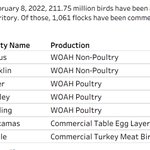
Two more backyard flocks in Montana & Ohio have been reported by APHIS.
aphis.usda.gov/livestock-pou…

#H5N1
The latest dairy herds reported by APHIS. In addition to the first infection in Oregon, and the additional cases in Washington we have heard about, there are two more herds reported in Idaho. Idaho may be the source of this spread.
aphis.usda.gov/livestock-pou…

K-in-CT 😷😷😷 retweeted
Nothing says change like re-electing a 75 year old man who has been in political office for 52 years.
K-in-CT 😷😷😷 retweeted

“Today’s rich people are richer than ever, and that seems to have made them worse than ever. More shameless. More out of touch. Less empathetic. Thinner-skinned. And, for some mysterious reason, angrier. They’re people who consider equality for others oppression for themselves.”

