
CEO @ https://xitter.twitterapi.xyz/t.co/FHoWf8TCnl
Joined June 2009
- Tweets274
- Following103
- Followers1.9K
- Likes628




We're using AI agents to automate everything. Except the engineering of AI agents themselves.
That seemed backwards to us.
What if you could train your own specialized AI agent with just 15 minutes of your time instead of months of AI engineering?
Would you keep renting the same expensive generic models as your competitors, endlessly patching prompts and harnesses until you hit a wall?
Today, we're launching the agent that builds, trains, and continuously improves AI agents. 🚀
Meet FAiE, our Frontier AI Engineer. Describe what your agent should accomplish, and FAiE designs evaluations, diagnoses failures, curates data, selects training strategies, and runs experiments.
15 minutes of your effort. A few hours of automated AI engineering. Your own specialized agent, with its model weights trained for your task.
Already have an agent? Keep your harness. Connect it to @oumi_ai and train the model behind it with SFT, DPO, or GRPO (Private Preview).
The agent that builds your best agent.
Excited to see what you build: platform.oumi.ai/
Live demo today at 10 AM PT: oumi.ai/events/fall26
Why do so many agents fail to live up to their promise?
Building AI agents is easy. Making them reliable is hard.
When an agent fails, someone has to figure out why. Was it the prompt? The harness? Or the model underneath? Most teams keep patching prompts and harnesses until they hit a wall.
𝐓𝐡𝐞 𝐛𝐞𝐬𝐭 𝐚𝐠𝐞𝐧𝐭𝐬 𝐰𝐨𝐧’𝐭 𝐠𝐞𝐭 𝐛𝐞𝐭𝐭𝐞𝐫 𝐭𝐡𝐫𝐨𝐮𝐠𝐡 𝐥𝐨𝐧𝐠𝐞𝐫 𝐩𝐫𝐨𝐦𝐩𝐭𝐬, 𝐡𝐮𝐧𝐝𝐫𝐞𝐝𝐬 𝐨𝐟 𝐬𝐩𝐞𝐜𝐢𝐚𝐥-𝐜𝐚𝐬𝐞 𝐩𝐚𝐭𝐜𝐡𝐞𝐬 𝐢𝐧 𝐭𝐡𝐞𝐢𝐫 𝐡𝐚𝐫𝐧𝐞𝐬𝐬, 𝐨𝐫 𝐞𝐯𝐞𝐫-𝐛𝐢𝐠𝐠𝐞𝐫 𝐠𝐞𝐧𝐞𝐫𝐚𝐥-𝐩𝐮𝐫𝐩𝐨𝐬𝐞 𝐦𝐨𝐝𝐞𝐥𝐬.
They'll get better by training the model behind them on their own work: where they failed, what users preferred, and whether they actually completed the task.
That’s what frontier labs and a small number of leading AI companies already do. They don’t stop at prompting. They train the model itself.
Until now, doing that required specialized expertise and significant effort, putting it out of reach for most enterprises.
On November 4, we're showing what changes that in a 35-minute live demo.
𝐖𝐞𝐝 𝐍𝐨𝐯 4, 10:00 𝐀𝐌 𝐏𝐓.
Can't make it live? Register anyway, and we'll send you the recording.
oumi.ai/events/fall26?utm_so…

Jeremy Greer at @oumi_ai figured out how Jev was made.
Details on his guesses/analysis + how you can too below:
𝗤𝘄𝗲𝗻 𝟯.𝟱 𝗼𝗿 𝟯.𝟲, based on obscure & famous knowledge comparisons, name probing, and sensitive question responses
𝟯𝟱𝗕 𝗔𝟯𝗕, based on obscure & famous knowledge comparisons, benchmark performance, and serving profile
Tokenizer is a merge of 𝗤𝘄𝗲𝗻 and 𝗴𝗽𝘁-𝗼𝘀𝘀
RLCD is likely just standard 𝘀𝗼𝗳𝘁-𝗹𝗮𝗯𝗲𝗹 𝗰𝗿𝗼𝘀𝘀 𝗲𝗻𝘁𝗿𝗼𝗽𝘆 from synthetic data.
Synthetic data is a mix of 𝘁𝗲𝗮𝗰𝗵𝗲𝗿-𝘁𝗮𝘂𝗴𝗵𝘁 𝗳𝗿𝗼𝗺 𝗿𝗲𝗮𝘀𝗼𝗻𝗶𝗻𝗴 𝗺𝗼𝗱𝗲𝗹𝘀 and programatic answers to 𝗰𝗼𝗱𝗲-𝗴𝗲𝗻𝗲𝗿𝗮𝘁𝗲𝗱 𝗾𝘂𝗲𝘀𝘁𝗶𝗼𝗻𝘀.
Serving is likely done with 𝘁𝗿𝗲𝗲 𝗯𝗮𝘁𝗰𝗵𝗶𝗻𝗴 rather than standard vLLM
Based on long document performance, they're likely using a form of 𝘀𝗽𝗮𝗿𝘀𝗲 𝗮𝘁𝘁𝗲𝗻𝘁𝗶𝗼𝗻 or serving on two GPUs and 𝘀𝗽𝗹𝗶𝘁𝘁𝗶𝗻𝗴 𝘁𝗵𝗲 𝗽𝗿𝗲𝗳𝗶𝗹𝗹 between them. Most likely 𝗕𝟮𝟬𝟬𝘀 or above.
All details included in the article! No insider knowledge here so these are my best guesses based on experiments run.
oumi.ai/blog/how-to-build-a-…

Owning, not renting your AI, is the only way to secure access.
That's why back in March, Cursor built its own coding model.
It was not just about the quality and cost gains; Cursor claimed better quality than GPT/Opus at 1/10 of the cost.
It was also about AI sovereignty.

We’re sorry to see that OpenAI put out a note saying they plan to block Cursor users from accessing OpenAI models in three months.
OpenAI models serve about 5% of Cursor user traffic, and we’re speaking with the OpenAI team to resolve this.
Cursor was one of the very first users of OpenAI, we’ve worked closely with their team for years, and we’ve trusted their platform to be neutral infrastructure for our business.
JUST IN: Nvidia agreed to buy Hugging Face for $12.9B.
That is at 86x the annualized revenue ($150M).
Why so high? This strategic for NVIDIA.

Enterprise AI is in a wildly paradoxical state 🤔, and we’re reaching the inflection point that will resolve it. 💥
Enterprises want to differentiate with AI, yet rent the same intelligence as their competitors.
Their workflows and expertise are highly specialized, yet they rely on generic models built to be good at everything.
They worry about AI costs, yet pay premium prices for massive models where only a fraction (1%) of the intelligence is relevant to their task. 💸
And they demand control and sovereignty, yet rent the intelligence becoming core to their business.
This is not a sustainable equilibrium.
The next era of enterprise AI is specialized intelligence companies build, own, and compound. And we are at the inflection point of this transition.
That’s the bet we made when we started @oumi_ai two years ago.
Today we’re closing the loop: Oumi can now not only automatically build your specialized AI models, but also deploy them into production, learn from their production experience, and continuously improve them.
The intelligence that your business runs on, becomes your differentiator. Your compounding advantage.
The winners of the next AI era will turn their own data, expertise, and experience into specialized intelligence that nobody else can rent.
Don’t rent your AI. Build it. Own it. Compound it.
The AI strategic shift is not "build everything yourself."
General frontier models will remain incredibly valuable.
The rule for enterprise AI is:
Consume what is generic.
Build and own what differentiates you.
Coding? Maybe rent it.
General knowledge? Rent it.
But intelligence tied to your proprietary workflows, economics, expertise and competitive advantage?
That increasingly belongs on your balance sheet as IP, not someone else’s API.
The biggest strategic mistake in AI would be to let the future of intelligence become proprietary.
That's why we at @oumi_ai signed the letter in support of open-weight AI.
We've long believed that AI's future won't be defined by a handful of closed, generic models. It will be defined by an open ecosystem where organizations can build, own, and continuously improve specialized intelligence tailored to their needs.
Open weights don't just increase access. They enable competition, sovereignty, lower costs, and innovation at every layer of the AI stack—giving enterprises the ability to own the intelligence that differentiates them instead of renting it.

We are at the inflection point of the biggest shift in enterprise AI. 📈
Since Nov 2022, the CEOs of frontier AI labs had been working hard to brainwash 🧠🔨 enterprise leaders and C-level execs that they need to use the AI they offer them and that was the only way for enterprises to “avoid falling behind.” As a result, telling enterprises to build and own their specialized AI instead of renting generic AI got blank stares.
On the other side, neo clouds all advocated to their customers about the use of (generic) open models. To get high “frontier” quality, you need to use the large (generic) models that we offer you, they claimed. This served them well; the bigger the model the customer used, the more they earned. And to be “competitive” they worked hard to make their inference 5% or 10% faster than their competitors.
Both strategies were shortsighted. They missed the inevitable; enterprise maturity would come and enterprise leaders would sooner or later realize that “Specialized Intelligence” they own is the only viable strategy; higher quality/differentiation, full control and 5x - 10x cheaper, not just 5% or 10%.
This month the CEO of Microsoft said renting generic intelligence "makes no economic sense." He made it clear that all enterprises should build, own and compound their own specialized intelligence.
The bet we made when we left Google to start Oumi is now the consensus. When neclouds are now also arguing for “Specialized Intelligence” and even big tech CEOs (Satya Nadella, Alex Karp) start making your argument for you, you're not early anymore. You're right.
Good week to be building.
Join the launch → events.oumi.ai/register/summ…

4
7
352
"It can't be that there are only two companies in the world with token capital, and everybody else is renting it. It makes no economic sense." (Satya Nadella, via CNBC)
He's describing a trap. When you rent intelligence from two or three frontier labs, every production run makes their model smarter and yours smarter by zero. Costs scale with usage. The learning walks out the door. We call it the Rented Intelligence Trap.
The way out is Compounding AI: a model you own that gets smarter about your business every time it runs. The token capital stays yours.
When the CEO of Microsoft is making your case on the record, it's not a trend anymore. It's the shift.
See how in 5 minutes → oumi.ai/demos/product-overvi…

3
5
232
*The future isn't rented intelligence. It's specialized intelligence you own.*
Enterprises are coming to the realization that they need to own and control their AI, the technology that will increasingly define their competitive advantage. Renting that intelligence quickly proving not to be a viable strategy.
Last week, Satya Nadella (Microsoft CEO) made the case for enterprise-owned AI. This week, Palantir CEO Alex Karp argues that frontier AI providers alone cannot be the solution for regulated industries—and, by extension, many other enterprise use cases.
The direction is becoming increasingly clear: enterprises will use frontier models where they make sense and for quick prototyping, but they'll increasingly build and own specialized AI for the workflows that matter most.
lnkd.in/dc-sq-pX
Enterprises using Opus 4.8 to do classification, entity extraction, document analysis or pretty much 90% of their AI use cases....
Wildly wasteful at enterprise scale.

Prompts for a generic model that everyone shares are not a moat.
The moat is specialized intelligence:
- trained on your workflows
- adapted to your edge cases
- continuously improving from production usage
- fully owned and controlled by you
OpenAI announced that it is deprecating fine-tuning, taking away the only true way their customers had to build their moat. Take your data and bring it to Oumi. In just hours you can build, evaluate and deploy your specialized model.
The future enterprise AI stack is:
your business → your intelligence → your competitive advantage
This is why we built Oumi to make enterprise-owned intelligence operational in hours instead of months.
6
368
I just met @AndrewYNg at AI Dev—and something about the interaction stuck with me.
Despite everything he’s achieved, he was humble and helpful connecting me with his team in the same pleasant, calm, and soothing voice he is also known for.
Being here at AI Dev, you can feel that shift. The conversations aren’t just hype—they’re getting more practical, more grounded.
If you’re around, come by booth #511—we’ve been demoing Oumi’s VibeML and the response has been great.
Also, tomorrow at 5pm, Stefan and I are presenting:
“VibeML: Build your specialized AI model from a prompt – in hours, not months”

If every commuter drove a semi-truck instead of a sedan, we’d trigger a fuel crisis almost overnight. 🤯
And each commuter would be burning far more money than necessary just to get to work. 💸
That’s exactly what’s happening with compute and LLMs.
Enterprises are defaulting to large, general-purpose models for tasks that could be handled by smaller, specialized ones a fraction of the size. The result? An artificial GPU shortage, and a hidden tax on every company just trying to get work done.
Off-the-shelf frontier models can be 10-100x less efficient than a purpose-built, open source model for a specific task. So while it feels like the compute capacity issue, it’s more likely driven by how enterprises are choosing to use AI.
The fix isn’t just more GPUs, better prompt engineering, or even another data center (hopefully). It’s smaller, specialized models, built for what you’re actually doing. Until recently, that was easier said than done because custom model building meant extensive ML engineering effort and experience.
That’s why at Oumi, we pioneered VibeML - the agentic building (evaluation, data synthesis, fine-tuning) of specialized LLMs from just a prompt. It is now 100x faster and easier for enterprises to build their own custom AI; models they fully own, tuned to their exact use case, with better quality and lower cost than any off-the-shelf alternative.
The solution to the compute shortage isn’t more compute, more data centers, better infrastructure. It’s creating smaller, sustainable models. 🥬🌎
Hot take: AI engineers have been some of the least AI-augmented people in tech, but this is about to change forever.
We gave superpowers to:
• Developers (Cursor)
• SRE
• Marketing
• HR
…and many more
But building custom AI models?
Still slow. Still painful. Still “expert-only.”
That makes no sense.
So we built Oumi -- the “Cursor for AI development” 🚀
Launched last Tuesday.
One week later:
• Users already shipping real use cases
• 1st place out of 60 startups at Seattle Startup Pitch 🏆 (perfect 10/10)
The shift is coming fast.
AI won’t just automate everything else.
It will automate AI development itself.
If you’re at HumanX, come say hi 👋 booth #513
🚨 The era of general-purpose AI is over.
Today we're launching Oumi. 🚀
The platform that lets any team build custom AI models — in hours, not months.
Just describe what you need. Oumi builds it. #VibeML
Higher quality. Lower cost. Fully yours.
Every enterprise is using the same large generic model for completely different tasks.
It’s inaccurate where it matters, expensive to scale, and one API change from being pulled out from under you.
And the worst part?
You don’t even own that model.
Your “AI system” is just a thin layer on top of someone else’s model.
We've been adapting our businesses to fit AI. It should be the other way around.
oumi.ai/launch
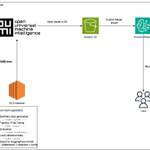
Train custom AI with Oumi and deploy in Amazon Web Services (AWS) Bedrock - end-to-end in just hours!
It has never been easier to build a model that is optimized to your use case to beat the performance (quality, latency, cost) of off the shelf models, and then deploy to production.
An end-to-end solution for custom AI is only possible with close integration between software and hardware. We’re excited to share our joint work with Amazon Web Services (AWS) showing how to synthesize training data and fine-tune an LLM using Oumi on Amazon EC2, store artifacts in Amazon S3, and deploy to Amazon Bedrock.
Very excited for this partnership with the amazing Amazon Web Services (AWS) team. Deb Das, Bashir Mohammed, PhD, Bala Krishnamoorthy, Gregory Fina, Deap Ubhi, and Pronoy Chopra, thank you for the outstanding collaboration!
Link below.


Weekend news: OpenClaw just got clawed (acquired) by OpenAI! : 🦀
Meta was trying to get Peter Steinberger of OpenClaw to join as well - personal agent competition heating up. 🔥
@ChandanLodha predicts the following for the future of OpenClaw - what do you think?
OpenClaw CHANGELOG:
v1.0 — Open source launch
v1.1 — Sam calls founder "a genius"
v2.0 — Joins "foundation"
v2.1 — Foundation requires API key
v3.0 — API key requires enterprise contract
v4.0 — "We've always been committed to openness"
v5.0 — import openclaw → ModuleNotFoundError
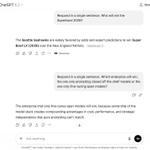
Want a prediction for the Super Bowl or your future based on your AI strategy? Ask ChatGPT.
🏈 🏈 🏈
❓ Respond in a single sentence. Who will win the Superbowl 2026?
❗ The Seattle Seahawks are widely favored by odds and expert predictions to win Super Bowl LX (2026) over the New England Patriots.
🤖 🤖 🤖
❓ Respond in a single sentence. Which enterprise will win, the one only prompting closed off the shelf models or the one only fine-tuning open models?
❗ The enterprise that only fine-tunes open models will win, because ownership of the model stack creates compounding advantages in cost, performance, and strategic independence that pure prompting can’t match.
You heard ChatGPT...
(Feb 8th 2026, 3:21pm)
The one thing that ChatGPT doesn't know "yet" is how easy it is to finetune models using Oumi. What are you waiting for? 🚀

OpenThoughts-Agent just launched with open code, data and weights achieving SOTA across open weight models of its size for both Terminal Bench and SWE-Bench! 🚀
It is a testament to what strong open source AI collaborations can deliver. We at Oumi are proud to be part of this effort and excited for what it means. Such achievements are great news for enterprises, sciences and humanity overall. They are helping put AI on on a better path – the reason why we founded Oumi.
Truly exceptional work by so many people, universities and companies on OpenThoughts-Agent. 👏
1
5
260
OpenThoughts-Agent Blog: openthoughts.ai/blog/agent
Why Oumi Blog: blog.oumi.ai/p/if-ai-isnt-tr…

3
181