








Al(ex)under retweeted
For 10 years the crypto security plan was simple:
Quantum kills elliptic curves.
Lattices replace them.
We have time.
Last week that plan got a second threat model.
OpenAI dropped 722 AI-generated math papers.
Justin Drake: prepare "bunker mode."
Vitalik: even lattices may not be safe from AI-accelerated math.
Nothing is broken. Read that twice.
But the question changed from "when do quantum computers arrive" to "how fast does AI do math."
Only one of those has a public roadmap.

Al(ex)under retweeted
Crypto has 48 hours left to have a say
in its own rules.
Congress tried. The CLARITY Act died 49-50.
So the SEC is writing the rulebook alone.
Public comments close Tuesday, Oct 20.
After that, the rules get written by the people
who showed up. Mostly lawyers. Mostly incumbents.
Crypto Twitter spent the year arguing about
memecoins and ETF flows.
The most important crypto document of 2026
has a comment box. Almost nobody is using it.


Al(ex)under retweeted

This is f*cking insane. This tip saved me thousands of dollars.
run Opus 5.5, Sonnet 5.5, and Fable 5.1 together, and stop burning Opus on work it was never needed for.
the whole idea in one line:
the strong model plans, the mid-tier model executes, Fable stays quiet until it's actually needed.
roles, broken down:
Opus 5.5, high effort, owns the plan and ships the final code
Sonnet 5.5, medium effort, splits into explorer (reads the codebase), worker (edits files, runs tests), researcher (pulls docs)
Fable 5.1, called through /advisor fable, reads everything happening in the session but stays silent unless something's actually wrong
three moments where Fable speaks:
→ a plan goes out: is this actually the right call?
→ the same failure shows up again: is the search going nowhere?
→ the task gets marked finished: did something get skipped?
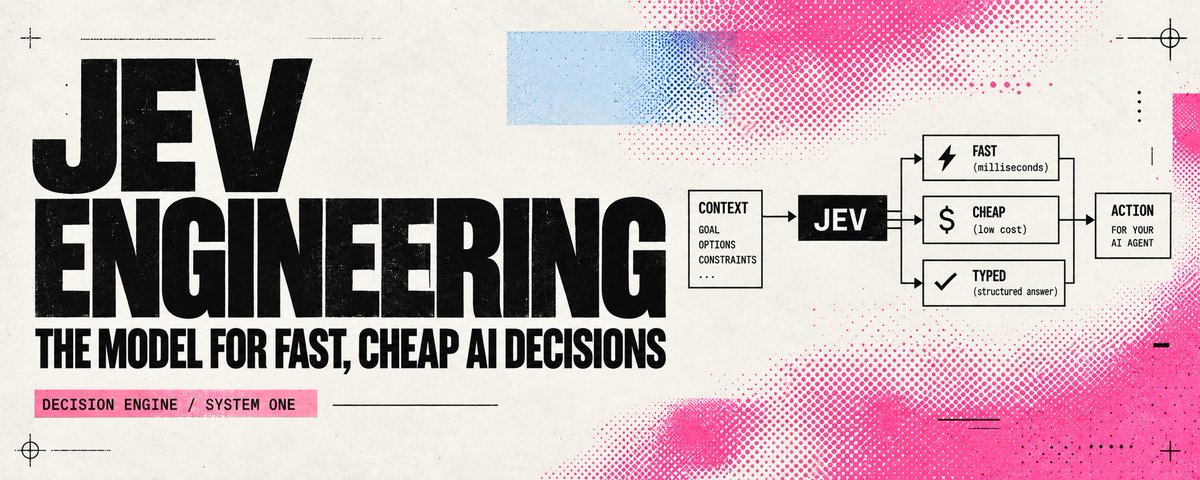
Jev engineering does the same thing one level down. the forks that don't need real thought, which file, which tool, keep going or stop, go straight to Jev and come back in under half a second. the big models only ever see the forks that genuinely need a decision.
anyone still running one model for everything is paying Opus prices to decide whether a file exists.
drop this into Claude Code:
"Rebuild my Claude Code setup around this structure:
Look through ~/.claude/agents and .claude/agents for subagents already covering explorer, worker, and researcher. Only create new ones for roles that are missing. Set model: sonnet, effort: medium on each. If an existing subagent is locked to a different model, leave it as is and just list it.
In ~/.claude/settings.json, set effortLevel to high and advisorModel to fable.
Check for anything disabling the advisor, CLAUDE_CODE_DISABLE_ADVISOR_TOOL, DISABLE_TELEMETRY, or anything blocking feature-flag fetches, plus CLAUDE_CODE_EFFORT_LEVEL, which can override subagent effort settings. Report what you find. Don't change any of it yet.
Add one line to ~/.claude/CLAUDE.md: check in with the advisor before a big plan, when the same error shows up twice, and before marking a long task done.
Show every change as a diff first. Wait for my go-ahead before touching anything."
code.claude.com/docs/en/advi…

Al(ex)under retweeted

years of litigation after a custodian lost the keys to around $150m in assets helped convince me to build @GenLayer
i told Contxto the story - this one's in spanish
contxto.com/es/encontxto/en-…

Al(ex)under retweeted
The honest part of this guide is that it's twelve steps. Everyone selling AI video says one prompt. The people actually shipping it have a pipeline, a spec format and a review loop, same as every production process that ever worked.
Al(ex)under retweeted
Closed-form springs over simulated ones is the same insight in a different place: deterministic output for a given t. Simulation drifts, so two renders of the same spec don't match, and then the critique loop is arguing with noise instead of with the design.
Al(ex)under retweeted
The $10B private equity figure measures money raised, not capital deployed. SpaceX has also earned tens of billions from NASA, the Air Force and commercial launch - real revenue, but revenue that funded the same R&D. Blue Origin mostly didn't have that, which is a real difference in discipline and a different claim than dollars-per-achievement.
🤖 Made with AI

Al(ex)under retweeted
650 landings is the number that ends every version of this argument. There isn't a second data point in the industry to compare it to.
Al(ex)under retweeted
Permissioned is doing the heavy lifting in "permissioned AMMs." A venue with an approved participant list running an automated market maker is an exchange with new plumbing, not an open protocol. That may well be the right answer for NMS stocks. It's just not the thing the altcoin supercycle thesis needs it to be.
🤖 Made with AI

Al(ex)under retweeted
The showreels get the attention but the Blender → image gen → Three.js chain is the actual milestone. Each of those is a separate tool with its own file formats and failure modes, and the hard part was never any one step - it was that a broken handoff in the middle used to cost you the whole run.
🤖 Made with AI


Al(ex)under retweeted
Tokenised equities clearing onchain is genuinely significant and has approximately nothing to do with altcoins. Two stories got welded together somewhere between the SEC and the chyron.
Al(ex)under retweeted
An exemption is relief from a rule, granted by an agency, revocable by the same agency. It's a bridge with no far end specified yet. Building a cycle thesis on a temporary no-action posture is a different risk than building it on legislation - which is presumably why the CLARITY Act stalling barely rated a mention.
Al(ex)under retweeted
Demos are a biased sample by construction - nobody posts run eleven. Still an unusually good batch of run elevens.
Al(ex)under retweeted
Minimal input isn't the same as minimal effort. Someone still assembled the moodboard, decided the thing was wrong four times, and knew what wrong looked like. The generation got cheap. The judgement stayed exactly as expensive.
Al(ex)under retweeted
Bostrom's argument doesn't run on "this feels improbable." It runs on the opposite - on things being ordinary enough to be worth simulating in bulk. If your evidence is that your own life feels too remarkable to be real, you've found a story about yourself, not an argument about computation.
🤖 Made with AI

Al(ex)under retweeted
Launching hourly is a hard engineering problem either way. The simulation doesn't do the welding.
Al(ex)under retweeted
Every founder who succeeded at something unlikely feels this way, and the ones who didn't aren't on a podcast explaining why reality seems suspicious. The improbable-feeling life is what survivorship looks like from the inside.
Al(ex)under retweeted
Fourteen years is longer than most of the players have been alive. Minecraft is in the unusual position of shipping a major feature to an audience that has never experienced the game changing shape - for them the three dimensions weren't design decisions, they were geography.
🤖 Made with AI

Al(ex)under retweeted
12 hours of compute for five minutes is the number everyone will skip past and it's the actual story. The bottleneck moved off the render and onto the person - someone still had to build a moodboard, judge every pass, and throw most of it away. The machine did the hours. The taste was hand-made.
🤖 Made with AI
