

Mohammed Al-Khalili – Journalist from Gaza I document pain, resilience, and the daily lives of people under war. Here, the truth is written.
Joined September 2022
- Tweets277
- Following2.7K
- Followers1.6K
- Likes1.1K




Pinned Tweet
I never imagined that one day I would have to ask for help just to get through everyday life.
Living in Gaza has become an exhausting struggle. The cost of food, rent, and basic necessities keeps weighing on us, while financial pressures make each day harder than the last.
Behind this photo is a person trying to hold his family together and find a way forward.
I'm not asking for a comfortable life. I'm simply hoping for a chance to give my family some stability and peace.
If you can support us, or even share our story, it would mean more than words can express. 🇵🇸
gogetfunding.com/from-ruins-…

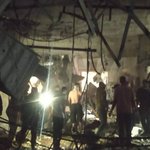
A hospital should be a place of healing, not destruction.
Heavy destruction has been reported at Nasser Medical Complex in Khan Younis, southern Gaza, after an Israeli airstrike struck its second floor.
Patients, medical staff, and an already struggling healthcare system are left facing yet another devastating blow.
Gaza's hospitals must be protected. 🇵🇸

The rain stopped. The suffering didn't.
In Gaza, families are still drying soaked blankets inside flooded tents.
Children wait for a dry place to sleep.
When the storm ends, their struggle doesn't. 💔🇵🇸

La détresse des habitants après les fortes pluies à Gaza. Un sujet d'@arnauldmiguet avec M. Salah H. Sbeata A. Salmane @chloe_dvg et @maelbenoliel pour @le20hfrancetele
This is what childhood looks like in Gaza.
A child stands barefoot on the cold, wet ground, wrapped in a blanket, trying to stay warm.
No warm home. No dry place to play. Just a fragile tent and another winter to survive.
While children elsewhere dream of Christmas gifts, children in Gaza dream of warmth, safety, and a place to call home.
No child should have to live like this. 💔🇵🇸

Gaza has already endured devastating floods. Now, another danger is looming.
UNICEF warns that a damaged, sewage-contaminated stormwater basin in Gaza City could overflow, putting nearby families and displacement camps at risk.
For families already living in fragile tents, the next rainfall could bring another emergency.
They need protection before another disaster strikes.

Heavy rains are worsening the already devastating conditions for children and families across the #GazaStrip.
At Sheikh Radwan pond in Gaza City, rainwater mixed with sewage could overflow, creating a public health crisis. The damaged pumping system is struggling to cope with rising water levels.
UNICEF has been calling repeatedly for unrestricted entry of essential equipment and supplies to restore the facility and pump the toxic water out before it floods the local area.
Critical water and sanitation infrastructure must be rehabilitated across Gaza to provide the essential services that every child and family has a right to.
Imagine surviving war and displacement, only to watch the rain flood the tent your family now calls home.
For thousands of families in Gaza, winter is not just another season. It is another struggle to survive.
No child should have to face this. 💔🇵🇸

A winter storm has compounded the suffering of displaced Palestinians in Gaza, flooding tens of thousands of makeshift shelters and leaving families without dry bedding or protection from the freezing cold.
Gaza’s Government Media Office said around 70,000 tents were flooded within the first 12 hours of the storm, while dozens of walls weakened by Israeli bombardment during genocidal war collapsed.
At least five people have been killed, including four children, due to the floods. Civil Defence teams received more than 1,500 emergency calls as rescue efforts were hampered by severe shortages of equipment and resources, with teams continuing to search for missing people


26,000 families. In just days, that many households in Gaza reported damage to their shelters or belongings after the heavy rains.
More than 150,000 tents are waiting outside Gaza, ready to be sent in.
Inside the Strip, families are still sleeping in flooded tents, with nowhere safe to go.
This is not just about surviving a storm. It's about having nowhere safe to call home.
How much longer must they wait? 🇵🇸

From above, they look like endless rows of tents.
But inside each one, there is a family trying to rebuild some sense of normal life.
Parents raising children. People trying to sleep, find shelter, and protect what little they have left.
These are not just tents. They are homes for families who have lost so much.
This is the human reality behind displacement in Gaza.
The world needs to see beyond the headlines. 🇵🇸
This is what displacement looks like in Gaza.
Thousands of families are living in makeshift tents, surrounded by damaged buildings, with nowhere safe to call home.
Behind every tent is a family that once had a home, a life, and a place to belong.
For them, this is not temporary hardship. This is their daily reality.
No family should have to live like this.
The people of Gaza deserve homes, safety, and dignity not a lifetime of displacement. 🇵🇸

Rain should never be a threat to survival.
But in Gaza, displaced families are watching their tents flood, their belongings disappear under the water, and their children struggle to find somewhere dry to sleep.
This is not just a weather disaster. It is a humanitarian crisis.
The world cannot keep looking away. 🇵🇸

🇵🇸 'This is not life': Rain heaps more woe on displaced Gazans
Heavy rain has flooded tens of thousands of displaced Gazans' tents in the war-devastated territory, according to Palestinian authorities, leaving them without shelter. Displaced families have been fleeing their camps in parts of Gaza City and in central and northern areas of the territory
This is Gaza City.
Entire neighbourhoods have been reduced to rubble. Homes, streets, and places once filled with life are now barely recognizable.
And as winter storms return, families who have already lost so much are being forced to face yet another season of suffering.
They have lost their homes. They have lost their sense of safety. How much more are they expected to endure?
Gaza must not be forgotten. 🇵🇸
150,000 TENTS ARE WAITING OUTSIDE GAZA.
Inside Gaza, families are sleeping in flooded shelters. Children are surrounded by rainwater, their blankets are soaked, and they have nowhere dry to sleep.
According to the UN, more than 150,000 tents are ready to be sent into Gaza, while displaced families desperately need safe shelter.
The tents exist. The families need them. So why are they still waiting?
Winter has barely begun. How many more families must suffer before help reaches them? 🇵🇸

FOUR WINTERS. ONE TENT. NO SAFE PLACE TO GO.
Jaber al-Kaseeh is in his seventies. For the fourth winter, he and his family are living in a tent in Gaza.
When the rain came, water flooded their shelter, soaking their mattresses, blankets and everything they had managed to keep.
Imagine spending four years displaced, only to face another winter with no real roof over your head.
This is not what survival should look like.
A family should not have to spend four winters fighting for a dry place to sleep.
Gaza needs safe shelter. Not another winter of empty promises. 🇵🇸

A TENT IS SUPPOSED TO BE A SHELTER. IN GAZA, IT CAN BECOME A DEATH TRAP.
After the first winter storm, sand dunes collapsed onto tents sheltering displaced families in Deir al-Balah.
Other families are watching their tents fill with rainwater, their belongings soaked, and their children left exposed to the cold.
And winter has barely begun.
After more than three years of displacement and suffering, thousands of families still have nowhere safe to escape the rain.
How many more tragedies must happen before these families are given safe shelter?
Gaza must not face another winter like this. 🇵🇸
A tent is supposed to protect a family from the rain. In Gaza, even that basic protection is slipping away.
Floodwater surrounds the tents where displaced families are trying to survive.
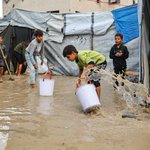
Children are walking through muddy water. Parents are struggling to keep their belongings dry.
For these families, rain brings no comfort. It brings another night of uncertainty.
No child should have to grow up in these conditions.
Gaza's families deserve safe shelter and dignity. 🇵🇸

From above, they look like endless rows of tents.
But inside each one, there is a family trying to rebuild some sense of normal life.
Parents raising children. People trying to sleep, find shelter, and protect what little they have left.
These are not just tents. They are homes for families who have lost so much.
This is the human reality behind displacement in Gaza.
The world needs to see beyond the headlines. 🇵🇸
A mother in Gaza spent the night facing an impossible choice.
Rana Hmeida, 29, watched rainwater flood her family's tent as she tried to protect her two-month-old daughter from the freezing cold.
“Hold my children or try to stop the water?” she asked.
Her family's blankets, clothes and bedding were soaked.
This is what the first winter storm means for families still living in tents.
Their stories must not be forgotten. 🇵🇸

Imagine having to walk through floodwater just to get the basic necessities of life.
In Gaza, even the simplest daily tasks have become exhausting struggles.
Families are trying to find water, meet their basic needs, and get through another day while navigating flooded streets.
Rain should bring relief, not another hardship.
People in Gaza deserve more than survival. They deserve a safe and dignified life.
Please don't look away. 🇵🇸
nowhere dry to sleep.
Winter has barely begun, yet families who have already lost their homes are being forced to face another struggle just to stay dry and warm.
Think about that for a moment.
No family should have to choose between living in a tent and watching their children sleep in the cold.
Gaza needs more than sympathy. People need safe shelter, protection, and dignity.
Please don't stop talking about Gaza. 🇵🇸
