

NEJM Evidence, a journal from NEJM Group, presents innovative Original Research and fresh, bold ideas in Clinical Trial design and clinical decision-making.
- Tweets3.7K
- Following1.6K
- Followers31.4K
- Likes966






ALT The image is a flowchart with three sections: Participants, Case Vignettes, and Intervention Arms. Participants include four trial sites and internal medicine clinicians. The Case Vignettes section describes scenarios: Pulmonary Embolism Case and Heart Failure Case. The Intervention Arms are divided into Single Threshold, Binary, and Interval Likely Ratio. Decision options are included at the bottom for each case.

ALT The image is page 1 of the editorial "Next- Generation Malaria Nets in an Escalating Arms Race" published in NEJM Evidence. A slate banner at the bottom encourages readers to access the full editorial at evidence.nejm.org.

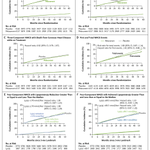
ALT The image contains six graphs. Graph A: The cumulative incidence of four-component primary end point of major adverse cardiovascular events (MACE) on treatment. Graph B: The cumulative incidence of three-component MACE on treatment. Graph C: The cumulative incidence of three-component MACE on treatment for composite of nonfatal MI, urgent coronary revascularization, or coronary heart disease (CHD) death. Graph D: The first and total_MACE events. Graph E: The cumulative incidence of the four-component MACE primary end point in landmark analysis with stratification of the pelacarsen group by lipoprotein(a) reduction after 3 months of treatment greater than or equal to and less than the median (170 nmol/l). Graph F: The cumulative incidence of the four-component MACE primary end point in landmark analysis with stratification of the pelacarsen group by achieved lipoprotein(a) after 3 months of treatment less than or equal to and greater than the median (69.5 nmol/l).

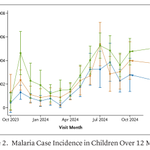
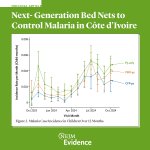
ALT Line graph titled "Malaria Case Incidence in Children Over 12 Months." The x-axis shows months from October 2023 to October 2024, and the y-axis shows incidence rate per month. Three lines represent different data sets: "Py-only" (green), "PBO-py" (orange), and "CFP-py" (blue).

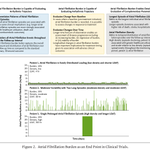
ALT Two panels showing atrial fibrillation burden as an end point in clinical trials. Panel has three highlighted boxes explaining different patterns of atrial fibrillation and evaluation methods. They discuss assessing episodes, changes from baseline, and complementing parameters like LEAF (Low Atrial Fibrillation Episode Frequency). Panel B features a chart with three patient scenarios, showing atrial fibrillation burden over time. Each patient shows different episodic patterns: even distribution, moderate variability, and a single prolonged episode.

ALT The image contains six graphs. Graph A: The cumulative incidence of four-component primary end point of major adverse cardiovascular events (MACE) on treatment. Graph B: The cumulative incidence of three-component MACE on treatment. Graph C: The cumulative incidence of three-component MACE on treatment for composite of nonfatal MI, urgent coronary revascularization, or coronary heart disease (CHD) death. Graph D: The first and total_MACE events. Graph E: The cumulative incidence of the four-component MACE primary end point in landmark analysis with stratification of the pelacarsen group by lipoprotein(a) reduction after 3 months of treatment greater than or equal to and less than the median (170 nmol/l). Graph F: The cumulative incidence of the four-component MACE primary end point in landmark analysis with stratification of the pelacarsen group by achieved lipoprotein(a) after 3 months of treatment less than or equal to and greater than the median (69.5 nmol/l).

ALT An image from a Morning Report published in NEJM Evidence article titled " A 58-Year-Old Woman with Abdominal Pain, Fever, and Cough." The image shows computed tomography of the abdomen (coronal view). The NEJM Evidence logo sits at the bottom.

ALT A quote from an Original Article published in NEJM Evidence reads as follows: "This phase 3 multicenter trial demonstrated that once-daily subcutaneous injection of vosoritide promoted linear and upper limb growth in children with hypochondroplasia.” The article is titled “A Phase 3 Trial of Vosoritide in Children with Hypochondroplasia” and the authors are A. Dauber et al. The white text is written on a greenish-blue gradient. The NEJM Evidence logo sits at the bottom.

ALT A participant of a clinical trial sits on a yellow chair, using an e-cigarette while talking to a physician on a large smartphone screen who is holding a clipboard. The NEJM Evidence article title is visible: "E-Cigarettes with and without Behavioral Support for Smoking Cessation" by K. Myers Smith and others.

ALT A quote from an editorial published in NEJM Evidence reads as follows: "Although the tested [long-lasting insecticidal nets] were shown to be beneficial ... malaria incidence among children assigned [chlorfenapyr-pyrethroid] nets ... remained high. Next-generation nets therefore cannot carry the burden of malaria control alone.” The editorial is titled "Next-Generation Malaria Nets in an Escalating Arms Race” and the authors are Matthew M. Ippolito, M.D., Ph.D., and Johanna P. Daily, M.D., M.S. The white text is written on a grayish-blue gradient. The NEJM Evidence logo sits at the bottom.

ALT A graph from an Original Article published in NEJM Evidence article titled "Next-Generation Bed Nets to Control Malaria in Côte d’Ivoire." The graph shows malaria case incidence in children over 12 months. The NEJM Evidence logo sits at the bottom.

ALT A table showing abstinence rates at different time points. The columns consist of "Outcome," "Supportive Messages (N=389)," "EC-Only (N=389)," "EC+ (N=388)," "EC-Only vs. Support Messages," and "EC+ vs. EC-Only." The "Outcome" column contain the subheads "Primary outcome at 6 months" and "Secondary outcomes."

ALT A box-and-whisker plot shows observed annualized growth velocity at baseline and week 52 by treatment group.

ALT Cover of the November 2026 issue of NEJM Evidence with "Read the latest issue" above it.


