Global fossil-fuel carbon dioxide emissions are projected to decrease by 0.4% in 2026, following an average annual growth of 0.8% between 2019 and 2025, according to research in Nature Climate Change. The authors link this decrease to rising oil prices. go.nature.com/4zD2FnQ
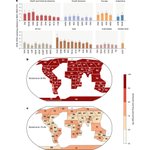
Regions worldwide may have already experienced around 90–94% of the warming expected when the global average reaches 1.5 °C above pre-industrial levels, and 65–76% of that expected at 2 °C of warming, according to a study in Nature Climate Change. go.nature.com/48ItLht
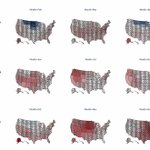
Not all US states are warming at the same rate. A dataset in Scientific Data shows Alaska, Utah, New Mexico, Colorado, and Nevada have the highest average warming trends, while Hawaii, Montana, North Dakota, South Dakota, and Arkansas have the lowest. go.nature.com/4BLX6VC
Twin pregnancy is associated with higher maternal, fetal and neonatal morbidity and mortality. A Primer in Nature Reviews Disease Primers discusses the epidemiology, pathophysiology, diagnosis, screening and management of twin pregnancy. go.nature.com/3V2fbhJ
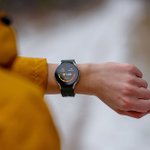
Smartwatches may be able to detect hypertension with the help of an AI system that interprets sensor readings, according to a paper in Nature. go.nature.com/482Fh7f
Parts of the Great Pacific Garbage Patch appeared to turn bluer and greener between 2002 and 2022, according to research in Communications Earth & Environment. The study suggests increased microplastic concentrations in seawater may be responsible. go.nature.com/4sQKwR6
A paper in Nature presents a new method for detecting exoplanets that is up to 15 times more sensitive than traditional exoplanet imaging methods. The technique uses a machine learning algorithm to remove starlight from telescope observations. go.nature.com/4ktt2Ic
Nature Portfolio retweeted
📣 📣 Excited to announce that submissions are officially OPEN for our new Special Issue on Quantum light–matter interactions. @NaturePortfolio @SciReports
Learn more about the collection and how to contribute: go.nature.com/4kbTiqe
Using data from 500,000 sibling pairs across diverse ancestries, a study in Nature Human Behaviour estimates how genetics contribute to behavioural traits and diseases within families. go.nature.com/4A0QvVw
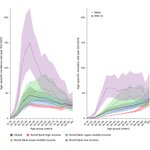
Global cervical cancer cases and deaths could rise by 20.2% and 39.3%, respectively, by 2050, according to a study in Nature Medicine. go.nature.com/4kvIxzj
Fifteen years of atmospheric CO2 measurements show that the Amazon carbon sink is weakening, with fires, deforestation and climate stress driving increasingly high carbon emissions, according to a paper in Nature. go.nature.com/3Wg7l4m
The results of a study in Scientific Reports challenge the long-held assumption that cometary impacts played an important role in the origins of life on Earth. go.nature.com/48lwNbl
The jack-o’-lantern, the carved pumpkin with the evil grin, has become the emblem of Halloween. An editorial in Nature Plants discusses how the lantern has its historic roots in carved turnips, which have been used in folklore for hundreds of years. go.nature.com/4iMp3VL
At 6 months, a cohort of 8,127 women in the UK initiating GLP-1 receptor agonist therapy via a digital platform showed mean weight reduction comparable to that in randomized clinical trials, according to a paper in Nature Medicine. go.nature.com/4zNDmiw
Water demand in Africa grew by around 26% between 2010 and 2020, yet around 717 million people lacked a piped water supply in 2020, according to research in Nature. go.nature.com/4yR94e6
Nature’s survey of nearly 4,000 researchers shows that you’re not alone if you struggle to make ends meet or your last pay rise is a distant memory. go.nature.com/4zYwOOs
4
5,214
A newly identified fossil amphibian, measuring 737 millimetres in length and dating back around 237 million years, may have been fully adapted to life in the sea, according to a study in Nature Ecology & Evolution. go.nature.com/4iiWdep
The authors of a Comment article write that they "feel that consciousness in AI is extraordinarily unlikely, at least in the digital, silicon-based systems that underpin today’s technologies." They provide three reasons for their scepticism. go.nature.com/4jDlJxc
A paper in Nature Medicine presents a device platform that converses with patients to help them manage their epilepsy. In a small test, patient feedback helped the system improve seizure detection, cutting false alarms by about 80 percent. go.nature.com/4euck7H
A paper in Nature describes a multi-agent framework that coordinates data science, medical reasoning and health coaching over longitudinal wearable and clinical data to provide holistic personal health support. go.nature.com/4k8aahI