

Science • Space • Cosmic Mysteries Explained simply. Follow for what comes next.
- Tweets3K
- Following38.5K
- Followers43.1K
- Likes3.8K





ALT A Tiny Dose of Bee Venom Showed a Powerful Effect Against Aggressive Breast Cancer Cells What if a substance known for causing pain could one day help fight one of the most difficult forms of cancer? Scientists in Australia discovered something remarkable while studying honeybee venom. The secret ingredient is **melittin**, a natural compound found in bee venom. In laboratory experiments, it damaged the outer membranes of aggressive breast cancer cells, including triple-negative and HER2-enriched cancer cells, within just 60 minutes. But that wasn't all. Within 20 minutes, melittin also disrupted chemical signals that help cancer cells grow and multiply. Researchers even found that melittin could enhance the effects of a chemotherapy drug in animal experiments. Could this tiny molecule inspire a new approach to fighting breast cancer?

ALT A STOVE THAT STARTS WITH WATER? THIS ISN’T SCIENCE FICTION. Imagine filling your stove with water instead of natural gas—then turning the knob and getting a flame. The secret is hydrogen. An electrolyzer can use electricity to split water (H₂O) into hydrogen and oxygen. The hydrogen can then be used as a fuel to create heat for cooking. And here’s the fascinating part: when hydrogen burns, its main combustion product is water vapour. But there’s a catch: the stove isn’t getting free energy from water. Electricity is needed to produce the hydrogen in the first place. Hydrogen is an energy carrier, not an energy source. Researchers have already developed and tested hydrogen cooking-stove designs. The technology is real—but making it safe and practical for everyday homes remains an important challenge. The future of cooking may look very different from the kitchen we know today. Source: U.S. Department of Energy. (n.d.). Hydrogen fuel basics.

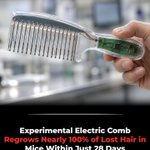
ALT **A Tiny Electric Comb Regrew Almost All Hair on Bald Skin in Mice** What if an electric comb could do more than untangle hair? Scientists have developed an experimental device that may offer a surprising new approach to treating baldness. Called **Detangle**, the device uses tiny electrodes and special drug-delivery technology to send therapeutic molecules deep into hair follicles. It combines electrical stimulation with two treatments designed to encourage blood vessel growth and reduce the production of DHT, a hormone linked to pattern hair loss. In experiments, mice with induced hair loss received treatment once every three days for four weeks. The results were remarkable: nearly complete hair coverage appeared across the treated skin, compared with approximately 70% in mice treated with minoxidil. But there is an important catch. This technology has only been tested in mice. Researchers still need to establish whether it can safely and effectively restore hair in humans.

ALT A Tiny Wireless Chip Is Helping People With Severe Vision Loss Read Again Scientists have developed PRIMA, a remarkable bionic vision system designed for people with advanced age-related macular degeneration, a condition that destroys central vision. The secret is a tiny implant measuring just 2 × 2 millimetres. It contains 378 microscopic light-powered pixels that convert invisible infrared light into electrical signals, stimulating surviving retinal cells. Special glasses capture images with a camera and project them onto the implant. Remarkably, the system works without implanted batteries or connecting wires. In a major clinical trial, **27 out of 32 patients regained the ability to read after one year.** Some could even read books and signs using digital magnification.

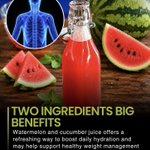
ALT **TWO SIMPLE INGREDIENTS, A POWERFUL HYDRATION BOOST! What happens when you combine watermelon and cucumber? You get a refreshing drink packed with water! Watermelon contains about 92% water, while cucumber contains around 95%. Together, they help replenish fluids and provide vitamins, minerals, and antioxidants. This natural drink can also replace sugary beverages, helping reduce unnecessary calorie intake. For extra fibre, blend rather than strain it. One important fact: It won't magically burn belly fat, but it can support healthy hydration and weight management!


ALT 🦠 **A Dangerous Fungus Can Enter Your Lungs Without You Even Knowing It** You may have inhaled thousands of microscopic fungal spores without ever noticing. One of them belongs to a fungus called *Aspergillus fumigatus*, commonly found in soil, compost, decaying leaves and airborne dust. For most people, this invisible visitor is harmless. The immune system usually takes care of it before it causes trouble. But in people with severely weakened immune systems or certain lung conditions, something much more dangerous can happen. The fungus can grow inside lung tissue, damage blood vessels and, in severe cases, spread to other organs, including the brain. This infection is known as invasive aspergillosis. Even more concerning, some strains are becoming resistant to commonly used antifungal medicines. Scientists are investigating how the use of certain agricultural fungicides may be contributing to this growing problem.

ALT **She Helped Discover a New Chemical Element, Making Scientific History! The periodic table holds 118 officially recognized elements. But behind one of its newest additions is a woman whose contribution made history. Her name is **Clarice Phelps**, a nuclear scientist at Oak Ridge National Laboratory in Tennessee. Her job involved something incredibly rare: purifying a radioactive material called berkelium-249. This material became essential in experiments that confirmed the existence of element 117, later named **Tennessine**. Her contribution was part of a major international scientific effort. Yet it also made her the first Black woman recognized for contributing to the discovery of a chemical element. What makes her story remarkable is that discovering a new element isn't always about the person who first sees it. Sometimes, it takes years of difficult work behind the scenes to make that discovery possible.

ALT 🚨 The Tiny Banana Trick Your Body Will Thank You For A small pinch of salt on a banana may sound strange, but it combines two essential electrolytes—sodium and potassium. Together, they help your muscles contract, nerves send signals, and cells stay properly hydrated. This simple combo can be especially useful after heavy sweating or intense exercise, when your body needs to replace lost electrolytes. Sometimes, the simplest foods can do more than you expect. Source: Thomas, D. T., Erdman, K. A., & Burke, L. M. (2016). Position of the Academy of Nutrition and Dietetics, Dietitians of Canada, and the American College of Sports Medicine: Nutrition and athletic performance. Journal of the Academy of Nutrition and Dietetics, 116(3), 501–528.

ALT **Scientists Are Now Testing DNA Repair Technology Directly Inside the Human Body! What if doctors could correct a disease-causing genetic mistake without removing a patient's cells or performing a transplant? That possibility is moving closer to reality. In 2025, researchers used a personalized CRISPR base-editing treatment to target a genetic defect in an infant with a rare, life-threatening liver disease called CPS1 deficiency. Now, another milestone has arrived. In October 2026, the first patient received an experimental prime-editing treatment in a Phase 1/2 clinical trial for Wilson disease, a genetic condition that causes dangerous copper buildup in the body. The treatment is designed to deliver molecular editing tools through a single intravenous infusion and correct the faulty DNA inside liver cells.

ALT 🚨 Scientists Believe the Human Mind May Connect to a Cosmic Intelligence Quantum researchers are exploring a shocking idea — that human consciousness could be linked to a larger universal mind. Some theories suggest the brain may access hidden information fields that influence healing, awareness, and balance. While scientists still debate the evidence, the research is raising mysterious questions about whether the universe — and human consciousness — are deeply connected in ways we never imagined. Reference: Hameroff, S., & Penrose, R. Consciousness in the universe: A review of the ‘Orch OR’ theory. Physics of Life Reviews

ALT 🧠 **Your Brain Creates Your Reality, But How Does It Create YOU?** Every second, billions of electrical and chemical signals travel through your brain. These signals help you think, remember, feel emotions, recognize faces, and experience the world around you. Scientists can observe brain activity and identify networks linked to awareness. But one enormous mystery remains. **How does physical activity inside the brain create the feeling of being YOU?** Why does seeing a beautiful sunset feel like something? Why do memories bring emotions? And how does a collection of living cells produce your personal experience of reality? Neuroscience has made remarkable progress, but the mystery of subjective consciousness remains one of science's greatest unanswered questions.

ALT ⚡ **11 TIMES MORE CARDIAC ARREST REPORTS. What Are We Really Drinking?** A University of Virginia study examined more than 28,000 FDA safety reports and found that cardiac arrest appeared **11 times more often** in reports involving energy drinks and stimulant supplements. Heart attack reports appeared 4.5 times more often. Even more concerning? Around 45% of the heart-related reports involved young adults aged 18–34. But there's an important catch. These numbers represent reported cases, NOT proof that energy drinks increase your actual risk by 11 times. The study also included stimulant supplements and pre-workout products, and it has not yet been peer-reviewed. Still, the findings raise an important question: Are we underestimating what high doses of caffeine and stimulants can do to the heart?

ALT Scientists Discover a Mysterious Third State Between Life and Death! What if death isn't always the end of a cell's story? Scientists have discovered something extraordinary: under certain conditions, cells from organisms that have died can reorganize into entirely new living structures called **biobots**. In laboratory experiments, skin cells from dead frog embryos formed tiny moving structures called xenobots. Even more fascinating, human lung cells have been used to create similar structures called anthrobots. These tiny biological structures can move and perform functions that their original cells were never designed to perform. Researchers believe this discovery could open exciting possibilities for future medicine, including tissue repair and targeted drug delivery. But here's the mystery: does this mean cells are conscious? Not at all. Some scientists explore this possibility, but there is currently no convincing evidence that individual cells possess consciousness.

ALT 🚨 This tuna was hiding a shocking secret. Scientists examined just 53 skipjack tuna caught off the coast of southern Brazil—and what they found was startling. Parasites were present in 96% of the fish, with more than 1,600 individual parasites found in total. But the biggest surprise was where some of them were found. Parasites were detected inside the edible muscle of 31 fish—about 58.5%. Among the groups identified was Anisakis, a parasite whose larvae can make people sick when infected seafood is eaten raw or undercooked. Before you panic, there’s an important detail: this does not mean most tuna sold in stores contains dangerous worms. The study involved a small sample from one region, and proper cooking or freezing can kill parasites. Researchers also found that timing matters. Removing the internal organs soon after catching the fish may help prevent some larvae from moving into the flesh after the fish dies.

ALT **Your Body Has Special Cells That Stop It From Attacking Itself! What if the secret to fighting autoimmune diseases was already hidden inside our immune system? Scientists discovered a special group of cells called **regulatory T cells (Tregs)**. Think of them as the body's peacekeepers. While other immune cells fight harmful invaders, Tregs help prevent the immune system from attacking healthy organs and tissues. This discovery, recognized with the **2025 Nobel Prize in Medicine**, could open new doors for treating diseases such as type 1 diabetes, rheumatoid arthritis and multiple sclerosis. Instead of simply suppressing the immune system, researchers hope to develop treatments that teach it to restore its natural balance. Could these tiny cells hold the key to future autoimmune therapies? Source: The Nobel Assembly at Karolinska Institutet. (2025, October 6). *The Nobel Prize in Physiology or Medicine 2025.*

ALT 🚨 Science confirms that eliminating light from your bedroom is essential for long-term health. Modern lifestyles often keep us surrounded by screens and artificial glow, but experts warn that even the smallest amount of light can sabotage your rest. When your eyes are exposed to light during the evening, it signals to your brain that it is still daytime, effectively stalling the body's transition into sleep mode. This disruption interferes with the natural rhythm of your internal clock, making it harder to drift off and reducing the overall quality of your recovery overnight. The secret to a deeper slumber lies in the dark, which triggers the brain's pineal gland to release melatonin. Often called the "sleep hormone," melatonin is crucial for regulating your circadian rhythm and signaling to every cell in your body that it is time to recharge.

ALT **What if your body could be taught to hunt down cancer cells? Imagine a cancer treatment that turns your own immune system into a powerful weapon against cancer. Scientists are exploring ways to reprogram immune cells so they can recognize and destroy cancer cells. One promising approach uses tiny particles to deliver genetic instructions directly to immune cells inside the body. Unlike traditional CAR T-cell therapy, which requires immune cells to be modified in a laboratory, this emerging technique could potentially reprogram them inside the patient. Early experiments have shown promising results, but the technology is still experimental and has not yet been proven as a human cancer treatment. Could the future of cancer treatment involve teaching our own bodies to fight back? **Source:Chen, Y., Monkovic, J., Mughal, H., et al. (2026). *In vivo engineering of CAR natural killer cells for immunotherapy using ligand-directed lipid nanoparticles.* Nature Biotechnology.

ALT **What If Intelligence Exists Without a Brain? What if the ability to process information is much older than the human brain? Scientists have discovered that individual cells can sense their surroundings, process signals, and change their behaviour. Slime molds can navigate mazes without a brain, while plants respond to touch, light, and environmental changes. Even more fascinating, a 2018 study found that anesthetic chemicals could temporarily stop Venus flytraps from responding to touch. Their normal movements returned after the chemicals wore off. These discoveries raise a fascinating question: Could intelligence exist in forms very different from our own? But there is an important distinction: sensing, processing information, and responding to the environment do not necessarily mean an organism is conscious. Scientists are still exploring where biological intelligence ends and consciousness begins.

ALT 🚨 Scientists found a protein that carries "old age signals" through the body — and blocking it literally reversed the damage. In a major breakthrough in aging research, scientists at Korea University’s College of Medicine have discovered that cellular aging can spread throughout the body via the bloodstream. The culprit is ReHMGB1, a redox-sensitive version of a protein called HMGB1, which is secreted by aging, or senescent, cells. This protein was shown to trigger aging-like effects in distant, healthy tissues—reducing their ability to regenerate and harming muscle performance. In mouse models, researchers successfully blocked ReHMGB1 using antibodies, resulting in fewer signs of aging and improved recovery after injury.