







Pinned Tweet
Tasmanian leaders struggle with a basic fact: environment laws should protect the environment | Adam Morton @GuardianAus theguardian.com/commentisfre…

Physicists propose new quantum device to measure how Earth's spin twists space-time
livescience.com/physics-math…

The Abuse in Care Royal Commission prompted improvements in support and compensation for survivors in Aotearoa New Zealand, but long delays and the lack of independent redress remain.
@ConversationEDU
👉 Read the full article: theconversation.com/the-stat…

Natural Resources Defense Council shows how federal rules changes will spike up public’s exposure to carcinogens
👉 @guardian_us theguardian.com/us-news/2026…

Hundreds of datasets and websites that contradict government’s ideology have been altered or wiped – a tactic taken straight from Heritage Foundation’s policy blueprint
👉 @GuardianUS theguardian.com/us-news/ng-i…

The real story isn't what these giant facilities consume. It's what's holding them up
#DataCenter #ArtificialIntelligence #EnvironmentalAwareness
sciencefocus.com/future-tech…

Forests across North America have seen a drop in the number of songbirds heralding the arrival of spring. To figure out why, biologists scour forests to capture birds and tag them with leg bands.
By going back to look for the tagged birds a year later, they can get a picture of how many survive from one year to the next. But the fieldwork takes untold hours, and capturing and banding can stress the birds.
A new paper lays out a quicker, gentler approach. It uses sound recorders and artificial intelligence to identify individual birds based on their song alone and track them over time.
Learn more: scim.ag/3V9Qike

There’s scarcely any corner of Earth in which life hasn’t gained a foothold. Living organisms shape the clouds, the climate, even the rocks. But how life first appeared on a barren planet some 4 billion years ago remains one of the biggest questions for science.
Many researchers believe that self-replication — cells’ ability to reliably store and copy genetic information — is life’s most core ability. If that’s true, then the earliest life-forms would presumably have needed the sorts of biomolecules that life uses to store and copy genetic information today.
The DNA molecule is the star of this process; it encodes the forms of the protein molecules that enable chemical reactions in cells. To translate the genetic information in DNA into the chemical structure of proteins, cells use RNA.
The trouble is, in modern cells, proteins are involved in every step of this process: They duplicate DNA when cells divide, they transcribe DNA into RNA, and they help to use RNA for making more proteins. This creates a chicken-and-egg problem: Useful proteins can’t be made in cells without DNA, but proteins are needed to make DNA in the first place.
A discovery about RNA in the late 1980s seemed to break the deadlock. Researchers found that, in addition to helping to convert genetic information into proteins, some RNAs can act as catalysts that enable chemical reactions. These were christened ribozymes, in reference to the protein catalysts called enzymes. The existence of ribozymes suggested that RNA can both carry genetic sequence information and act as a catalyst, thereby doing the jobs of both DNA and proteins. That makes it plausible that in its very earliest days, life — or the complex chemistry that preceded it — was all about RNA. According to this picture, championed by the physicist-turned-biologist Walter Gilbert, life began as an RNA world.
But this is just one theory. Tune in tomorrow for another installment of Quanta’s Origins of Life Week, as our writers parse through the primordial scenarios that may have given rise to life on Earth — and how the very study of the origins of life has entered a new age.
🔗Read the full story:
quantamagazine.org/did-life-…

David Ludden, Professor Emeritus of History at New York University, is a distinguished historian of South Asia whose research has transformed our understanding of agrarian societies, peasant life and the historical forces shaping the region. In this interview with The Daily Star, he discusses his intellectual journey, the transformation of agrarian societies under colonial rule, the historical roots of Bengal's regional divisions, and the relationship between agriculture, nationalism and political power. He also reflects on the changing place of agrarian studies in an increasingly urbanised world facing a deepening climate crisis.
thedailystar.net/slow-reads/…
.
#SlowReads #AgrarianHistory #Bangladesh #SouthAsianHistory

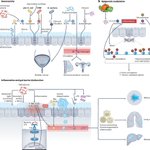
@NatureRevMicro : This Review discusses the role of the microbiome in cancer development and progression and in treatment response. It also considers the potential of the microbiome as a therapeutic target and as a prognostic and predictive biomarker, and outlines major knowledge gaps in the field.
Read the Review here: go.nature.com/4ek7EBn

New research suggests that the Sierra Nevada de Santa Marta, a high elevation biodiversity hotspot in northern Colombia, may be one of just a few places left on Earth where amphibian communities have not been affected by the fungal disease chytridiomycosis.
📷 Map of southern Central America and northwestern South America showing decades and locations where declines in Atelopus species occurred. The Sierra Nevada de Santa Marta is located inside the white box. Representative frog images are Atelopus zeteki (top left, photo by Corinne Richards-Zawacki), A. coynei (bottom left, photo by Andreas Kay/Wikimedia Commons (CC BY-SA 4.0)), A. cruciger (top right, photo by Lepidoptera Colombiana CO/iNaturalist (CC BY 4.0)), A. carbonarensis (middle right, photo by Dietrich Mebs/Wikimedia Commons (CC BY 4.0)), and A. longirostris (bottom right, photo by Luis Aurelio Coloma/Wikimedia Commons (CC BY 4.0)). (Background map courtesy of SRTM Team NASA/JPL/NIMA.)
Read the dispatch written by Richards-Zawacki here: cell.com/current-biology/ful…
Read the original article by Plewnia et al. here: cell.com/current-biology/ful…

Wednesday's discussions are expected to focus on de-escalation measures, including energy infrastructure and the Black Sea, as well as the possibility of a trilateral meeting at the leaders' level.
euronews.com/2026/11/11/ukra…
Territory remains one of the main sticking points, with Moscow demanding that Ukraine withdraw its forces from eastern regions, including areas still under Kyiv's control.

lemonde.fr/economie/article/… @lemondefr
Comment Nvidia s’est retrouvé au cœur d’un scandale international, entre espionne chinoise, guerre des puces et indifférence de Donald Trump


This week’s policy training is focused on the #BBNJ agreement and Indigenous Peoples 🌊 Learn more below👇🏽
📅 Date: November 12
🕰️ Time: 8 a.m. Honolulu/ 1 p.m. Bogotá / 6 p.m. London/ 9 p.m. Antalya
🔗 Join the training session via Zoom here: us02web.zoom.us/j/8750810712…
🗣️ Interpretation will be available in English,Spanish, French, Portuguese, and Russian.
🤝🏽 Organized by Earth Law Center, Big Ocean , UN Voluntary Fund for Indigenous Peoples , @Docip, International Work Group for Indigenous Affairs, and @NiaTero
This was created with Canva, not AI.
#COP31 #Ocean #training #HumanRights #ClimatePolicy #PolicyTraining


NEW SCIENTIFIC ARTICLE 🇪🇨🇧🇷🇨🇷
📑Data paper: Plant–hummingbird interactions, floral abundance, and floral traits for three altitudinal gradients in the Americas
🤝As a result of extensive collaboration, Aves y Conservación is pleased to share with you a new scientific publication led by four researchers: Catherine H. Graham, Isabela G. Varassin, María A. Maglianesi, and our colleague Tatiana Santander. This data paper reports and makes available for free, more than 95k interactions between 715 plant species and 79 hummingbirds from three countries along a gradient of elevation in the neotropics, among other information.
We hope this database contributes to knowledge about the mechanisms that generate and maintain biodiversity in tropical ecosystems and serves to make the best decisions, based on knowledge, for their conservation and restoration.🏞️🌳.
📲Access the publication at the following link:
doi.org/10.1002/ecy.70511

Algorithms in Allergy: Practical Approaches to Drug Desensitisation. Corresponding author: Ricardo Madrigal-Burgaleta
Read the article here: doi.org/10.1111/all.70497
Madrigal-Burgaleta et al., present a medical algorithm for the diagnosis and management of hypersensitivity reactions to chemotherapy and biologics. These core steps could be extrapolated to desensitisation to other classes of drugs.
#Allergy_journal
Read more medical algorithms published in #Allergy here: journalallergy.com/Medical-A…

The fan shell, the black shell and two species of sharks are among the fishing resources most vulnerable to climate change on Peru's north coast, according to research projecting their effects by 2055. Changes in the ocean could also impact communities that depend on this economic activity. es.mongabay.com/2026/11/peru… @MongabayOrg

Among those calling for a clearer roadmap away from fossil fuel use are South Pacific island nations that are especially vulnerable to sea level rise, and some European nations.Portugal, which has one of the highest shares of renewable energy among European countries, said on Monday it would advocate linking the electrification goal to low-carbon fuel.
Turkish villagers demand COP31 leaders see for themselves devastation caused by coal - reuters.com/sustainability/c…
The debate puts a spotlight on the energy systems of the two countries overseeing COP31. Turkey, the summit host, and Australia, which is leading the negotiations, both rely on fossil fuels for electricity.Coal generated about a third of Turkey's electricity last year and more than 40% of Australia's, according to government data. Click here for an in-depth story about the damage coal has done to local communities in Turkey.

Regions worldwide may have already experienced around 90–94% of the warming expected when the global average reaches 1.5 °C above pre-industrial levels, and 65–76% of that expected at 2 °C of warming, according to a study in Nature Climate Change.
The findings suggest that regional warming in 2025 was statistically indistinguishable from the levels expected in a 1.5 °C warmer world, underlining the immediate need for adaptation across all regions.
Read the article:

Read the article: go.nature.com/4sTHo6X

7