Smart Science (@SmartScience) header
Smart Science (@SmartScience) profile picture

🔬 Smart science facts • Space 🚀 Physics ⚛️ Biology 🧬 Tech 🤖 • Learn something new every day

Science Hub
Joined March 2026
Photo by Smart Science (@SmartScience)Photo by Smart Science (@SmartScience)Photo by Smart Science (@SmartScience)Photo by Smart Science (@SmartScience)Photo by Smart Science (@SmartScience)Photo by Smart Science (@SmartScience)Photo by Smart Science (@SmartScience)Photo by Smart Science (@SmartScience)Photo by Smart Science (@SmartScience)Photo by Smart Science (@SmartScience)
Include

Only show posts containing:

Exclude

Hide posts containing:

Time range
-
Minimum likes
The first patients have officially received Moderna’s new mRNA cancer vaccine. Moderna's CEO, Stéphane Bancel, told the Financial Times this week that cancer prevention is the company's "holy grail," and its first attempt has already started in people. The vaccine, called mRNA-4194, is being tested at the University of Oxford in people with Lynch syndrome, an inherited condition that gives them up to an 80% lifetime risk of cancers like bowel and womb cancer. I t teaches the immune system to recognize harmless pieces of proteins found in early abnormal cells, so it can destroy them before they turn into tumors. The first volunteer, 53-year-old Sarah Ewart, got her first dose in August. Almost every cancer drug works after a tumor is found. A vaccine that trains the body to clear out cancer's earliest cells would flip that around, starting with the people at highest risk. It builds on Moderna's mRNA work in melanoma, where a personalized vaccine given after surgery cut the risk of the cancer returning or death by 42% in a large trial. Still, this prevention trial is at a very early stage. The first part, with up to 30 people, is testing safety, dose and immune response, and there are no results yet. But if it goes well, Oxford and Moderna plan to expand it to more UK centers in 2027, a real step toward vaccines that keep cancer from ever starting. source: Financial Times. (2026, November 10). Moderna chasing 'holy grail' of cancer prevention. Financial Times. NIHR Oxford Biomedical Research Centre. (2026, August 3). First patient receives trial vaccine to prevent Lynch syndrome-associated cancers.
2
1
4
213
Your cells give off a faint might — and experts say it seems to be how mitochondria communicate Deep inside the human body, trillions of microscopic cellular powerhouses known as mitochondria constantly convert nutrients into life-sustaining energy. Beyond their vital role in powering heartbeats and brain activity, scientists have long known that the chemical reactions within mitochondria release extremely faint light emissions called biophotons. While invisible to the human eye, specialized optical instruments can capture these delicate flashes. In a groundbreaking experiment conducted at the University of Westminster, researchers placed isolated groups of mitochondria in separate containers, completely removing any physical or chemical contact between them. When scientists deliberately stressed one group, the adjacent, physically isolated mitochondria unexpectedly altered their oxygen consumption rates, indicating an unprecedented non-chemical interaction. The findings revealed that surrounding light conditions directly influenced these cellular responses, suggesting that electromagnetic signals or biophotons may serve as an unrecognized channel for cell-to-cell communication. Additional research examining nervous system functions indicates that light emissions could potentially coordinate biological processes alongside traditional chemical and electrical pathways. If future studies confirm that human cells actively signal through light, it could revolutionize our understanding of neurobiology and open groundbreaking avenues for non-invasive diagnostic tools and light-based therapies. source: Frontiers in Physiology. Non-chemical signalling between isolated mitochondria. Frontiers Media S.A.
1
8
15
532
Most fat-loss drugs shrink fat cells, which then grow back. This experimental shot makes them self-destruct. An experimental drug called CBL-514, from Taiwan's Caliway Biopharmaceuticals, triggers fat cells to self-destruct while leaving other cells alone, unlike weight-loss drugs that only shrink fat cells. In two Phase 2 trials, 41 people with a normal or overweight BMI got injections in the lower belly every three weeks for up to 12 weeks, and MRI scans tracked their visceral fat, the deep fat packed around the organs. Four weeks after the last shot, visceral fat had dropped 12% in people who got the drug, while it rose almost 6% in the placebo group. The results were presented at the European Association for the Study of Diabetes meeting in Milan. Visceral fat is the dangerous kind, linked to type 2 diabetes and heart disease, and it's hard to target directly. Side effects were mostly mild soreness, swelling and redness at the injection site. In rats, adding the drug to tirzepatide (Zepbound) also reduced weight regain after the weight-loss drug was stopped, something researchers now want to test in people. That said, this was a small group, the data come from the company's own trials and haven't been peer-reviewed yet, and nobody in it had obesity. Also, the drug's path to FDA approval is only for cosmetic belly fat under the skin, and that depends on a Phase 3 trial still underway. But killing fat cells instead of shrinking them is a new approach that's worth watching. source: Garvey, W. T., & Ling, Y.-F. (2026, October 1). CBL-514 reduces visceral adipose tissue: Phase 2 MRI subgroup analysis. Presented at the European Association for the Study of Diabetes Annual Meeting, Milan. Saey, T. H. (2026, October 8). An experimental drug kills fat cells, rather than shrinking them. Science News.
2
10
16
1,003
A common supplement was just shown to calm the immune cells that drive psoriasis — and you can buy it online. Researchers in Beijing found that dendritic cells, the immune system's alarm cells that drive psoriasis, carry unusually high levels of enzymes called vanins in people with psoriasis and other autoimmune diseases. Those enzymes burn through pantethine, a form of vitamin B5 sold as a cheap supplement, and without enough of it the cells ramp up their own cholesterol production and become overactive. In mice, blocking the enzymes stopped psoriasis from developing, and giving pantethine eased the disease. Then, in a small trial of 24 patients using a standard psoriasis ointment, those who also took pantethine tablets improved more, especially people with high cholesterol. The study was published in the Journal of Experimental Medicine. Psoriasis treatments range from creams to expensive injected drugs, and many people never get full relief. Finding that a widely available supplement can calm the very immune cells behind the disease opens a cheap new angle, and the same pathway may matter in other autoimmune conditions. That said, most of the evidence comes from mice and cells, and the human trial was small, short and used pantethine as an add-on rather than on its own. The researchers themselves call it a proof of concept, so it's too early to self-treat. Still, it gives scientists a clear target for the larger trials they say are needed next. source: Cao, A.-P., Li, J.-C., Wang, R., Wang, Y.-Y., Wu, N., Liu, Y.-H., et al. (2026). Vanin-pantethine metabolic axis shapes dendritic cell function and affects inflammatory disorder progression. Journal of Experimental Medicine, 223(11), e20252558.
2
28
102
4,009
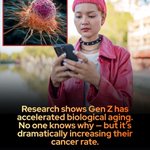
People born in the 1990s are aging biologically faster than any other generation, and no one knows why Researchers at Washington University School of Medicine in St. Louis used blood markers from more than 154,000 adults in the UK Biobank and over 10,000 Americans in the NIH's All of Us program to estimate each person's biological age, meaning how old their body seems compared with their birthdays. At the same chronological age, people born between 1965 and 1974 were aging faster than those born between 1950 and 1954, and people born in the 1990s were aging faster still than those born in the late 1960s. Faster agers were more likely to develop solid cancers at 55 or younger, especially lung, gut and uterine cancers, with the most-aged third facing a 15% higher risk than the least-aged third. Faster immune aging was tied to early lung cancer and faster aging of fat tissue to early colorectal cancer. The study was published in Nature Medicine. Cancer in people under 50 has been climbing around the world, and doctors still can't fully explain why. Biological aging offers a common thread that links the changes in how younger generations live to the disease showing up earlier. As senior author Yin Cao put it, the goal is to decode how modern environments become biologically embedded to drive cancer risk, so that the people most at risk can be spotted while they are still healthy. Next, the team plans to pin down which environmental, lifestyle and social changes speed up aging, so prevention can be aimed at those who need it most. source: Tian, R., Zong, Y., Ren, D., Tica, S., Hong, D., Odulyale, O., Buenrostro, J., Govindan, R., & Cao, Y. (2026). Biological aging and generational shifts in early-onset cancer risk. Nature Medicine.
15
16
3
64
4,216
The pigment that turns eggplant skin purple stops melanoma cells, activating a tiny genetic off-switch for cell growth. The pigment is delphinidin, one of the anthocyanins that give eggplant skin, blueberries and other dark fruits and vegetables their purple-blue color. Researchers at Kyushu University in Japan, led by Hirofumi Tachibana, added purified delphinidin to mouse melanoma cells and found it significantly cut their numbers after 48 and 72 hours. Digging into why, they saw it raised levels of let-7b, a tiny RNA molecule that acts like a brake on cell division by lowering a growth protein called cyclin D1. The same let-7b boost showed up in human melanoma cells. Using a genetic screen, the team traced the effect to a little-studied gene called Fam222B, and when they switched that gene off, delphinidin stopped working. The study was published in Scientific Reports. Melanoma is the most dangerous of the common skin cancers, and plant pigments are a long-studied source of leads for new drugs. Pinning down the exact switch delphinidin flips, rather than just noting that it slows cancer cells, gives researchers a specific target to build on. That said, this was purified delphinidin in lab dishes, not eggplant extract, and when mice with melanoma tumors were given it by mouth, let-7b rose in their tumors but the tumors didn't shrink. Also, eating eggplant is not a treatment for melanoma, and the study came out in August 2025. Still, the newly found Fam222B gene gives scientists a fresh handle on how cells control growth, which could matter well beyond one vegetable. source: Murata, M., Marugame, Y., Yamada, S., Lin, I.-C., Yamashita, S., Kumazoe, M., Fujimura, Y., & Tachibana, H. (2025). Delphinidin upregulates microRNA-let-7b expression through family with sequence similarity 222 member B. Scientific Reports, 15, 29304.
8
53
5
235
6,988
Scans show the brain is literally rebuilt during menopause. White matter, the brain's wiring, gets about 10% smaller after menopause. The long-term consequences? In a key study, Lisa Mosconi at Weill Cornell Medicine and Roberta Brinton at the University of Arizona scanned the brains of 161 women aged 40 to 65 before, during and after menopause. In regions tied to memory, speech and processing sights and sounds, brain glucose use, the brain's main fuel, was about 20% lower after menopause than before it, and white matter, the brain's wiring, was about 10% smaller, even after accounting for age. But the scans also showed the brain compensating, with more blood flow and more production of ATP, the energy molecule cells run on, and some of the grey matter loss bounced back after menopause. "It becomes a different brain," Brinton told New Scientist. Oestrogen helps the brain turn glucose into energy, so when it plunges, the brain has to reorganise how it fuels itself. That may explain brain fog for many women, and could help explain why women face a higher risk of Alzheimer's. The good news is that around 9 in 10 women in perimenopause still score in the normal range on memory tests, and Mosconi's team found the brain seems to find a new normal afterwards. That said, these are snapshots comparing women at different stages, and an early look at the first long-term study, which is scanning 242 women over time, found no difference in brain volume before and after menopause. Results from that study are expected to be published soon, and could show more clearly which women need extra support during the transition. source: Mosconi, L., Berti, V., Dyke, J., et al. (2021). Menopause impacts human brain structure, connectivity, energy metabolism, and amyloid-beta deposition. Scientific Reports; Wade, G. (2026). How menopause radically changes the brain - and what happens after. New Scientist.
3
12
37
1,460
A comb with electrified teeth regrew nearly all lost hair on balding skin in a month. The device, called Detangle, was built by engineers at Beihang University in Beijing and described in Nature Communications. Its teeth carry tiny electrodes set at different heights, plus little pods of medicine, so that each stroke creates an electric field reaching about nine times deeper into the hair follicles than electrodes placed on the skin. That field gently stimulates the follicles and briefly opens up their cells, letting the comb slip in two treatments: a gene that makes a growth factor called VEGF-A, which builds new blood vessels, and a molecule that silences the enzyme that makes DHT, the hormone that shrinks follicles in pattern baldness. Mice with this type of hair loss were combed once every three days, and after a month the bald patches regrew nearly 100% of their hair. Pattern baldness is the most common form of hair loss, and today's options have drawbacks. Pills that block DHT can cause side effects throughout the body, while creams like minoxidil struggle to reach deep enough into the scalp to work well for everyone. A comb that delivers treatment right to the follicle during an ordinary daily habit would sidestep both problems. That said, every result so far comes from mice whose baldness was induced in the lab, and human scalps and hormones may respond differently. source: Liu, F., Yao, F., Sun, H., et al. (2026). Combing-triggered electrostimulation synchronizing deep delivery for rapid hair regrowth in androgenetic alopecia. Nature Communications.
76
239
21
1,726
108,485
What if spacecraft could travel through space without carrying enormous amounts of fuel? An Egyptian physics student once proposed an extraordinary idea that explored whether quantum physics could make this possible. In 2012, Aisha Mustafa, then a 19-year-old student at Egypt’s Sohag University, attracted international attention for a proposed spacecraft propulsion system based on quantum effects. Her idea involved using the strange behavior of energy in what we normally consider empty space. According to quantum physics, even a perfect vacuum is not entirely empty. Quantum fields exist throughout space, and their fluctuations can produce measurable physical effects. One example is the Casimir effect. When two conducting surfaces are placed extremely close together, quantum effects can produce a tiny force between them. Scientists have experimentally measured this phenomenon, making it a genuine and fascinating part of modern physics. Mustafa proposed using related effects to develop a propulsion system that might reduce or eliminate the need for conventional propellant. Her concept reportedly involved closely spaced plates designed to interact with quantum vacuum fields. The potential implications were enormous. Conventional rockets accelerate by expelling material in the opposite direction. Carrying propellant adds considerable mass, limiting how far and how efficiently spacecraft can travel. However, turning quantum vacuum effects into usable spacecraft propulsion presents major scientific challenges. A force between two components of a spacecraft does not automatically produce forward motion, and any proposed system must obey conservation of momentum. Mustafa’s proposal received international media coverage, but there is no verified evidence that it became a functioning, independently tested propulsion system capable of moving satellites without propellant. Nevertheless, the underlying research question remains fascinating. Scientists continue investigating advanced propulsion concepts that could make future space exploration more efficient. Source: The Next Web; Egypt Business; Inhabitat.
8
20
3
77
2,977
About 7% of American adults think chocolate milk actually comes from brown cows. It’s a reminder that trip to a working farm might teach kids more than any textbooks. The figure comes from a nationally representative online survey of adults, which was commissioned by the Innovation Center for U.S. Dairy. Seven percent of the people asked said chocolate milk comes from brown cows, and when The Washington Post scaled that up to the whole adult population, it worked out to roughly 16.4 million people. For the record, every cow's milk starts out white, whatever color the cow is. Chocolate milk is ordinary milk with cocoa and sugar stirred in. Funny as it sounds, experts told the Post it fits a much older pattern. A U.S. Department of Agriculture study in the early 1990s found that nearly one in five adults didn't know hamburgers are made from beef, and researchers who interviewed California schoolchildren found many couldn't say that pickles are cucumbers or that cheese is made from milk. As one food educator put it, "it's an exposure issue," because many people simply never see how their food is produced. source: The surprising number of American adults who think chocolate milk comes from brown cows. The Washington Post.
2
7
1
17
872
🚨 A decade-long study reveals that too much coffee can actually weaken bones. For millions of women, safeguarding bone health is a critical aspect of aging safely, with osteoporosis affecting one in three women over the age of 50. Now, a 10-year study conducted by Flinders University has illuminated how our morning rituals impact our skeletal strength. Researchers tracked the beverage habits and bone scans of nearly 10,000 older women and discovered that regular tea drinkers had significantly higher bone mineral density in their hips than non-tea drinkers. This skeletal boost is likely driven by catechins—antioxidant-rich plant compounds in tea that stimulate bone-building cells and minimize age-related bone loss. Coffee drinkers, however, must navigate a more delicate balance. While enjoying a moderate two to three cups of coffee daily proved completely harmless, consuming more than five cups a day was linked to decreased bone density, particularly in women with higher lifetime alcohol consumption. Researchers note that excessive caffeine can hinder calcium absorption, though adding a splash of milk can help offset this effect. Ultimately, health experts suggest that small, daily adjustments—like swapping a heavy coffee habit for a comforting cup of tea—can be an easy, enjoyable strategy to prevent fractures and preserve lifelong mobility. source: Liu, E., et al. (2025). Longitudinal Association of Coffee and Tea Consumption with Bone Mineral Density in Older Women: A 10-Year Repeated-Measures Analysis in the Study of Osteoporotic Fractures. Nutrients.
3
13
3
31
1,465
Women with higher lifetime estrogen exposure have less damaged blood vessels in their brain, research shows. The longer a woman's body makes estrogen, the healthier the blood vessels in her brain look in old age, a new study found. Researchers in Sweden scanned the brains of 352 women from Gothenburg, all born in 1944 and all mentally sharp, first at age 70 and again five years later. They compared those scans with each woman's reproductive history: how long it was from her first period to menopause, and whether she had ever taken the birth control pill or menopausal hormone therapy. Women with longer reproductive years had fewer signs of small vessel disease, the damage to tiny blood vessels deep in the brain that's tied to strokes and dementia. Each extra year was linked to roughly 8% lower odds of having two or more of those signs, with later menopause doing most of the work. Women who used hormone therapy also had fewer signs of damage and healthier white matter, and those who had used both the pill and hormone therapy had the best vascular profile of all. This matters because women make up the majority of people living with Alzheimer's, and scientists are still working out why. As senior author Anna Marseglia of Karolinska Institutet put it, hormone exposure across different stages of a woman's life may have cumulative effects on the brain's blood vessels. The work points researchers toward the brain's blood vessels as a promising place to look for ways to protect women's brains as they age. source: Lorenzon, G., García-Lluch, G., Coughlan, G., Sindi, S., Maioli, S., Poulakis, K., Najar, J., Mohanty, R., Rydén, L., Shams, S., Kern, S., Buckley, R., Westman, E., Skoog, I., & Marseglia, A. (2026). Reproductive lifespan and hormonal therapy in relation to later-life neurovascular health: A population-based study of women in the Gothenburg H70-1944 Birth Cohort. Neurology.
4
22
81
2,339
When a sperm activates a human egg, it releases a burst of zinc ions, creating a tiny flash of light. Life begins with a flash — a remarkable moment of creation. 💫
10
1
39
1,128
Cells from donors over 50 began switching on stem cell genes in a week, and the stem cells they produced passed standard checks for health and genetic stability. Scientists spent nearly 20 years trying to improve the proteins that reset cells. An AI just did it. OpenAI teamed up with longevity startup Retro Biosciences to build GPT-4b micro, an AI model trained on protein sequences and biology data. They asked it to redesign two of the Yamanaka factors, the famous proteins that earned a Nobel Prize in 2012 because they can reset an adult cell into a stem cell. The AI's versions, called RetroSOX and RetroKLF, differed from the originals by more than 100 building blocks on average, yet in lab tests they triggered more than 50 times stronger signs of reprogramming. Turning adult cells into stem cells is notoriously slow and inefficient, often working in fewer than 1 in 1,000 cells, which holds back efforts to grow replacement tissues and to study how aging cells might be rejuvenated. The redesigned proteins also seemed to help cells repair DNA damage better, a hint that they may do more than just speed things up. That said, all of this happened in lab dishes, and the results were shared by OpenAI and Retro themselves rather than in a peer-reviewed journal. Also, OpenAI CEO Sam Altman is an investor in Retro. Still, it's a striking sign that AI can help redesign some of biology's most important tools, and it gives regenerative medicine a promising new way to build them. source: OpenAI & Retro Biosciences. (2025, August 22). Accelerating life sciences research. OpenAI.
13
65
3
209
5,134
People who get at least 42 minutes of bright daylight a day have a 23% lower risk of dementia. Researchers led by Guangzhou Medical University in China gave 87,577 older adults in the UK Biobank a wrist sensor that measured the light around them, day and night, for a full week. Over the next eight years, 741 of them developed dementia. People who spent at least 42 minutes a day in truly bright light, the kind you get outdoors, had about a 17% lower risk than those who got less. The link was even stronger in night owls and in people who carry APOE4, the best-known genetic risk factor for Alzheimer's, with risk up to 41% lower. Brighter days were also tied to more brain volume in memory-related regions. Most of us live under indoor lighting of just 300 to 500 lux, while daylight outdoors is many times brighter. The researchers think daylight may protect the brain partly by keeping the body clock on track, and according to ScienceAlert's coverage, light exposure predicted dementia better than familiar risk factors like obesity, alcohol and hearing loss. To be clear, this study shows a link rather than proof that light prevents dementia, since people who get outside more may also be healthier and more active. Light was also measured for only one week. Still, it points to a cheap, easy habit worth testing properly, and the authors call daytime light a new, measurable signal of dementia risk. source: Zheng, N., Wang, W., Li, B., Mei, X., Liu, Y., Du, J., Chan, N. Y., Chan, J. W. Y., Xing, X., Tan, X., Benedict, C., Wing, Y. K., Zhang, J., & Feng, H. (2026). Associations between wearable-device-measured daytime and nighttime light exposures and dementia risk: A prospective cohort study. General Psychiatry, 39(3), e70039.
1
11
31
1,027
A compound that builds up as cannabis ages shields neurons from a type of cell death tied to Alzheimer's. Scientists at the Salk Institute in California, led by neuroscientist Pamela Maher, studied cannabinol, or CBN, a lesser-known compound that slowly forms in cannabis as THC breaks down. They exposed nerve cells to oxytosis, a type of cell death driven by oxidative stress that becomes more common with age and is linked to Alzheimer's. CBN protected the neurons, and the team traced that protection to mitochondria, the tiny power plants inside cells. Under stress, the mitochondria curled into donut shapes, a change also seen in aging brain cells from people with Alzheimer's, but CBN kept them intact and working. When the mitochondria were removed, the protective effect disappeared. Crucially, CBN worked without switching on the brain's cannabinoid receptors, which means it wouldn't be expected to cause a high, and unlike THC it isn't a controlled substance. That makes it an appealing starting point for new drugs, and the researchers think the same protection could matter for other brain diseases such as Parkinson's. That said, these experiments were done on cells in lab dishes, not in people. And they tested a purified compound, so the results don't mean that smoking or eating cannabis protects the brain. Still, by pinpointing exactly how CBN shields neurons, the work points researchers toward a promising new target for treating brain aging. source: Liang, Z., Soriano-Castell, D., Kepchia, D., Duggan, B. M., Currais, A., Schubert, D., & Maher, P. (2022). Cannabinol inhibits oxytosis/ferroptosis by directly targeting mitochondria independently of cannabinoid receptors. Free Radical Biology and Medicine, 180.
17
121
16
512
22,961
Two weeks of treatment made old rats' livers work like young ones again, and an Alzheimer's-linked protein in their blood fell by half. As we age, the cells lining the liver's tiny blood vessels lose the little pores that let blood reach the liver cells underneath, so the liver gets worse at filtering things out of the bloodstream. Researchers at the Keck School of Medicine of USC gave two-year-old rats, elderly by rat standards, a drug called cinaciguat for two weeks. It reopened those pores and switched back on a growth signal called HB-EGF that tells liver cells to pull substances out of the blood. Levels of amyloid beta, the protein that clumps into plaques in Alzheimer's, dropped by about half in the blood, matching young rats, and LDL cholesterol fell to youthful levels too. The liver normally clears much of the amyloid beta circulating in the blood, so restoring that clean-up job could offer a back door against Alzheimer's. As first author Sam de Leve pointed out, it may be far easier than trying to get a drug through the blood-brain barrier, which is notoriously difficult. The surprise drop in cholesterol also hints at a new way to tackle heart disease. That said, this was a small study in rats, and it measured amyloid in the blood, not plaques in the brain or memory, so it doesn't show the drug protects against Alzheimer's. Also, an earlier heart failure trial of cinaciguat was stopped early because higher doses caused low blood pressure. Next, the team plans to test whether the approach protects the brain in an animal model of Alzheimer's disease. source: de Leve, S. J., Wang, X., Alavifard, H., Dara, L., & DeLeve, L. D. (2026). Reversing liver sinusoidal endothelial aging restores clearance of amyloid-beta and LDL. Journal of Biological Chemistry, 302(11), 113608.
3
19
53
1,426
🚨 New research reveals people were getting high on cannabis 2,800 years ago. The proof was hiding in the hair of the dead in a Siberian royal tomb. Experts believe it was given to people to calm them before being sacrificed. The tomb sits at a site called Tunnug in southern Siberia's Uyuk Valley, sometimes nicknamed the Valley of the Kings. It was built around 800 BC by early Scythians, horse-riding nomads who buried their elite under huge mounds. Inside four wooden burial structures, a team led by Gino Caspari of the University of Bern found more than 1,000 whole cannabis seeds and about 500 broken ones, carbon-dated to between 800 and 760 BC. Then they tested hair from the people buried there, and every sample held cannabinol, a compound that forms when THC breaks down, along with weaker traces of THC itself. Since THC is what gets you high, that means these people actually consumed it, rather than just having the plant nearby. The findings, published in Science, beat the previous record, from a Chinese cemetery dated to around 500 BC, by roughly three centuries. They also back up the Greek historian Herodotus, who wrote around the 5th century BC that Scythians threw hemp seeds onto hot stones and howled with joy in the smoke. The tomb was surrounded by sacrificed horses, laid out like a ghostly cavalry, and the researchers think people were probably sacrificed there too. They suggest the cannabis may have been used to calm those chosen for the ritual. That said, the team can't tell how the cannabis was taken, whether it was smoked, eaten, brewed or breathed in, or how much anyone had. And the idea that it sedated sacrifice victims is still their best guess, not a proven fact. Next, they're sequencing the ancient plant remains to learn whether the Scythians were growing cannabis or gathering it wild, which could reveal how the plant spread across Asia. source: Caspari, G., Sadykov, T., Formicheva, D., Blochin, J., Armbruster, D., Happel, O., Ryabogina, N., Boxleitner, K., & Spengler, R. (2026). Direct evidence for psychoactive cannabis use 2800 years ago. Science.
4
11
1
43
1,836
Research shows cancer risk cancels it out literally any benefit of alcohol. It doesn’t help your body. It‘s literally killing you. An expert team led by Kevin Shield of the University of Toronto, with researchers from Columbia University and elsewhere, reviewed more than 7,200 scientific articles on alcohol-related diseases and injuries. They combined those findings with large national health datasets to estimate lifetime risks at different drinking levels. They found no overall protective effect at any amount. Risk rose for both men and women above one drink a day, and at 14 drinks a week, the equivalent of two a day, about 1 in 25 people would be expected to die from alcohol-caused disease or injury. The idea that moderate drinking is good for your heart has been popular for decades. Small amounts may slightly lower the risk of some heart problems, but the researchers found that cancer, liver disease and other harms outweigh it. The report was commissioned to inform the latest US dietary guidelines, and an accompanying editorial says its findings were sidelined. source: George, S., Naimi, T. S., Keyes, K. M., Rehm, J., Justice, A., Shield, K. D., et al. (2026). Alcohol intake and health study: No protective effect at low levels, with mortality increasing to 1 in 25 at 14 drinks per week. Journal of Studies on Alcohol and Drugs, 87(4), 621.
4
15
3
52
1,782
One kind of injection reprogrammed about 80% of targeted immune cells into tumor hunters. And three of five mice with aggressive melanoma went into complete remission. The team, led by chemical engineer Daniel Anderson, packed genetic instructions called mRNA into tiny fat bubbles known as lipid nanoparticles and coated them with antibody pieces that home in on natural killer cells, the immune system's first responders. Once injected, the particles taught about 80% of the targeted cells to build a CAR, a receptor that locks onto a specific target on diseased cells. In mice with an aggressive melanoma, three of five went into complete remission, and in mice given a human immune system, T cell lymphoma tumors were wiped out after five injections. A single shot even cleared the rogue immune cells behind autoimmune hepatitis and let the liver heal. The work was published in Nature Biotechnology. Today's CAR therapies mean drawing a patient's blood, shipping their cells to a lab to be engineered and grown, and infusing them back weeks later, which is why they cost hundreds of thousands of dollars. Natural killer cells also avoid a problem that plagues CAR T cells against T cell cancers, where engineered cells end up attacking each other. As Anderson put it, if a patient can just get an infusion of nanoparticles, it would dramatically simplify the process and reduce costs. Still, every result so far comes from mice, and whether the approach is safe and works as well in people is still unknown. The team now hopes to take aim at autoimmune diseases like multiple sclerosis and rheumatoid arthritis too, which could make one off-the-shelf injection useful far beyond cancer. source: Chen, Y., Monkovic, J., Mughal, H., Langer, R., Anderson, D. G., et al. (2026). In vivo engineering of CAR natural killer cells for immunotherapy using ligand-directed lipid nanoparticles. Nature Biotechnology.
5
25
3
71
2,462