

CEO & Founder | PhD | Startup Advisor | @Columbia | Author Generative Software Engineering https://xitter.twitterapi.xyz/t.co/VDwMbdbwrf | 🔔 Follow for AI & Vibe Coding Tips 👇
PNW
Joined July 2023
- Tweets18.1K
- Following552
- Followers13K
- Likes5.4K






Pinned Tweet
Qwen3.5-4B running CPU-ONLY at up to ~11+ tps on a Ryzen 5 laptop. No GPU. Running models in RAM and CPU is something the Qwen4 team is already thinking about.
💡 I built this standalone .exe because businesses are already deploying local models to save money and ensure privacy. (thumb drive friendly - just drag drop and doubleclick)
My llama.cpp recipe 👉
🧠 Qwen3.5-4B Q4_K_M GGUF
⚙️ Ryzen 5 7540U — 6C/12T
🧵 --threads 9
🧵 --threads-batch 12
⚡ --prio 2
🔄 --poll 50
📦 --batch-size 2048
📦 --ubatch-size 512
🚀 --flash-attn on
🧠 KV cache: q4_0 / q4_0
🔧 --repack
💾 --mmap
👤 --parallel 1
🚫 --device none
🚫 --gpu-layers 0
🚫 KV/op GPU offload
🚫 MTP OFF
Interesting result 👉 MTP=3 was slower (~10 tps in benchmarks).
Plain decode + 9 threads + Q4 KV hit ~11.4 tok/s.
That's about 10% faster just from tuning llama.cpp — on a basic laptop CPU.
Ollama Mac Update. 🍎
🐫Mac, Mac, Mac, Mac, Mac guess what day it is?
Is it the day two Mac agents don't have to wait their turn on Ollama.
Ollama’s new MLX update lets multiple requests generate concurrently.
For those running Local AI users running coding agents, background assistants or a shared local server, that means earlier responses for requests stuck behind another job.
Developer tests on an M5 Max measured the second client’s wait for its first token (fast) 🏃♂️
⚡ Gemma 4 12B: 7.45 → 4.69 seconds
⚡ Qwen3.8-27B: 13.84 → 9.90 seconds
⚡ Nemotron 3.5 Lightning: 3.31 → 1.65 seconds
With Qwen, finishing both requests took 20.07 seconds instead of 17.23. The first request also waited longer to start.
The benefit is sharing access more responsively is not necessarily finishing all the work faster.
To try it out ...
🍎 Use a supported model through Ollama’s MLX backend
⚙️ Configure OLLAMA_NUM_PARALLEL=2
💾 Allow extra memory for concurrent requests
Speculative decoding currently pauses while multiple requests generate together.
The change merged November 10 and is included in v0.40.17-rc0, a prerelease.

9
8
712
PR #19197 github.com/ollama/ollama/pul…

132
🤖 After covering Cosmos and PAN 2, here’s the next Physical AI release I’m watching @runwayml's Praxis-1. Its open weights arrived today.
Give it a task, camera observations, and the robot’s current state.
It predicts the following
🎬 What the cameras will see next
🦾 The robot movements to execute
The robot performs a short action sequence, gets fresh observations, and repeats.
That’s the distinction. Praxis-1 outputs robot-control actions alongside predicted video.
Runway reports these results on RoboLab-120, a simulated robotics benchmark covering 1,200 episodes
🟢 Praxis-1 → 46.2% success
🔵 Cosmos 3 Nano → 36.8%
⚪ π0.5 → 28.0%
These scores aren’t directly comparable to PAN 2’s 34% video-plan completion result. Different tasks, different evaluations.
And 46.2% still leaves more than half the attempts unsuccessful.
Here is the model stats...
🧠 27B mixture-of-experts diffusion model
💾 Downloadable checkpoints
🔓 Apache 2.0, including commercial use
🛠️ Inference and fine-tuning code
🔧 Full fine-tuning and LoRA adaptation
You can test it in simulation and explore adapting it to your own robot.
The standard quick start requires an 80GB CUDA GPU, and the main BF16 checkpoint is approximately 54GB before other components and runtime memory.
An experimental NVPF4 path targets RTX 5090 and RTX PRO 6000 Blackwell, but closed-loop operation on those GPUs remains unvalidated according to the repository.

3
4
404
So your AI model doesn’t fit on one 🍎Mac?
💻 Apple-owned Claris wants you to connect another.
Claris Harbor, a private AI server app is being tested for Apple silicon. (check the thread)
Vision
🖥️ Run open-weight models on a single Mac
🔗 Connect multiple compatible Macs over Thunderbolt 5
🧠 Pool their unified memory to accommodate larger models
🏠 Serve AI from hardware you control
Claris is aiming to make the setup approachable.
Harbor automatically discovers connected Macs, forms a cluster, and lets you browse, download and load models through its interface.
Mac clustering already exists BUT making it accessible to people who don’t want to configure a distributed inference system could bring it to a much bigger audience.
Harbor is still in early access (see thread), not a public download. Pricing remains unclear, and we need real benchmarks before making performance claims.
Running inference locally avoids a cloud provider’s per-token bill. But we'll have to wait to see if Harbor itself will be free.

☠️Is CUDA's moat dead? This is a great localmaxxing development.
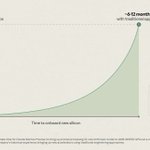
Anthropic says Claude Mythos Preview brought prompt processing for one of its models to AMD MI355X GPUs in roughly three days.
It provided a historical comparison for 6–12 months to bring up new accelerators through traditional engineering.
The company says Claude wrote or ported almost all the required GPU kernels, the specialized code that performs the model’s calculations.
We spend plenty of time comparing💾 VRAM capacity, ⚡ Memory bandwidth, 💰 Hardware prices
But software really determines how much of that hardware we can use.
If AI can shorten the work of porting and optimizing inference, developers could support more hardware with less engineering effort.
The is a pre-IPO Anthropic company-reported result.
So, CUDA’s advantage isn’t gone. But AI helping build better inference software for competing hardware is something to keep track of.

🆕 Project Zenith is now available on the new Ryzen AI Halo workstations.
Hit the ground running with preinstalled AI tools.
Ryzen AI Halo PCs are a Windows 11 developer environment with the tools already configured.
The hardware is fantastic
🧠 Up to 192GB unified memory
🎮 Up to 160GB available to graphics
⚡ 273GB/s memory bandwidth
AMD’s Halo Zenith setup includes critical AI tools...
🤖 Lemonade Server for local models
🎨 ComfyUI for image-generation workflows
🔧 ROCm-enabled PyTorch
Zenith adds the development tools, including VS Code, Python, Git and WSL.
Download a model through Lemonade, connect it to Intelligent Terminal, and use your own model to help with commands and files.
Remember, Lemonade can use that NPU too.
You still choose and download the models. Some apps default to cloud services, so selecting the local endpoint matters.
Also, Microsoft publishes Windows Developer Config, with setup options for local AI tooling, including Ollama and llama.cpp.

2
4
721

🔊Qwen4 launched. So how are we going to test it out?
The official release is Qwen4-Max-Preview, and the first route in is hosted.
Here’s how to try it?
1️⃣ Subscribe to QwenCloud’s Token Plan
2️⃣ Generate a dedicated Token Plan API key
3️⃣ Follow the setup guide for a supported client, such as Qwen Code, Claude Code or OpenCode
4️⃣ Select qwen4-max-preview
QwenCloud currently requires the Singapore service region for Token Plan. Its keys and endpoint are separate from ordinary pay-as-you-go access.
What should we test?
🧠 Deep reasoning
📚 1M-token context
👁️ Image and video understanding
🛠️ Tool calling
📋 Structured JSON output
Or let's see how it handles actual work.
Give it the same broken repository, screenshot-to-interface task and multi-step tool workflow you already use to test your favorite local model.
Keep the harness, tools, and instructions consistent.
Then compare these
✅ Tasks completed correctly
⏱️ Time to completion
🔄 Retries and human corrections
🧮 Tokens consumed
For Localmaxxers, this is a chance to measure what the new flagship adds over the models we already run ourselves.
This release provides hosted access but not downloadable weights. It doesn’t announce a local Qwen4-27B.
And the preview runs through November 25, Beijing time, after which this preview model is scheduled to retire.

So we were watching the rumored 24GB RTX 5080 for one reason, getting another 8GB of room for our models.
Now its reported that the January launch may be off. ☹️
Club386 reports that NVIDIA has allegedly canceled the January 2027 launch plan, citing expensive 3GB GDDR7 memory chips.
The underlying report concerns China. No replacement date is given.
NVIDIA hasn’t publicly confirmed the card or its cancellation.
Going from 16GB to 24GB would have given many of us 50% more VRAM capacity when upgrading from our RTX 4080s.
We still need reasonably priced hardware with enough memory to use them.


🆕New tool-calling model! 🎯 If you're using your agents for tool calling and it's failing, that's on you.
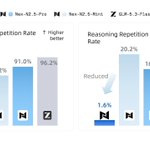
A new model Nex-N2.6 targets that problem.
Across 956 tested contexts, the team reports 100% valid tool selection: its tool calls stayed within the tools available in the current environment.
Just to be clear, that is adherence to a tool-list and not necessarily 100% task success.
But it addresses a frustrating failure when switching between coding-agent frameworks.
The team also reports these benchmarks
🔁 Reasoning repetition: 16.0% → 1.6%
🖥️ OSWorld: 83.0
💻 Terminal-Bench 2.1: 84.1
This is a big model. A roughly 321B model built on GLM-5.3-Flash.
FP8 weights are announced for self-hosting.
The point of this model is that an agent needs to know which tools it actually has and keep making progress without repeating itself.

Time to update your Qwen3.8-27B quants! Unsloth has done it again with Dynamic V3.1 GGUFs. It's ready for Qwen4 too.
Unsloth refreshed Qwen3.8-27B with Dynamic V3.1 GGUFs.
Its claim on average 5–10% accuracy improvements at comparable sizes across benchmarks including Terminal Bench and DeepSWE.
Same base model but it is a better preservation of its capabilities when compressed.
The tests include these benchmarks
💻 Terminal Bench 2.1
🔧 DeepSWE v1.1
🧪 LiveCodeBench v6
Keep in mind these are Unsloth’s measurements, not independent confirmation that every quant is best.
The downloadable GGUFs are available now under Apache 2.0.
There’s also a teaser as Unsloth says it’s working on an even stronger quantization method for Qwen4.

3
31
2,512

Is this the newest and best 2B model available?
The company behind PUBG just turned a 30B MoE into a small AI model you can download. 👀
KRAFTON released Raon-1 nano, designed for conversations, instruction following, and tool use in English and Korean.
They pruned and distilled Raon-1 mini preview, converted it into a dense model, then continued training on 3 trillion tokens before further post-training.
A smaller assistant that follows instructions and keeps track of the conversation could be useful without needing a giant model behind every interaction.
KRAFTON’s reported results ...
📋 IFBench → 75.9
🧠 PersonaMem v2, 32K context → 38.8
📱 AndroidControl → 36.0
It leads the selected comparison models on those tests—not every benchmark.
Release stats ...
💾 Downloadable weights
🔓 Apache 2.0
🌐 English + Korean
🧠 3.1B total parameters, described as an effective 1.5B dense model with per-layer embeddings
GGUFs only <4GB
So now we have to test how fast it runs, how much memory does it need, and how reliably does it handle your tools?

ALT https://huggingface.co/KRAFTON/Raon-1-nano https://huggingface.co/KRAFTON/Raon-1-nano-gguf

Qwen4 spotted in Qwen's chat code. I still don't see it in QwenCloud. ...and
Qwen4-Max is now in preview on Alibaba’s Token Plan. You can also get early access to the new model on QwenWork, Qoder, Qwen APP, and QwenStudio.


Qwen4 Max Preview is showing up in Qwen chat's code
The new build switches the agent mode default reference from Qwen3.8 max to Qwen4 max preview
Looking forward to this finally coming out after we got blueballed last week

1
8
1,350
So this new inference engine is VERY fast. It's going on my inferencing list.
Your local AI could be reading that pasted document while you’re still typing the question.
Kinetic is a new open-source inference engine written in Rust.
The developer tested it on local AI hardware
🎮 RTX 3060 laptop GPU (6GB VRAM)
🧠 Ryzen 5 6600H
After pasting a 22,631-token document and typing a question, the reported wait after pressing Enter was... ready
llama.cpp → 10.95 seconds
Kinetic → 0.13 seconds 👈
The important detail is that Kinetic starts processing before you hit Enter. It moves work into time you’re already spending typing.
Its separate file-rewriting test is interesting too.
LFM3-1.7B, same GPU and GGUF
⚡ llama.cpp → 229.7 tps
🚀 Kinetic → 1,033.7 tps
4.5× on editing, where speculative decoding can exploit repeated text. It isn’t a promise of 4.5× faster everyday chat.
Kinetic also reuses earlier prompt states, helping avoid processing the same conversation repeatedly.
Stats
🔓 Apache 2.0
💾 Loads supported GGUF models
🪟 Windows + Linux
⚙️ CPU, CUDA and Vulkan
🔌 OpenAI-compatible API

New llama.cpp update.
Okay, so yeah, your local model fits in VRAM, but then the conversation gets longer. 💨
The model weights aren’t the only thing consuming memory. Its attention cache needs room too.
llama.cpp just merged FP8 KV-cache support.
Compared with FP16, FP8 uses half as many bits per cached value, which potentially frees memory for longer contexts or more simultaneous sessions on supported configurations.
... giving your hardware more room to work.
“But doesn’t LM Studio already have KV-cache quantization?”
Yes. Existing options such as Q8 already offer savings.
What’s new is another cache format?
Q8 stores the cached values as scaled integers. FP8 uses a floating-point representation. Different ways of compressing the attention data your model reuses while generating text.
That expands the options for running models locally. It doesn’t establish that FP8 is faster or more accurate than Q8.
This reduces cache memory, not model-weight memory. It won’t double your total VRAM or override a model’s context limit.

ALT https://github.com/ggml-org/llama.cpp/pull/28392
Yes, it seems like ARC-AGI-4 is solved. Gemini 4 Carbon/Argon, Fable 5.2, GPT-5.6 Astra have all nearly solved the benchmark. What's next? Do we bother?
Are these models exceeding our (human) capacity to defeat them with benchmarks?


Gemini 4 Carbon from @Google on ARC-AGI (Verified):
- ARC-AGI-3: 99.1%, $4.6K (provider adapter), 65.1%, $7.2K (standard harness)
- ARC-AGI-2: 94.2%, $0.38/task
- ARC-AGI-1: 98.5%, $0.16/task
Carbon beat its predecessor Argon by 18% points on ARC-AGI-3 in the standard harness.

They've arrived! RTX Spark workstations.
With 128GB unified memory, NVIDIA Blackwell, Windows 11 and in a roughly one-liter PC.
GIGABYTE announced AI TOP AERO, a compact desktop aimed at running AI locally.
The appeal for Localmaxxing is obvious.
The announced hardware stats
🧠 NVIDIA RTX Spark N1X
⚙️ 20-core Arm-based Grace CPU
🎮 Blackwell RTX graphics — 6,144 CUDA cores
💾 Up to 128GB unified memory
🪟 Windows 11
There’s another interesting feature, NVIDIA PAIR.
Remember this? GIGABYTE says it can distribute inference tasks among available devices on your local network.
What’s missing?
💰 Regional pricing and availability
⚡ Independent local-model benchmarks
📚 Usable context and memory measurements

ALT https://www.prnewswire.com/news-releases/gigabyte-expands-its-local-ai-portfolio-with-the-launch-of-ai-top-aero-powered-by-nvidia-rtx-spark-302934919.html
🆕 New Local AI Box! 💻 48GB of shared memory.
48GB of unified memory in a $1,559 mini PC. How much Local AI can you fit in that?
MINISFORUM opened US orders for its T5 Max-388.
The hardware config
🧠 AMD Ryzen AI Max+ 388 — 8 cores / 16 threads
🎮 Radeon 8060S — 40 compute units
💾 48GB unified LPDDR5-6400 memory
📂 1TB SSD
🔧 Two M.2 storage slots
But ... check out the shared memory pool!
The CPU and integrated Radeon GPU access the same 48GB of memory, potentially accommodating models that won't fit entirely on a conventional 12GB or 16GB GPU.
MINISFORUM even advertises support for quants
🧠 Qwen3.6-35B-A3B
🧠 Gemma 4 26B
And remember, 48GB unified memory isn't 48GB of dedicated VRAM. The OS and inference workloads share it.
💰 US price: $1,559
📦 Estimated shipping: Early December
⚠️ Memory is soldered and not upgradeable.
The capacity is interesting, but the AI benchmarks will decide the value.
🔗 Link in ALT.

ALT https://store.minisforum.com/products/minisforum-t5-max-388-mini-pc?utm_source=Social&utm_medium=T5Max&utm_id=post
🤯Having built Operating Systems for different platforms in the past, I'm truly impressed but also humbled. Software is solved. This is really impressive.
This is not an OS simulator in a browser.
An empty folder and eight days later with more than 1,000 AI subagents. A prototype operating system that boots on a laptop.
That’s what @AnthropicAI says: Claude Fable 5.2 was built after an engineer assigned it the project.
The model coordinated subagents to write, test, and review code.
The resulting prototype reportedly includes
🧠 Its own kernel
🔧 Disk, keyboard and network drivers
💾 Persistent file storage
🖥️ Windows and a login screen
📦 An installer
🤖 Built-in Claude functionality
The interesting part is how long it took, but also how it coordinated the project, keeping it moving across eight days of implementation, testing, and revision.
Does your local AI use Wikipedia's API to improve its fact recall? Now you have one for Financial data too - Exa Search for Finance.
Exa is introducing a finance-focused search service for AI agents, claiming access to over 2 billion financial records and documents.
📈 110M+ daily stock and crypto prices
📄 2M+ SEC filings and earnings calls
📰 250M+ financial news articles
So ...
🧠 Run your LLM locally.
🔎 Let it retrieve current financial information through an API.
📊 Have your own model analyze the results.
No need to retrain the model every time financial information changes.
So this is not a downloadable local financial database.
Exa's search index runs in the cloud.
Link in ALT

ALT https://exa.ai/use-cases/finance


After my NVIDIA Cosmos post, here’s another development worth noting.
An open-weights world model better than COSMOS. PAN 2 from @mbzuai Institute of Foundation Models beat NVIDIA.
It combines:
🧠 an LLM that describes what happens, when, and how the camera moves PLUS
🎬 a 29B diffusion model that generates the resulting video
They ran an experiment keeping the diffusion model fixed.
• Direct action instructions → 0.0%
• LLM formatting only → 27.8%
• Full LLM reasoning → 34.0%
Formatting matters enormously. Reasoning adds another 6.2 percentage points.
These results used Kimi K3 as the reasoner. They measured whether generated videos depict every requested step, not whether a real robot successfully performs the task.
Local AI stats
💾 Downloadable diffusion weights
🔓 Apache 2.0 for PAN 2’s own code and weights
🛠️ Inference, pretraining and fine-tuning code
🎥 Generated clips up to 20 seconds
It’s big tho, roughly 58GB for the BF16 diffusion weights alone, before the text encoder, video decoder, and runtime memory.
And it remains imperfect. IFM reports physical inconsistencies and failures in roughly two-thirds of complete simulated plans.
🔗 Link in ALT.

ALT https://ifm.ai/blog/pan2/