

CREA is a feminist human rights organisation which builds feminist leadership, advances women’s human rights, & expands sexual & reproductive freedoms for all.
- Tweets10.6K
- Following1K
- Followers15.1K
- Likes7.4K






ALT Graphic announcing applications for CREA and Digital Narratives Studio’s “Possible AIs: Institute for Speculative Technologies,” taking place 19–26 January 2027 in Bangkok, Thailand. Application deadline is 30 October 2026. A QR code to apply appears at the bottom.

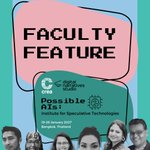
ALT A colourful faculty feature graphic for Possible AIs: Institute for Speculative Technologies, organised by CREA and Digital Narratives Studio. Large black pixel-style text reads “Faculty Feature” against overlapping pink, teal and light blue speech bubbles. The Institute dates, 19–26 January 2027, and location, Bangkok, Thailand, appear above a row of six black-and-white faculty portraits.

ALT A faculty feature introducing Nishant Shah, academic, researcher and digital culture scholar. He is an Associate Professor at The Chinese University of Hong Kong and Director of the Digital Narratives Studio. His work connects research, teaching, feminist digital justice and collective action. His smiling portrait, wearing glasses and a dark blazer, appears beside a teal speech bubble containing his biography on a pink background.

ALT A faculty feature introducing Leni Velasco, feminist activist, movement builder and narrative change strategist. Her work spans human rights, democracy, arts, culture and technology. She is the Steward Anchor of the Narrative Convergence Network and co-leads the Generative AI Network (GAIN). Her portrait appears in the lower right alongside a teal speech bubble containing her biography against a pink background.

ALT A faculty feature introducing Maya Indira Ganesh, researcher, AI ethics scholar and feminist technologist. She is an Assistant Research Professor and Associate Director at the Leverhulme Centre for the Future of Intelligence, University of Cambridge. Her work examines AI through feminist and decolonial perspectives. Her smiling portrait, wearing a colourful patterned jacket and yellow earrings, appears beside her biography on a pink and teal background.

ALT A faculty feature introducing Prarthana Mitra, creative practitioner and digital rights researcher based in New Delhi. Their work explores emerging technologies through queer-feminist, decolonial and tech-critical frameworks, focusing on alternative technological futures and creative agency in the AI era. Their smiling portrait, wearing glasses and a patterned shirt, appears beside a teal speech bubble against a pink background.

ALT A faculty feature introducing Geci Karuri-Sebina, scholar, digital governance researcher and futures strategist. She is an Associate Professor at the University of the Witwatersrand and ICESCO Chair on Innovation and Futures in Africa. Her work focuses on digital governance and the sociotechnical implications of AI in the Global South. Her portrait, featuring glasses, a patterned headwrap and a beaded necklace, appears against a pink and teal background.

ALT A faculty feature introducing Noopur Raval, feminist educator, researcher and technology scholar. She is an Assistant Professor of Information Studies at the University of California. Her work examines emerging technologies, gig workers, AI in the Global South, and AI in learning and teaching. Her portrait, wearing a denim jacket and white shirt, appears beside a teal speech bubble containing her biography on a pink background.

ALT A faculty feature introducing Sam Chua, cultural entrepreneur, researcher and futures curator. He is the founding curator of Seapunk Studios, a research-and-imagination collective exploring solarpunk ideas for Southeast Asia and the Global South. His work examines strategy, systems, curiosity, care and civilizational change. His portrait, wearing a light blue patterned shirt, appears beside his biography on a pink and teal background.

ALT Slide 1: A blue and purple graphic introducing Nisha, a Roshni Community Leader from Patna, Bihar. A black-and-white portrait of Nisha with her arms crossed appears on the right, outlined in yellow. The text reads, “She calls herself ‘Natural Nisha’, a leader born from her community.” A quote highlights her belief that real change comes from many voices rising together through collective action.

ALT Slide 2: Nisha is pictured working on a laptop, wearing a green kurta and patterned scarf. Against a blue background, a purple text box describes how, after Class 10, Nisha witnessed her friends dropping out of school while balancing her own studies and family responsibilities. These experiences motivated her to work towards change in her community. White illustrations of connected people symbolise collective action.

ALT Slide 3: A photograph shows Nisha addressing a group of women and children outdoors, with several young women standing alongside her. The text describes her Roshni Community Leader Action Project, through which she organised a Nukkad Natak demanding a health centre and community meetings addressing early marriage and school dropouts. Her work brings community members together to collectively advocate for their rights.

ALT Slide 4: A blue and purple collage featuring two photographs of Nisha's community work. The first shows her facilitating an awareness session with women seated indoors, while the second shows her standing outdoors with three young women. The text explains that Nisha's project focused on adolescent girls' education and health through awareness and counselling sessions. She collaborated with PRI members, Panchayat Pradhans, teachers, ASHA workers and NGO representatives. Her efforts helped 15–20 families and 90 community members develop greater awareness of gender equality, education and health.

ALT 1. Cover slide with the title “Who Feeds AI?” in large white pixelated text against a teal gradient background featuring circuit board patterns. A white robotic hand extends from the left, palm facing upwards, with the CREA logo at the bottom right.

ALT 2. Slide titled “The Work We Don’t See,” featuring a photograph of hands typing on a laptop. Text explains that AI does not train itself. Human workers label data, review responses, identify harmful content and correct mistakes. Their essential contributions often remain invisible in conversations about technological progress.

ALT 5. Quote slide featuring a teal circuit board background and a robotic hand. Large white pixelated text reads, “The responsibility for the treatment of these workers needs to be laid at the feet of Big Tech.” The quote is attributed to Karri Lybeck, tech industry trade union adviser and organiser, as quoted by SOMO in 2026.

ALT 7. Call-to-action slide with a teal circuit board background, titled “Want to Explore These Questions Further?” Text introduces CREA’s Possible AIs Institute, which brings together activists, researchers and practitioners to examine AI, power, rights and justice. A QR code and “Apply Now” prompt appear beneath the text, with the CREA logo at the bottom right.

ALT Blue graphic titled “Let’s Demystify AI!” The text explains that participants will explore how artificial intelligence works, trace its histories and examine how power, politics and social structures shape technology.

ALT Pink graphic titled “Who Gets to Shape AI?” The text highlights how AI can reproduce inequalities and create new forms of discrimination and violence. Participants will examine AI through feminist and queer perspectives, exploring gender, sexuality, identity, rights and whose voices are excluded from its development.

ALT Blue graphic titled “What’s Behind the Screen?” The text encourages participants to look beyond AI applications and outputs to critically examine the processes, structures, interests and wider social implications behind AI technologies.

ALT Pink graphic titled “What If We Built AIs Differently?” The text introduces collective dialogue, reflective co-creation and critical thinking as ways to imagine alternative technologies grounded in feminist values, justice and collective wellbeing.
ALT Graphic announcing applications for CREA and Digital Narratives Studio’s “Possible AIs: Institute for Speculative Technologies,” taking place 19–26 January 2027 in Bangkok, Thailand. Application deadline is 30 October 2026. A QR code to apply appears at the bottom.

ALT CREA carousel introducing Deepa, a Roshni Community Leader from Lakhisarai. A black-and-white portrait of Deepa appears against a blue background with yellow butterfly illustrations and purple accents. Text introduces her as “Multitasker Deepa” and describes her as someone breaking barriers and building women’s leadership in her community.

ALT Photograph of Deepa smiling while facilitating an activity, set against a blue and purple background with butterfly illustrations. Text describes how she overcame social criticism and challenges growing up in a marginalized community, transforming her experiences into a determination to bring change to her village.

ALT Deepa stands in front of a blackboard, addressing a group of girls and women seated in a classroom. Text highlights her Roshni Community Leader Action Project, which addresses girls’ school dropouts caused by a lack of science teachers and inadequate sanitation. She raised these concerns on Mann Ki Baat and mobilized parents, schools and girls to advocate for their rights.

ALT Two photographs show Deepa with groups of girls and women, including one of six young people standing outdoors with raised fists. Against a blue and purple background, text explains how her project supported safe toilets and a community library in two villages in Gopalpur. It directly benefited 95 school dropout girls through awareness, counselling and re-enrolment support, engaged 25 stakeholders and reached 20–25 families.

ALT Five speakers seated on stage at the FON Bangladesh event, with FON and AFD branding displayed behind them.

ALT A speaker in a bright pink outfit presents from a podium at the FON Bangladesh event.

ALT Screenshot of a bdnews24.com article titled “FON project wraps up as stakeholders urge sustained support for feminist organisations,” with CREA, FON and AFD branding.

ALT Participants seated around tables listen and applaud during the gathering.

ALT Graphic announcing CREA’s participation at the SVRI Forum 2026 in Bangkok, Thailand. The text reads, “We are heading to Bangkok for the SVRI Forum 2026!” followed by “CREA” and “Join us!” The design features the SVRI Forum and CREA logos, with colourful floral illustrations and geometric motifs in CREA’s pink, blue and orange palette.

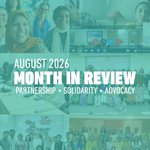
ALT Slide 1: Cover for CREA’s August 2026 Month in Review. A teal overlay covers a collage of photographs from CREA’s work during the month, including group meetings, an online training, partner visits and a seminar. White text reads, “August 2026: Month in Review — Partnership • Solidarity • Advocacy.”

ALT Slide 5: Four-photo collage from FON partner visits in Sri Lanka, showing Alejandra Garcia Paton, Yamini Perera and partner organisation representatives meeting, talking and posing together. Text reads, “FON Sri Lanka | Sustaining Feminist Movements.”

ALT Slide 9: Photo collage from the second Ibtida Network meeting in Jaipur. Participants are shown speaking during sessions and posing together for a large group photograph. Text reads, “Ibtida Network 2nd Meeting | Strengthening the Network.”

ALT Slide 14: Photograph of Priya Das and Anuradha Chatterji standing together at the AVPN Global Conference 2026 in New Delhi. Conference signage behind them reads, “A Blueprint for Action in Asia.” Overlay text reads, “AVPN Global Conference 2026 | Investing in Feminist Futures.”

ALT Graphic for the FON Bangladesh Capitalisation Dissemination Meeting panel titled “What Does Feminist Funding Make Possible and What Comes After?” It features four speakers: Tamanna Binte Rahman, Project Manager and Gender Focal at AFD Dhaka Office; Dr Priya Das, Director, Programs and Innovation at CREA; Syeda Samara Mortada, Partnership and Coordination Analyst at UN Women Bangladesh; and Nishath Sultana, Director – Influencing, Campaign and Communications at Plan International Bangladesh. The panel is moderated by Dr Sayed Md Saikh Imtiaz, Professor and Lead, Design Thinking, Transdisciplinary Innovation and Gender Lab, Department of Women and Gender Studies, University of Dhaka. The event takes place on 27 September 2026. Logos for CREA, Feminist Opportunities Now, France and AFD appear at the top.

ALT Teal and purple event graphic for the FON Sri Lanka Capitalisation Dissemination Meeting. The design features a translucent wave motif over a group photograph. Text reads: “FON Sri Lanka Capitalisation Dissemination Meeting” and “27 September 2026 | Dhaka, Bangladesh.” Logos for FON, CREA, EmpowHer, FIDH, Médecins du Monde, IPPF and France/AFD appear along the bottom.

ALT Teal and purple graphic with an abstract flowing wave motif. Large text reads: “FROM THE MARGINS TO THE MOVEMENT.” Below, it reads: “Four years of feminist organising, collective learning and solidarity across Bangladesh.” Logos for FON, CREA, EmpowHer, FIDH, Médecins du Monde, IPPF and France/AFD appear along the bottom.

ALT Close-up of a woman in a floral sari and bangles reaching into a large metal water vessel. Text reads: “The queue that gets longer with the heat. A woman in rural India used to walk to the well. Now the well runs dry more often, so she walks to the next one. Then the one after that.”

ALT Yellow CREA graphic with black text explaining that women and girls across India and much of the Global South often carry primary responsibility for collecting water. It notes that erratic rainfall and groundwater depletion can mean longer distances and queues, reducing time for school, paid work and rest, while increasing exposure to violence during water collection.

ALT Yellow CREA graphic with black text explaining that women and girls with disabilities may face inaccessible terrain and a lack of assistive infrastructure at water points, sometimes increasing dependence on women caregivers. It adds that climate adaptation plans often measure scarcity in litres and kilometres, rather than the time taken from people’s days or the risks involved in collecting water.

ALT Turquoise and yellow CREA graphic featuring a hand-drawn illustration of women, sanitation and menstrual health-related objects, including a raised fist, a worker with a tool, a sanitary pad dispenser and a toilet cubicle. Text reads: “Explore how gendered time burdens intersect with climate stress on the Centre for Inclusive WASH.”

ALT Four attendees pose together in front of blue curtains at the FON Sri Lanka dissemination meeting, including three women in saris and a man in a suit. On-screen text reads, “H.E. the Ambassador & CREA Team,” with the Feminist Opportunities Now logo.

ALT A large group of participants, partners and guests pose together in a conference room in Colombo. Blue curtains and a projector screen are visible behind them. On-screen text reads, “FON Dissemination takes off in Colombo with the French Ambassador and Mayor of Colombo.”

ALT A speaker wearing a light blue outfit and patterned headscarf addresses participants from a podium during a CSO thematic showcase. A Feminist Opportunities Now banner and presentation screen are visible behind her. On-screen text reads, “Sisterhood Initiative | CSO Thematic Showcase.”

ALT A speaker seated near the front of the room holds a microphone and raises a sheet of paper toward a projected presentation while another woman stands beside the podium. Participants are seated facing the presentation. On-screen text reads, “FON Dissemination takes off in Colombo with the French Ambassador and Mayor of Colombo.”

ALT A graphic for the FON Sri Lanka Capitalisation Dissemination Meeting titled, “What Does Feminist Funding Make Possible, and What Comes After?” It features speakers Juliette Van Wassenhove, Gender and Climate Specialist at AFD South Asia; Anuradha Chatterji, Executive Director at CREA India; Dr. Ramani Jayasundere, Senior Advisor at The Asia Foundation; and Shyamala Gomez, Executive Director at the Centre for Equality and Justice. The discussion is moderated by Shanuki de Alwis, Advocacy and Communications Consultant. The meeting takes place on 18 September 2026 in Colombo, Sri Lanka. CREA, FON and AFD logos appear at the bottom.


ALT Yellow graphic introducing Venkatalakshmi, a sanitation entrepreneur in Narsapur. Text explains that she secured money to buy desludging trucks herself, hired drivers, painted and advertised the vehicles. Below is a still of Venkatalakshmi speaking in the 2017 film. CREA and Dasra logos appear at the top.

ALT Collage of three stills from the film showing Venkatalakshmi watching a desludging truck from her home, a desludging truck and workers operating outside a building, and a close-up from inside a vehicle. CREA and Dasra logos appear at the top.

ALT Yellow graphic explaining that although the film is from 2017, it reflects an ongoing pattern of women entering the sanitation ecosystem as owners. Text notes that Venkatalakshmi’s work began without an NGO programme or subsidy and created work for her family and other operators.

ALT Yellow graphic explaining that Narsapur has since developed infrastructure including empanelled operators, safety training and a treatment plant. A large illustrated speech bubble asks: “Most stories about women in sanitation focus on hardship. This one is about ownership. Do we tell that version enough?” CREA and Dasra logos appear at the bottom.

ALT Graphic featuring a screenshot of Shalini Singh Deo’s article, “Disability Justice and Allyship: CREA’s Work on Sexuality, SRHR and Gender-based Violence,” on The Ability Network, with a group photograph and CREA branding.

ALT Teal CREA graphic featuring a quote by Shalini Singh Deo: “Changes must be led by and emerge from the voices and work of women and trans persons with disabilities.”

ALT Teal CREA graphic featuring a quote by Shalini Singh Deo: “Disability justice is not an additional area of work; it is integral to building intersectional feminist movements.”

ALT Teal CREA graphic inviting readers to read the full piece by Shalini Singh Deo on The Ability Network, with a QR code and CREA logo.

ALT Graphic announcing CREA’s Disability, Sexuality and Rights Institute as shortlisted for the Zero Project Awards 2027. The Zero Project Shortlist 2027 and CREA logos appear side by side on a white panel, set against a teal illustrated background.