

I won't follow blindly what they say. Stand tall stand proud you do not need the approval of others. Proud Birpai woman. Minya nyura wubaliyn.
Everywhere
Joined August 2010
- Tweets1.1M
- Following6.7K
- Followers14.3K
- Likes1.1M


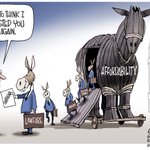



‘Irrelevant’: Estate agent calls out landlords for hiking rents to offset inflation
news24.com.au/lifestyle/tren…

1
39
Victoria’s debt eclipses entire countries in global shock
news24.com.au/politics/austr…

Constitutional expert says PM’s staffing allocations could be corruption
news24.com.au/politics/austr…

1
7
116
Sydney sex assault service boss leaves role following ‘antisemitism’ accusations
news24.com.au/politics/austr…

2
163
Labor’s massive Victoria Barracks backdown as historic Sydney site spared sale
news24.com.au/politics/austr…


Check the photos .. that woman is definitely wearing a hijab!
What a shock!
‘Rorting the system': Major $235 million government benefits fraud involving NDIS exposed news24.com.au/national/crime… via @News24Aust

What an insidious tax … payroll tax! Unbelievable
apple.news/AFg3FE4y0S6aXumqo…

4
219
One Nation volunteer attacked in horrific alleged assault amid rising political threats
news24.com.au/politics/austr…


C’mon News.com.au .. you truly pathetic posting click bait like this!

A viral Marine One photo has been described as the most “psychologically telling” image of Donald Trump’s entire presidency.
2
66

Well what do you know! Jodie turned up for the Caribbean holiday! Never knock back a good freebie holiday!

Anthony Albanese has done something no Australian prime minister has ever done before.
He's taken a free trade agreement — a document that is supposed to be about buying and selling — and he's stuffed it full of climate ideology until it's barely recognisable as trade at all.
This isn't a free trade deal. It's a climate agreement wearing a trade deal as a disguise.
Here's what his own government's documents admit. DFAT published a paper titled "Benefits for Trade, Environment and Climate," and buried in it is this line: for the first time in a free trade agreement, Australia has made a binding commitment to implement the obligations under the Paris Agreement.
Not a reference. Not a nod. A binding commitment. And the same document says the agreement can be suspended over serious violations of climate obligations.
So if a future Australian government — any government, Labor or Liberal — decides the Paris targets are too expensive, too punishing, too destructive to our economy, Europe can drag us before a dispute panel and suspend the deal. That's not sovereignty. That's a leash.
And Albanese knows exactly what he's doing. Ursula von der Leyen stood in our own Parliament and said she was proud to have made decarbonisation a defining pillar of this agreement. A defining pillar. In a trade deal. The woman running Europe didn't hide it. She celebrated it. And our Prime Minister sat there and smiled.
Now let's talk about what these targets actually mean for ordinary Australians. The 2030 target is a forty-three percent cut below two thousand and five levels. The Climate Change Authority itself admits emissions need to more than double their current rate of reduction to get there in four years.
The Institute of Public Affairs ran the numbers and found that meeting the twenty thirty-five target of sixty-two to seventy percent would require the equivalent of a two hundred and ninety billion dollar tax burden over a decade. That's not a rounding error. That's a generation of wealth confiscated in the name of a theory that Europe itself is quietly walking back as its own industries collapse.
And here's the kicker that should make every Australian furious. The European Union has told us point blank — once negotiations are done, they're done.
Don Farrell repeated it. There is no reopening. There is no amendment. Whatever is written in that text is written in stone, and it binds not just Albanese but every prime minister who comes after him.
This is a man who can't win a debate on climate policy at the ballot box, so he's outsourcing it to Brussels.
He's taking the most contentious, most divisive policy in Australian politics and locking it into an international treaty so that even if the people vote him out, the ideology survives him. That's not governance. That's entrenchment.
Why is any of this in a trade deal in the first place? Because the far left has learned that you can't sell climate destruction directly to voters, so you smuggle it in through the back door of agreements nobody reads.
You attach it to something people want — cheaper wine, more beef exports — and hope they don't notice the poison pill. And when the Coalition objects, Albanese calls them nativist and protectionist. He turns legitimate sovereignty concerns into a culture war so he doesn't have to answer the actual question: why should a future elected Australian government be unable to change its own energy policy without asking permission from Europe?
But before we get to the treaty, let's look at what the green agenda has already done to this country on its own. Because the damage isn't theoretical. It's on every power bill in Australia right now.
Household electricity bills are up thirty-five percent since the start of twenty twenty-two. Gas is up forty-nine percent.
Insurance premiums have surged forty-six percent in under five years. This isn't global inflation doing its thing — this is a deliberate policy choice to retire reliable coal generation and replace it with intermittent wind and solar, then build tens of thousands of kilometres of transmission lines to carry power from where the wind blows to where people actually live. And who pays for all of it? You do.
Every household. Every business. Every manufacturer trying to keep the lights on and the doors open.
Look at the numbers state by state. In South Australia, the median rate is nearly forty-two cents per kilowatt-hour — the highest in the nation. In New South Wales, it's around thirty-two cents. In regional NSW on the Essential Energy network, the regulated reference price is two thousand six hundred and four dollars a year.
In South Australia, two thousand three hundred and thirty-four. And on top of the usage rate, every household pays a daily supply charge — anywhere from about four hundred and thirty to six hundred and sixty dollars a year just for the privilege of being connected. That's before you've switched on a single light.
And here's the part they don't put in the press releases. The wholesale spot price might have dipped lately — sixty-three dollars per megawatt-hour in the September quarter, down twenty-seven percent on a year ago. Great. But that number is a mirage for what you actually pay.
Network charges make up thirty-nine to fifty-four percent of your bill, and they don't fall when wholesale prices do. Environmental schemes add another two to three percent directly. And the futures market — what retailers actually lock in when they set your contract — is climbing hard. New South Wales twenty twenty-seven contracts are up thirteen percent this quarter. Queensland up nearly thirteen. Victoria up nine and a half.
The October heatwave sent the NSW spot price to over twenty-three thousand dollars per megawatt-hour for a single half-hour. That's not a glitch. That's what happens when you've dismantled baseload and you're praying the wind picks up.
A leaked Victorian government briefing warned household bills there will soar by up to twenty-seven percent over the next decade as coal plants close, with large businesses facing increases of up to sixty percent. Western Australia's own modelling showed industrial electricity costs could rise eighty-nine percent by twenty thirty-two without intervention.
Nexa Advisory found that just delaying transmission projects could add thirty-seven percent to wholesale prices between twenty twenty-seven and twenty thirty-one — up to four hundred and seventy-two dollars on the average household bill.
And a leaked gas infrastructure document admitted Victorian policies alone could add a hundred dollars a year per household as the gas network shrinks and remaining customers get slugged to cover the costs.
Then there's the data centre bomb. The Smart Energy Council estimates that if five gigawatts of new data centre demand connects to the existing grid without bringing its own power, it will add forty billion dollars to wholesale electricity costs across the eastern states between twenty twenty-nine and twenty thirty-five. Households carry nine point two billion of that.
A Queensland household would pay an extra three hundred and seventy dollars a year from twenty twenty-nine — nearly twenty percent on top of an already brutal bill. Victoria, another seven hundred and thirty-nine. South Australia, six hundred and sixty-one. New South Wales, five hundred and forty-three.
And Queensland's Crisafulli government is talking about building new taxpayer-funded coal plants to power these data centres — fifteen to twenty billion dollars for a single facility — which means the public pays twice: once for the renewables transition and again for the backup when it fails.
‘Pause for thought’: Wild Meghan timeline throws major claim into question
news24.com.au/lifestyle/cele…

1
6
377
‘Tens of billions of barrels’: Massive Queensland oil discovery could dwarf original estimates
news24.com.au/business/energ…

Unbelievable!!!

I just looked at this again and it shows Meghan did her best to get the letter out there, watch it yourself youtu.be/3O7KvTxl3Ok?is=QzyN…

2
238