
Frequently updated assortment of tweets related to the world of science (with some side tracking) - As an Amazon Associate we earn from qualifying purchases
Joined March 2012
- Tweets7.7K
- Following29
- Followers2.6M
- Likes498
Pinned Tweet
At first glance, a sky full of stars...
Look closer: most of these tiny points of light are actually galaxies!
This Rubin Observatory view captures around 10 million of them, each with a story to uncover.
(Video by WorldAndScience - Credit: RubinObs/NOIRLab/SLAC/NSF/DOE/AURA)
A very cool piece to brighten up your work space!
A model of the second Death Star: amzn.to/46FhDgT -AmazonAfflink

2
4,456
Fascinating: The volumes of liquid water on Earth, Europa, and Titan, shown to scale.
(Credit: PHL / UPR Arecibo/NASA)

Why Do Some Memories Last for Decades While Others Are Gone by Dinner?
universal-sci.com/article/wh…

It takes a little imagination to see a flock here. Messier 11 is known as the Wild Duck Cluster, an open cluster of roughly 2,000 stars that won’t stay together forever.
(Credit: ESO)

Alien Earths: The New Science of Planet Hunting in the Cosmos: amzn.to/4slb23x -AmazonAfflink

3
9,920
Mesmerizing: As it completed its 100,000th orbit, Hubble zoomed in on the Tarantula Nebula, uncovering a region of chaotic star birth, perhaps triggered by a nearby star that exploded.
(Credit: NASA, ESA, et al.)

This stunning image showcases NGC 6820 and the young star cluster NGC 6823 in remarkable detail, featuring crimson hydrogen gas, blue-white infant stars, and dark pillar-like forms carved by stellar radiation.
(Credit: International Gemini Observatory/NOIRLab/NSF/AURA et al.)

Need a solid VPN? - NordVPN has an incredible Black Friday sale right now!
Get a massive 78% discount + 3 extra months for free!
Use our affiliate link here: go.nordvpn.net/aff_c?offer_i…
3
7,968

A closer look at nebula Gum 80. The brilliant star near its centre may be an outsider, born in the nearby Eagle Nebula. Now its radiation makes Gum 80’s hydrogen glow red, turning a chance encounter into a spectacular sight.
(Video by WorldAndScience - Credit: ESO/VPHAS+ team)
Scientists tracked nearly 800 people.
Here’s what stood out about late-day exercise: universal-sci.com/article/ex…

8
10,106
Beyond Neptune lies the icy Kuiper Belt, which may hold at least a trillion comets. Hundreds of thousands may exceed 100 km (62 miles) in diameter.
We still don’t know if any of its worlds could support life as we know it...

Transform your bathroom with awesome galaxy shower curtains: amzn.to/3PsbsHf -AmazonAfflink

3
7,788
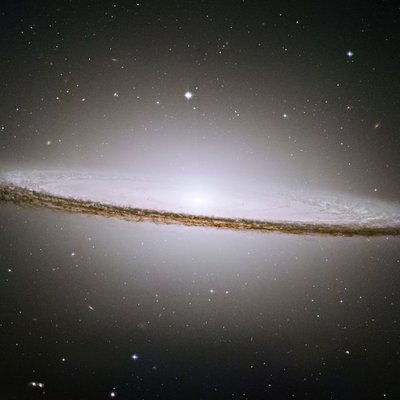
About 30 million light-years away, the Sombrero Galaxy is a showstopper.
You cannot see it with the naked eye, yet it is an easy target for a small telescope.
(Video by Universal-Sci - Credit: ESA/Hubble & NASA, K. Noll)

Light and darkness side by side in the Milky Way!
NGC 6520 shines brightly next to the dark cloud Barnard 86, all set against a spectacular background of countless stars.
(Video by WorldAndScience - Credit: ESO)
The Real-Life Last of Us? Could a Warmer World Help More Fungi Infect Humans?
universal-sci.com/article/co…
