

Animals 🦉 Nature 🌿 Discovery 🔎 Daily wildlife facts, natural wonders, and fascinating stories from Earth.
Joined March 2010
- Tweets12.3K
- Following4.5K
- Followers5.5K
- Likes10
Chalciporus piperatus, the peppery bolete, was first described by Pierre Bulliard in 1790 as Boletus piperatus. In 1908, Frédéric Bataille reclassified it as Chalciporus piperatus. Its genus is considered an early branching lineage within the Boletaceae and appears related to boletes with parasitic properties.


Evarcha flagellaris is a tiny jumping spider recorded from Ghana, Kenya, South Africa, and Zimbabwe. First described in 2011, it measures just 2.0–2.4 mm across the carapace, with an abdomen 1.9–3.6 mm long. Males show four brown stripes on a yellow abdomen and have the whip-like embolus that gave the species its name.

The southern rough-winged swallow is a member of the swallow and martin family, found from Honduras south through every mainland South American country except Chile, and on Trinidad. It has also been recorded as a rare vagrant on Aruba, Bonaire, Curaçao, Tobago, and the Falkland Islands.


Birchleaf mountain mahogany, Cercocarpus betuloides, isn’t a true mahogany at all. Native to California and Baja California, it’s a flowering shrub or small tree in the rose family, noted for extremely hard reddish-brown wood and distinctive feathery seeds.


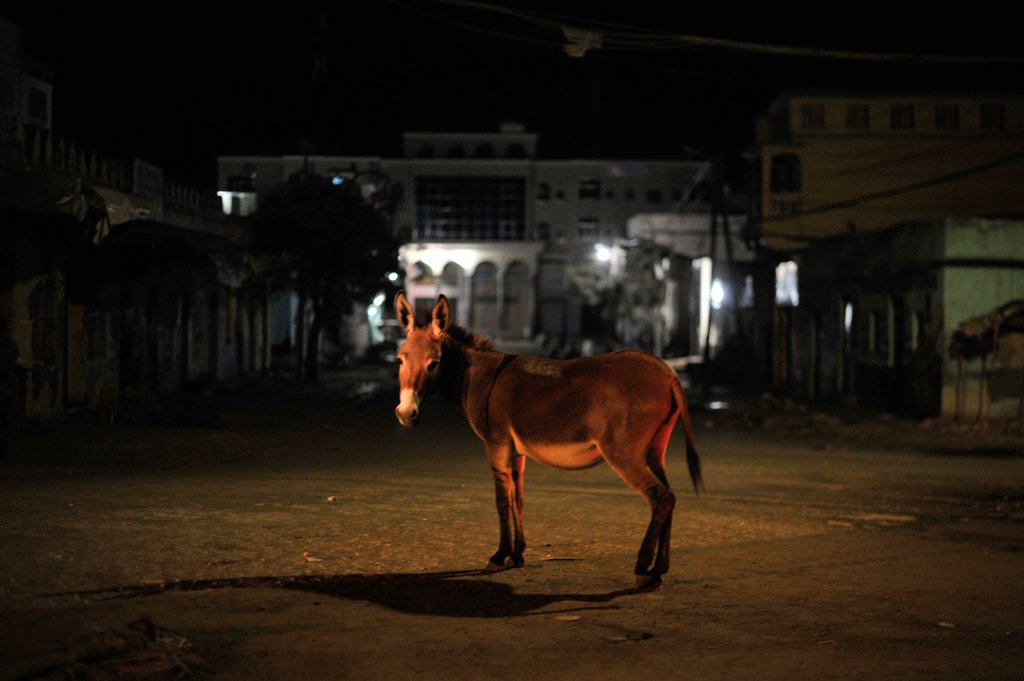
Donkeys descend from the African wild ass and were domesticated in Africa around 5,000 to 7,000 years ago. Since then, they have been used mainly as working animals, a long partnership between people and one of the world’s most familiar equines.



The little glassywing, Vernia verna, is a skipper butterfly in the family Hesperiidae. It occurs across the eastern United States and southeastern Canada, with a range stretching from central New England west to central Nebraska and south to northern Florida, the Gulf Coast, and southern Texas.


Cicindela patruela, known as the northern barrens tiger beetle, is found in eastern North America. Because it depends on very specific open habitats, and because of human involvement, its populations have declined significantly in several regions, including most of New England, Ontario, and Quebec.

The crimson-bellied parakeet, or crimson-bellied conure in aviculture, is a parrot in the family Psittacidae. This species is found in Bolivia and Brazil.

Opuntia rufida, the blind prickly pear, is native to rocky slopes in southwestern Texas and northern Mexico. It lacks the long spines many cacti have, but is covered in red-brown glochids—tiny barbed bristles that detach easily and may be carried by the wind, which is how the plant got the name cow blinder.


Bicknell’s thrush is one of North America’s rarest and most localized songbirds. About 17.5 cm long, it breeds on coniferous mountaintops and in disturbed habitats across northeastern North America. The species was first scientifically identified on Slide Mountain in the Catskills, and John Burroughs later wrote of hearing it near the summit.


4
96
Miller’s saki is a New World monkey found in parts of southwestern Colombia, northeastern Ecuador, and perhaps adjacent areas of Peru. Its classification shifted over time: described as a species, treated as a subspecies in 1987, then restored to full species status in 2014. Males are darker and grizzled, while females are generally more grayish.

1
3
121
Pangrapta decoralis, known as the decorated owlet, is a moth in the family Erebidae. First described by Jacob Hübner in 1818, it is found in North America from Alberta to Nova Scotia, south to Florida and Texas.

4
135
Carolina silverbell, or little silverbells, is a flowering plant in the Styracaceae family native to the southeastern United States.

9
122
The tamarisk jird, also called the tamarisk gerbil, is a rodent in the family Muridae. It ranges across Central Asia, including China, Mongolia, Kazakhstan, Kyrgyzstan, Russia, Turkmenistan, and Uzbekistan, and it prefers habitats with grass or shrub cover.

The plain prinia, also known as the plain wren-warbler or white-browed wren-warbler, is a small cisticolid warbler found from Pakistan and India to south China and Southeast Asia. It was once grouped with the tawny-flanked prinia of sub-Saharan Africa, but is now usually treated as a separate species.


The Texas spiny lizard, Sceloporus olivaceus, is native to Texas, Arizona, and Oklahoma, as well as northeastern Mexico including Coahuila, Nuevo León, Tamaulipas, and San Luis Potosí. It is quite common across its range and can be found in trees or on fences.


In a 2026 NOAA mission in the Gulf, technical divers using closed-circuit rebreathers outplanted lab-reared mesophotic corals for the first time. The team placed 26 corals on dome-shaped structures 66 meters down, using a new “coral torpedo” to deliver them to the seafloor as part of restoration work in habitat injured by the Deepwater Horizon spill.


The snowy urola moth, Urola nivalis, is a moth in the family Crambidae. Its recorded range runs from southern Canada and Maine south to Florida, and west to Illinois and Texas.


Cladia inflata is a fruticose lichen that forms dense mats up to 5 centimetres high. Its swollen, glossy branches range from pale yellow-brown to olive-brown and are broader at the forks, a key feature that sets it apart from close relatives. It grows on peaty or sandy soil in very wet parts of Tasmania, south-eastern Australia, and New Zealand.


