








TLDR- A fully open, decentralized and permissionless prediction market application on Kaspa.
In the last few months I have been working with @maxibitcat mapping and coding his proposal for a permissionless prediction market into an Argent app.
He proposed a voting resolution mechanism that utilizes a lottery to incentivize the losing side of a binary market to vote honestly (see more in his original post).
It felt like a great use case for KCC20 tokens. A prediction is held as a tradable, fungible KCC20 token representing the prediction asset, with extended logic to support voting.
A few things worth sharing:
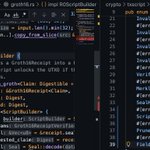
1. Argent is a fantastic tool that enables coding this complex covenant system with ease. This idea could also be written as a single EVM program, but when mapping it to the state machine it actually is, it feels natural and obvious to implement it as a UTXO covenant application (image attached).
2. It’s exciting to draft an application that is completely decentralized and open. Everyone would be able to create and participate in any market they wish, while also running their own application code
There will be no owner and no beneficiary. The system is completely open, would only benefit the network miners, and would encourage honest participation.
3. The system’s openness and current implementation tie the security of a market to its size. Small-cap markets could be manipulated more easily. Inevitably, people would lose money in this social experiment.
4. I aim to release a mainnet version around the end of this year.


The main idea was to have token holders vote, in this way: drive.google.com/file/d/10Wx…
But like UMA, there should be an optimistic resolution that should make voting unnecessarily in most cases.
1
9
123

💵 KaspaDollar
15 Questions for the Development Team!
The new @KaspaDollar initiative, led by Kaspa core developer @asaefstroem, with support from the core team as described in its announcement, is exciting news for the Kaspa ecosystem!
#Stablecoins will play an important role in bringing decentralized finance, payments, lending and other financial applications to Kaspa.
Most of us are familiar with $USDT and $USDC, which rely on centralized issuers and reserves of traditional financial assets to maintain their dollar backing.
KaspaDollar is proposing something different: a decentralized, overcollateralized stablecoin.
Closer comparisons are existing DeFi stablecoins like $DAI, Liquity's $LUSD and its newer $BOLD. Each takes a different approach to collateral, stability, redemption and governance. DAI also incorporates centralized stablecoins and real-world assets into its backing.
The KaspaDollar team has already published its initial roadmap, including a 5 million $KAS development fundraiser, testnet plans, independent auditing and a targeted September 2027 mainnet launch.
At @Kaspa_Commons, we're excited to follow this development and help our fellow Kaspians understand how it could work, what makes it different, and what opportunities it might create.
We've put together 15 questions covering the technology, economics, funding, decentralization and adoption.
These aren't demands for answers or assumptions about decisions the team has already made. We're genuinely interested in digging deeper, learning alongside the community and understanding the thinking behind what's being built.
We recognize that some answers may still be taking shape through research and development. We'd love to hear from the team as that work progresses, and hopefully turn their responses into an ongoing Q&A that everyone can learn from.
No rush! Excited for this next year!
And of course, we'd love to hear what questions our fellow Kaspians have too!
🧵 1/5
kaspadollar.com


Today we are introducing KaspaDollar, an initiative led by core developer @asaefstroem to build the first decentralized stablecoin on the $KAS network.
The developments around @kccforum and the Toccata hardfork have considerably widened what Kaspa is capable of. Capability alone, however, does not make an ecosystem. Decentralized finance requires a unit of account that holds its value, and until Kaspa has a stablecoin of its own, every application built on it will remain dependent on assets issued elsewhere.
The design we intend to follow is the decentralized, overcollateralized stablecoin: a pattern whose security properties have been examined and tested across the industry for the better part of a decade. With the support of the core team, we consider the conditions right to bring it to Kaspa.
Realizing this requires development, an independent audit, further research, and the operational work of taking a protocol from specification to production. To fund it, we are opening a fundraiser with a target of 5,000,000 KAS.
Contributions are made directly to the fundraising address published on the website. Should the target not be reached by 1 January 2027, every contribution will be returned to the address from which it was sent.
Up until that point, this account will share the plans, details and progress of the work as it develops.

That's wishful thinking. Everything to do with finance has to go through US regulation if you use it in the US. Particularly, if you infer it is pegged to USD, but not backed by USD. That's the equivalent of counterfeiting.
1
21
GENIUS Act, Pub. L. 119-27, §2(22)(A): a "payment stablecoin" is a digital asset "the issuer of which is obligated to convert, redeem, or repurchase for a fixed amount of monetary value" and "represents that such issuer will maintain a stable value".§3(a): "unlawful for any person other than a permitted payment stablecoin issuer to issue a payment stablecoin". §3(b): unlawful for a service provider to offer one not issued by a permitted issuer. Both apply to payment stablecoins as defined in §2(22).§14(a): Treasury "shall carry out a study of non-payment stablecoins, including endogenously collateralized payment stablecoins", covering "governance structure, including aspects of decentralization". A study, not a ban. §14(b): endogenously collateralized means backed by an asset "created or maintained by the same originator", i.e. Terra.18 U.S.C. §§471–474 (counterfeiting) cover "obligations or securities of the United States", §§485–486 cover coins. The Liberty Dollar conviction was for minting metal coins resembling US coinage.FinCEN FIN-2013-G001: "The production and distribution of software, in and of itself, does not constitute acceptance and transmission of value." FIN-2019-G001 §4.5.1 ties money transmission to whoever accepts and transmits value. DOJ memo of 7 April 2025: no prosecution of platforms, including DeFi, for the acts of their end users.
KaspaDollar is no issuer, nobody is obligated to redeem anything and it is not a custodian either thereby the aforementioned laws do not apply. If you disagree please support your claims with something.
1
24

Hey @asaefstroem is it right to say that @KaspaDollar aims to be the first product that starts a GPU economy on $KAS as well ?


KaspaDollar whitepaper is now live! Please find it under the /whitepaper page on our website. Do note, that this is a working document that is subject to both internal and external review!
As part of this release we also want to talk about why KaspaDollar is not just a stablecoin and why $KAS is the only collateral possible. That is, in this post we want to go through some of the decisions that have been taken so far and the thinking behind them, because a few of them look strange from the outside until you see what they protect.
KaspaDollar is not a business. There is no planned revenue that will be extracted from the community and there is neither any developer fee. The deployed contracts will not have an admin key and no central form of control at all. Our goal is to design it into a self-sustaining system that inherits the properties of the base layer itself. Therefore, it should be considered a product designed for the people of $KAS, owned by $KAS miners, if anything.
Let’s backtrack a little bit to understand the motivations behind this.
Why do we want decentralization and why do we resist censorship? Because there are countless examples of centralized entities abusing their power in their own favor. When it comes to stablecoins we can see this concretely with freezes. A concrete example is when Circle blacklisted the Tornado Cash contracts in 2022, every depositor in those pools had their USDC frozen with them. In addition, Tether blacklisted more than a billion dollars of USDT in 2025 alone. One can argue that most of the cases are in line with a criminal investigation but what prevents a centralized issuer from freezing without proper cause? What is the point of a decentralized PoW if a centralized stablecoin captures the majority of the TVL. Some might argue that this is why we should just stick to $KAS. But $KAS comes with a volatility not every holder can accept. Many people want to offload profits or losses into a stable asset knowing that the value of $KSD will with near certainty equal the same value tomorrow.
Everyone in the Kaspa movement has their own reasons for being here, but we believe and hope that all of them are rooted in the core crypto ethos.
Kaspa is a PoW-backed L1 with capabilities that exceed any other PoW network, and it is PoW for a reason, because this is the consensus mechanism that has proven to be the most decentralized way of agreeing on chain.
Some people point out that mining hashrate on Kaspa, and on Bitcoin, is too concentrated in a handful of pools or miners. That is true, but the same is true of staking on PoS networks like Ethereum with one major difference. The difference is that PoW is actual hardware, an ASIC machine that took years and a tremendous amount of capital to develop that can do exactly one thing, mine $KAS.
Attacking a PoW network with hardware you bought means attacking the only income your hardware will ever have. A PoS attacker’s stake can be slashed only for misbehavior the protocol can prove, and voting a false price or censoring a transaction is not one of them. Therefore in a PoS system, the stake could simply be retargeted.
Now the reason why $KSD only uses $KAS for its collateral is to bind it to the success and health of the network. The price that $KSD runs on is voted by the miners themselves. So the only party that can attack $KSD is a large miner, and that miner would be doing it in public, against the asset that pays for its hardware. Therefore, the more of Kaspa’s economy settles in $KSD, the more an attack on $KSD is an attack on $KAS itself, and the reward would be in the very asset the attack is destroying.
Some have suggested that we should use gold or $ETH as collateral. If we did this, $KSD would actually become more likely to be attacked and exploited. With $ETH or gold the reward would be paid in an asset the attack does not impact. It would also mean that the collateral is no longer on Kaspa at all. Gold on Kaspa is only a claim on gold that is held by a custodian, and $ETH on Kaspa is a claim on $ETH secured by PoS.
$KAS is the only asset that exists natively on the base layer, with no issuer and no bridge in front of it. So ironically, through less diversification we get a stronger system, one that is closer to the security properties of $KAS itself.
However, we can also not ignore the fact that centralized issuance is needed for adoption. That is why KaspaDollar also creates the infrastructure that any future issuer on Kaspa will need, including centralized ones like @circle or @tether if they ever come. The biggest piece is the oracle itself, a price feed voted by the miners that any Kaspa protocol can read, whether it is a lending market or a DEX. Simply put, providing technical rails that are built and verified by the core team can have a very beneficial stamp of approval, which could make issuance and building on Kaspa less daunting.
Consider what Kaspa DeFi would look like if it were built on bridged stablecoins or on stablecoins that originate on an L2. A covenant on the base layer can have flawless security and still hold nothing more than a claim on money that lives somewhere else, with completely different security properties.
If the dollar inside it is bridged, its value depends on the bridge’s multisig. If the dollar comes from an L2, its value depends on that L2’s sequencer and the L2’s security. If the L2 has any form of centralized control, then the security of Kaspa’s DeFi inherits the security of an external system, that can be completely disjoint from the original sought properties.
Therefore, an important statement is that: the base layer implementation is only as secure as the weakest asset within the protocol. $KSD is the only dollar on Kaspa where both the collateral and the price are secured by the same miners that secure $KAS, and that is what makes it the foundation for Kaspa DeFi.

Oh gotcha. That's good to hear! Didn't know you could top up the original $KAS collateral.
However it works, try to keep this part super intuitive because it's important aspect of risk management.
1
2
75

📄 From whitepaper to visual explainer. 🎬
We created this LM explainer to explore the KaspaDollar (KSD) whitepaper by Alexander Säfström, a Kaspa Core developer.
The proposal explores a dollar-denominated token on Kaspa L1, backed by KAS and supported by miner-supplied price data.
How could it work? What are the risks? And what could it mean for Kaspa DeFi?
▶️ Watch our explainer.
From decentralized money to decentralized finance.
That's not how a USD stable coin works! That would be illegal in the US. It's just another L1 token if it isn't backed by USD or Treasuries. Read the ironically named, Genius Act.
1
1
34

I have an 8 GPU rig, could this be used for proving? And are RX 6600 XT good enough for the job or do we need something a little stronger? I’ll read the white paper I promise 😂
1
50

USDT is coming on kaspa:native L1 👀
@trestly_io

KAS mining coming back to GPU? Nice! So assuming GPU hashrate contributes to network hashrate but the rewards come from somewhere else other than Coinbase?
1
2
52


I admit I don't really know what I'm talking about when it comes to mechanics of stablecoins. But from the little I do know it seems like a more stable price for Kaspa with more of a floor on the price would make for a better foundation for collateral. We've watched Bitcoin for decades. It was predicted the price would become more stable as it got adopted. The adoption ended up being as digital gold and the predictions of a stable price are turning out to be true.
I'm just one person with one opinion but I would prefer some app, some more demand for KAS undergirding the network before it is used as collateral.
1
1
51

$KAS Kaspa Stablecoin is going to change Everything!!!
A completely trustless, native stablecoin is coming to Proof-of-Work. Here is why the new $KSD whitepaper from Kaspa Dollar is turning heads: 👇
1/ **100% $KAS Backed:** No fiat reserves or corporate intermediaries. $KSD is minted through native L1 covenant vaults secured directly by Kaspa's blockDAG.
2/ **Zero Admin Keys & Fees:** The proposed contracts have no backdoor, no admin privileges, and no developer taxes. Code is law in its purest form.
3/ **Miner-Voted Oracles:** Instead of trusting external APIs, the system uses a decentralized price feed driven by miner voting across recent blocks—tying economic security directly to hashrate.
As L1 programmability expands, bringing decentralized stablecoins natively to high-speed PoW networks could completely shift how capital flows in the ecosystem.
What are your thoughts on algorithmic, PoW-backed stables?
Is this what $KAS needed?
#Kaspa #KAS #KSD #Crypto #DeFi


I'm struggling to understand how @KaspaDollar oracle is DECENTRALISED
Mining pools construct Block Templates & CONTROLS the price votes
2-3 pools produce most blocks,thousands of votes still reflect just 2–3 operators,not independent price reporters
Am I missing something?
$KAS

Thanks for the detailed explanation! I couldn't find the Stratum proxy mechanism described in the whitepaper and wasn't aware of it. It addresses a part of my concern
1
3
196

@asaefstroem wouldn't such an oracle service potentially even allow us to run something like NEAR's rainbow bridge, so we could directly onboard USDC ourselves by locking USDC in ETH that become available in KAS as soon as this deposit was attested?

Uhhhh, I like!
Having miners include real time data about real world facts directly in their blocks and use them to provide decentralized oracle services, sounds like a really interesting idea.
The oracles could become their own economic actors that collect fees for consuming their latest values that could then be re-distributed to the miners that update these values.
That would not only create an incentive for miners to actually provide this data but it would also provide a completely new funding mechanism for PoW itself.
And I don't even think that you have to constrain yourself to weighing these oracles by the amount of PoW - you could most probably also build an oracle that aggregates existing attestors in other chains like chainlink, or larger dexes to tap into another dimension of existing decentralization.
Such a "merge-mining of data" would turn Kaspa into an aggregation layer for all kinds of forms of decentralized trust.
Yeah technically that mechanism can be used as well. I think however that the game theory needs to be studied in all applications that will use miner-based oracle in order to ensure that the incentives are aligned.
Uhhhh, I like!
Having miners include real time data about real world facts directly in their blocks and use them to provide decentralized oracle services, sounds like a really interesting idea.
The oracles could become their own economic actors that collect fees for consuming their latest values that could then be re-distributed to the miners that update these values.
That would not only create an incentive for miners to actually provide this data but it would also provide a completely new funding mechanism for PoW itself.
And I don't even think that you have to constrain yourself to weighing these oracles by the amount of PoW - you could most probably also build an oracle that aggregates existing attestors in other chains like chainlink, or larger dexes to tap into another dimension of existing decentralization.
Such a "merge-mining of data" would turn Kaspa into an aggregation layer for all kinds of forms of decentralized trust.

widespread adoption of miner attestation oracle services, aka RTD, should definitely be an incentive for Kaspa miners and the Kaspa community to decentralize mining to the maximum, assuming we want to propose and showcase to the world the real value this attestation system can provide.
my point is, don’t analyze the current situation as a given, but rather use this opportunity and incentive to change the state of affairs. want to sell to the world realtime decentralization as a service? influence it!