







liam retweeted

Why ETH is the store of value for what's coming
We are almost certainly heading into a period of high inflation and extreme economic and social volatility. As inflation and risk erode the purchasing power of nation-state money and many other assets, it will matter more than ever to hold assets that keep or grow their value.
Gold and BTC are high-powered money and excellent stores of value. ETH goes further.
Not debt-based. Like gold and BTC, ETH is not debt-based or credit-based money.
Censorship resistant. Like BTC, or gold and silver held physically, ETH transactions on Ethereum L1 can't be censored. That's true for simple payments and for complex smart contract programs like DeFi, and those programs are guaranteed to execute.
Cheap to hold. Like BTC, ETH is relatively cheap to hold and store securely.
Cheap to use at any scale. Ethereum is cheap and easy to use whether a transaction moves $1 or billions. Any well-formed transaction is guaranteed to execute.
Sound, and getting sounder. ETH is disinflationary and becomes ultrasound, meaning deflationary, during periods of high network activity.
Broadly useful. ETH has many uses across the Ethereum economy, and that economy will grow by orders of magnitude as finance, and eventually every industry, moves onchain. Global adoption of the Web protocols in the '90s and '00s transformed the world economy. Ethereum is the foundation of Web3, the user-centric, decentralized web.
Collateral money. ETH works as collateral, and collateral that grows in value over time is a powerful thing.
Home of stablecoins. Ethereum hosts the bulk of stablecoin activity. Stablecoins serve as payment money and as unit-of-account money.
Despot-proof. Like BTC, ETH can't be used by a despot to financially exploit or repress citizens. Over time that should have positive geopolitical effects.
Programmable. ETH is programmable money. You can attach arbitrary logic to transactions and build an entire economy on smart-contract-based agreements and business processes (see shodai.network).
Transparent or private, and auditable either way. Money and financial instruments on Ethereum can be public or private, and in both cases selectively disclosable and auditable. Privacy tools for retail and institutional users include VPNs, mix networks, shielded and privacy pools, Railgun, stealth addresses, Kohaku, and zero-knowledge proofs in many forms, including on L2s and on private permissioned EVM networks linked through bridgeless synchronous composability.
Future-proof. By the end of 2027, or partway through 2028 at the latest, ETH will be quantum-safe and AI-safe money.
ETH is the base money of an exponentially growing ecosystem that should keep growing for decades. Its monetary premium will keep rising, because retail, corporate, and government users will all need to hold some. Part of today's premium is speculative: Ethereum dominates smart contract blockchains, but it hasn't fully hit its stride or gone mainstream yet.
Machine intelligence will supercharge every scientific and technological pursuit and grow global GDP bigger and faster than any of us can imagine. Ethereum L1 and modular Ethereum L2s will undergird most of the high-value agreements, transactions, payment flows, and complex business processes behind the coming hybrid human-machine decentralized economy.


Expanding on why I believe "ETH as store of value (SoV)" makes much more sense to focus on than "ETH as fee-burning token".
Three primary reasons:
1. ETH as fee-burning token never was as strong as it seemed
2. Optimizing for ETH as fee-burning token would demand Ethereum and ETH function in ways that are very hard to make compatible with decentralization and capture resistance.
3. Meanwhile, optimizing for ETH as SoV is aligned with Ethereum focusing on its unique strengths (decentralization and CROPS)
EIP-1559 (including its burn) is fine and good, we should keep them. But we should not feel sad if fee burn is < 10% of breakeven indefinitely; the value of ETH comes from elsewhere.
The core idea: the big thing that people appreciate about Ethereum is decentralization and CROPS. The main pragmatic benefit that these things translate into is stability. SoV is the category where that is not an unneeded extra we merely put effort into for ideological reasons, but rather a pragmatic strength from the perspective of people putting in their assets. And in the era of AI disruption, stability will be highly valued.
One clear benefit as a result of AI is that the cost of implementing formal verification on Ethereum has reduced by an order of magnitude.
While AI-powered mathematics are ironically one of Ethereum's largest threats, it's also the solution to bolstering our security against AI.
1
4
229
ETH is a decentralized, programmable, SoV asset
Expanding on why I believe "ETH as store of value (SoV)" makes much more sense to focus on than "ETH as fee-burning token".
Three primary reasons:
1. ETH as fee-burning token never was as strong as it seemed
2. Optimizing for ETH as fee-burning token would demand Ethereum and ETH function in ways that are very hard to make compatible with decentralization and capture resistance.
3. Meanwhile, optimizing for ETH as SoV is aligned with Ethereum focusing on its unique strengths (decentralization and CROPS)
EIP-1559 (including its burn) is fine and good, we should keep them. But we should not feel sad if fee burn is < 10% of breakeven indefinitely; the value of ETH comes from elsewhere.
The core idea: the big thing that people appreciate about Ethereum is decentralization and CROPS. The main pragmatic benefit that these things translate into is stability. SoV is the category where that is not an unneeded extra we merely put effort into for ideological reasons, but rather a pragmatic strength from the perspective of people putting in their assets. And in the era of AI disruption, stability will be highly valued.
2
43
689
liam retweeted
We like our gold working for us.
Even sitting idle after minting, your gold will have the potential to earn yield.
In this example, gold’s price dropped, but the position kept on receiving fees, pETH flows, and secondary-rate income.
Together, these more than offset the interest paid, leaving the position with a positive return.
---
[This is a testnet position, so no real money. But core protocol mechanics will be the same on mainnet.]
liam retweeted

Devcon 9 is coming to Lisbon! 🇵🇹
October 11–13, 2027
Building on Mumbai, we're bringing Ethereum's builders together with more friends and allies working toward a freer, more open internet.
liam retweeted
If you like Pendle, you'll love Polaris.
Pendle splits yield from principal, and pETH splits into its floor (fpETH) and its premium (vpETH).
First of all, you can put that pETH to work and stack extra yield on top, or use it to mint assets.
But let's say you choose to split your pETH.
The floor would just grow with no risk of losing value in ETH terms.
And then you'd have your vpETH, which would be exposed to spot price volatility, so you can trade it or just sell it to get a low-volatility position.
Shout out to the @ethereumfndn YouTube channel.
I couldn't make it to @EFDevcon this year, so having access to all presentations via individual videos has been really helpful, rather than having to go through each livestream.
So much exciting stuff happening across Ethereum!
1
21
591
liam retweeted

Q-Day estimates have moved up, but so have estimates for achieving quantum-resistance on all three layers of Ethereum. How do we keep pace? @drakefjustin answers.
In the last few days, a key tool in shipping these upgrades, leanVM, has been formally-verified end-to-end. We remain optimistic in the face of AI-enabled attackers because defenders can use the same tools as attackers with one fundamental advantage: cryptography is on the side of the defender. Cypherpunks knew this decades ago, and we haven't forgotten. Ethereum's upgrade to post-quantum cryptography will keep the defender's asymmetry alive.

“Our hope is that by December 2028 we’ll be able to wrap up the full post-quantum and post-AI transition, which gives us 24 months to ship the three forks after Glassnode.” - @drakefjustin
📍 Devcon 8, Opening Ceremony

liam retweeted

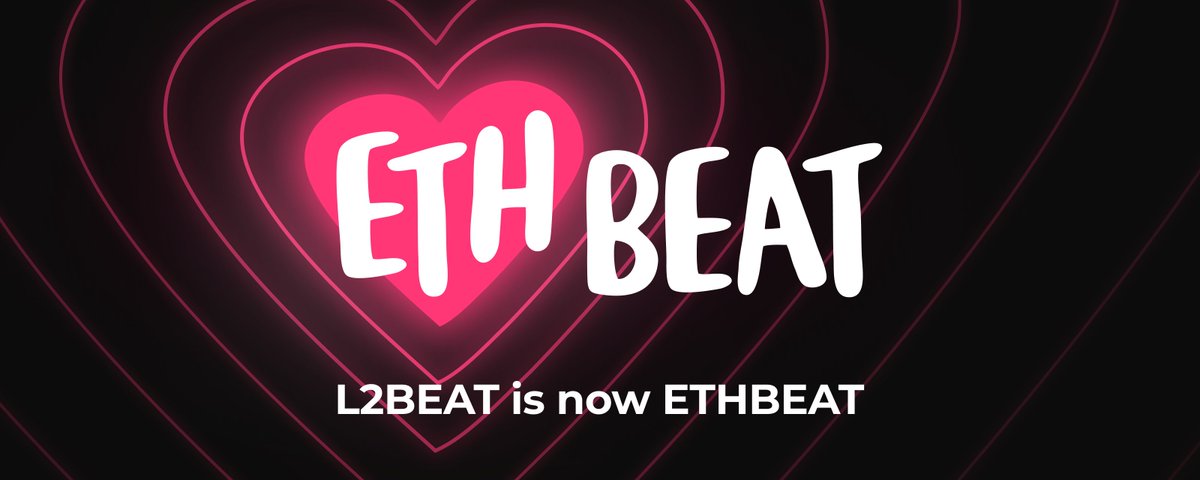
L2BEAT is now ETHBEAT.
5+ years of keeping L2s accountable, now extended to privacy, interop, staking and beyond. One goal: transparency on the guarantees users get on Ethereum.
Thank you to the community that got us here. The next chapter starts today!
cry me a river to anyone who can't get over Vitalik's choice of topic during his Devcon keynote
touch some grass or something lol
4
29
848
liam retweeted
Our trust in our hardware has entered freefall lately. Vitalik is right that this is unacceptable. You shouldn't have to hack your television or dissemble your hardware wallet. Accessible, open, and verifiable silicon is necessary and Ethereum welcomes those building it.
liam retweeted
What's the most work that could possibly be required to verify an Ethereum block?
Today, we can't prove an answer. All we know is the validator always finishes. evm.fast is an open challenge to change that: contributors compete on a leaderboard to find mathematically guaranteed bounds for verifying Ethereum, no matter what's in a block.
Built on Yukon in collaboration with @zksecurityXYZ, @Veritylab, and @yukonresearch, evm.fast seeks provable limits that keep verification cheap, predictable, and possible on modest hardware.
Try it yourself:
evm.fast

