

Professor & Chair of Global Public Health, Edinburgh Uni. Sunday Times bestselling author. Visiting faculty, Univ of Miami. Level 3 Personal Trainer. Views own.
Edin, Oxford, Wash DC, Miami
Joined August 2010
- Tweets9.2K
- Following496
- Followers267K
- Likes9.8K


Prof. Devi Sridhar retweeted

The death rate among confirmed Ebola cases in the Democratic Republic of Congo has climbed above 50% after health authorities added hundreds of previously unallocated fatalities to the official toll bloomberg.com/news/articles/…

Prof. Devi Sridhar retweeted
My latest column on selfies, cancer and AI: theguardian.com/commentisfre…

Prof. Devi Sridhar retweeted

Inflation is up again. Not because of a pandemic. Not because of a natural disaster. Because of Trump’s war, tariffs, and corporate tax breaks.
It really is this simple: Republicans took over, and then drove up the cost of living in America.

BREAKING: Inflation climbed to a 4-month high in September as the Iran war continued to drive up gasoline prices ahead of key midterm elections.
Prices rose 3.7% in September compared to a year earlier.
Read more: abcnews.link/Le5jZ0N

Prof. Devi Sridhar retweeted

Russia’s silence over the death of a lab worker underlines that pandemic preparedness amounts to nothing if information on threats is withheld | @devisridhar theguardian.com/commentisfre…

Prof. Devi Sridhar retweeted

Watch my @CUGHnews interview with Dr @devisridhar on public health, pandemics, politics and more. You can get these podcasts @Spotify & other sites. Cc @UoE_EFI @lizgrant360 @gavi @DrTedros @NSF @NASEM_Health @CBCNews @ASTMH @PeterHotez @NewsHour @thePHFI

🎧 Listen to the latest episode of the CUGH Global Health Leaders Podcast! Ft. Devi Sridhar discussing public health, pandemics and politics
Spotify: open.spotify.com/show/2kfIxa…
Apple: podcasts.apple.com/us/podcas…
@keithmartinmd

Prof. Devi Sridhar retweeted

Always worth reading @devisridhar . See this theguardian.com/commentisfre… for another thing to worry about AI.

Prof. Devi Sridhar retweeted
My latest column on what AI use could be doing to your brain theguardian.com/commentisfre…
Prof. Devi Sridhar retweeted

🎧 Listen to the latest episode of the CUGH Global Health Leaders Podcast!
Ft. @devisridhar, author and Chair of Global Public Health at the University of Edinburgh. She shares insights on pandemic prevention and key challenges in global health
🔗Links Below
@keithmartinmd

🎙️ Announcing The CUGH Global Health Leaders Podcast!
🎧Subscribe now to listen wherever you get your podcasts:
Spotify open.spotify.com/show/2kfIxa…
Apple podcasts.apple.com/us/podcas…
Amazon music.amazon.com/podcasts/3b…
YouTube youtube.com/playlist?list=PL…
@keithmartinmd

Prof. Devi Sridhar retweeted

mRNA COVID vaccine linked to lower risk of myocarditis in teens, young adults
Being unvaccinated and getting COVID-19 were associated with a higher risk of heart disease and death than receiving a vaccine.
Read more: bit.ly/3UhXOJ8

ALT Teen boy on heart monitors in hospital
Prof. Devi Sridhar retweeted

Lots of stimulating - and challenging - questions from @devisridhar and the highly engaged audience at the Edinburgh International Book Festival which hosted some extraordinary discussions across a wide range of topics: fiction, politics, history and science.

Prof. Devi Sridhar retweeted

Very good interview with @devisridhar on @BBCPM about the many headwinds facing disease control teams in the DRC with the continuing Ebola outbreak. The UK needs to up its assistance on things like this.
Prof. Devi Sridhar retweeted
As Ebola kills thousands in DRC, a perfect storm is making the virus hard to stop theguardian.com/commentisfre…

Prof. Devi Sridhar retweeted
Some random thoughts on why the wealthiest Americans die younger than the wealthiest Europeans @bryan_johnson theguardian.com/commentisfre…

Prof. Devi Sridhar retweeted

A very compelling summary. It does beg the question around what exactly is freedom? It is astonishing that most of this must be appreciated by the majority of US citizens yet no mass movement is in place to act on it. As an American yourself, that must be so frustrating.
Prof. Devi Sridhar retweeted

Startling read ..."Americans live much shorter lives and spend more of their lifetime in poor health. This is despite Americans earning some of the highest salaries per capital in the world and spending twice as much as comparable countries on healthcare"

My latest column: theguardian.com/commentisfre…
Prof. Devi Sridhar retweeted

In the scramble to respond to a global pandemic, I watched in awe as the vast majority of ordinary Britons came together with quiet decency, courage and altruism.
Not quite everyone though - as today’s damning report from the UK Covid-19 inquiry chair, Heather Hallett, lays bare.
Boris Johnson’s infamous ‘VIP’ lane for PPE procurement wasted an eye-watering £10bn of public money by favouring suppliers with connections to government, despite their abject lack of experience.
Cronies like Michelle Mone squandered hundreds of millions of pounds of taxpayers’ money on useless, unfit-for-purpose PPE, all while lining their corrupt, bottomless coffers.
“The waste of public money was vast and could have been avoided, says Hallet. "Of approximately £14.9bn spent on PPE, nearly two thirds – almost £10bn – was wasted.”
Meanwhile, NHS doctors, nurses and care sector staff were forced to work with pitifully adequate PPE and lack of essential healthcare equipment such as ventilators. We couldn’t protect ourselves - or those in our care - from infection.
I will never forget those plastic pinnies so thin they tore apart in your hands, and the paper masks so flimsy the ear loops fell off as you unfolded them.
Hancock and Johnson will forever crow that they were heroes. But frontline staff in hospitals like mine will never forget the fear, the pressure, the staggering loss of life and our colleagues - who died of the deadly disease they caught while trying so valiantly to save others.

Prof. Devi Sridhar retweeted

What an excellent, thoughtful and empathetic article. We work in systems and societies that have structural racism. That doesn’t make most people racists. Address these systems and your own conscious and more commonly unconscious biases. I know I have mine. Thank you Devi, excellent as always.


Prof. Devi Sridhar retweeted

Healthcare officials in the US, including former Centers for Disease Control and Prevention officials, warned Congress against adopting a proposed policy to treat Americans exposed to Ebola in Kenya or countries in the European Union reut.rs/4dVCDCR
Prof. Devi Sridhar retweeted

Cancer is now a story of the good, the bad and the ugly – but also hope | Devi Sridhar
theguardian.com/commentisfre…

Prof. Devi Sridhar retweeted
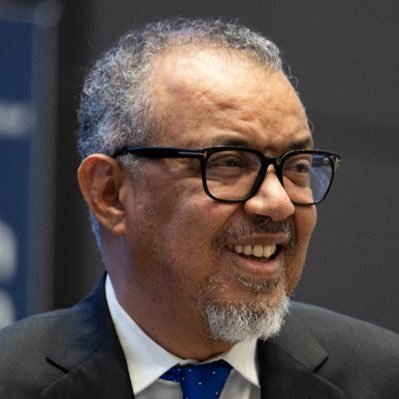
To the people of DRC, especially to the people of Ituri
Jambo kwenu wakahaji wa Ituri
Mbote na bino, bato ya Ituri
My name is Tedros, and I am the Director-General of the World Health Organization (@WHO). But today, I am not writing to you as an official. I am writing to you as someone who knows your region, who has walked your streets, and who cares deeply about what happens to you and your families.
I am writing because I want to be with you in these moments. And I want you to know that you are not alone.
#Ebola is not new to me personally. From 2018 to 2020, I came fourteen times to North Kivu, the epicentre of the outbreak at that time. Fourteen visits to Beni, Butembo, Katwa, Goma, and many other communities. During that outbreak, Ebola spread across North Kivu, South Kivu, and reached parts of Ituri as well. I was alongside families who had lost their loved ones. I met health workers risking their lives every day. I met community leaders, traditional healers, religious leaders and business leaders who refused to abandon their people. I saw men and women show extraordinary courage in the most difficult of circumstances. The people there, who saw me coming back again and again, wanted to give me a name that belonged to their community. They asked me whether I was the first, second, or third child of my parents. When I told them I was the firstborn, they gave me the name Dr. Paluku. I carry that name with pride. It is not just a name. It is a bond. It is a reminder that this work is not about titles or institutions. It is about people. It is about you.
That outbreak was one of the most complex in history. It did not unfold in a stable, peaceful environment. It happened in the middle of armed conflict, with communities displaced, supply routes disrupted, and health workers operating under constant threat. People were fleeing violence while also trying to protect themselves and their families from a deadly disease. I remember being in Beni on more than one occasion while fighting was taking place on the outskirts of the city. We could hear it. And yet the health workers around me did not stop. They kept working. That kind of courage is something I will never forget. The challenges of that time are not so different from what you are facing today in Ituri. I understand that. I have seen it with my own eyes.
Mistrust ran deep, and the security situation cost us precious time. Our health workers were attacked. Clinics were targeted. People who were only trying to save lives found themselves caught in the middle of a conflict they did not start. Lives were lost that we might have saved, and that weighs on me still. But I also witnessed something remarkable. When we listened, when communities felt respected and heard, things began to change. Trust grew slowly, then more quickly. People came forward. And together, we managed to contain the outbreak. We did it. The people of DRC did it. I will never forget that.
Ebola is now back. This time, the outbreak is hitting Ituri province the hardest. More than 90% of all cases have been reported in Ituri province, with a small number of cases also reported in North Kivu and South Kivu. I know how frightening that is, and I know that the people of Ituri are bearing a burden that is not easy to carry.
I know that many of you are exhausted. You are already carrying so much: malaria, hunger, insecurity, and the daily struggle to keep your families safe. And now Ebola. It is not fair, and I will not pretend otherwise.
But I also want to say something else about Ituri, because this province deserves to be seen for more than its hardships. Ituri is a place of remarkable energy. It is a province of vibrant commerce, of entrepreneurial spirit, of communities that have refused to be defined by the conflicts around them. The markets of Bunia buzz with life. Traders, farmers, teachers, and young people building their futures against all odds. That spirit, that refusal to give up, is exactly what we need now. It is the foundation on which we will build our response. We do not come to Ituri with only medicine and expertise. We come to join a community that already knows how to fight for its survival.
I want to say a special word to the young people of Ituri. You are growing up in circumstances that no young person should have to face. And yet what I see, again and again, is not despair but determination. You are the future of this province and this country. In this outbreak, you have a vital role to play. Talk to your friends and your families. Share what you know about Ebola. Help break the fear and the silence that allow this virus to spread. Your voice carries further than you know, and we need it now more than ever.
And to the health workers of Ituri, I want to say this: you are seen, and you are not alone. Every day you go to work knowing the risks, and you go anyway. You do it for your patients, for your communities, for your families. You are the backbone of this response. Without you, none of this is possible. I know the conditions are hard. I know the resources are often not enough. I know that fear and exhaustion are real. Please know that WHO stands with you, that we are working to get you the support you need, and that your courage and dedication are known and deeply valued far beyond the borders of this province.
I also know that the security situation in parts of this region remains very difficult. Conflict and displacement make everything harder, including reaching people who need care and keeping health workers safe. I want to be honest: this is one of our greatest challenges. We cannot do this work if those who are trying to help are prevented from doing so or put in danger. We are working closely with all relevant partners to ensure that the response can reach every community that needs it, and that no one is left behind because of where they live or what is happening around them.
That is why today I am making a direct appeal to all warring parties in this region: please, declare a ceasefire. Even briefly. Even just enough to let health workers through. People are dying from Ebola who do not have to die. Children are sick. Families are suffering. No cause, no conflict, no grievance is worth condemning innocent people to death from a preventable disease. A ceasefire, even a temporary one, would save lives. I urge you, I implore you: give us the space to help the people who need it most.
I also know that there is anger and mistrust in some communities, and I understand why. Trust must be earned, it cannot be assumed. We have not always done things correctly. But I promise you, we are here to learn as much as we are here to help.
I need to be honest with you about something important. Most previous Ebola outbreaks in DRC were caused by a virus called Ebola Zaire, for which we have vaccines and treatments. This outbreak is caused by a different virus called Ebola Bundibugyo. There are currently no approved vaccines or treatments for it. This is serious, and you deserve to hear that plainly. But I also want you to know this: while there are no specific treatments for Bundibugyo, there is much we can do together to prevent the spread of this virus and save lives. Early supportive care in our treatment centers can make a real difference. If you or someone you know falls ill, please do not wait. Coming forward early can make the difference between life and death. And everything we do, we will do with you. We will listen to you, we will share information with you, and we are here to help. And for those we cannot save, we will mourn with you. We will help you grieve your lost loved ones with safe and dignified burials.
We are working under the leadership of the Government of DRC, together with all relevant partners, united around one goal: to stop this outbreak and protect your communities. No one is working alone. No one is working at cross purposes. We are coordinated, we are committed, and we are here.
That is why I am coming to Bunia. I will be there in person, alongside my colleagues, meeting your leaders, listening to your concerns, and doing everything in my power to help you. I will not be managing this from a comfortable office far away.
This is the 17th Ebola outbreak in DRC. Together, you have overcome every single one before. That is not a small thing. That is a testament to the strength and resilience of your communities. I have seen that strength with my own eyes.
My brothers and sisters of Ituri, I want you to know that the world is watching your courage. You are not forgotten. Together, we will overcome this outbreak, as you have overcome every challenge before. Your resilience is the light that guides us all.
We will get through this one too. Not because of anyone, but because of you.
Our teams are already on the ground, and they will stay for as long as necessary. And when this outbreak is over, we will not quietly disappear. We will not forget you. We will stay, and we will keep working with you to build health systems that protect every person in every community.
I look forward to seeing you in Bunia soon. Until then, please know that you are in my thoughts.
With respect and solidarity,
Paluku
Tedros Adhanom Ghebreyesus
Director-General, World Health Organization

