

Founder @dfinity @caffeineai. New Tech Stack: sovereign cloud that's an open, mathematical network, hosting AIware that empowers agentic enterprises and people.
Everywhere
Joined April 2007
- Tweets7.6K
- Following1.1K
- Followers219K
- Likes6.1K






Pinned Tweet
Dear ICP community, the Internet Computer has now been running strong for 5 years 👏👏👏
Here is a celebratory preview of ICP "cloud engines," the sovereign frontier cloud technology the network shall soon provide from opencloud.org.
Main points:
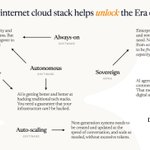
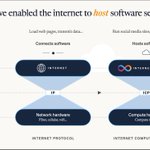
— Cloud engines enable anyone to spin up their own sovereign frontier cloud. The technology involves an extraordinary inventive step, in which cloud is created from a mathematically secure network of nodes. The nodes run as part of the Internet Computer network (internetcomputer.org) but are selected and configured by the cloud engine's owner.
— The frontier cloud provided by engines is strongly focused on enabling AI agents to build and update online applications and services for us. The world is changing fast, and nearly all new online apps and services are already being built with the help of AI, and thus cloud engines target the future of cloud.
— Software hosted on cloud engines is tamperproof, which means that it is immune to infrastructure hacks, because it runs inside a mathematically secure network protocol, rather than on computers directly. This means that AI agents, and those building with them, don't need to have a security team in the loop, or to trust someone else's security team. This is crucial, because in the future, non technical people will demand the freedom to build with full automation — where they just need to issue instructions to AI about what to build, and don't need to worry about anything or anyone else. Of course, apps and services running on engines are also vastly safer from the new breed of hacker being enabled by frontier AI.
(The cloud engines themselves are also "tamperproof." Even if a hacker gains physical access to some portion of a cloud engine's nodes, and can make arbitrary changes, the computations and data of the hosted apps and services cannot be corrupted or interrupted so long as the network's fault bounds aren't exceeded. The recent hack of Vercel, a major cloud platform, which gave hackers access to the apps it hosted, provides additional perspective on the importance of this advantage.)
— Software hosted on cloud engines is guaranteed to run, so long as a sufficient number of the engine's nodes are running. This means that AI can build applications and services without the need to have a human systems admin team constantly tinkering with the underlying platform to keep it running, which is again crucial, because in the future, non technical people will expect the freedom to use AI to build without the support of others.
— New frontier programming language technology, in the form of the Motoko language developed by Caffeine Labs, leverages seminal "orthogonal persistence" technology that unifies program logic and data to deliver further unlocks for AI (Motoko is the first computer language being developed that targets agents that are writing software rather than humans engineers per se). Nowadays, AI can build and update production apps at a prodigious rate, even at the speed of conversation. But it can also make mistakes, and there's a risk that an update it creates might be "lossy" in the sense it causes some transformed data to be lost. Again, in this new world, it's both undesirable and impractical for everyone to have to have a systems admin team on-hand to detect lossy updates and roll them back, but Motoko provides a solution: it can detect new software updates are lossy before they are applied, reducing potentially catastrophic errors by AI to harmless coding retries.
— Software hosted on cloud engines is "serverless" but unlike traditional serverless software, directly it directly incorporates data through "orthogonal persistence." Another key purpose is simplify backend software logic and fuel the modeling power of AI by increasing abstraction (sorry for the technical language!!!). Put simply, this enables AI to produce more sophisticated backends, faster, and at dramatically lower costs, as measured by the number AI API tokens consumed during coding. (Tip for the technical: orthogonal persistence is a new paradigm where "the program is the database," and data lives inside program variables, which is possible because it's as if hosted software runs forever in persistent memory).
— An expanding database of skills at skills.internetcomputer.org shall make it possible to develop and directly deploy apps and services to your cloud engines directly from Claude Code, Perplexity, Codex and other AI platforms. Further, your account on caffeine.ai can be connected, so that new apps and updates created through conversation automatically appear hosted from your cloud engine. In the future, R&D is going to be very seamless. You converse with AI, and your secure and unstoppable apps or services are created or updated. Cloud engines are designed to directly support this "self-writing cloud" future where we can work hands-free.
— Tech sovereignty is becoming a huge issue worldwide, with governments and corporations seeking to create sovereign tech stacks owing to geopolitical tensions. Increasingly, people are realizing that tech provided by foreign nations can come with hidden backdoors and kills switches, from the base platform, right up through hosted apps and services. ICP technology is open source, and those building on ICP using AI own their own source code. When you have the source code, you can verify that there are no backdoors, and when you own the source code thanks to AI, you can update it at will, freeing you from vendor lock-in. But cloud engines take sovereignty much further...
— You create a cloud engine by selecting the nodes that will be combined. You can choose the class of nodes used, and their number, but more importantly, you can choose who operates the nodes, and where they are located. Almost any configuration is possible, because the Internet Computer scales the security privileges afforded to hosted software within the network according to configuration (software hosted on cloud engines can directly interoperate with software on other engines and traditional subnets, but base restrictions are applied according to security rules). A cloud engine can be created within a region such as Europe, to comply with regs such as GDPR, or completely within a sovereign state like Switzerland or Pakistan. But cloud engines go further still...
— Sovereignty is also about freedom from vendor lock-in. Cloud engines are essentially ICP (Internet Computer Protocol) network configurations, and this means the underlying compute nodes they combine can be swapped out without interrupting their hosted apps and services. This is a big deal. In addition, cloud engines now support nodes that are instances running on Big Tech's clouds, in addition to nodes that are dedicated specialized hardware, as per the Gen I and Gen II nodes that dominate the Internet Computer today. For example, it is possible to have an engine running across different AWS data centers, say, and then reconfigure the engine to run across a mixture of AWS, Google, Azure and Hetzner for even more resilience, without the users of hosted apps and services noticing a thing. That's true freedom.
— Sovereign AI is becoming increasingly important too, and cloud engines allow special "AI nodes" to be added to them, so that hosted software can perform inference on hardware provisioned by the owner from a location the owner has selected. Even though the AI nodes are only accessible within the cloud engine, they can still benefit from the forthcoming Internet Intelligence Gateway (IG), which will make it possible to validate inference performed on key frontier open weights LLMs, even when the inference is performed on completely independent AI clouds. When the results of inference are received, this technology can verify that neither the prompt+context (input) nor the inference result (output) have been modified, and that the results were produced by the precise LLM expected. This ensures that AI clouds don't cheat by running inference on cheaper models than are being paid for, and bad actors aren't modifying the inputs or outputs to surreptitiously insert advertising into results, say, or change facts, or insert malware when code is being generated. What's super cool about this technology is the cost of the verification is scalable. A very valuable additional security can be achieved with only 1-2% of extra cost.
— Scaling apps and services when they hit capacity limits is another thorny problem that cloud engines help the world address. Engines make scaling possible without rewriting or reconfiguring software. The query workload capacity of hosted software can be horizontally scaled simply by adding new nodes to an engine, and nodes can also be added in geographical proximity to demand. Meanwhile, update workload capacity can first be scaled-up by swapping an engine's nodes out for the next class up, and then when no larger class of node is available, horizontally scaled-out by "splitting" the engine into two, which doubles available capacity. (Technical tip: horizontally scaling update capacity by splitting engines requires multi-canister architectures).
— For those who have been following how Caffeine builds apps that can efficiently store large numbers of files, I should mention that apps built on cloud engines will also support the new ICP Blob Storage cloud network (since cloud engines currently have up to about 3 TB of memory, which apps storing large amounts of files can easily exceed). We are also working on allowing blob storage nodes to be added to cloud engines, to enable sovereign mass blob storage within an engine, similarly to how AI nodes can be added currently.
— Lastly, but certainly not least, I should mention that cloud engines are multi-blockchain capable, and ready for digital assets, thanks to the clever math at their core. For example, an e-commerce service built on a cloud engine can securely accept and custody stablecoin payments, or a multi-chain DEX could be hosted. Further, engines can support software autonomy (software orchestrated and controlled by other autonomous software, in a decentralized way) and can themselves be orchestrated by SNS technology, and thus run autonomously too.
Today, though, the focus is on *mainstream* cloud. This year, the cloud industry will generate approximately one trillion dollars in revenue. That number is already huge, but is expected to grow to two trillion dollars by 2030.
After years of continuous development, which have seen more than $500m spent on R&D, the Internet Computer network is now tacking directly toward this mainstream cloud market with cloud engine technology.
In their first version, cloud engines are not meant to be a cloud panacea. For example, currently they are not ideal for working with big data. You should use something like DataBricks for that.
Cloud engines are carefully targeted at enabling AI to produce traditional online applications and services, including SaaS, in a safer and more productive way, which represents a new market segment with tremendous potential. Of course, DFINITY will continue to work relentlessly to push forward ICP's capabilities, so expect further developments.
It's worth mentioning that this cloud segment isn't just about creating new apps and services using AI, it's also about replacing legacy systems and apps built on super expensive SaaS services. Caffeine Labs is working to produce technology (Caffeine Snorkel) that can study an enterprise's legacy systems and app built on SaaS, create replacement systems and apps, and migrate the data, while supporting key stakeholders through the process over email and chat, with full automation. Thus the legacy systems and SaaS markets shall also be addressed by cloud engines.
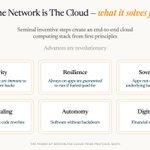
Zooming out, and reasoning in a more metaphysical way, we believe, as we always have, that there is room for a new kind of cloud created by mathematical networks, that provides seminal advances in the fields of security and resilience, as well as true sovereignty and freedom from lock-in. That this same technology, with the help of additional technologies like orthogonal persistence and Motoko, enables AI to build for us without the need for so much oversight, and to create more backend sophistication while consuming fewer AI API tokens, enables ICP to bring game-changing advances to the world.
Cloud engines will work synergistically with the Intelligence Gateway, which will enable apps and services running on engines to seamlessly leverage AI, wherever that AI is running, while providing verifiability at extremely low cost for open weights frontier models.
We believe that cloud engines represent an inflection point in the storied history of the Internet Computer project, and I'm very proud to be sharing the details with you on the network's fifth birthday 💪
I'll be back with more news soon!!
I guess that leaves only the Internet Computer in the "world computer" game then, building on hardcore technical work since 2014 ;) Cloud engines this week ✌🏼..

Expanding on why I believe "ETH as store of value (SoV)" makes much more sense to focus on than "ETH as fee-burning token".
Three primary reasons:
1. ETH as fee-burning token never was as strong as it seemed
2. Optimizing for ETH as fee-burning token would demand Ethereum and ETH function in ways that are very hard to make compatible with decentralization and capture resistance.
3. Meanwhile, optimizing for ETH as SoV is aligned with Ethereum focusing on its unique strengths (decentralization and CROPS)
EIP-1559 (including its burn) is fine and good, we should keep them. But we should not feel sad if fee burn is < 10% of breakeven indefinitely; the value of ETH comes from elsewhere.
The core idea: the big thing that people appreciate about Ethereum is decentralization and CROPS. The main pragmatic benefit that these things translate into is stability. SoV is the category where that is not an unneeded extra we merely put effort into for ideological reasons, but rather a pragmatic strength from the perspective of people putting in their assets. And in the era of AI disruption, stability will be highly valued.

GPT-6 Cyber "available to select Daybreak Red customers"
General problem: if a customer can security audit open source software before you, that you develop or rely on, they can become your attacker.
Solution: move the world to tamperproof backend code hosted by a network/ICP.

Introducing GPT‑6 Cyber: a major advance in security research that pairs stronger capabilities with better model alignment.
The model powered the Linux kernel research we announced yesterday, and security teams at companies like Mozilla, Palo Alto Networks, Calif, and Cisco—alongside our own at OpenAI—are already putting it to work.
GPT-6 Cyber is available to select Daybreak Red customers and we are expanding access over time.
openai.com/index/introducing…

funny, on a podcast the other day I talked about AI/agent worms being able to run on things like security cameras and freezers, swap their models and API keys so they can't be blocked, and move between hacked devices... "that sounds like sci-fi"
bbc.com/news/articles/ckq6nd…

The heists this year have been shocking, and the money is taken to bad places to fund bad things. It's time to reexamine the tech vs narrative balance. Hopefully, with MULTI/DEX, ICP can demonstrate a better way forward through open source services that run 100% from the network.

A major advance for MULTI/DEX went live. The world's 1st order book exchange that's 100% onchain, open source, has margin, an AMM, offers swaps, has no owner, no backdoors, and is MiCA compliant, just got closer to prod — CEXs might adopt the platform for extra security too 🔥

Nice work @JoshHQ Migrating from PHP, web server plus database, to one secure, unstoppable, serverless Motoko canister, which keeps its data in persistent memory, is now super easy with AI. And then you can improve it fast.
If you're on legacy web tech, just do it!

Keep the app. Retire the stack. The network runs it.
Your team stops patching servers.
Move to Motoko on the Internet Computer.
movetomotoko.com/
AI just proved that the Exponential Time Hypothesis (ETH) is false. Cryptography relies on ETH, but luckily this particular discovery doesn't threaten core algorithms yet. However, ETH was thought true for almost 30 years, and is highly relevant in the field. This illustrates how AI is the true threat to crypto and security, because it can move the ground under our feet, and it's here today.
Currently, many chains are promoting their migration to "quantum safe" signatures and other schemes. Meanwhile, cryptographically-relevant quantum computers won't be around for some years, and even when they are, they'll be specialized machines, requiring special environments, rather than easily accessible mass market devices, and it will be relatively easy for authorities and regulatory frameworks to control their use, at least initially. Renting them for the purposes of hacking won't be allowed, for obvious reasons (not that this is something we should rely upon, but it impacts any objective threat analysis).
However, there are dangers with adopting these schemes. The less well-studied and more complex a cryptography algorithm, the greater the chance that a sudden shift in our understanding of theoretical computer science or mathematics, or sophisticated analysis by AI, will suddenly reveal a catastrophic bug. The first real-world harbinger of the dangers occurred when AI found issues with HAWK, a quantum-safe algorithm that was passing through NIST's standardization process at the time (it was withdrawn).
Chain operators' desire to ride narratives and exploit the tendency of web3 investors tendency to seize onto this or that carefully promoted story, who for the most part do not use crypto technology beyond holding and trading tokens, and who lack understanding of the theoretical issues involved, is certainly exploitative for a simple reason — whereas historical technical safety manias used for commercial purposes, such as Y2K, only collected money, this one also risks user safety.
Chains sell adoption of quantum safe signature schemes to token buyers and users that in reality reflect a kind of stupidity, and irresponsibility, rather than actions reflecting wise stewardship protecting people from an imminent quantum meltdown. Meanwhile, of course, while adding support for a new post quantum signature algorithms doesn't involve much engineering work, it allows them to post pictures of their logo next to photos of quantum computers, so they can sell the ignorant on how sci-fi and advanced they are, which makes it particularly attractive to them.
Important note: you'll hear about some serious people performing post quantum encryption of messages. That's different. They're calculating the risk that adversaries, such as state adversaries, perform mass storage of encrypted messages containing secrets, so that they can extract the secrets from them 10 years from now, say, when they finally have cryptographically-relevant quantum computers. This is a different kind of risk they are addressing.
The perverse tragedy of the quantum mania craze that's currently gripping crypto is that on the one hand it shows how so many chains are driven by a desire to sell tokens first, rather than pursue sound engineering practices, and on the other, their willingness to lie and risk user safety in the process. This, all while the real wolf is at the door as concerns our engineering — AI that's rapidly advancing, here today, accessible to many, and difficult to control.
What I can promise, is that DFINITY will be focusing on mitigating this real risk, and no matter the post quantum mania, we won't be joining it, and will instead try to plot the most responsible course.
sansser.com/articles/exponen…

Entrepreneur | The State of AI 2026
Great article on ICP 🔥
internetcomputer.org/reports…

This was the first time DFINITY attended an AI event, but it's just the start. Thank you to the organizers for a great time. I explained the way that the Internet Computer | ICP now provides the ultimate agentic infrastructure, and it was tremendously well received, with some stunning follow-ups (more details in time). At the end my keynote, I gave out an email where you can apply for cloud engine coupons — and we're already seeing a steady stream of applications from that audience. The Internet Computer remains the first network creating genuine impact in the mainstream world, and the potential is unlimited.

Carefully watch this NEAR Protocol attack dog 👀
Recap on his deranged accusations against me, the Internet Computer & ICP, bizarre made-up facts, and apparently proud alignment with criminal market manipulators. He needs to come down asap and apologize:
xitter.twitterapi.xyz/andyyy/status/21130416…
unavailable
Great to be back in Dubai after a while, today meeting with Dr. Sohail, Chairman of the Pakistan Digital Authority re next phases of ICP cloud engine, Open SaaS + Open AI factories tech rollout, did some podcasts, and tomorrow will present a keynote at the Dubai AI Festival 🔥

Dr. @sohailmunir , Chairperson of the Pakistan Digital Authority (PDA), met with Dominic Williams (@dominic_w ), Founder and Chief Scientist of @dfinity , and @PierreSamaties , Chief Business Officer, for strategic discussions on establishing an AI Factory in Pakistan for developing production-grade software for the public sector, deployed on the PDA Cloud Engine.
The meeting involved detailed deliberations on developing a sovereign AI Factory focused on GovTech, government applications, and public-sector innovation, with the aim of strengthening Pakistan’s digital infrastructure and AI capabilities.
This marks the second high-level engagement between PDA and DFINITY this year, building on their earlier meeting, which culminated in the signing of a Memorandum of Understanding (MoU).
The initial collaboration also laid the groundwork for a significant international milestone: UNDP’s adoption of Pakistan’s sovereign Cloud Engines model, reinforcing Pakistan’s emerging role in sovereign digital infrastructure and government-led technological innovation.


Total solution: use AI (e.g. Claude) to migrate your PHP app to Motoko, and run it on the Internet Computer, making it *tamperproof*. Now you can modify it at will, and you'll automatically skip the next hole too.

So basically, today PHP got two critical bugs that let anyone run code on your server without even logging in, which is bad, and then the details leaked before the patch was even out, which is worse, and it works on WordPress and MediaWiki and Magento and Joomla and Laravel, and Censys says like 1.5 million servers are running a version with no fix, so the NSA was like "take your system offline," and the FBI was like "take your system offline," and CISA and the UK and CERT-EU were all like "take your system offline," and then the Prime Minister of Japan, the actual Prime Minister, posted at 5:55 in the morning telling 48.8 million people to take their system offline, so everyone took their system offline, like the Dutch cybersecurity agency took its own website offline, and the Dutch parliament went offline, and the Port of Rotterdam went offline, and Finland and France and Denmark started pulling government sites, and Wikipedia went down, and Archive.org went down, and Asana and GOG and Something Awful went down, and the University of Vienna's webmail went down for some reason, and that's just PHP. Because GitLab also dropped a CVSS 10.0, which is the highest score they give out, for a bug that's been there since 2014, so that's every self-hosted GitLab for twelve years, and then LiteLLM 1.107.0 got hijacked and shipped a credential stealer and a remote access trojan in every single wheel and the Docker images, including latest, and you didn't even have to import it, just installing it was enough, and it's the second time this year, and then Railway paused every deployment on the entire platform because someone got into the environment variables, so now everyone has to rotate every secret they've ever stored there, and TiDB Cloud said someone was walking around inside with stolen credentials for basically a month and an extortion group says they took 10.6 terabytes, and Zeabur got breached for the second time in two months and is just shutting down, like the whole company, and Node.js patched remote code execution and a TLS bypass, and CISA says Plex is being actively exploited, and someone took over 300 Tor exit relays to steal SSH passwords, and SafePay ransomware has hit over 600 critical infrastructure orgs, and India's biggest bank filed a data loss incident, and Japan has been in an official state of emergency in cyberspace since October 9, which honestly explains the 5:55 AM post. Oh, and eMudhra, a certificate authority that's issued over 60 million certificates, whose entire job is proving websites are who they say they are, was supposed to be using private keys that are random numbers over a hundred digits long, and one of them was 4. Just 4. And the others were like 66 and 237. Anyway, it's Wednesday.

Someone just drew this to my attention. It's a post from NEAR, presumably in response to my previous post, and in fairness it must be shared.
xitter.twitterapi.xyz/NEARProtocol/status/21…
Among the findings they have a dashboard that shows their server cluster now has 16, not 8 nodes as I was informed, and they are run by different parties.
This does not, of course, reduce concerns about backdoors, the ability of NEAR to upgrade the software of those "MPC" nodes directly and the ability to use such software updates to extract the key shares if they wished, the use of a trusted dealer to distribute the private key shares in the first place, and all of the other things that a truly decentralized setup addresses.
That being said:
1) Sharing keys over 16 nodes is much better than over 8 (we prefer around 50).
2) They state that the operators of these nodes include Sovereign AI, Bitwise, Nansen, Greenfield, Everstake, Near One, and Luganodes, which is good. It's not clear if there are 16 different operators though, which is what you want.
3) They reference a strong technical description of their TEE architecture github.com/near/mpc/blob/mai…. So long as this is implemented on the nodes, and the node operators are actively using attestation to check the software NEAR is running on these nodes, that reduces the risks involved.
I am not aware of when they moved from 8 nodes to 16.
None of this reduces our key concern that their system has been powered by our proprietary tech all this time.
Further, their post also talks about another thing they have released in 2025: CKD, or Confidential Key Derivation.
This is basically vetKeys, an Internet Computer technology that does exactly the same thing, and it works the same way too!!
We published how to do this in 2023: eprint.iacr.org/2023/616
However, this isn't protected afaik, so they have no worries there, but they should have contacted us first AND referenced our work. That's the respectable way to work in the fields of computer science and open source.
We wish NEAR well, but they cannot just steal proprietary DFINITY tech.


Ha! DFINITY ran on BambooHR, but we switched to Open HR just 3 weeks ago (part of the Open SaaS suite of free "AIware" you can install on ICP cloud engines to run enterprises).
Tamperproof, unstoppable, with AI inside... general availability soon with the cloud engine unlock.

This is craazy. I asked one of our PhD engineers to look into NEAR *Confidential* Intents wondering how they designed their system. Unredacted, word-for-word, this was his answer 😱😱😱
"Everything I found out about the privacy claims and confidential intents is so bad that it seems almost comical and I cannot believe what I am seeing. Apparently they run a completely separate instance of the protocol, which is called FAR (as an opposite to NEAR), and that has a permissioned operator set. The entire confidentiality claim seems to rest upon the fact that it is a permissioned chain and the nodes are trusted to keep things private, there doesn't seem to be any deep technology behind it and it also does not seem to be open source. The entities running the nodes are also not publicly known.
I almost feel weird writing this because it is so absurdly bad that it feels like ... I don't know ... a simulation? I know the usual level of overpromising in Web3 but this is so many levels beyond believable that it still feels unreal."
An important advantage that network cloud can provide to onchain services is better "AI Safety". Here's how.
When AI makes cryptography unsafe, networks can be rapidly upgraded, protecting all hosted software.
With traditional tech stacks, algos are linked into the various layers and components, making upgrading difficult and laborious for those operating services.
Networks, like the Internet Computer/ICP, can abstract the core security math that keeps hosted services safe.
They can also upgrade peripheral (non-core) cryptography.
For example, on a dime, the Internet Computer could could upgrade to a new version of HTTPS in response to AI suddenly making the current version unsafe, without those running services having to do anything.
By contrast, on traditional tech stacks, (or "on" traditional blockchains, where the apps are actually served from traditional tech, such as from AWS, with only tokens a DeFi logic onchain), those running services would need to manually upgrade all their web servers and application servers.
Where the software powering a service makes HTTPS outcalls to other services, it will be directly linked to libraries enabling the calls — so it will all need to be upgraded too!
By contrast, the Internet Computer hosts serverless code, where these kinds of complexities are abstracted away from services. If a service makes an HTTP outcall to another service, the call uses whatever version of HTTPS the network chooses (since the network makes the actual call on behalf of the software). If the network is upgraded, then so is every service — automatically.
This further reflects the way that the Internet Computer as cloud dramatically reduces security admin and systems admin demands compared with building on traditional tech, and additional unique advantages.
It also highlights another crucial axis on which networks must be measured, whether they seek quantum safety (when relevant) or AI safety (since today, AI can now find flaws in algorithms and software at any time) — agility.
That is, how fast can a blockchain network be upgraded in response to a new threat?
The Internet Computer is unique in that it is orchestrated by a decentralized governance system called the Network Nervous System (something like a DAO with system privileges, but much more sophisticated).
That enables the network to be agile, and to rapidly respond to emerging threats, by upgrading the code running on the node machines hosting it. The Internet Computer is a self-updating, adaptive network.
The ability of chains to rapidly react to new threats that have been suddenly uncovered/created by AI, whether they are flaws in cryptography algorithms, or flaws in software libraries, will be a defining feature as things get more hairy.
This is a conundrum for traditional chains chasing quantum safety, of course. By definition, they are claiming that upgrading networks is a long and arduous process, and therefore that they have achieved something important and valuable by upgrading to quantum-safe algorithms ahead of time.
But the algorithms they are upgrading to — so they can claim "quantum safety" — are new and do not benefit from the decades of examination that e.g. ECDSA has.
What then, if AI finds suddenly problems with them, like it did with HAWK?
They have tacitly declared that they cannot quickly switch back, because transitioning is something that takes time, which is why their upgrades are such an achievement...
I will press the point no further, but as an industry, we need to get much more nuanced and sophisticated in how we understand security in an age where AI can suddenly upset security assumptions and make software insecure.
The Internet Computer has got this crucial agility axis covered, and it's agility, not the premature adoption of new and unproven quantum safe crypto algorithms, that really defines safety.
The key point is, if a network has to adopt these unproven algorithms years before a cryptographically-relevant quantum computer exists, then it's doing something very wrong.
The Internet Computer has solved agility. It provides an end-to-end alternative to traditional tech, where people can build services, and gain safety and independence from the rapidly shifting sands of security that the AI era will bring.
It is another reason that the mainstream world needs Internet Computer cloud. It's a security and resilience haven.