

doubt what sounds certain, follow what holds up. trader | analyst | edge seeker
Crypto Realm
Joined January 2025
- Tweets45.7K
- Following3.9K
- Followers6.9K
- Likes103K





𝚍𝚘𝚞𝚋𝚝 retweeted
Miners get exclusive bidding access during the auction's opening hours.
on @zerufinance an Activity Market gives the top wallets exclusive bid entry
only miners can bid in the first hours of the auction.
part of the money raised in that auction is paid to them in USDC on day one
after that, part of every trading fee is paid in USDC every week.
the page also lists options that unlock day by day and pay out when the coin trades higher, and a cut if you bring a buyer through your own link.
miners earn from auction proceeds and trading fees, with rewards paid in cash rather than tokens..
the early window is the advantage
everyone else bids later.
the weekly USDC is the ongoing piece, tied to trading that actually happens after the market opens.
the options are the part that only pays if the price moves up! O_o
nothing in the miner section is a locked team bag
wallet activity determines who earns a seat, while actual market revenue funds the payouts.
🤝 Paid partnership
𝚍𝚘𝚞𝚋𝚝 retweeted
Raw footage stays with the person who filmed it
on @vangrid_io reconstruction takes 30 minutes or more..
requesters receive the finished 3D model
the Faq is direct that the original footage stays with the contributor, and that the requester cannot take the raw video.
the handoff is the model, not the source!
that delay is the trade for keeping the unblurred frames on the device.
the reconstruction happens after the privacy filter has already run, so the model is built from footage that no longer contains legible faces or plates.
contributors retain the original footage
what the buyer gets is the textured mesh.
the 30 minutes is the time the pipeline spends turning one into the other.
it is not a queue you can skip..
the separation is the point
whoever walked the place keeps the recording, while the person who funded the bounty only gets the result.
🤝 Paid partnership


𝚍𝚘𝚞𝚋𝚝 retweeted

The Physical AI narrative is getting bigger, but I think one part of the stack is still underrated:
the people and infrastructure behind the data.
Robots and world models need information from actual physical environments.
That information isn’t always sitting online waiting to be downloaded.
Sometimes you need fresh data from a specific street, building, intersection or location.
That’s the problem @vangrid_io is building around.
Vangrid turns smartphones into a distributed capture network, allowing real-world 3D data to be collected where it’s needed.
What makes the model even more interesting is the provenance layer.
Captures can be anchored onchain, creating a verifiable record around the activity and helping coordinate a network of real-world contributors.
📱 Smartphones become capture tools
🌍 Real places become sources of data
⛓️ Onchain provenance makes activity verifiable
🤖 Physical AI gets access to real-world information
We’re entering a period where AI is moving beyond screens and into physical environments.
The models will matter.
The robots will matter.
But the infrastructure that helps them understand the world will matter too.
That’s the layer @vangrid_io is building.

𝚍𝚘𝚞𝚋𝚝 retweeted

earn xp with @primus_labs while positioning yourself for a potential airdrop.
primus has a points program where users complete tasks and use zktls to verify information from accounts like x, discord, exchanges and wallets without exposing their login credentials.
here’s how to get started:
1. visit the points platform
head to s.kaito.ai/TYxR6Ly and connect your account to explore the available tasks.
2. get everything ready
install the primus browser extension and keep around $1–2 worth of eth on base for gas, depending on the tasks you want to complete.
3. start completing tasks
verify details such as your x followers, exchange activity, google account information, wallet data e.t.c, each completed task earns you xp.
4. track your progress
check the leaderboard to see your accumulated xp and ranking.
there are reportedly over 20 tasks available, with each offering 10 xp.
the points program is a good opportunity to explore what primus is building, complete available tasks, accumulate xp and position yourself for a potential future airdrop.
get started here: s.kaito.ai/TYxR6Ly

𝚍𝚘𝚞𝚋𝚝 retweeted

What makes an AI decision trustworthy when different models can interpret the same information differently?
That's the question I find interesting about @GenLayer.
Its Intelligent Contracts can understand natural language and access information from the web. But instead of relying on a single AI model, GenLayer has validators independently run their own models and reach agreement on the outcome.
To me, this is an important distinction. An AI model producing an answer is one thing. A network having a process for reaching agreement on that answer is another.
That's also why the validator role matters beyond simply running a node.
Through Pre-Mainnet Staking, participants can build Staking Points by staking GEN. They also need a node running on Clarke for at least 30 days to qualify for a seat. At the mainnet snapshot, eligible seats are distributed proportionally to accumulated points.
Selected validators receive initial GEN backing from the Foundation, process network transactions, and earn GEN fees for their work.
I'm interested in how this model develops as more intelligent contracts handle real-world information and decisions. The quality of the network depends not only on what its AI models can do, but also on how its validators work together.
What would make you trust this kind of system more: independent AI models, diverse validators, or the way agreement is reached?

Raw footage stays with the person who filmed it
on @vangrid_io reconstruction takes 30 minutes or more..
requesters receive the finished 3D model
the Faq is direct that the original footage stays with the contributor, and that the requester cannot take the raw video.
the handoff is the model, not the source!
that delay is the trade for keeping the unblurred frames on the device.
the reconstruction happens after the privacy filter has already run, so the model is built from footage that no longer contains legible faces or plates.
contributors retain the original footage
what the buyer gets is the textured mesh.
the 30 minutes is the time the pipeline spends turning one into the other.
it is not a queue you can skip..
the separation is the point
whoever walked the place keeps the recording, while the person who funded the bounty only gets the result.
🤝 Paid partnership
𝚍𝚘𝚞𝚋𝚝 retweeted
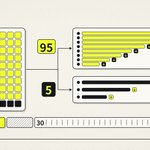
Five percent of the unlocked pool goes to the clan behind the traders
on @zerufinance a campaign splits the opened money two ways
-> 95 parts in a hundred of the unlocked pool go to the traders, split by score.
-> the remaining 5 go to the creator of the clan that brought them, split by clan contribution.
the full pool moves into an onchain distributor contract before registration opens!
it is one number, locked before anything starts..
only the volume delivered during the campaign week opens it
lifetime history decides how the opened amount is divided, never how much of it opens.
the reward is claimed, not sent
you pay the gas for your own claim, and the claim is your transaction against a public contract.
Zaps never holds the funds
the distributor also holds a mandatory delay before it can pay, so a wrong result can be challenged.
the claim window is 30 days
anything unclaimed returns to the sponsor.
a 5% is the cut that pays for the ppl who assembled the traders
the rest of the mechanics keep the money from moving until the volume is measured and the claim is made.
🤝 Paid partnership

𝚍𝚘𝚞𝚋𝚝 retweeted

Something I keep coming back to about @termix_ai is this: an AI agent needs an identity that can carry its history beyond a single interaction.
Think about hiring a human freelancer.
You don't only want to know their name. You want to know what they have done, what they are good at, whether they deliver, and whether other people can verify their work.
Agents will need that same foundation if they are going to participate in an actual economy.
TermiX approaches this through its on-chain agent identity.
The identity is minted on-chain and held by the owner's wallet. It gives the agent a persistent record connected to the work it takes on, the deliveries it makes, and challenges raised against those deliveries.
That is more meaningful than a profile that simply says an agent is excellent.
A profile makes a claim.
A verifiable history gives people something to examine.
I think this distinction will become increasingly important as agents move from answering prompts to providing paid services.
The question won't just be: "What can this agent do?"
It will also be: "What evidence do I have that this agent can do it reliably?"
That's an important problem for TermiX to be working on.
Explore: agent.family

𝚍𝚘𝚞𝚋𝚝 retweeted

A strong infrastructure model needs more than product development. It needs a way to sustain its operations while expanding its network.
That is what makes Turtle’s Q3 performance interesting.
@turtledotxyz and Lunar Strategy generated $1.04M in revenue, on a cash in basis and net of intercompany.
The revenue came from services and distribution while Turtle continued developing its infrastructure.
Hare launched with GSR with 100M committed over several years, while Creator Wire shipped in late August and Streams became self serve.
This shows how commercial activity can support infrastructure development before the full ecosystem matures.
Q3 report 👇👇
🤝 Paid partnership


Five percent of the unlocked pool goes to the clan behind the traders
on @zerufinance a campaign splits the opened money two ways
-> 95 parts in a hundred of the unlocked pool go to the traders, split by score.
-> the remaining 5 go to the creator of the clan that brought them, split by clan contribution.
the full pool moves into an onchain distributor contract before registration opens!
it is one number, locked before anything starts..
only the volume delivered during the campaign week opens it
lifetime history decides how the opened amount is divided, never how much of it opens.
the reward is claimed, not sent
you pay the gas for your own claim, and the claim is your transaction against a public contract.
Zaps never holds the funds
the distributor also holds a mandatory delay before it can pay, so a wrong result can be challenged.
the claim window is 30 days
anything unclaimed returns to the sponsor.
a 5% is the cut that pays for the ppl who assembled the traders
the rest of the mechanics keep the money from moving until the volume is measured and the claim is made.
🤝 Paid partnership
𝚍𝚘𝚞𝚋𝚝 retweeted
Your phone can already be the node
an edge node on @vangrid_io is a person’s phone running the capture app.
the docs say that is the whole of it!
there is no hardware to ship, no fleet to maintain & no installation
the network runs on the phones people already carry, which is the only sensor deployment that reaches street level everywhere at once.
coverage therefore follows ppl rather than infrastructure
it is densest where contributors are active and thin where they are not, and it grows through bounties.
that removes the usual capital layer..
traditional spatial work starts with sensors, deployments, and maintenance
here the sensors are already in pockets.
the density is highest in metropolitan areas, because that is where the people are and where autonomous systems need fine-grained data.
outside those centres the coverage is sparser, and the way to fill a gap is still a funded bounty for the place.
the node is not a device you place
it is a person who walks.
🤝 Paid partnership

𝚍𝚘𝚞𝚋𝚝 retweeted

launchpad is live
create a coin on any @github repo
earn 1,000 $FORK for any launched token
→ forks.wiki/launch
𝚍𝚘𝚞𝚋𝚝 retweeted

a $600 laundromat bounty on @vangrid_io made me stop scrolling
at first I thought this would be a pretty easy indoor capture
then I pictured rows of nearly identical washing machines, reflective doors and narrow aisles
that's actually an interesting challenge for 3D reconstruction
when so many objects look alike, getting the geometry right might be harder than expected
I always assumed larger spaces were more difficult to map
but maybe complexity isn't just about size
curious how well a finished 3D model would handle all those repeated details
🤝 Paid partnership

𝚍𝚘𝚞𝚋𝚝 retweeted

Tried @Hypesium for the first time today and honestly it felt unfair.
Bridged from my EVM chain. Set up my buy and was in a new Elysium pool before I'd normally finish approving a transaction. All inside Telegram with no tab switching.
Live on Elysium mainnet. Kinetiq's Hyperliquid L2. This is the sniper setup I've been waiting for.
Meanwhile @RebateLaunch:
Round 3 creator program on @starlisting closes on 17 Nov.
I'm holding $REBATE on Robinhood Chain.
Early supporters get rewarded not used.
Hypesium gets you in first. Rebate pays you for it.

Small bag. Big conviction.
I'm holding 21,589 $REBATE and up +32.97% today. Not life-changing money but a position hits different when you actually believe in the product.
@RebateLaunch is built around rewarding people who show up early instead of using them as exit liquidity. That's the kind of launchpad I want my bags on.
Rebate pays you for being early. @Hypesium gets you there first.
NFA. Just my bag.

Your phone can already be the node
an edge node on @vangrid_io is a person’s phone running the capture app.
the docs say that is the whole of it!
there is no hardware to ship, no fleet to maintain & no installation
the network runs on the phones people already carry, which is the only sensor deployment that reaches street level everywhere at once.
coverage therefore follows ppl rather than infrastructure
it is densest where contributors are active and thin where they are not, and it grows through bounties.
that removes the usual capital layer..
traditional spatial work starts with sensors, deployments, and maintenance
here the sensors are already in pockets.
the density is highest in metropolitan areas, because that is where the people are and where autonomous systems need fine-grained data.
outside those centres the coverage is sparser, and the way to fill a gap is still a funded bounty for the place.
the node is not a device you place
it is a person who walks.
🤝 Paid partnership
𝚍𝚘𝚞𝚋𝚝 retweeted

𝗦𝗺𝗮𝗿𝘁 𝗔𝗜 𝗮𝗴𝗲𝗻𝘁𝘀 𝗱𝗼𝗻’𝘁 𝗵𝗮𝘃𝗲 𝘁𝗼 𝗱𝗼 𝗲𝘃𝗲𝗿𝘆𝘁𝗵𝗶𝗻𝗴 𝗯𝘆 𝘁𝗵𝗲𝗺𝘀𝗲𝗹𝘃𝗲𝘀. 🤖
One thing I find interesting about the direction AI is heading is the idea that an agent doesn't need to be an expert in every field. What matters is knowing where to find the right expertise and how to work with it.
This is exactly the kind of concept @termix_ai is bringing into focus with Montage Studio.
Let's take video creation as an example.
Producing a quality video involves several different stages, from developing the storyline and creating a storyboard to composing music, editing scenes and rendering the final output.
Expecting one AI agent to handle all these responsibilities might not always produce the best results.
Montage Studio takes a different approach by breaking the entire process into smaller tasks and allowing specialized agents to handle the areas they understand best.
One agent can work on the storyboard, another can handle the soundtrack, while others take care of editing and rendering.
The system coordinates their contributions and combines everything into one finished project.
But there's another side to this that makes it even more interesting.
𝗧𝗵𝗲 𝗔𝗴𝗲𝗻𝘁 𝗘𝗰𝗼𝗻𝗼𝗺𝘆.
With TermiX's agent marketplace, agents can discover other agents offering useful services, delegate tasks and collaborate.
The onchain escrow system also introduces a way to manage payments, so funds can be secured while agreed work is being completed.
This means AI agents could move beyond simply responding to prompts. They could become service providers, clients and collaborators within an economy of their own.
TermiX is also exploring the infrastructure needed to make these interactions more dependable through AACP.
This includes agent discovery, task agreements, reputation, escrow and dispute resolution.
And honestly, these are important pieces of the puzzle.
Because allowing agents to work together is one thing, making sure they deliver what was agreed, building trust and handling payments properly is another challenge entirely.
I believe video production is only one possible use case.
Imagine similar systems being applied to software development, research, marketing, customer support and many other industries.
The future might not belong to one AI agent that knows how to do everything.
It could belong to networks of specialized agents that know how to work together.
What do you think, will specialized AI agents eventually outperform all purpose agents through collaboration?

𝚍𝚘𝚞𝚋𝚝 retweeted
The money is not locked the moment you fund the bounty
on @vangrid_io you can get the reward back any time before u accept a submission.
if the deadline passes and you have accepted nothing, the reward is returned the same way.
the FAQ states both rules without a claim window or a support ticket
the return is automatic
that changes the risk of posting.
most bounty systems treat the funded amount as spent once the request is live.. here the acceptance is the point that closes the escrow
until then the requester can still walk away, and the deadline itself returns the money if no one is chosen.
the contributor still only gets paid when their submission is accepted
the two rules sit next to each other!
one protects the person who funded the brief, the other protects the person who walked the place.
🤝 Paid partnership
