

Building confidential systems for institutional Ethereum
Ethereum
Joined September 2025
- Tweets191
- Following10
- Followers9.9K
- Likes63







Pinned Tweet
Today we're launching EthSystems.
We build confidential systems for institutional Ethereum.
Institutions want to use Ethereum, but one of the biggest problems is the lack of built-in, modular privacy tools.
We were the Ethereum Foundation's Institutional Privacy Task Force (IPTF) for the past year. We had hundreds of conversations with central banks, regulators, tier-one banks, and asset managers, shipping open source work the whole time.
Wall Street has found crypto as an asset class, but not yet as commercial infrastructure. Institutions want to run real flows on Ethereum: stablecoins, tokenized assets, settlement. These are businesses with billions of dollars on the line, and no bank will operate in full public view. On a public ledger, confidentiality is the hard part: each party to a transaction should see what it has a right to see, and nothing more.
We have a year of proof of work: private bonds, confidential stablecoin transfers, private settlement across chains, the Ethereum Privacy Map, and more. All with protocol specs and security properties, at our website.
We've spent a decade working on privacy in crypto. We know there's no silver bullet. Different use cases need different systems, each designed, specified, and hardened properly, and someone has to do that work. That's why EthSystems exists.
We're an independent, for-profit company, backed by long-term Ethereum-aligned investors. This is a decade-long transition, and we aren't going anywhere.
If you're an institution that wants to build on Ethereum, talk to us. We're hiring: BD in New York, protocol engineers, ops: join@ethsystems.org
Our October community update starts with formal verification. We took our shielded pool from the written spec down to the bytecode running on Sepolia and checked each layer with its own tool. No double spend and value conservation are now machine-checked theorems in Lean, and the deployed runtime codes match a fresh build byte for byte. We found six issues on the way, three of them in the verification tools themselves.
Also this month: a private money market fund starter kit, a write-up on the next two Ethereum forks, and the team in Seoul, Singapore and New York.
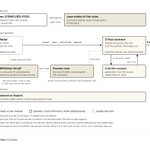
2/ The spec gives each guarantee a level: asserted, tested or machine-checked. Lean covers the model, circuits and hash.
Halmos and Kontrol cover the contract. Aeneas and Verus cover the wallet. The verifiers and the deployment are rebuilt byte for byte.
Write-up: ethsystems.org/writeups/form…
xitter.twitterapi.xyz/eth_systems/status/211…


We pushed formal verification through our shielded pool, from the written spec down to the bytecode running on Sepolia.
Each layer got its own tool: Lean for the model, circuits and hash, Halmos and Kontrol for the contract, Aeneas and Verus for the wallet, and byte-for-byte rebuilds for the verifiers and the deployment.
What we proved, what we found and what we still assume, in the thread below.

1
3
122
Our Managing Director Kaushal (@liftlines) joins "Staking Economics and the Market for Block Space" panel on 13 November.
As block space markets change where validator revenue comes from, staking yield and its risks shift too. Kaushal brings years of experience in finance and building on Ethereum. Looking forward to the exchange.

How are block space markets changing where validator revenue comes from, and what do new revenue sources mean for staking yield and the risks holders take on?
How are institutional stakers and liquid staking providers responding to these shifts, and how is the economics of block space reshaping competition between operators?
On stage:
Kaushal Vyas, EthSystems
@Kean_Gilbert, @LidoFinance
Yuki Kishi, @BitMNR
@KamBenbrik, @Bitwise
Moderator:
Krzysztof Urbanski, L2BEAT (@ethbeat_org)
Secure your spot: london2026.stablesummit.xyz

We're co-hosting a closed, invite-only session with @Nethermind in Singapore on 18 Nov, during SFF week.
Looking forward to working through one question with them and a group of banks: how do you design compliant infrastructure for regulated finance on Ethereum?
DMs are open.

At Hong Kong FinTech Week, @oskarth was on a panel with Euroclear, the BIS Innovation Hub, CAT Investigators and Elephants Inc about why institutional tokenization keeps getting stuck in pilots.
A pilot can live with a public ledger. A portfolio can’t. And a tokenized bond can outlive the cryptography it was issued under, so issuers need to plan for quantum migration too.
If you’re working on confidentiality or post-quantum migration for long-lived assets, we’d like to compare notes 📝
#HKFTW26

Each lunchbox that a dabbawala carries is routed by a code. The food stays hidden, but the package still says where it's going.
On 4 Nov at ETHIndia, @_rymnc uses that to explain what privacy on Ethereum needs to get right. If you’re in Mumbai, come by!

The engineer who spent years working in and around Ethereum, is explaining it with Mumbai’s dabbawalas.
@_rymnc, Director of Engineering at @eth_systems, was part of the Ethereum Foundation’s Institutional Privacy Task Force before the team spun out as EthSystems this year.
He’s taking the stage on The Lid Leaks: what Mumbai’s dabbawalas teach us about private finance. A system the whole city trusts, used to explain what privacy on Ethereum needs to get right.
4 Nov · Mumbai, inside Devcon

Engineering Lead at EthSystems, @_rymnc will be presenting our open source work, as well as speaking about what we've learnt while working with institutions.
Meet us at @EFDevcon and @ETHIndiaco!

Privacy is one of the main things standing between regulated institutions and Ethereum.
On November 3, our CTO and co-founder @oskarth takes that on at the Devcon Hong Kong satellite venue.
Our map of use cases and starter kits is open source. Come to the talk, then help us build it out.

🎉 嘉宾公布|EthSystems 专题分享
👏 欢迎 Oskar Thoren(Co-founder & CTO of EthSystems)@oskarth 加入 Devcon 香港分会场!
Oskar 将带来 EthSystems 专题分享,围绕以太坊生态的技术发展与创新实践,分享前沿洞察与行业思考。
📅 November 3
📍 Devcon香港分会场
🎟️ 立即报名: luma.com/cfthgx9l
期待现场与大家交流!🚀

We pushed formal verification through our shielded pool, from the written spec down to the bytecode running on Sepolia.
Each layer got its own tool: Lean for the model, circuits and hash, Halmos and Kontrol for the contract, Aeneas and Verus for the wallet, and byte-for-byte rebuilds for the verifiers and the deployment.
What we proved, what we found and what we still assume, in the thread below.
Our spec gives each guarantee a level: asserted, tested or machine-checked. No double spend and value conservation are now machine-checked, as Lean theorems over every history the pool's rules accept.
We found six issues. Three were in the verification tools themselves, and two of those could prove False, which means they could prove anything. So check your checker too.
AI agents wrote most of the proofs, and Lean's kernel checked every one.

1
18
783
Tokenized money market funds on Ethereum publish their shareholder books: every balance, every subscription and redemption.
Our proof of concept hides positions from the public, while the fund's transfer agent still sees all of them.
How it works, and the links, below 👇🏻
Kaushal Vyas (@liftlines ), our Managing Director, joins the Building Ethereum panel at @LFDecentralized's Privacy for Financial Services Workshop in New York on Friday 23 October (12:00 to 12:45 pm ET), moderated by Johnna Powell of DTCC.
He will bring our open map of institutional privacy use cases, each with the requirements institutions named, the approaches already ruled out, and starter kits for several of them.
Looking forward to the conversation with fellow panelists, and to building on it together after 🤝🏻

Most of the conversation online is about payments from institutions to end users. In our conversations, we notice the harder problems may also sit between institutions: settlement, payment instructions, flows they can’t let competitors see.
Our CTO and co-founder @oskarth covers how we approach that side in his @EthTaipei talk.

Oskar Thorén (@oskarth), @eth_systems co-founder, says:
"privacy is really the main blocker now, especially when it comes to moving onto public blockchains like Ethereum"
His team spoke to hundreds of institutions. On a public ledger, rivals see what auditors see.
@EthTaipei
We published a writeup on Ethereum's upgrades, past and coming, read through what banks, custodians and other institutions need.
Apart from the move to proof of stake, most institutions we talk to haven't followed the forks closely. Since 2021 the gas limit has doubled, and accounts and rollups can now do things they couldn't before.
The next two forks have different focuses. Glamsterdam, due in December, is mostly about capacity: it prepares clients for a 200M gas limit and makes writing new storage more expensive. Hegotá, planned for 2027, is about control. Frame transactions give accounts more say over how they sign and pay fees, and FOCIL makes it harder for block producers to leave valid transactions out.
We looked at each change through five needs: key control, capacity at a cost firms can plan for, speed to finality, neutral inclusion and confidentiality. Each section opens with a summary for six kinds of firms, from bank treasuries to staking providers, and a replay of mainnet transactions under the new gas rules shows where costs move.
One of those needs the forks leave open. More below.
Intercompany cash on a public chain publishes the group’s structure, and that includes who funds whom, how much, how often. Competitors can read it even before your annual report.
Our private payments starter kit tests the reverse: hidden on chain, visible to treasury, open to a tax authority on request.
There are still two gaps remain, see threads for more 👇🏻
1) Disclosure covers an entity’s whole history, not one transfer
2) Amounts still show where cash enters or leaves the pool
If you have a design or a requirement for either, add it here.
Use case: ethsystems.org/use-cases/
Starter kit: github.com/ethsystems/pocs/t…

1
4
285
Our September community update starts with the specs behind our shielded pools, and it’s now public. How our pools work was defined by the code until now. The specs write it down as a standard anyone can implement or audit against, released under CC0, and our own proof of concept now conforms to them.
Also this month: two new building blocks, two people joining the team, four talks, and more collaborations with @lfdecentralized and @0xMiden.
1/ Each spec moves through raw, draft and stable, and the bar at each step is written down. Draft needs a reference implementation and an adversarial review. Stable needs someone outside EthSystems to use it.
The two shielded pool specs are at draft. Railgun, Privacy Pools and Bermuda reviewed them before launch, and their feedback is in what we published. The compliance check, the attestation gate, now has its own spec separate from the pool core, so it can be reviewed on its own.
Source: github.com/ethsystems/specs
xitter.twitterapi.xyz/eth_systems/status/210…

When we launched EthSystems we said each use case needs its own system, designed, specified, and hardened properly, and that someone has to do that work.
Our specs site is now public: specs.ethsystems.org
Starting small: a shielded pool for confidential payments, an attestation-gated profile of it, and the process behind both. Each spec states what the protocol does, what it assumes, and what it guarantees. This means engineers, auditors, and regulators can work from the same document.

1
9
336
Most banks started on permissioned networks, and that did real work for hedging the risk and building capability. @motypes 's EthConnect 2026 keynote was about what comes after, because the architecture chosen at step one sets the cost of step three, and the wall on the way to a public network is almost always confidentiality.
Confidential is not anonymous. It is control over who sees what, when and how: the counterparty sees the trade, everyone else sees only a proof that it is valid, the operator sees nothing, and the regulator holds a disclosure key.
The same question ran through both panels. Good conversations with @Sharplink , @LidoFinance , @ETHGasOfficial , @Offchain , @zama , @axelar and @FourPillarsFP , and our thanks to @0xundefined_ for hosting.
Coverage in threads 👇🏻

- Keynote: etoday.co.kr/news/view/26317…
- Privacy panel: etoday.co.kr/news/view/26317…
- Capital flows panel: etoday.co.kr/news/view/26317…

4
446
We're glad to welcome David (@david__nunez) to EthSystems as Protocol Engineer.
David has spent more than 15 years in cryptography and information security, the last 8 in Ethereum and web3. Most recently he was CTO of NuCypher, leading TACo, an access control layer built on threshold cryptography, and he built the staking and governance smart contracts for Threshold Network.
He holds a PhD in Cryptography from the University of Málaga, and his research has been published at CRYPTO, AsiaCCS and in the Journal of Cryptology.
At EthSystems, David joins as Protocol Engineer. He'll work out which cryptographic building blocks hold up against institutional requirements, how they compose, and what they cost to run, and turn that into reference implementations institutions can test themselves.
Welcome, David.
Let's build confidential systems on Ethereum for institutions.

EthSystems will be at @token2049 . Our CEO Mo (@motypes) joins the Ethereum Ecosystem Summit hosted by @ethereumhkhub and @Sharplink on October 8, on tokenization, settlement and what institutions need from public rails.
If you're working on privacy for regulated flows, DM us or email hello@ethsystems.org. Let's collaborate 🤝🏻

During @token2049, the Ethereum Ecosystem Summit will bring together leaders across Ethereum, institutional finance, payments, staking and onchain infrastructure for an afternoon of high-signal conversations.
Joining the discussion:
◾ @ethereumJoseph— Ethereum Co-founder, Founder & CEO of @Consensys, Chairman of @Sharplink
◾ @joechalom— CEO, @Sharplink
◾ @IsdrsP— Chief of Staking, @LidoFinance
◾ Ian Wallis — Director of Digital Asset, @BaillieGifford
◾ @motypes— Founder and CEO, @eth_systems
◾ @henrychen_cy — CBO of @snzholding, Partner of BlockUnion
◾ @_julianma— Co-founder, @ethlabs_org
◾ @xxintheworld— Investment Partner, @HashKey_Capital
◾ @mpfzajac— Global Head of Institutions, @Nethermind
◾ @ajwarner90— CSO, @Offchain
◾ @aya_kantor Co-Founder & CEO, @upshift_fi
◾ Prof Bao Te — Assistant Dean, Graduate College / Associate Professor, School of Social Sciences, @NTUsg | @NTU_CCTF
…and more.
Across one afternoon, we’ll explore:
→ Ethereum’s enduring edge and credible neutrality
→ Stablecoins, instant settlement and autonomous commerce
→ Tokenization, vaults and institutional blockchain infrastructure
→ What Ethereum’s next decade could look like for open finance
📅 October 8, 2026
🕑 2:00–6:00 PM SGT
📍 Singapore
🎟️ Curated attendance
Approval required: luma.com/7q9md4zf

Kaushal Vyas (@liftlines ), Managing Director at EthSystems, speaks at @Sibos in Miami on Tuesday 29 September, 12:00 ET, at the @lfdecentralized booth.
The session is on the patterns that let institutions build on Ethereum without giving up confidentiality or the controls they run today.
Meeting details below.

Kaushal is in Miami for the week, 28 September to 1 October, and open to meetings with banks, consortium networks, asset managers and market infrastructure firms on practical ways to deploy with the privacy and controls they already have.
DM @liftlines or book a time: cal.com/kaushal-vyas/

Another building block we use: chainfold
chainfold is a Rust library to deal with some of the inconveniences that come with handling on-chain events, especially reconciling after encountering a reorg.
Instead of forcing you to use a specific runtime, a storage backend, or an arbitrary "safe" block height that can be considered finalized, chainfold puts these batteries in your hands, that you can tune according to your specific usecase.
The design is simple enough: process an event, fold it into your local state, and when the block is finalized, persist the fold to storage, all while being able to roll back to a point that the data was known to be canonical.
We built this library to enable easier legacy system integration, where codebases cannot use modern languages / libraries that are well maintained, and the developers end up having to rebuild most of these components themselves.
More on the design, links and long-form writeup below 👇
In the long-form writeup, we cover how we dogfooded the library in our proofs of concepts, and the ways that developers can compose and use chainfold with other libraries in our suite.
FFI bindings and Formally verified invariants coming soon!
Writeup: ethsystems.org/writeups/buil…
Crate: github.com/ethsystems/works/…

7
408