

World Champion Ultra Distance Triathlon │ Exemplar. I write about endurance training and high-performance habits.
Boulder, CO
Joined August 2020
- Tweets24K
- Following966
- Followers19.9K
- Likes42.7K




Pinned Tweet
How To Train is now available on Amazon
It's the story of how I applied From Lemon To Legend to my own training
It's filled with practical advice for improving at endurance sport

Most of us will do best thinking in terms of energy needs - nearly all of us can meet our needs with real food. I mark the transition from training-for-health to training-for-performance by where we need to eat supplemental sugar.
In the quote post I make the case for who needs good fatox in sport. Some helpful charts in there for top athletes. @BekOlimjon and I will talk through on Sunday. I will have ideas for those of you who think you can optimize yourselves by not eating.
For health, we all do better with better metabolic fitness and that takes lots of easy training over time.
If we invert the original question: “who doesn’t need hi-carb fueling?” then we might learn something.
In How To Train I get into this question. See extract in photo. I started training and was excited to eat. However my eating got ahead of my energy needs and I gained fat.
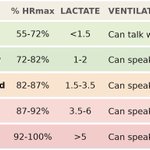
Around the same time, I used lactate testing to get a look at what was happening internally. My conclusions for myself (p37) are something I’ve seen repeat over and over.
There are subtleties to the energy supply discussion but most of us don’t train enough to worry about them. On the performance side I saw @Alan_Couzens share a post this morning that covers a lot of the issues.


I can see how a runner might feel that way.
Pic 1: Quite a difference fueling one end of the table from the other.
Pic 2: Someone with poor fatox will deplete rapidly
Pic 3: My profile at your easy pace and my marathon pace, imagine someone larger than me with poor fatox


2
23
2,193
For our call next Sunday, @BekOlimjon and I are discussing Training Zones // all our calls are recorded and put on our YouTube channel youtube.com/@GordoandBek
Linked is the document where I'm putting thoughts together
If you have any questions or topics you'd like us to review then please reply here
docs.google.com/document/d/1…

19
2,029
My daughter asked me how she could be rich.
First, I asked her what she meant by rich.
Second, I explained that when I was younger, I made a decision not to be rich.
youtu.be/Qx5emLrSP_I?si=szz9…
3
27
3,599
AC re-upped this thread, which relates to this week's video:
xitter.twitterapi.xyz/feelthebyrn1/status/17…
The secret for me has been high engagement and under scheduled
Within the _same_ job I've been over/under employed and over/under engaged
Great teams of people were also important. The days with you for example as well as the days at the start of my finance career. In both of those situations... Rapid learning by doing lots of case studies ✅
Money is very useful. Of course managing lifestyle expections is even more helpful. You do that better than anyone I know. I
left my high paying job way before my colleagues but they all left eventually. "Leave early" is useful but I was fortunate I didn't get completely wiped out in 2008/2009. If that recession hit in 2004/2005 then my financial life would have been very different.
There's a significant role for chance to play in out lives
1
673
This morning’s article is ideas to help you craft a better off-season.
Something I did well across my elite career was thinking more widely than physical recovery.
I would have two main racing seasons (Northern & Southern Hemisphere). After each I would complete a non-training project that moved my life forward.
These days, my off-season is longer and also includes time sharing fun experiences with friends and family.
You’ll find the full piece over at Endurance Essentials.

The key benefit of following Alan's advice is we don't have to negotiate with ourselves, and our lives learn our schedule.
The nature of what goes into the slots will change, but the slots are held across the year.
Morning slots are the most useful: (1) start each day with a win; and (2) they are the least likely to be disrupted.

Tempo Thursday
By using cross-training, I get 100 minutes of peppy stuff that ends with a speed set at 5K race pace.
Morning is a wake-up swim with intervals (5x400m), then a ride with long intervals (4x8’).
Evening is the workout you can see in the card.
Legs were fairly fresh today because of the preemptive recovery you can see in the quoted post.
Exercise physiologists give thought to the METs through my cells relative to peak HR & stress.

Training When Injury Risk Is High
Monday's chapter gave you an outline for post-race recovery.
I didn't race this past weekend, but my Run-Focus Week left my legs feeling beat up.
Beat-up legs indicate injury risk is high. I stay active, space my runs, and dial down the stress. If I only ran, then it would be tempting to run more when injury risk is high. Cross-training takes the temptation away.
24 km of running and 14.5 hours of training; a 5:1 ratio of cross-training to running.
The easy training is an important part of the program.

14
1,449
Fun thread with Brady on METs and science papers.
Based on a common definitions, Vigorous/Strenuous is >= 6 METs
It does not take much effort for athletic populations to hit 6 METs

This would be an excellent topic for a Friday post
I first came across it via @stevemagness digging into a study
And I often see Strava easy miles faster than 7s in your demographic

2
18
3,133
Training When Injury Risk Is High
Monday's chapter gave you an outline for post-race recovery.
I didn't race this past weekend, but my Run-Focus Week left my legs feeling beat up.
Beat-up legs indicate injury risk is high. I stay active, space my runs, and dial down the stress. If I only ran, then it would be tempting to run more when injury risk is high. Cross-training takes the temptation away.
24 km of running and 14.5 hours of training; a 5:1 ratio of cross-training to running.
The easy training is an important part of the program.
General Preparation for Marathon Runners
The picture brings together the workouts I explained in the first two chapters.
We end up with two days off running and seven runs total.
The week contains ~35 km of marathon pace work, ~83 km of running, and a 10x200 speed set.
Total volume will depend on how much cross-training you tolerate. A 1:1 ratio gives you 15-17 hours.
I'm wrapping up this week, and I'll be at 23 hours. You can see my specifics on Strava.
After a week like this, most runners will need to back down to their Basic Week.

Doc J is back writing and worth a follow

Week 1 of 30 runs in 30 days: 35.7 mi, all easy. The bigger change from 20 years ago is that I do an activation routine before the run and stretch after it and before bed. Here's the routine: jeffshiltmd.substack.com/p/s…

1
10
1,313
Good Q from Max
What makes someone injury prone?
1// Rehabs themselves so they can quickly return to the loading pattern that caused the injury.
2// Energy deficits.
3// Constant nervous stimulation.
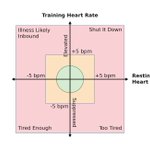
3 is subtle: just because our HR is in Zone 1 doesn't mean our training is truly easy. There's a wide range between resting and the top of the Green Zone.
My elite pals are masters at convincing themselves things are easier than reality. It's part of what makes them great. The key is to build systems that break the loop of self-harm.
My default: every setback is feedback - there's no such thing as bad luck.
Pic is what's different with my approach now that I'm older and somewhat wiser.


Right and that was part of my point. I spend a lot of time trying to figure out what injury prone means.
I think it is more risk scaled with the level of activity yo uare doing. As you know, nothing is free. You are way ahead of many of your peers in terms of goals, so there is probably more risk just because of the level and not some underlying mechanical flaw.
4
27
2,223
Yes, but not at the start of the race - pull up the first 5-8k of a well paced half/full and you’ll see HR come up gradually
Early race heart rates are similar to training heart rates
What’s different is a more continuous, longer effort which results in elevation, later
In training and racing, never push HR early. You’ll overshoot pace and underperform later.


Today's chapter focuses on using races to train specifically for the marathon. I give you ideas for your race start, building specific fitness, checking fatigue and testing nutrition.
Race data is useful for setting ceilings below which we operate in training. Within our interval workouts, it is tempting to convince ourselves we can sustain paces above our current marathon fitness.
Setting a cap below half marathon race effort is one way to keep our ego in check.
When I use the formula in the picture, I end up with a ceiling of 152 bpm (162-10). Those of you who follow me on Strava see that I'm usually 10-15 bpm below the cap. There are a few reasons for this:
1: I'm conservative in training because I don't want to screw up compounding.
2: Interval sessions are much shorter than races. I know I'll want a large cushion on race day.
3: Breaks of 1-2 minutes greatly reduce the stress we're under. If I push myself up toward my cap, my true intensity is higher than it appears.
4: I can feel my physiology changing as I approach 148 bpm. I trust my feelings more than an arbitrary formula.
All of the above gives me the capacity (and mojo) to take myself higher on race day.

2
21
1,921
Mark Allen taught me something similar to Bob’s teaching
Write down what scares you (about your big day) and prepare for it
and know that some actions/risks we need to completely accept to get the result we desire - here he was talking mostly about the process and work required to reach our potential

Here’s a week for a Developing Athlete. I’ll drop a week for a Competitive Athlete in the first reply.
We don’t need to do this much exercise. Most people with marathon aspirations will do better, and enjoy the process more, by following a long apprenticeship.
I built up gradually 5/10/21k races, then repeated the progression in triathlons. Took three years.

Density for Marathon Training
Density is an important technique for the low-mileage marathoner.
We can make the week more challenging by placing runs closer together.
We can reduce stress and soreness by increasing the spacing between runs.
The image shows how we can average one run per day while still having gaps of more than 24 hours between runs.
Ample cross-training fills the gaps.


There are two things you will be tempted to do with your training:
1⃣ Skip building metabolic fitness; and
2⃣ Rush biomechanical adaptations.
Both require patience across multiple years.
Those of you who follow me on Strava know that I've been working to get sub-3 marathon pace into my Green Zone. This week is the first time I've been able to show that it's actually there. The workout chart is from yesterday's double and similar to my profile on Thursday.
The process took 52 months from when I returned to running. The most challenging parts of that journey are in How To Train.
You should also read Chapter One of From Lemon To Legend, which explains how to progress your endurance training.
Most athletes approach sport upside down - too much specific work, done too early, on a body that lacks general capacity and metabolic fitness.

2
39
2,367
Density for Marathon Training
Density is an important technique for the low-mileage marathoner.
We can make the week more challenging by placing runs closer together.
We can reduce stress and soreness by increasing the spacing between runs.
The image shows how we can average one run per day while still having gaps of more than 24 hours between runs.
Ample cross-training fills the gaps.
General Preparation for Marathon Runners
The picture brings together the workouts I explained in the first two chapters.
We end up with two days off running and seven runs total.
The week contains ~35 km of marathon pace work, ~83 km of running, and a 10x200 speed set.
Total volume will depend on how much cross-training you tolerate. A 1:1 ratio gives you 15-17 hours.
I'm wrapping up this week, and I'll be at 23 hours. You can see my specifics on Strava.
After a week like this, most runners will need to back down to their Basic Week.
Think More, Not Faster
We are always tempted to ramp up the pace, especially when our heart rate is up and we feel good.
Remember, you are training for a long event. Success will depend on durability and economy at average race pace.
Success also depends on not screwing up the early miles. Learning to hold back in training, and in a crowd, will serve you well.

26
1,851
