

AI open models ready to use. Private inference with flat rate. Own your models with privacy, zero logs and EU compliance Community & builders at https://xitter.twitterapi.xyz/t.co/ciWFdCqcvm
Tenerife, España
Joined March 2026
- Tweets262
- Following34
- Followers2.4K
- Likes680






Pinned Tweet
Today we’re featured in @LaVanguardia talking about AI, data sovereignty, and why the EU is competing in one of the most important races of our time and how at @helmcode we’re working to help meet that challenge.

🤔 How to reduce LLM and AI infrastructure costs without sacrificing quality
We published a guide on cutting AI costs. There's an example in chapter 1 we keep coming back to.
You run 10,000 tasks for $330 and 9,000 of them come out right, so each good result costs you about $0.037. Then you move to a cheaper setup: $280 for the same 10,000 tasks, but only 7,000 come out right. Each good result now costs $0.040.
You pay less every month and every useful result costs you more. That's why the guide measures everything as cost per accepted task.
To save, the first thing that help is splitting the bill by operation.
It's 14 chapters guide, and each one can be read as a quick overview or in full detail. There's also a spreadsheet and a SQL query to build your own baseline.
helmcode.com/guides/ai-cost-…

🤔 About AI Act: Spain's data protection authority (AEPD) just warned a company that planned to score CVs with AI. The tool wasn't even live yet.
The case raises a question many teams building on third-party APIs haven't asked: when does your app make you a high-risk AI provider under the AI Act?
You don't need to train a model for that. A system prompt like "score this CV from 1 to 10 and reject anything below 5" is enough to land in Annex III. Put that app into service under your name and you can be its provider.
Rodrigo Cilla Ugarte walks through it, using the CV case as an example:
→ What the AEPD asked for: privacy by design, a DPIA, transparency and human oversight that can actually question the score
→ Why the CV travelling inside the prompt matters (photo, date of birth, career history)
→ The three cases in Article 25
→ Why "summarise this CV" and "score it and reject below 5" can end up in very different places
→ Deadlines: Annex III obligations moved to 2 December 2027, but the GDPR and Spain's Royal Decree 723/2026 already apply
Plus five things to check before you deploy something like this.
Full article here: helmcode.com/posts/high-risk…

Helmcode retweeted

RESUMEN FINAL.
Soy Monti he trabajado para startups durante 5 años y ahora quiero intentarlo con este proyecto y compartirlo desde una vision no solo de desarollo si no 360.
Todos los agentes usan @helmcode y su sub de 70 de NaN.
When you send a request to an open model on Helmcode, it runs on infrastructure we operate in Europe.
We don't forward it to whichever third-party provider happens to be cheapest that day.
And we don't store your prompts.
It's a fairly simple distinction, but one we think matters a lot when companies start building with real customer data.
You should know who's running your AI.
Helmcode retweeted

Read it, or is the summary enough?
I share a link and Runline decides: Jev (a small decision model) picks, Apple's on-device model summarizes only when needed.
Fitting example: @helmcode's guide on cutting AI costs 👇
runline.juanpecatalan.com/bl…

Helmcode retweeted

DISCURSOS.xyz funciona gracias a @helmcode.
Analizar las agendas de los grandes partidos, transcribir, procesar las intervenciones y analizar los mensajes es mucho más fácil gracias a ellos.


La idea es sencilla, DISCURSOS.xyz es un archivo público de las intervenciones de políticos desde que se anunció la convocatoria electoral del 29N.
La palabra importa. Y por eso quiero que sirva de inspiración y de objeto de estudio.
Que nos ayude hoy a desarrollar criterio propio, porque es más necesario que nunca.
Si te interesa conocer qué dicen nuestros políticos y candidatos a las Elecciones Generales del 29 de Noviembre, aquí las tienes todas (o casi todas).
Helmcode retweeted

Se han superado los 100.000 análisis en el Radar y observatorio de modelos de IA en HugginFace.
Podéis bajar la minería de datos en el repo : )
¡Gracias!
radar-huggingface.686f6c61.d…

One tweet can start a company. How far can we take it? 🚀
We're launching the Helmcode YouTube channel!
And we're kicking things off with this incredible intro created by @Saulgmz_.
Absolute cinema. 🚬
Sound on. 🔊 We want to hear what you want to see on the channel. We've prepared a nice form for getting your responses: nan.builders/prompt
And if this is just the intro, imagine what's coming next. 😏
youtu.be/c7-QvNDoLvE
Helmcode retweeted

Un tweet puede crear una compañía. ¿Hasta dónde podemos llevarla?🚀
¡Lanzamos nuestro canal de Youtube en @helmcode!
Con esta intro al canal creada por @Saulgmz_ Absolute cinema 🚬
Activad el sonido. Quiero saber qué os parece.
Si esta es la intro, esperaos a ver los vídeos 😏
youtu.be/c7-QvNDoLvE?si=gF9M…
This is how our inference architecture works at Helmcode.
Serving inference in production is more than hitting the API you use. 🤷♂️
You need routing, fallbacks, observability, cost control, and the right deployment model.
Here's a closer look at how we approach it at Helmcode:
1/ API Gateway & Routing
Every request enters through an OpenAI-compatible API. We handle authentication, rate limits, and routing to the appropriate model and infrastructure.
2/ Model Serving
Different models have different requirements. We run inference workloads across GPU infrastructure, managing model replicas, batching, and concurrency to balance throughput and latency.
3/ Scalability & Reliability
Traffic isn't constant. The infrastructure needs to handle demand spikes, distribute requests across available capacity, and recover when something fails.
4/ Observability
We monitor latency, token throughput, GPU utilization, errors, and request volume to understand how the system is performing and identify bottlenecks.
5/ Cost & Deployment
Infrastructure decisions directly affect inference costs. Shared, dedicated, and on-prem deployments have different trade-offs in utilization, isolation, performance, and economics.
All of this needs to work together while keeping the API simple for developers.
This is how we make open model inference accessible to businesses at Helmcode.
Helmcode retweeted

El estudio de grabación que tiene la buena gente @getmanfred está chulísimo.
Muchas gracias por la invitación!
PD: en la comunidad ya somos +1K 🚀

🔥‼️ ¿Pivotar todo el modelo de negocio de tu empresa con un solo tuit?
Hemos traído a Cristian Córdova (@barckcode), fundador de @helmcode, a charlar con nosotros sobre cómo pasaron de ser una empresa de servicios cloud tradicional a un proveedor de inferencia de IA en Europa🧵
💸 How to fix your AI bill. A comprehensive guide about AI cost optimization explained by our platform team 👇
We've just published a practical guide to reduce your AI cost.
14 chapters covering model selection, routing, caching, agent loops, RAG, GPU economics, and the decisions that actually reduce inference costs.
It's free, with three reading depths, real calculations, a capacity calculator, a spreadsheet, SQL templates, and a downloadable PDF.
👉 Read the full guide: helmcode.com/guides/ai-cost-…
The quick summary, in 5 points:
1/ Stop optimizing for price per token.
A model that's 5x cheaper means little if it needs three attempts to complete the same task. Measure cost per successful task, including retries, tool calls, and failures.
2/ Your best model shouldn't handle every request.
Classification, extraction, summarization, coding, and complex reasoning have different requirements. Route tasks to the models that can handle them reliably. Save expensive reasoning for the work that needs it.
3/ You're probably paying for the same work more than once.
Repeated context, duplicate tool calls, unnecessary retrieval, and agents that keep searching after finding the answer.
Caching, context management, and better stopping rules can make a real difference.
4/ Agents need budgets, not just prompts.
An agent can turn a cheap request into an expensive workflow through retries, searches, and tool calls.
Set limits on steps, time, and spending. Track the cost of the complete workflow.
5/ Self-hosting isn't automatically cheaper.
A GPU sitting idle still costs money. Compare infrastructure, utilization, peak demand, latency, and engineering time against API pricing.
Sometimes dedicated infrastructure wins. Sometimes pay-per-use does. Sometimes a flat rate makes more sense.
We've also included a fictional company that starts with a $2,600/month AI bill. Across the guide, we walk through the decisions that change that bill, one by one.
No magic 90% savings claim. Just the calculations and trade-offs behind each decision.
Free guide, available in EN/ES:
helmcode.com/guides/ai-cost-…

Helmcode retweeted

¡Seguimos con el cyberchallenge.ai! Hoy en ICAI @UCOMILLAS, gran cantera de ingenieros. Si eres universitario y tienes ganas de quemar tokens de @helmcode lanzando ciber-ataques en un entorno controlado... ya sabes, contacta!


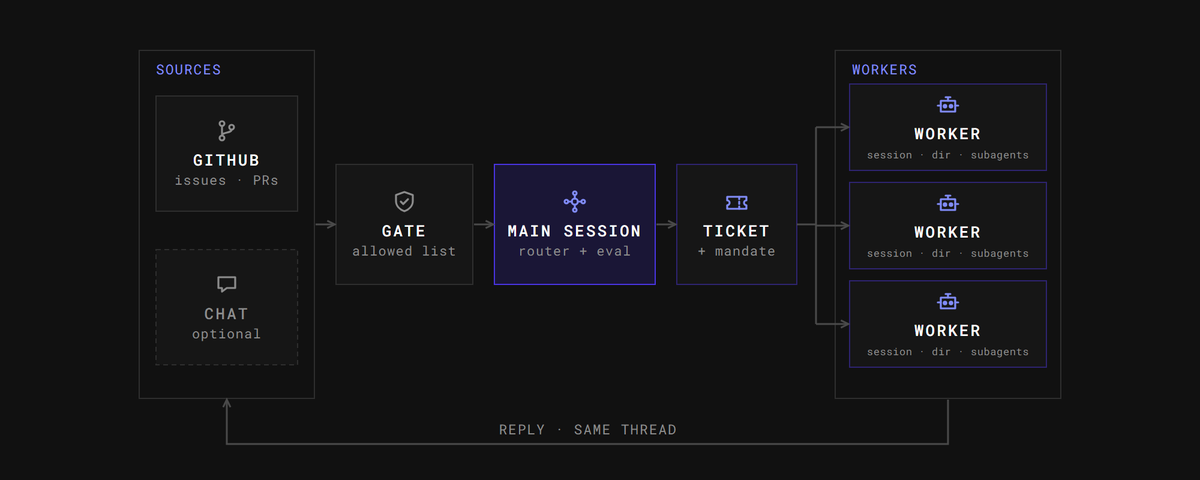
DeepSeek is open-sourcing their full AI ecosystem: models, harness, inference and now, agents.
We’ve been testing DeepSeek Super-agent to review some PRs, and here’s a full breakdown of what it is, how it’s built and how it works 👇
Helmcode retweeted
☕ ¡Café Helmcode Barcelona! ¡Abrimos entradas!
📆 24 de noviembre
🕐 18:00-21:00
📍 @itnig Café
👯 120 plazas
📣 3 charlas de la comunidad + networking
Podéis proponer charla cuando os apuntéis.
Escogeremos las 3 mejores sobre IA con modelos abiertos
Apúntate aquí :)
luma.com/jnq0il77>
RT y tal para que rule a la gente de BCN que se quiere venir! ¿Quién se viene?
@user_nuria @Patimba_ @Gsnchez @vinates cuento con vosotros!

Just use helmcode.com 🤷♂️
Cut your AI bill with open models flat rate pricing as @Revolut did 👇
You don't need to self-host and pay for a bunch of h200... You can use our API to call the best open models:
- GLM 5.3
- DeepSeek v4.1 Flash
- Qwen 3.6 & Gemma unlimited
And with zero logs and with server on EU ✌️


Revolut: Europe's most valuable startup ($200B) just showed the world its AI strategy.
Every company will end up copying it.
At the start of this year, Revolut leaned on the frontier labs. Its 2,000 engineers used Claude Code and Codex, and some burned $1,000 to $10,000 a month each. The bills kept climbing, and the returns weren't there.
So Revolut switched its default to an open-source model called GLM. All it needs is GPUs, which it rents from Together AI.
The results, by Revolut's own count:
- The bill is about a tenth of what it paid OpenAI and Anthropic
- Engineers get unlimited tokens instead of spending caps
- Coding time is down 60% and lead time is down 70%
That's the chart below.
Revolut still uses Claude and GPT, but only as "the exception," for the tasks they do best. Everything else runs on open source.
So here's the question I keep coming back to: how many use cases can companies really justify sending to frontier models?
My answer is very few. Plenty of companies still route everything to OpenAI and Anthropic today. For how long?
I think open source ends up handling the vast majority of corporate AI work, and frontier models get a short list of the hardest jobs. That's a problem for labs whose revenue forecasts assume unlimited growth.
If you appreciate unpopular takes, follow me @m0xt_ for more.

ALT Revolut chart of engineering lead time and coding time, both dropping after switching to self-hosted open-source GLM
👀 @Revolut has reduced its AI coding costs by 90% by self-hosting open models.
And I think their story is worth paying attention to.
At @aiDotEngineer NYC, David Abitbol shared how Revolut went from being skeptical about the ROI of closed models to making open-weight models a priority for its engineering teams.
Some interesting numbers from their experience:
- Around 2,000 engineers using AI tools.
- 90% lower AI costs compared with their previous Anthropic and OpenAI spending.
- 60% improvement in coding time.
- 70% improvement in lead time.
- GLM models running on their own GPU infrastructure.
👉They still use closed models for tasks where those models perform better. But open models have become their default for much of their coding workload.
One of the most interesting points from the talk is what happens when engineers no longer have to worry about token budgets.
They start using AI for more of their work, including the tasks surrounding coding that often slow down delivery.
❤️ This is very close to what we believe at Helmcode.
We're seeing more companies reconsider their dependence on closed-model APIs, especially as usage grows and costs become harder to predict.
But there's an important difference between Revolut and most companies.
Revolut has the scale, engineering resources, and infrastructure to operate its own models. Many teams don't.
That's why we built Helmcode around operating open models for companies that want the benefits without having to manage GPUs, inference servers, and deployment themselves.
We also offer flat-rate pricing, so teams can scale usage with a predictable bill.
We've already seen customers reduce their AI costs by up to 75%.
And while there will always be workloads where frontier closed models are the better choice, we're increasingly seeing open models become a practical default for production applications.
Revolut's results are a great example of where this is heading.
Really worth watching David's talk. It's technical, practical, and full of useful numbers.
youtube.com/watch?v=Ok6QdZHC…

Helmcode retweeted
Recomiendo este vídeo a todo el mundo que esté trabajando con IA a escala en producción.
"Cómo @Revolut ha bajado sus costes de IA un 90% self-hosteando modelos abiertos"
Dónde empezaron:
- Muy escépticos sobre el ROI de los modelos cerrados
- Con curiosidad sobre los modelos abiertos
Dónde han terminado
- Open-weight como prioridad porque
- Les da una factura predecible
- 60% de mejora en el tiempo que tardan en completar un proceso
- Modelos cerrados como excepción
- Algunas tareas las hacen mejor gpt/claude
Esta es nuestra misma tesis en @helmcode porque lo estamos viendo cada vez con más clientes que llegan. No todas las empresas necesitan o puedes self-hostear, por eso damos una tarifa plana para que la factura sea siempre la misma.
En algunos casos hemos conseguido bajar facturas de varios ceros en un 75%
Y mola que un gigante como Revolut confirme que vamos en la dirección correcta
GLM + DeepSeek for the win :) Open-source/weight for the win
Echadle un ojo al vídeo 👀
youtube.com/watch?v=Ok6QdZHC…
(gracias @ecura)
Helmcode retweeted

¿cómo hacés para que un modelo responda a miles de personas al mismo tiempo sin que el costo se dispare?
este artículo explica Deepinfer, el motor de inferencia que DeepSeek abrió parcialmente: el software que organiza cómo se ejecuta el modelo en las GPUs.
cuando mandás un mensaje, pasan 2 cosas:
-> prefill: el modelo procesa tu mensaje y el contexto.
-> decode: genera la respuesta de a un token, que puede ser una palabra o parte de ella.
ahora sumale miles de usuarios: uno manda un documento de 50 páginas, otro hace una pregunta corta y otro pide código. todos comparten recursos y hay que organizar ese trabajo.
Deepinfer aplica varias optimizaciones:
1) repartir la carga entre GPUs para que unas no se saturen mientras otras quedan libres.
2) preparar el siguiente paso mientras se ejecuta el actual, reduciendo las esperas.
3) proponer varios tokens y verificarlos juntos. si se aceptan, la generación avanza más por iteración.
4) reutilizar cálculos y evitar volver a procesar información innecesariamente.
hay una decisión importante: atender más pedidos a la vez puede hacer que cada usuario reciba su respuesta más lento. tenés que equilibrar capacidad, tiempo de respuesta y costo.
me gustó porque muestra cuánto podés mejorar el rendimiento de un mismo modelo organizando mejor su ejecución. hay mucha arquitectura detrás de una llamada a una API.

