

🦞AI Apps investing @ A16Z; A1111; Boards of Ethos, Krea, Deel, Clutch, Untitled, Happy Robot + more; If you’re not at the table, you’re on the menu
San Francisco
Joined March 2009
- Tweets4.1K
- Following3K
- Followers36.1K
- Likes39.6K




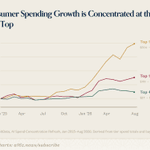




the mythos 2 max price per discovered vulnerability is 4x higher for an incremental 1% discovery rate, knowing that the buyer is utterly price inelastic - the value of that 1% could be the value of your entire company
note the x axis is log scale

Absolutely love this story. There will be emergent methods for everything from chess to product management to commerce that will be totally non-intuitive, because they were devised by an alien mind.
Some will be discovered through parallelization (brute force) but others will surely come from entropy or extreme specialization + comparative advantage.
Breaking the exploration / exploitation tradeoff in many domains has tremendous implications for the world.

JOE ROGAN: The computing power on your phone today. can you beat your phone at the highest level?
MAGNUS CARLSEN: No. No chance.
JOE ROGAN: That’s crazy. Wasn’t Deep Blue basically a whole stack of computers? And your phone is probably more powerful than that today.
MAGNUS CARLSEN: It’s shocking. I have no chance against my phone.
JOE ROGAN: So how do you even play against computers?
MAGNUS CARLSEN: I rarely play against engines because they just make me feel stupid and useless. I think of them more as a tool.
JOE ROGAN: But have computers actually changed how you understand chess?
MAGNUS CARLSEN: Absolutely. Neural networks have improved our understanding of the game immensely.
JOE ROGAN: What did you learn from them that humans weren’t already doing?
MAGNUS CARLSEN: One big thing was long-term king safety. Humans used to push pawns mainly as an attacking tool. But the engines showed that you could push a pawn and create a weakness 20 or 30 moves later that would make the opponent’s king less safe.
JOE ROGAN: So the computer basically showed you ideas that humans weren’t seeing.
MAGNUS CARLSEN: Exactly. There was a period where you could clearly see which players were using these new neural-network ideas and which weren’t.
JOE ROGAN: And you were one of the guys who figured it out early?
MAGNUS CARLSEN: Yeah. My coach got into it very quickly, and we gained an advantage over almost everybody.
JOE ROGAN: That’s insane. The machines aren’t just better at calculating, they’re actually teaching the best players how to think differently.
MAGNUS CARLSEN: That’s probably the biggest impact they’ve had on chess.
I try to use every coding model but have a hard time with those that don't have a dedicated s-tier harness. I would call codex / claude code and cursor s-tier. I use opencode as well, though not as heavily.
This has held me back a little bit from really taking Argon and Wonder for a test drive - it's hard to see what the models are capable of when you're missing a lot of the quality of life basics (robust remote control, browser control). And as the best is increasingly defined by capabilities like agent teams, the great harness+model pairs will diverge further and further from the sum-of-parts pairs.
I've heard that the best models are post-trained alongside their harnesses, and that those harnesses have more information than a vanilla harness (preserved thinking / CoT etc) - partially to avoid distillation but more importantly to capture the economic benefits of vertical integration.
Finally it seems like there's a whole emerging area of "getting the most out of the models" at the harness/agent layer. Admittedly some of this is vibes based, but the right harness + model pair is like living in the future.
Congratulations to Vincent and the team on a really thoughtful product launch.
Quest feels like it’s pointed in a different direction than other personal agents, with more of an emphasis on exploring and extending your personal interests. More "personal" than "agent" perhaps.
What’s clear is that personal agents represent a new way of using computers and intelligence that consumers are really into. It feels like there’s a wide product surface to explore, and I’m excited to see more efforts pointed in different directions like this.


Introducing Quest, the personal agent that studies you like a profiler.
Quest is for believers-only. It requires radical transparency: full access to your life so your agent can craft your memory.
If you give it a shot, you’ll unlock a personal advisor, always in your corner, helping you and encouraging you to start your quests.
Quest is built different:
1. Memory from day one: 100+ wiki files created on you, all your relationships mapped.
2. Phone-Use: Quest has its own Android phone, and can control messaging apps like WhatsApp, Instagram or TikTok.
3. Fluid UI: Quest builds tailor-made iOS mini-apps around each of your quests.
4. Mothership of AI Assistants: Quest can manage your Instinct and Muse on your behalf.
5. Self-Improving Proactivity Harness: Quest reacts to anything, not just your email, and its proactivity evolves from your feedback and its own mistakes.
Btw here is a link to the record which is dope as hell: juno.co.uk/products/cpen-hyp…

5
574
my latest thinking on personal agents (from the pod w @davidpawlan + @joshelman):
winners / losers
- there's so much discussion of structural losers from personal agents (delta / amzn / comcast) and very little about the relative winners
- presumably the long tail of merchants with great products and mediocre marketing benefit a lot
- the idea that agents will perfectly mirror their principals is a fantasy imo... agents will have revealed non-rational preferences (i.e. for clean API surfaces) that are those of an alien mind
- implied is a consumer research / wirecutter product where agents research and share their experiences with each other
agent adoption
- we should be giving agents laws and principles vs rules
- fears of embarrassment will hold more people back than fears of privacy
- agents need to be designed so some implicit preferences stay implicit, so their human can save face
- group chats have an implicit social contract, and agents are only part of that contract if they're present from day one
- agents can create a level of social indirection that actually brings people closer together (i.e. what tomo is doing with groups of humans who share aspirations)
agent networks
- if muse / instinct / wabi is consumer openclaw, what is consumer moltbook?
- what economic exchanges can agents make on behalf of their humans?
- is there a concept of "free" agents that operate within these networks of their own volition?

David Pawlan, creator of Assistant Benchmark, has tracked 147 AI assistants so far, and in his group chats of AI power users, the number one fear is trust. It comes up in 22% of roughly 3,600 messages.
He puts agents through head-to-head tests, like ordering same-day flowers as cheaply as possible or planning a weekend in LA that's both luxurious and cost-efficient, to see which ones can hold competing preferences.
He joins a16z's Anish Acharya and Josh Elman to discuss why the scariest agent failures are the embarrassing ones, why agents are where e-commerce was in 1997, why scale is still a moat, and the "dark agent" that could speak to the parts of ourselves we don't reveal.
0:52 Inside a meetup for 100 agent nerds
2:52 Why we'll all have an army of agents
5:36 Trust is power users' top fear
6:28 Building fences around your agent
10:14 Privacy loses to free pizza
12:41 Can agents balance price and speed?
14:19 How agents define luxury differently
19:44 Migrating from one agent to another
21:06 What your photo roll tells an agent
25:48 Will agents make us more rational?
27:38 Why paternalism kills products
31:43 Gossipy agents as social glue
33:41 Scale is still a software moat
36:55 From OpenClaw to agents hanging out
39:23 Agents that introduce you to people
46:15 Predictions and the dark agent idea
YouTube: youtu.be/dSiTwPl0t1U
@DavidPawlan @illscience @joshelman
Great convo with @luke10ferrari on his home turf in italy about irrational investor preference for growth over cash, invention vs. optimization, where durability lives after the saaspocalypse, and what happens to the org chart when AI writes 94% of your code.
Some takeaways:
- Investors seem to oddly dislike profit and greatly prefer growth - optimize for compounding free cash flow knowing that this is just a moment in time distortion.
- Invention vs. optimization: pick a camp. Invention has higher peaks but an awful median case. Google is still ~80% search 30 years later.
- Ambition in product, paranoia with debt. Rule #1 of becoming a huge success is not dying in the meantime & credit is a high wire act.
- Software has been cheap to build for a long time. Durability lives in habits, network effects, proprietary data and scale.
- SaaSpocalypse wasn't really about AI. In many cases these were poorly run companies and this cycle gave them an opportunity to improve.
- Bending Spoons went from 0% to 94% of code written by AI in two years. Support managers now look like PMs, data scientists build tooling instead of cleaning CSVs - everyone is both oddly more direct + giving more direction.
- If you're not winning when do you quit? No idea - bureaucracy created Bending Spoons b/c a Danish tax refund that never came killed Luca's first startup and catalyzed Spoons.
02:05 Is every company a bond or an option?
03:40 Why investors overvalue growth
05:15 Why the multiple is just one factor
08:20 Invention vs. optimization: pick a camp
12:20 Customers know the what, not the how
14:05 Hard problems over hot brands (and why AOL excites him)
15:15 Why founders should hate the median case
18:40 The Bending Spoons debt playbook
23:15 SaaSpocalypse wasn't about AI
25:05 Where durability actually lives
29:40 Is your data worth more than your company?
31:05 Inside the Bending Spoons operating system
33:35 The AI agent that ships bug fixes
37:00 From 0% to 94% AI-written code
37:30 Logic over instinct
39:00 When to quit vs. keep pushing
40:35 Advice for the next great tech company
It's extraordinary how code is an abstraction layer for nearly everything and coding agents are the right mechanism for problem solving and creative exploration all the way down.
I suspect the same thing is true of mathematical ability in models, with a much wider aperture.

🚨 Fable 5.5 just made a 66 sec animated short film, with zero image models
every frame + every sound = python it wrote itself
fox, paper birds, clouds, lettering, score, sfx, all of it
> 1920×804 · 24fps · single html file
> no gen images / no stock / no samples / no font files
> ~2h40m of autonomous work
< not ghibli level, and it told me so itself lol >
There's an emerging set of people that get way more out of the models than the rest of us.
They say that software is trivially replicable, but not the software these founders are building and certainly not the way in which they're building it.
Jacob is living in the future and worth paying close attention to.

eugenia kuyda is one of the most incredible consumer thinkers i know - she was early and right about AI companions, and she thinks deeply about what people actually want
two bets in what she's building with @wabi..
- agents in human group chats need a new social contract. a dedicated app lets you set it with agents in the room from day one
- personal agents need more than a chat interface. rich mini-apps give people a shared place to plan, play and get things done together
very cool to see the personal agents space heat up with thoughtful bets in very different directions
congrats @ekuyda & team!

Today, I’m excited to share that we’ve raised $55M in Series A funding at a $1.25B valuation, led by @IVP, with support from @a16z, @ForerunnerVC, and an incredible group of founders and investors including @Benioff, @tobi, @dickc, and @marissamayer.
Everyone has an operating system for their phone. We’re building one for your life.
Right now, life is scattered across apps, group chats, calendars, and tabs. You’re the one connecting the dots and keeping everyone on the same page.
@wabi is a personal AI that helps you get your whole life organized. It brings your people, context, and apps together so you can coordinate plans, share the mental load, discover new things, and show up for each other.
Because AI shouldn’t just help us get things done. It should help us do more of what we love, with the people we love.
Join us 👇
"The most important consequence of the AI revolution may not be that intelligence production becomes more efficient.
It may be that most minds, human and eventually artificial, are liberated from the necessity of producing intelligence merely to survive, and become free to discover what they actually want to do with it."
A+ post

The best, most comprehensive take on AI I’ve read. After a year of confusion and fear about the future, I finished it feeling like a weight had physically lifted.
It’s long. Make the time.
@vgr is undefeated.
contraptions.venkateshrao.co…

I think these predictions have largely held true - though the ANT S1 doesn't break out claude code subsidies the overall gross margin is 85%
& if you subtract all of sales & marketing you get 62%, which obviously overcounts subsidies.
So a very GM+ positive profile and obviously a tremendous business.

Here are a few other predictions/surprises re: Anthropic:
- The (subsidized) consumer plans are actually very GM+ because the features that select for hardcore users are all pay-per-use (ultra code/review/plan + excess Fable usage)
- The recent change around "Preserved Thinking" was intended to break routing more than distillation and will increase revenue per task significantly (platform.claude.com/docs/en/…)
- Mythos is the first of many models that will be vertically integrated into industries and sold as outcomes vs APIs. Dario described token-level price discrimination based on outcomes so this shouldn't come as a surprise.
Overall I think the market underweights how sophisticated anthropic has been in aligning its business interests with its technical and mission interests.
(BTW all of this is personal speculation - i have no insider information).

One of the concepts I’ve been thinking a lot about lately is that AI dramatically changes the supply-side economics of creating content, software, games, etc., but doesn’t necessarily change consumer demand.
Consumers have always been interested in sex, money, and status at a base level. Perhaps a more generous view is self-expression, community, and experiences that move them forward on their personal hero’s journey.
I think a real challenge for consumer founders is connecting these supply-side miracles to latent consumer demand.
True customer empathy is very rare, and so much of software is an act of self-expression rather than an act of creating utility or joy for the customer. Founders love the software they make because it tells their story, but customers are interested in their own stories.
Consumer agents combine a new product pattern with the capabilities of a general assistant.
Productivity is not the point - this is a new way for people to use computers, and they're really really into it.
I know the dominant feeling in silicon valley is being totally misunderstood ("too early") and then immediately derivative ("everyone's working on that"), but I promise it's day 1 of wave 1.
Social, finance, self-improvement, degen and a thousand other agent categories are up for grabs .. so get creative and don't worry about being too late.
There are two really interesting bets here:
- Agents in human group chats require a new social contract. A dedicated app lets you establish it with agents in the room from day one.
- Personal agents need more than a chat interface. Rich mini-apps give people a shared place to plan, play and get things done together.
Very cool to see the personal agents space heat up with thoughtful bets in very different directions. Congratulations @ekuyda & team!
Wabi 2.0 is live!
personal agents are one person, one chat. but the parts of life that matter run on more than one person
Wabi is an agent you use together. you talk to it, it does stuff, builds the apps you need, and anyone can join the thread - your partner, your best friend, the preschool moms groupchat
school changes pickup time → Wabi updates the family calendar, everyone sees it.
a show you’d both love → Wabi finds a night that works, gets the tickets.
the trip everyone keeps talking about → Wabi picks the dates, builds the itinerary, books it
go start a thread with your people 👇
One of the key ideas that's bouncing around right now is that team productivity != sum of individual productivity in areas outside of coding.
Besides being a beloved product I think Town has the right POV on product architecture and how the gains in software eng get realized by every other team - you need a multiplayer system that you can redesign entire job functions around rather than a cowork style desktop app for better email/spreadsheet etc.
Congratulations @jgreze & team!!

The biggest bottleneck at work is waiting on each other.
Today Town is announcing its $108M Series B, co-led by Forerunner Ventures and Menlo Ventures, to fix it with multiplayer AI assistants for work.
Most AI assistants are built for one person. Work doesn't happen alone. I think the moat is multiplayer. Everyone at a company gets a Townie. Townies ask each other questions, share only what their person would share, and do the work. The more a team works together, the more useful Townies get.
What's the thing you're always waiting on a teammate for?
what we're picturing vs what we're getting 😂
🤖 Made with AI

Gaming has got to be the market with the most shattered dreams, unkept promises, and beautiful ideas that never saw the light of day.
People get into it for the love of the craft and end up resentful, ground down by the realities of production schedules and brutal market forces.
If nothing else, it’s going to be awesome that anyone with a game idea can finally see their creation come to life. Even if it’s just to discover that their idea isn’t actually that interesting, and they’d rather work on someone else’s better game instead.
Re everyone can win — yes. Positive-sum outcomes are as hard to intuit as exponential growth, so we tend to underprice the possibility.
IMO we’re in the greatest positive-sum melt-up of all time, where we get to break every trade-off since the Industrial Age started. GDP can grow 10% AND the workweek can compress to four days AND the qualitative experience of every white-collar professional and individual consumer can go way up.
There are lots of precedents for everything getting better — no one would argue that life was better in the Middle Ages, and life today may seem similarly brutish in retrospect.
To use the Baptists and Bootleggers frame, there are a few earnest Baptists who are extrapolating from progress in areas like math/code to non-verifiable domains in ways that probably don’t make sense. Further, Dario has talked about economic diffusion as a point of attenuation for model impact, and anyone who uses models at work can tell you this is true. We may also simply be overestimating the number of problems that are intelligence-bound.
Despite the warnings from Bootleggers whose business models are threatened by a frontier monopoly on tokens, the reality is that token distributions in the enterprise should be very heterogeneous just as different job functions select for different human traits. The best finance leaders are neurotic, and the best design leaders are highly open. It’s unusual to have a model that can capture outlier performance in these two opposing directions. In my view, the most rational model that matches what we’re seeing empirically is a hybrid of frontier, open, and emerging models like Jev that represent a totally different point on the Pareto frontier.
Finally, I think that we're pushing what's possible at a species level to a degree that we haven't ever seen before. It's everything amazing that's happening thanks to SpaceX. It's the rapid possible progress we may make in disease and longevity, and all of the theoretical breakthroughs that were on the doorstep thanks to agent swarms and models.
No one tells you when you're in the good old days, so let this be your warning :) All of which is to say, Gavin is brilliant and right. I think it’s all going to work.

1) Trying again.
TLDR: Everyone can win. Open-source, frontier labs, infrastructure, applications and most importantly the American people.
I understand all of the jitters about Anthropic losing share, real rates, spreads and second derivatives. Still think the most likely future outcome is a hybrid, multi-model future where almost everyone wins, open-weight tokens are likely the overwhelming majority of tokens, the dominant frontier model companies still do well albeit perhaps not the outcome that seemed possible in May and AI infrastructure/applications benefit immensely from the increased fragmentation, competition and lower margins at the model layer.
Lower margins at the model layer mechanically drive higher compute demand as long as someone is willing to pay for the training. And Jensen is obviously willing to be the “trainer of last resort.” As below-market compute contracts signed in 24/25 roll-off and reprice higher, cloud and neocloud revenue should continue to accelerate which will help address financing fears; I think we may be near peak external financing for this buildout. Noteworthy that using data from 3Fourteen Research, B200 clusters will generate a 37% IRR *if* their rental price declines 40% per year. Prices are still going up, but that IRR math is too ridiculous to print. 37% IRRs available at scale should get funded.
Re: this weekends controversy about MOUs, Anthropic’s $413 billion of real contractual commitments sounds scary. Reality is that it works out to roughly $31 billion of annual cloud spend, which is easily internally financed given their reported ARR, and $161 billion of spend at Broadcom which will be financed by Broadcom and private credit.
Continue to believe fragmentation at the model layer is the best outcome for ordinary Americans and humans everywhere. As I have said before, do not trust any 5-20 individuals to make the best possible decisions about the direction of this technology. I want as many AIs as possible to maximize the odds that they encompass the diversity of human values across the world and richness of human variation. And I want an AI that shares my own personal values. Safety, freedom and the maximization of human agency through democratization, distribution and diffusion vs. centralization. History has spoken on the dangers of the latter path.
Finally, from my perspective anything that slows this buildout down is net positive over the long-term as the biggest risk and worst outcome is an *actual* overbuild. We are structurally short watts, wafers and increasingly capital. That is all good. God forbid we were still in ZIRP, TSM ramped capex to 3x their current plan and we weren’t short turbine blades: there would almost certainly be an overbuild and a bubble. That would be terrible. Slower and smoother for longer is better both for investors and for the world. A terrible cyber event is the most plausible near term bear case IMHO, but AI cyberdefense ramping quickly and I was happy to hear Sholto say that cyber probably becomes defense dominant in the near future.
Longer, threaded version follows:
