

Entrepreneur; CEO of Carroll & Co. Consulting, MAPLE|silk Canada, Great Plains MDF, etc.; proud dad. Tweets are mine and often satirical.
Ottawa, Vancouver, Calgary
Joined February 2009
- Tweets142K
- Following2.5K
- Followers5.9K
- Likes277K



🇨🇦 Jamie Carroll 🇨🇦 retweeted

The Pentagon has backed an Army sentinel who demanded silence and respect at the Tomb of the Unknown Soldier
“While commemorating this solemn day, a soldier correctly and respectfully reminded everyone to maintain decorum,” the statement said stripes.com/theaters/asia_pa…

🇨🇦 Jamie Carroll 🇨🇦 retweeted

Amanda has guided liberals through key moments, & she knows this is our time for change.
Amanda Alvaro is Team @NavdeepSBains.
Voting is open. Rank Nav #1: navdeepbains.ca/how-to-vote/

🇨🇦 Jamie Carroll 🇨🇦 retweeted

In Case You Didn't Know.
While on post, a Sentinel from the U.S. Army's 3rd U.S. Infantry Regiment (The Old Guard) exercises absolute post authority over the plaza at the Tomb of the Unknown Soldier, meaning their orders must be obeyed by all personnel regardless of civilian status or military rank.
Humble yourself. Not to the Guard, but to the locale. The meaning. The tomb. OUR Warriors who lay resting.
It is a solemn place. A place of respect. A place to focus. A place to assess.
No Rank Insignia on the mat: Sentinels wear blank uniforms without rank insignia while walking the mat. This intentional choice symbolizes that they do not outrank the unknown service members resting below, and it clarifies that their authority derives directly from the sacred nature of the post rather than personal rank.

🇨🇦 Jamie Carroll 🇨🇦 retweeted

MAJOR BREAKING: 5 people have just been shot in D.C.'s Logan Circle
The suspect is barricaded.
I thought Trump said that he’s eradicated all the crime in Washington DC?
Hoping for the best.
🇨🇦 Jamie Carroll 🇨🇦 retweeted


BREAKING: Nvidia CEO Jensen Huang has resigned effective immediately, the company's board of directors announced. cbsn.ws/48kx1zA

🇨🇦 Jamie Carroll 🇨🇦 retweeted

Nvidia CEO Jensen Huang ousted as CEO, company says CFO to lead on interim basis cbc.ca/news/business/nvidia-…
Find out more at nationalnewswatch.com

🇨🇦 Jamie Carroll 🇨🇦 retweeted
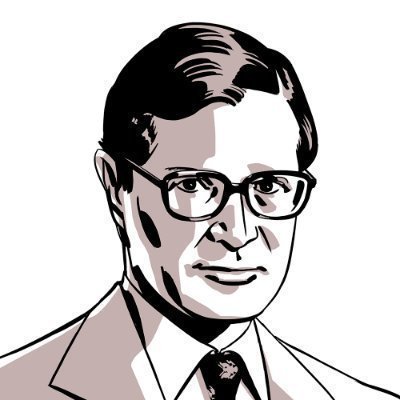
Thank you for taking the time to write this. I have two disagreements.
First, you write this in your article:
"Most garments are designed around a set of assumptions: upright posture, visible shoulder line, some degree of muscle tone, and the ability to move through space without fabric collapsing, pulling, or distorting. Jackets sit cleaner when shoulders are held back. Trousers drape better when there's strength through the hips and legs. Knitwear behaves differently on a body that carries tension versus one that doesn't."
I don't understand this. How a garment hangs is a result of three factors: the pattern, the garment's construction, and the wearer's body. A garment can collapse, pull, or otherwise look messy if the pattern and construction don't match the body.
In slides one and two, I've attached some videos of Canadian Prime Minister Mark Carney. The first video shows that he has a hunched posture and rounded back. The second video shows how he looks in his suits. I think his clothes fit in very cleanly. I can tell you that these are bespoke garments (likely made in France, although I'm not 100% certain). This means that the pattern was drafted from scratch for him. The garments were then perfected through a series of three fittings until the tailor got everything right.
In slide three, I've attached the opening scene to a James Bond film. Daniel Craig is wearing a Tom Ford suit in this scene, which means the garment is built from an adjusted block pattern. The block doesn't fit him, which is why it pulls at the waist and the collar hovers off his neck.
How is it that Mark Carney, an older male politician with a hunched figure, has better-fitting clothes than an athletic movie star? The answer is simply in how the pattern was drafted. To accommodate his rounded back, the tailors had to create a longer back balance (more material across the back). The neck point also had to be adjusted.
In slide four, I've attached a photo to show how a garment can be made to fit a hunched or an erect posture.
Whether a garment "behaves" well on your body is a matter of the garment's design, not your body. I'm reminded of a story I heard from New York bespoke tailor Len Logsdail, who has made clothes for several prominent figures, including Denzel Washington.
When he was a younger tailor, Len was fitting a client in a basted jacket. As he was struggling to get the jacket to fit right, he absent-mindedly said during the fitting: "You know, sir, you have a very difficult figure to fit."
The client turned to him and said, "God's work is perfect. Yours is not."
This, to me, is the essence of the issue. The fashion industry fails to make clothes that fit people, and then people blame themselves. The reality is that much of the fashion industry runs on aspiration and fantasy, so people often buy clothes based on people they wish to become or lifestyles they wish to have. The disconnect is what causes the issues you mention here.
For menswear, this was less of an issue before 1849, the year Brooks Brothers invented the first ready-made suit. Before that, most men had their clothes made at home or by a tailor, if they could afford one. Ready-made clothing was mostly limited to crude workwear, such as what was worn by miners, sailors, and people who were enslaved. Getting a garment to fit "right" was not really an issue, assuming your tailor was skilled, since the pattern was drafted from scratch based on your posture and measurements. IMO, your view is situated within the system of ready-to-wear production, which is a relatively new invention.
Unfortunately, Twitter limits the number of images I can attach to a reply. But if I could attach more, I would add some images from designers like Yohji Yamamoto or Comme des Garçons (if you're interested, you can look up their collections if you're not already familiar with them).
I would add these to illustrate my second disagreement. IMO, our notions of fit and silhouette are culturally contextual. In the images below, I'm working within the framework of classic men's tailoring. These principles are not universal — they don't derive from laws like those in physics or chemistry. Instead, they derive from a system when tailors made clothes for the ruling class, mostly those residing in Britain, Italy, and the United States.
In your essay, you jump between recognizing the subjectiveness of fashion and asserting a supposed objectiveness. But the tailoring principles below only seem "universal" because they derive from hegemonic culture. As Pierre Bourdieu pointed out in his book Distinction, our notions of "good taste" are often nothing more than the preferences and habits of the ruling class.
If we understand the suit as a garment with the jacket and pants made from the same cloth, you can see many suits in Yohji Yamamoto and Comme des Garçons's collections. Yet, their fits and silhouettes look nothing like what you see below because they don't aspire to imitate the looks of British, Italian, and American elites. They are creating a totally new language based on post-war Japanese ideas around decayed romance.
Thus, ideas about shoulder lines, trouser silhouettes, buttoning, etc., differ. And those clothes don't aim to replicate classical Western ideas of beauty (e.g., the hourglass shape for women, the upside-down triangle for men). Some of their silhouettes are concealing and, at times, even disfiguring! They don't seek to "flatter" in the Western sense.
It's true that it's harder to find clothes that fit if you have a certain body shape. This is true if you're very muscular, fat, short, tall, or whatever else. But this is the fault of the fashion industry, not consumers.
Sometimes professional athletes reach out to me and ask if I can help them find clothes. They are often the hardest to fit because they have unusual body shapes (as a result of their profession). This requires clothes to be made from scratch, as they can't fit into ready-to-wear or even made-to-measure.
IMO, we always start with a body — fat, slim, athletic, short, tall or whatever. The question is then how to clothe that body in a way that's emotionally and physically comfortable for the wearer. Also what clothes allow them to feel like "them." This is about helping them express what they want to express. Different people will require different solutions for this problem. But all of these bodies can look stylish because style derives from culture, not what the fashion industry provides us.

🇨🇦 Jamie Carroll 🇨🇦 retweeted

BREAKING: Four people have been shot in a trendy Washington, D.C., neighborhood within walking distance from the White House, police say. apnews.com/article/dc-shooti…

🇨🇦 Jamie Carroll 🇨🇦 retweeted
Amanda connaît les défis auxquels nous faisons face et l’urgence d’agir.
Amanda Alvaro est avec @NavdeepSBains.
Le vote est ouvert. Placez Nav au premier rang (#1) : navdeepbains.ca/how-to-vote/

🇨🇦 Jamie Carroll 🇨🇦 retweeted
Joly didn't meet with Roshel before deal signed with Stellantis: minister's office nationalnewswatch.com/2026/1…

Sadly unsurprising.

NDP Leader Avi Lewis receives RCMP protection, @markramzyy reports thestar.com/politics/federal…
Find out more at nationalnewswatch.com

🇨🇦 Jamie Carroll 🇨🇦 retweeted

Glad this man is doing well. But this is a big, big problem and it has real costs for people who are fighting for their lives.

Cancer patient pushing for further action to reduce critical lab results wait times, technologist shortage in Ontario ctvnews.ca/toronto/article/c…


🇨🇦 Jamie Carroll 🇨🇦 retweeted

The Nvidia board is reportedly planning to oust CEO Jensen Huang amid reports he engaged in two extramarital affairs, including one with a Chinese businesswoman and alleged spy and another with an executive at his tech company. abcnews.link/M8AfUPr

🇨🇦 Jamie Carroll 🇨🇦 retweeted

Huge crowds surging through the streets of London, waving Union Jacks and cheering. An incredible film of the Armistice celebrations on 11th November 1918.


