

Co-chair of Arnold Ventures. Reality is more nuanced than the headline.
Houston
Joined October 2013
- Tweets10.8K
- Following489
- Followers14K
- Likes24.3K

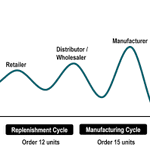
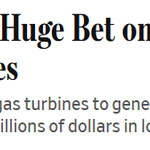



I read how Softbank lost $3.7 billion cancelling a gas turbine order and thought this is setting up as a textbook case study of the bullwhip effect that decimated the telecom and fiber optics in 2001. The caveat is that suppliers may have negotiated better contracts this time.
1/

From AI: "The bullwhip effect is a supply-chain phenomenon in which relatively small changes in end-customer demand cause increasingly large fluctuations in orders, inventory, and production further up the supply chain, often resulting in overinvestment, excess inventory, and sharp subsequent contractions."
2/

Voters sent a clear message last week that they are deeply concerned about affordability. The rising costs of healthcare, housing & energy are putting real pressure on families.
But affordability can't just be a campaign slogan; it must be a governing philosophy. There are two main ways to address high costs: subsidies and supply side reforms.
Subsidies have their place, but also serious problems, particularly in an environment of limited fiscal capacity with $2 tln annual deficits and the 10-year at 5%. More importantly, subsidies often treat the symptoms of high costs rather than their causes.
Supply side reforms address the underlying problem. They expand capacity and competition, reduce costs for all Americans and do so without adding to the national debt.
The Bipartisan American Affordability and Jobs Act is among the most important energy affordability bills this century. It helps the energy system deliver on multiple priorities by lowering costs, improving reliability, reducing emissions, creating jobs, strengthening energy independence, and supporting economic growth.
These goals transcend party lines. That's why two Democrats and two Republicans, representing very different states, ideologies and priorities, were able to negotiate a comprehensive bill that provides greater certainty for projects and streamlines environmental reviews while preserving the right to raise and adjudicate legitimate objections. It's also why the bill received 73 votes in the Senate yesterday, the first of several votes needed to make it law.
This bill is not perfect. No bill is. It includes some Republican priorities and some Democratic priorities. But mostly it includes American priorities that aren't partisan, like ensuring data centers pay 100% or more of their costs, establishing clear rules for responsible development, limiting executive authority to favor one energy source over another, and making better use of the infrastructure we've already built.
Politicians spent months telling voters they understood their concerns about affordability. Now they have a chance to prove it.
Dept of Unintended Consequences:
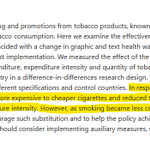
"Plain packaging—where you strip cigarette boxes of their attractive branding—seems like a no brainer, but in Australia, it looks like the policy caused smokers to switch to cheaper brands and to smoke more."
via @a_m_mastroianni

Fantastic post about why many well-intentioned government policies and philanthropic interventions fail to produce their intended results because we vastly overestimate our understanding of human behavior and our ability to change it.
experimental-history.com/p/w…

1
15
3,982
This is the common AI experience I hear from non-tech, small biz CEOs. They're paying for AI for many/all of their white collar workers. They can describe a few tasks where AI blows them away and the benefits are substantive. When asked whether AI can do a full job rather than a specific task, they say 'it's not there yet.' They haven't laid off workers but some haven't backfilled a position in a division like finance. They're optimistic about the future value of AI to their businesses.
The big question I leave with is whether:
1) AI can already perform entire jobs, but management and employees at most companies haven't figured out how to maximize its use.
2) Today's models aren't very capable of performing entire jobs at most companies, but future models will be.
3) AI has a more fundamental limitation in that it can automate individual tasks but has limited ability to replace most jobs.
IDK about you, but had I spent 6 months campaigning on affordability and then had a vote a week after the election on whether the Senate should open debate on one of the biggest ever energy affordability bills, I'd have voted yes. But maybe that's just me.

News today:
National Urban League, the largest civil rights org, endorses BAAJA.
US Chamber of Commerce endorses.
IBEW, the most influential skilled-trades labor union, endorses.
EDF, most influential enviro group, calls for yes on procedural vote today to continue negotiations.
The Blue Dog Coalition of moderate Dems comes out with strong support of BAAJA:
“The American people made clear that they expect action on lowering costs, not more delays. Failing to act now would be an act of disrespect to those who placed their trust in us.”
via @PunchbowlNews
BAAJA shows the downside of single-issue advocacy. 350 million Americans will benefit from cheaper, cleaner, more reliable energy. Yet interest groups focus on how the bill affects their narrow issue, ignoring its broader benefits. The millions who stand to gain aren't heard.
Dems have been the more vocal opponents of gerrymandering over past 15 years, but now can benefit from it. If, and it's a big if, they're willing to give up their near-term political advantage, a rare window to pass anti-gerrymandering legislation in Congress may have opened.


Maybe both parties keep mistaking voter rejection of their opponents’ agenda for an endorsement of their own sweeping platform, when voters really just want a president who fixes the proverbial potholes.
Very smart people have been scrutinizing the language of BAAJA for weeks offering constructive edits and concerns with the bill. Kudos to the sponsoring senators for negotiating in good faith to adopt many improvements and clarifications to strengthen the bill.
BAAJA is a model for bipartisan lawmaking. It will lower costs, improve reliability, create jobs, and reduce emissions. After an election focused on affordability, it’s imperative that Congress show it can still be responsive to the needs of Americans.
Trying to shape immigration policy through energy permitting reform. The everything bagel is so back.

Evaluating BAAJA against the 6 core goals of the energy system:
Affordable - Lowers costs✅
Reliable - Dependable supply✅
Sustainable - Minimizes environmental impact✅
Scalable - Supports economic growth✅
Employment - High-quality jobs✅
Independence - Secure against shocks✅
For the sake of democracy it’s very good that the 7-, 8-, and 9-figure political donations didn’t seem to make a difference.
Dems won by focusing on affordability.
As it happens, the Senate’s first vote when it returns Tuesday will be on a bill to lower energy costs by modernizing the permitting process. It will be first test of whether affordability is a governing priority or just a campaign slogan.
Gambling companies spent $23 million backing a Nebraska ballot measure to legalize online sports betting. Opponents raised just $1 mil. Voters rejected it, 55%-45%. The federal government must stop forcing prediction market sports gambling into communities that don't want it.

Those 3 weeks in January when silver became a meme stock because, well I don't know why and neither do the people who were buying it.
