








Pinned Tweet
Just promoted our new GPT-Live outbound telephony API to GA, allowing developers to make phone calls from their Live voice agent, via any SIP trunk provider (e.g, Telnyx or Twilio). Calls can use HD Voice and can send and receive keypad events (DTMF).
developers.openai.com/api/do…

Had a great time talking about GPT-Live at VapiCon 2026. Doing my best to also deliver natural speech with frontier intelligence 😁


ChatGPT supports shortcuts to start a chat, dictation, or call to your dot, which you can map to the iPhone action button for one-touch access.

Just finished Outer Wilds. Quite an interesting game, with a soundtrack I’ll probably never forget.

6
21
2,124


Dots calling was kinda slow, but we fixed it. It's pretty fast now, thanks to WARP and Instant Connect and some heroic refactors, and we think you'll enjoy it a lot more.

Will be talking about the architecture for GPT-Live next week at VapiCon 2026!

On Day 1 of VapiCon, @juberti’s gives a talk on speech-to-speech models, “Skipping Turns: A More Responsive Architecture for Voice Agents.”
Justin, Head of Realtime AI at @OpenAI is a hands-on engineer and vision-based leader of large (150+) engineering teams. He is also an occasional mathematician, physicist, and musician.
Join Justin and other AI leaders in San Francisco this November.
📍 Fort Mason, San Francisco
📅 November 11–12, 2026
Explore the agenda and get your ticket: vapi.ai/vapicon-2026


Can I interest you in OpenAI Presence?
openai.com/business/openai-p…


The interesting question is where vertical integration stops. Telephony and session management are natural extensions, but orchestration increasingly touches business logic, external systems, application-specific policies, etc. Do you see the model provider eventually owning that layer too?
3
35
4,097

The problem is that this stuff is very complicated and excruciatingly hard to debug. Vertical integration makes for fewer seams and helps ensure better quality for developers.

So, does this mean OpenAI is going after the infrastructure layer(like LiveKit) and the orchestration layer(like pipecat).
So theoretically you can have OpenAI and the Sip trunk layer(like Ozonetel,Twilio etc) and that's all you need for the voice agent stack.
Interesting.
8
53
4,664
Updated the IETF WARP (WebRTC speedup) drafts:
- sped-01 adds explicit negotiation via the "sped" ICE option, and guidance on pacing and DTLS roles
datatracker.ietf.org/doc/dra…
- snap-01 clarifies a=sctp-init and allows INIT chunks w/ or w/o trailing padding
datatracker.ietf.org/doc/dra…
It's good to be cautious here, but these arguments are surprisingly hand-wavy:
1) intelligence doesn't imply consciousness
2) we think computational functionalism is "fatally flawed"
3) some theories require specific physical properties that LLMs lack

LLMs can mimic thought and feeling with uncanny skill, but intelligence alone is not enough for subjective experience
go.nature.com/3VSXWQ4

Nonlinear activation functions can do some amazing things!


If your Live API app typically selects from a few specific tools, you can now use the new Decisions API to speed up delegation, while retaining the ability to use a full LLM for long-tail queries.

you can now use native decision delegation in your voice app.
a week ago i wrote this voice x decision doc. today i update the guide because now it is miles better
you can trigger a decision on every input or output frame (roughly every 200ms).
you can have a realtime decision engine judging what i’m saying while i’m still saying it!!
try realtime action × realtime voice 👇
developers.openai.com/api/do…

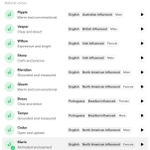
GPT-Live-1.1 offers much better multilingual support (including several new voices), more natural delegation, and improved steerability. Rolling out now to ChatGPT Voice, Desktop, and Dots.

This is very good news, we need interpretability now more than ever

interpretability might be the most important scientific problem in the world right now, as I don't think we can solve alignment if we don't know what we're building. I think I have good news about it. I co-authored early work in mechanistic interpretability at OpenAI and came away pessimistic, because neural networks appeared to fold into arbitrary tangled knots. years later, I started openai's first large-scale automated interpretability project, finding about 2% of neurons legible with the primitive tools we had
with modern agentic tools and a much closer look, the picture looks totally different. the vast majority in models up to trillions of parameters are legible, and their circuits beautiful. many famous examples of tangled neurons turned out to be misunderstood. The roadblocks I expected mostly aren't there. I now think ambitious interpretability will be solved by the time we need it most, and possibly quite soon, as automated scientists keep improving. it may be a bitter lesson for interpretability: the simple thing, at absurd scale, works
already-clean.goodfire.com/

Echo cancellation is a complicated situation. While gpt-live is quite robust to echo, AEC and AGC are very intertwined and accordingly local AEC is still useful to ensure the model receives a usable signal.
