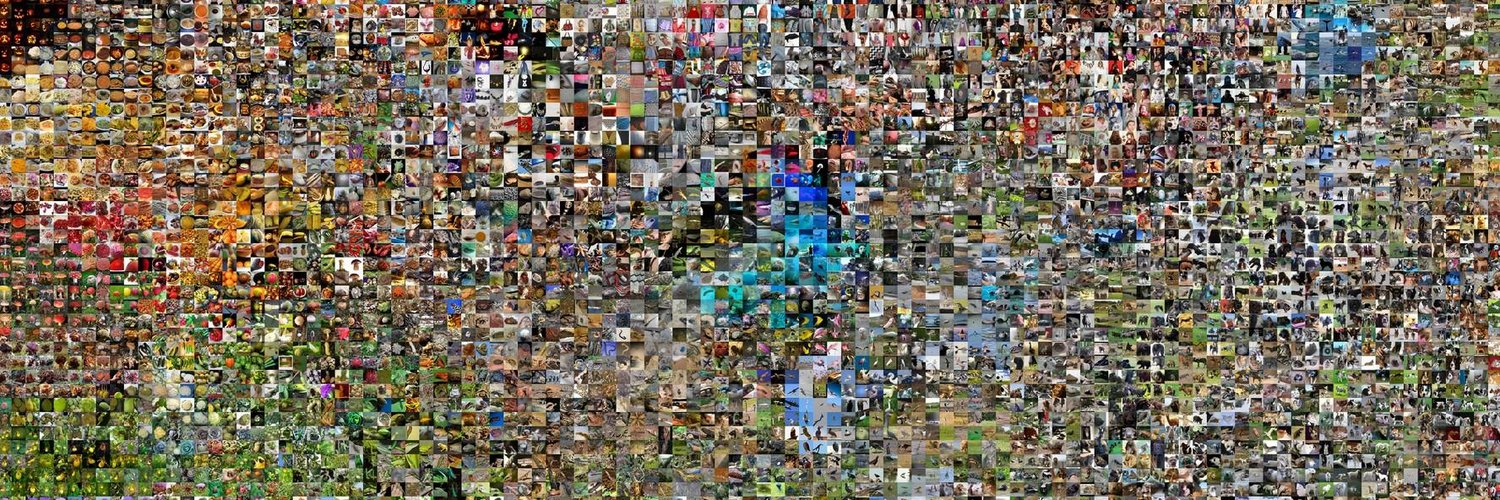

Weekend hack: HackerTube. I was annoyed with YouTube's recommendations so I had Claude filter down 43M comments over 20 years of HN to 6,454 videos that keep being recommended. *Significantly* better viewing experience, ~2 hours with Opus 5.5:
hackertube.org/
- Excellent recs without any logins (state is kept in local browser session)
- Thumbnail is a representative frame from middle of the video instead of the super duper A/B test hyper-optimized user uploads
- Underlying data from the comment analysis as one zip file, point your Claude at it and ask for your own version
- HackerTube Longs ✊
A bit more on the process:
I use Claude Code (desktop app for Mac), Opus 5.5 on Medium effort as my default. I only talk to Claude and have it do everything, the only "manual work" I helped with in tandem was in the browser (reminiscent of MenuGen): 1) I had to create some kind of API key from Google Cloud UI to query YouTube for video metadata, 2) I booted up a VPS box for serving and 3) I bought the domain name. Once the box was up I gave Claude the IP and told it update, secure, harden, deploy and optimize the code, and it did the whole thing.
Many awesome projects that would have normally taken weeks/months even can now be few-shotted for breakfast. What else are we not thinking of.

I had some amount of journalistic inbound way back as a PhD student but the only person I consistently replied to was Jack because he actually put in effort, read academic papers and asked good technical questions and I have not really seen that before (or since).

We'll be spending a lot more time trying to understand the outputs of language models. A few thoughts, tips & tricks:
Writing. Something I've had success with: Ask your LLM to explain something in ASD-STE100, it's a controlled language specification originally developed for aerospace maintenance documentation. LLMs well-versed in this language and it comes with heavy constraints on clean writing style that I often find a lot more readable. Sometimes I've tried to soften it a bit e.g. ask for "80% of the way to ASD-STE100" because the spec is quite stringent. But even better:
Diagrams / images. Instead of writing, ask your LLM to create a diagram. These can be a lot easier to process, parse, and understand. But even better:
Web pages. Ask for output "in HTML" to get a beautiful, interactive webpage. LLMs are getting really good at frontend and can create beautiful experiences, animations, etc. But even better:
Explainer videos. The output format I am most bullish on is fully custom / bespoke explainer videos generated on any arbitrary topic. Experiment with things like "Create a 3b1b style video explainer on X. Use my ElevenLabs API key for audio narration". (you'd need an API key for the latter or you can ask your LLM to find you decent free alternatives that use your local compute). This is actually starting to work!
In summary:
- As LLMs get better, they will do more and more of the legwork autonomously, and a lot more of our work will rise up the abstractions into oversight and understanding.
- Luckily, LLMs can help here too because as intelligence and code are increasingly abundant, you can ask for large, custom, discardable software artifacts (e.g. web apps, video explainers) that would have never made sense to create before. Push the boundaries here and you'll be surprised.


We're starting to leave the territory where you'd test an LLM by e.g. "create an svg of pelican on a bicycle". As one idea to generalize it, I was interested what Opus 5 would do if I gave it the first paragraph of the Lord of the Rings, a 1M token budget (~$10) and asked for three js render of it. Opus went off for ~2 hours and wrote 5500 lines of code that (procedurally) rendered the story. It's kind of janky but fun. But it's a bit mindboggling that the LLM has to place and orchestrate various polygon assets in (x,y,z) coordinates and write code that animates it all, and that it even does anything at all.
I also like this kind of examples because no one in their right mind would ever spend the time to write something this custom but LLMs have all the stamina and patience in the world, so it's an example where we go from "no one would ever do this" to "sure, why not, it's ~free". There might be a lot more. But I'm excited about creating hyper custom worlds that you can imagine dropping players into, e.g. here to participate in the LoTR story as a spectator NPC, or one of the characters, or etc. Something like an ephemeral GTA of X on demand.
Last thought is that the domain of worlds/games exposes a weakness in LLMs: they can't easily audit their work because they aren't able to efficiently and natively perceive videos or play games within them. Here, Opus 5 had to very slowly and painstakingly take screenshots at different points, and it messed up a few times and created a bunch of jank. An example of raw capability (multimodal, gameplay) that I think is still quite lacking.


Andy Weir showing some of the spreadsheets underlying the calculations in the book
youtube.com/watch?v=lYHCTEnY…
i mean, it's not quality scifi if it doesn't come with a supplementary whitepaper

(link to blast from the past)
youtu.be/xQhb3C2hQoE?si=x3qQ…

The signature is alluding to NVIDIA GTC 2015, where Jensen excitedly told an audience of, at the time, mostly gamers and scientific computing professionals that Deep Learning is The Next Big Thing, citing among other examples my PhD thesis (one of the first image captioning systems that coupled image recognition ConvNet to an autoregressive RNN language model, trained end to end). This was back when most people were still unaware and somewhat skeptical but of course - Jensen was 1000% correct, highly prescient and locked in very early.

All of these patterns as an example are just matters of “org code”. The IDE helps you build, run, manage them. You can’t fork classical orgs (eg Microsoft) but you’ll be able to fork agentic orgs.

Three days ago I left autoresearch tuning nanochat for ~2 days on depth=12 model. It found ~20 changes that improved the validation loss. I tested these changes yesterday and all of them were additive and transferred to larger (depth=24) models. Stacking up all of these changes, today I measured that the leaderboard's "Time to GPT-2" drops from 2.02 hours to 1.80 hours (~11% improvement), this will be the new leaderboard entry. So yes, these are real improvements and they make an actual difference. I am mildly surprised that my very first naive attempt already worked this well on top of what I thought was already a fairly manually well-tuned project.
This is a first for me because I am very used to doing the iterative optimization of neural network training manually. You come up with ideas, you implement them, you check if they work (better validation loss), you come up with new ideas based on that, you read some papers for inspiration, etc etc. This is the bread and butter of what I do daily for 2 decades. Seeing the agent do this entire workflow end-to-end and all by itself as it worked through approx. 700 changes autonomously is wild. It really looked at the sequence of results of experiments and used that to plan the next ones. It's not novel, ground-breaking "research" (yet), but all the adjustments are "real", I didn't find them manually previously, and they stack up and actually improved nanochat. Among the bigger things e.g.:
- It noticed an oversight that my parameterless QKnorm didn't have a scaler multiplier attached, so my attention was too diffuse. The agent found multipliers to sharpen it, pointing to future work.
- It found that the Value Embeddings really like regularization and I wasn't applying any (oops).
- It found that my banded attention was too conservative (i forgot to tune it).
- It found that AdamW betas were all messed up.
- It tuned the weight decay schedule.
- It tuned the network initialization.
This is on top of all the tuning I've already done over a good amount of time. The exact commit is here, from this "round 1" of autoresearch. I am going to kick off "round 2", and in parallel I am looking at how multiple agents can collaborate to unlock parallelism.
github.com/karpathy/nanochat…
All LLM frontier labs will do this. It's the final boss battle. It's a lot more complex at scale of course - you don't just have a single train. py file to tune. But doing it is "just engineering" and it's going to work. You spin up a swarm of agents, you have them collaborate to tune smaller models, you promote the most promising ideas to increasingly larger scales, and humans (optionally) contribute on the edges.
And more generally, *any* metric you care about that is reasonably efficient to evaluate (or that has more efficient proxy metrics such as training a smaller network) can be autoresearched by an agent swarm. It's worth thinking about whether your problem falls into this bucket too.

💯 "If you build it, they will come." :)
~Every business you go to is still so used to giving you instructions over legacy interfaces. They expect you to navigate to web pages, click buttons, they give out instructions for where to click and what to enter here or there. This suddenly feels rude - why are you telling me what to do? Please give me the thing I can copy paste to my agent.

(I still have the bigger cousin running on prod nanochat, working a bigger model and on 8XH100, which looks like this now. I'll just leave this running for a while...)

I packaged up the "autoresearch" project into a new self-contained minimal repo if people would like to play over the weekend. It's basically nanochat LLM training core stripped down to a single-GPU, one file version of ~630 lines of code, then:
- the human iterates on the prompt (.md)
- the AI agent iterates on the training code (.py)
The goal is to engineer your agents to make the fastest research progress indefinitely and without any of your own involvement. In the image, every dot is a complete LLM training run that lasts exactly 5 minutes. The agent works in an autonomous loop on a git feature branch and accumulates git commits to the training script as it finds better settings (of lower validation loss by the end) of the neural network architecture, the optimizer, all the hyperparameters, etc. You can imagine comparing the research progress of different prompts, different agents, etc.
github.com/karpathy/autorese…
Part code, part sci-fi, and a pinch of psychosis :)


nanochat now trains GPT-2 capability model in just 2 hours on a single 8XH100 node (down from ~3 hours 1 month ago). Getting a lot closer to ~interactive! A bunch of tuning and features (fp8) went in but the biggest difference was a switch of the dataset from FineWeb-edu to NVIDIA ClimbMix (nice work NVIDIA!). I had tried Olmo, FineWeb, DCLM which all led to regressions, ClimbMix worked really well out of the box (to the point that I am slightly suspicious about about goodharting, though reading the paper it seems ~ok).
In other news, after trying a few approaches for how to set things up, I now have AI Agents iterating on nanochat automatically, so I'll just leave this running for a while, go relax a bit and enjoy the feeling of post-agi :). Visualized here as an example: 110 changes made over the last ~12 hours, bringing the validation loss so far from 0.862415 down to 0.858039 for a d12 model, at no cost to wall clock time. The agent works on a feature branch, tries out ideas, merges them when they work and iterates. Amusingly, over the last ~2 weeks I almost feel like I've iterated more on the "meta-setup" where I optimize and tune the agent flows even more than the nanochat repo directly.
