

Agentic AI development from prototype to production. Kiro helps you do your best work by bringing structure to AI coding with spec-driven development.
- Tweets430
- Following1
- Followers22.8K
- Likes179


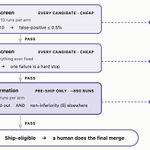


ALT Diagram of Kiro’s continuous prompt-evaluation workflow. An LLM judge reviews thousands of internal developer conversations, using explicit evidence across 15 behavior dimensions to find recurring complaints and incomplete tasks. Failures are traced to system-prompt guidance; the team defines a candidate instruction and regression risk, then deterministically assigns developers to stable cohorts: control, isolated changes, and a combined interaction check. The same rubric compares explicit dissatisfaction and behavioral-quality rates. Regressions trigger revision or removal; otherwise design and sample size determine broader follow-up or shipment. After a model upgrade, prompt changes stay fixed while known failures and successful cases are replayed through the newer model and scored for quality, dissatisfaction, regressions, and efficiency. Results shown: 32% fewer behavioral-quality issues initially and a further 4% reduction on the newer baseline.


