

Law Prof, CRC in Internet and E-commerce Law @uocommonlaw @LawBytesPod Mastodon: https://xitter.twitterapi.xyz/t.co/i2Y7ZQJ4PS | @mgeist@mas.to https://xitter.twitterapi.xyz/t.co/3QZfqszBsa https://xitter.twitterapi.xyz/t.co/F736lh0mJt
Ottawa, Canada
Joined April 2008
- Tweets27.9K
- Following856
- Followers85.3K
- Likes5.1K




Pinned Tweet
If you follow me for Canadian digital policy, copyright, and AI regulation, the deeper analysis lives on my Substack - including every Law Bytes podcast episode embedded in full.
Free to subscribe: mgeist.substack.com/
I’m scheduled to appear before the Senate committee studying Bill C-22, the lawful access bill. Before many witnesses even have a chance to raise their concerns, the government says it doesn’t anticipate making any changes.
xitter.twitterapi.xyz/ChrisGNardi/status/212…

Days after two government watchdogs recommended changes to the Liberals’ lawful access Bill C-22 in the Senate, Public Safety Minister Gary Anandasangaree said he did not anticipate any further amendments to the controversial legislation.
My latest:
nationalpost.com/news/canadi…

Word salad. Honest answer: government promised $1B in new money, ignored warnings, and got a law that generated nothing but trade friction. So they reversed the CRTC ruling, made up the $600M, and are now stuck paying far more than streamers with no policy
xitter.twitterapi.xyz/cbcwatcher/status/2120…


Carney is confirming the government is replacing the CRTC’s planned streamer contribution (the “Netflix tax” / digital giants fees) with direct taxpayer funding of $600 million for the audiovisual sector, rather than requiring the platforms pay
He again frames it as a distinction between revenues and expenditures: the priority is the size and predictability of the investment in the sector, which he calls a fundamental government commitment. The key line (the “not much there” part) is: “$600 million is a lot of money. You don’t [have] to have a tax on the digital giants. It’s not clear that there are actual revenues there. So we made the decision to use $600 million entirely from the government to support that sector.”
In other words, he is saying the expected revenue from taxing/charging the streamers is uncertain or unreliable, so Ottawa is covering it directly instead with taxpayer dollars
French answer vs. English answer
French: Carney is more direct and technical about dropping the tax on the digital giants. He stresses that there isn’t clear revenue “there,” so the government will simply fund the $600 million itself. This reads as an explanation/justification for abandoning the CRTC-style contribution model.
English portion: He pivots to the trade talks with the U.S. (post-midterms) and emphasizes progress and success on discoverability—especially French-language and Canadian cultural programming on platforms—plus other measures to protect and promote French. He says those cultural red lines (discoverability + French-language protections) were enough to block a deal in August, while other issues remain outstanding. He closes by saying the budget demonstrates the government’s priorities in supporting the French language, Quebec culture, and Canadian culture.
The contrast is that the French-side remarks lean toward “we’re not taxing the streamers because the money isn’t reliably there—we’re paying it ourselves,” while the English closing stresses “we held the line on culture/discoverability/French and succeeded on those points.”
Again saying one thing in French and something else in English @MarkJCarney
Streamers went to court to challenge the CRTC requirement to fund Canadian news. Government agreed, cancelled the decision, but then nearly doubled the funding with public money on top of hundreds of millions in tax credits and program funding for news.
xitter.twitterapi.xyz/mgeist/status/21201557…


The government made up the $600M as it scrambled to justify cancelling the CRTC's streaming decision. It then copied the CRTC's list of funds almost exactly, leaving taxpayers on the hook for far more than the streamers would have been required to pay.
michaelgeist.ca/2026/11/back…

This is what the government's back-of-the-napkin cultural policy looks like: $600M bill for taxpayers, more than doubling what streamers would have paid, windfall for cultural groups, and yet another $91.5M for broadcasters + still no CRTC policy direction
xitter.twitterapi.xyz/mgeist/status/21201557…

The government made up the $600M as it scrambled to justify cancelling the CRTC's streaming decision. It then copied the CRTC's list of funds almost exactly, leaving taxpayers on the hook for far more than the streamers would have been required to pay.
michaelgeist.ca/2026/11/back…
The government made up the $600M as it scrambled to justify cancelling the CRTC's streaming decision. It then copied the CRTC's list of funds almost exactly, leaving taxpayers on the hook for far more than the streamers would have been required to pay.
michaelgeist.ca/2026/11/back…
Strong interview from @VassyKapelos on Internet streamers and the government’s $600M handout. Minister admits the law didn’t work and chafes at question over when the new policy direction to the CRTC is coming (now months after it was first announced).
xitter.twitterapi.xyz/CTV_PowerPlay/status/2…

‘We've tried that legislation; it hasn't worked over the last three years,’ Culture Minister @MarcMillerVM talks about new approach to U.S. streamers.
Signal’s app and protocols are built to keep communications private. Bill C-22 would mandate surveillance capabilities and months of metadata retention. Signal’s Udbhav Tiwari discusses the lawful access privacy risks on this week’s Law Bytes podcast.
michaelgeist.ca/2026/11/the-…

Signal may exit Canada over Bill C-22 given the bill's metadata retention rules and the risks to encryption and user privacy. Signal’s Udbhav Tiwari joins the Law Bytes podcast to explain why the company says it cannot comply and what could come next.
michaelgeist.ca/2026/11/the-…
The broadcast lobby asked for the journalism tax credit and got it almost line by line: $85 million a year permanently for Bell, Rogers, Corus and Quebecor, more than the entire program paid out to every newspaper and digital outlet in 2024.
michaelgeist.ca/2026/11/from…

Michael Geist Weekly Digest #32: Budget 2026 and the end of the “web giants pay” strategy, the Bill C-34 House debate, lawful access at the Senate, Canada’s first digital trade agreement, and Law Bytes on Europe’s digital sovereignty push
linkedin.com/pulse/weekly-di…

The journalism tax credit now extends to Bell, Rogers, Corus and Quebecor: $501M over five years, $85M a year permanently. Nearly every major news organization now depends on federal support. Companies reliant on government are less likely to criticize it.
michaelgeist.ca/2026/11/from…
The government talked about getting Netflix, Google and Meta to fund its media policy. Instead, Budget 2026 has taxpayers footing the bill: roughly $1.5 billion for culture and news, with millions for Bell, Rogers, and other media giants.
michaelgeist.ca/2026/11/from…
Liberal MP Karina Gould, speaking in support of Bill C-34: “Personally, I have some concerns about age verification technology.” The bill requires it for millions of Canadians, with no verification method, standards, privacy review, or breach remedy.
xitter.twitterapi.xyz/mgeist/status/21183438…

Has the government read its own bill? Liberal MPs spent three days describing Bill C-34’s under-16 social media ban as an “earned exemption model.” The bill has no exemption criteria, no timeline, and no regulator to grant one. Hearings start Nov 16th.
michaelgeist.ca/2026/11/has-…

What Liberal MPs said about Bill C-34 and what the bill does: an “exemption model” with no criteria or regulator, 50 decisions left to regulation, no platform thresholds, a Charter statement that contradicts MPs, and age verification with no standards.
xitter.twitterapi.xyz/mgeist/status/21183438…

Has the government read its own bill? Liberal MPs spent three days describing Bill C-34’s under-16 social media ban as an “earned exemption model.” The bill has no exemption criteria, no timeline, and no regulator to grant one. Hearings start Nov 16th.
michaelgeist.ca/2026/11/has-…
Has the government read its own bill? Liberal MPs spent three days describing Bill C-34’s under-16 social media ban as an “earned exemption model.” The bill has no exemption criteria, no timeline, and no regulator to grant one. Hearings start Nov 16th.
michaelgeist.ca/2026/11/has-…
Standing Committee on Canadian Heritage agrees to at least 16 hours of study of Bill C-34, with hearings on the social media ban and online harms starting the week of November 16th.
ourcommons.ca/committees/en/…

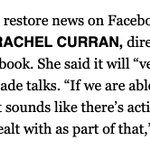
.@politicoottawa reports this morning that Meta hopes to restore new links on its platforms in Canada by year-end as it expects the Online News Act issues to be addressed in Canada-U.S. trade talks.

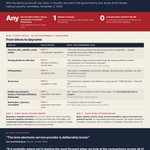
Senators told this week that Bill C-22 covers any service that creates, transmits, stores or processes digital information. Minister @gary_srp called it deliberately broad and officials said it extended beyond any comparable country. Surveillance by design
xitter.twitterapi.xyz/mgeist/status/21179833…

C-22 was sold as lawful access for telecom and ISPs. At the Senate this week, government officials said its service provider definition is broader than any comparable country they examined, including gaming platforms with chat functions and AI services.
michaelgeist.ca/2026/11/surv…
