




This is not an ad for @Meta. Facebook didn’t pay me to share this. But I’m sharing it anyway, because I think it matters. If you agree, pass it on.
Big thanks to everyone who came out to say hello at the local Costco last week, down in Orange County. Hundreds of people stopped by for a selfie and signed bottle of my grandfather's whiskey, and while most of them were long time fans of Dirty Jobs, the majority had questions about my mother, her latest book, and how it feels to be the son of a famous writer.
I loved every minute. More on Mom's latest book later. (It's out in two weeks. For now, if you're around Van Nuys tomorrow, I'll be there for more at the local Costco. I'm afraid Mom can't make it, but I'm happy to absorb your affection for her and pass it on.
“You Gotta Eat the Rat!”
A quick prediction regarding the midterms: When the results are in, a lot of people are going to be very, very disappointed.
Aside from that, I got nothin’.
Except this. I suspect that disappointment will leave a lot of Americans even less enamored with both parties, and more open to candidates who don’t belong to either one.
According to Gallup’s figures for 2025, 27% of American adults identified as Democrats. Another 27% identified as Republicans. Independents? Forty-five percent.
That’s a lot of people without a team jersey.
Obviously, calling yourself an independent doesn’t mean you agree with everyone else who does. But with numbers like those, why are so few independent candidates elected? And why should someone who wins as an independent have to pick a side once they get to Washington?
How did “We the People” become “We the Party?”
I put those questions to @JoeManchinWV, who answered with remarkable candor—and explained what he and his daughter, Heather, are doing about it.
They’ve launched the Independent Leadership Council to help independent candidates get the money, support, and visibility they need to compete. The goal is to elect a handful who will remain independent once they arrive. In a closely divided Congress, a handful could matter quite a bit.
I knew I was going to enjoy this conversation. I didn’t realize how much. On the eve of another national election, it seems like a useful time to hear from a guy who knows what happens when you tell your own party “no.”
The whole conversation is here, and worth your time:
bit.ly/TWIHI509JoeManchin
The attached clip explains the rat. (You'll want some context for that.)
Bon appetite!
I wrote this 13 years ago today. Still holds up, I think. And this is still my best Halloween costume ever. I've updated the parts that need updating in caps. And according to AI, Toby Sells is still out there, doing what he does so well....
Is There a Zombie in Your House?
Psychologically, the journey from TV host to brain-dead zombie is a fairly short one. Physically, though, the transformation requires time, skill and a lot of hard work. I learned this firsthand from Toby Sells, a talented special-effects artist who turned me into a soulless corpse for an episode of Dirty Jobs back in 2007.
Toby plies his trade in a creepy little studio outside Atlanta. He studied his craft for years as an apprentice, practiced under the supervision of a seasoned professional, and worked his butt off getting very good at what he does. Then the world came to an end over on AMC, the zombie business blew up big time, and Toby got busy breathing new life into the walking dead. Today, he’s still carving out his own pound of flesh from an industry that thousands are dying to get into.
Unfortunately, while millions of legitimate zombies are alive and well, the work ethic and apprentice model that put Toby Sells in business is now on a kind of death watch. And this Halloween, you’ll see the results, as a whole new breed of trick-or-treaters knock on some very familiar doors.
But these "walkers" are looking for more than candy. They want dinner. And breakfast. And brunch. And car payments. And if you don’t answer the door, they won’t leave a bag of burning dog crap on your porch, or wrap your shrubs in toilet paper. They’ll just let themselves in with the spare key, raid your fridge, crash on your couch, and play Call of Duty and Halo until someone turns off the electricity. These are zombies of our own making. And they are very, very scary.
The facts are pretty simple, even if the numbers are big. A trillion dollars in student loans. [NOW 1.8 TRILLION] Three million available jobs that don’t require a four-year degree. [NOW OVER 5 MILLION] And tens of thousands of unemployed college graduates moving back home, perfectly educated for jobs that no longer exist, and completely untrained for those that do. It's a nightmare.
But really, how surprised should we be? We've gutted the technical trades from our high schools and consistently portrayed vocational education as something ..."alternative.” And yet, we still push a four-year degree like it’s the best path for the most people. The result? A one-size-fits-all approach to education that all but guarantees the dysfunctional relationship with hard work and skilled labor we have today.
mikeroweWORKS is an attempt to turn that around. At its base, it's a PR campaign for alternative education. By the end of this year, we’ll award around $4 million in Work-Ethic scholarships [NOW OVER $20 MILLION] to a small number of extraordinary trade schools, beginning with Tulsa Welding School and Midwest Technical Institute. These scholarships are designed to reward two things: the willingness to work hard and the desire to learn a useful trade.
In the near future, you may expect to see me interrupt your favorite TV programs (maybe even your favorite zombie drama) with short messages in support of this program. Here’s an example:
ispot.tv/.../mike-rowe-works…...
Thanks in advance for not fast-forwarding through them, but if you must, you can support our efforts in a variety of other non-traditional ways at mikeroweWORKS.org.
Ultimately, closing the skills gap will only happen when the entire country starts to think differently about the definition of a “good job.” This will come down to parents, teachers, pundits, Scoutmasters, clergy ... anyone in a position to influence a kid who’s trying to figure out what he's good at, or what to do with the rest of her life. We need to change some fundamental stigmas and biases toward hard work and skilled labor, and that won’t be pretty.
But hey - if the zombie trade is booming, maybe there’s hope for those industries that make civilized life possible for the living?
And maybe, with a little luck, we can keep the Walking Dead where they belong - on TV, and out of our refrigerators.
Happy Halloween!

I've been unforgivably derelict in my solemn duty to keep you all up to speed as to the extraordinary run of guests I've been honored to interview here of late. So many great minds, from so many different disciplines. The latest is a former floor hand and roughneck who paid his dues, and then some, on the oil rigs in West Texas, not so long ago.
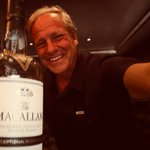
Toby Rice (@Shalennial) knows the oil and gas industry better than most, and worked his way up in the most literal way possible. Today, he's the CEO of EQT, one of the largest producers of natural gas in America. His personal story is fascinating and inspirational, but his take on energy independence is the reason I wanted to talk to him, and share his common sense with all of you. We caught up in Wyoming not too long ago, and had a hell of a chat. My only regret in this conversation is that I forgot to thank him for buying the drinks the night before, in a subterranean watering hole at the incomparable Brush Creek Ranch. As I recall, there was a bottle of 68-year old McCallum on hand, the depletion of which Toby generously facilitated. (If the label appears blurry, it's only because everything else was.)
Our entire conversation is here, and worth your time. bit.ly/TWIHI408TobyRice
A short clip is below.

Kia Orana!
Please pardon another protracted absence, but I’ve been hopelessly distracted by the beauty of the South Pacific, the hospitality of the Cook Islanders, a delightful lack of Wi-Fi, and America’s growing reliance on rare earths and critical metals.
I blame my friends at CIC Minerals and OML, a couple of deep-sea research and exploration companies on the island of Rarotonga, who are working to better understand the impact of harvesting a few hundred million tons of polymetallic nodules spread across the bottom of the ocean, like so many golf balls on a giant driving range, waiting to be scooped up. Unlike golf balls however, these small, ancient spheres are packed with cobalt, copper, nickel, manganese, and rare earths. They’re also five miles below the surface of the ocean, where they’ve been forming for the last 30 million years or so, in quantities so vast it boggles the mind.
Obviously, the business of retrieving these nodules is complicated and controversial. The pressure five miles below the surface is indescribable. But so too, is the pressure up here on land. The electric grid on which we all depend is about to get a whole lot bigger, and the metals in these nodules are now more valuable than all of the gold and silver on every shipwreck combined, with a collective value of fifteen to twenty trillion dollars. (Yes, trillion.) And now, 150 years after these curious little rocks first came to our attention, we finally have the technology and the capital to bring them to the surface. The question is, will we? Or more to the point, should we?
The stakes are high for everyone, but especially for Cook Islanders. Assuming the research indicates an acceptable level of environmental impact, and assuming the government grants permission to start harvesting sometime soon, these islands could quickly become one of the wealthiest nations on earth. Some locals like the sound of that. The Cooks rely almost entirely on tourism, and for them, Covid was an unmitigated economic disaster. After years of no appreciable GDP, a new source of revenue would be most welcome, and provide a whole new level of infrastructure, health care, and so forth. Others, however, are skeptical. Many locals fear the potential disruption of fisheries and cultural heritage, while others believe the immense profits will enrich no one but politicians and foreign corporations. And those fears are being stoked every day. Consider the billboard that greeted me just outside the airport in Rarotonga. (Obviously, this is not an accurate depiction of what nodule collecting looks like, but it’s a fine example of the propaganda and misinformation that’s about to bombard this part of the world, and soon, America.)
Suffice it say the battle lines are drawn. On one side are NGOs and environmental groups like Greenpeace, Earth Justice, and Ocean Ancestors, all of whom categorically oppose any form of deep-sea mining. Period, hard stop. They argue that we don’t yet understand the marine ecosystem at 5,000 meters and have no business disrupting it, no matter how badly we need the resources, or how little the impact the harvesting might have. On the other side are capitalists, entrepreneurs and industrialists who argue that harvesting these nodules poses little to no relative impact on the marine ecosystem, especially when compared to the business of mining cobalt in the rain forest. And somewhere in between are the scientists and researchers who invited me down, and the 15,000 Cook Islanders, who must ultimately decide what’s best for their own nation.
Anyway, that’s where I’ve been, and early next year, I’ll have an episode ready to share. For now, I want to thank Greg Stemm and Shona Lynch at CIC Ocean Research for their hospitality, along with Hans Smit at Ocean Minerals, (and his hard-working crew aboard the Anuanua Moana,) Michael Tavioni, (a genuine cultural icon, master carver, and traditional knowledge keeper,) Mrs. Beverly Stacey-Ataera the Seabed Minerals Commissioner, Mark Brown, the current Prime Minister, and everyone else who welcomed us warmly and talked candidly about the future of their island. I hope to return, sometime soon.


wearethemighty.com/mighty25/…
The trouble with a generous article like this one is that it makes a long series of questionable career decisions look like a plan. I’m tempted to take the credit, but too many of you have been here long enough to know better.
Big thanks to Jessica Manfre and @WeAreTheMighty for making me sound considerably more organized than I am, and for drawing attention to the work we’re doing at mikeroweWORKS—including opportunities for veterans to learn a skilled trade. Sorry it took so long to share, but I've been busy, making it up as I go along.
If you’re unfamiliar with We Are The Mighty, they’re a veteran-led media company dedicated to informing, entertaining, and supporting service members, veterans, and their families. They tell the stories of that community and help the rest of us better understand the people who serve. It’s worthwhile work, even if their editorial judgment occasionally leads them to highlight a former opera singer who became marginally famous for crawling through sewers with no discernible mechanical ability.
As always, the people worth lionizing are the ones who actually know how to build the stuff we all rely upon, and I’ve been fortunate to meet a lot of them, and smart enough, occasionally, to get out of their way. That's the only plan I've ever had, and I'm sticking to it....

I want you to know Nick Nichols. Retired Colonel, USAF. Fighter pilot. Currently running a terrific foundation called @FoldsofHonor, which provides scholarships to families and spouses of soldiers and first responders who don’t make it home.
Nick and I were introduced by John Rich a couple years ago, and today, we finally had a chance to sit down and solve the problems of the world. I honestly don’t recall enjoying a conversation more than this one. (Nathan Fillion came close, but that’s only because we hadn’t seen each other in 20 years.)
Colonel Nichols has been there and done that. All of it. His experience in combat, and in life, offer a treasure-trove of insight to anyone who cares about our country, and wishes they could do more to support it. (Spoiler alert, you can.)
Fascinating chat with a guy we’re lucky to have on our side. Short clip attached. Whole conversation here.
bit.ly/TWIHI506NickNichols
Really?
No one?
foxnews.com/politics/america…

Along the Old Tiburon Trail, where I often atone for my sins with a vigorous 8-mile ruck and film dirt-cheap commercials for Pure Talk on my iPhone, there’s a charming old gazebo where I sometimes pause to rest in the shade, gaze across the bay toward The Golden Gate Bridge, and contemplate the meaning of life. It’s called The Little Lori Gazebo, and it was built by a woman named Barbara Meislin, known to the locals as The Lady in Purple, since that’s the only color she ever wears. Barbara even lived in a purple house, until it burned down in 2009.
Anyway, the gazebo was built as a memorial to her daughter, Lori, who died very young, and I’m not the only one to enjoy its shady charm over the years. I’ve noticed however, that’s it’s been in need of repair, and last week, as I was filming one of those dirt-cheap commercials for affordable wireless while rucking along the Old Tiburon Trail, I noticed that the long overdue refurbishments had finally begun. I also met the contractor who was hired to do the work.
“Holy crap! It’s you!”
Since there was no one else around, and because the man was looking directly at me, I quickly deduced that I was the object of his query.
“You are correct,” I said. “It’s definitely me.”
The man struck me as delighted. Perhaps, a bit too delighted.
“This might sound a little creepy,” he said, “but I took this job because of you."
“You’re painting a gazebo because of me? Why?”
“I’m not just painting it,” he said. “I’m rebuilding everything below the roof.”
“Because of me?” I asked. “I don’t understand.”
“I don’t normally bid on projects this small, but I’ve been wanting to meet you for a long time. And I’ve seen those ads you do while hiking along this trail. I figured I might run into you during the work, so I bid on the gig. And now, here you are!
“You’re right,” I said. “That does sound a little creepy.”
The man laughed and walked toward me, hand out-stretched, as I unclipped the hip-strap on my ruck, just in case I had to drop the 60lbs on my back and run away. I’ve had some unusual encounters over the years and learned that running away is often the best option.
“Name’s Mike Sanguinetti,” he said. “My daughter and I have seen every episode of Dirty Jobs, and we love everything you do. I run a Painting and Construction Company here in town.”
The logo on his tee-shirt confirmed the claim. And the presence of a daughter was comforting. I relaxed.
“Mike Rowe,” I said. “Nice to meet you.”
We shook hands and Mike Sanguinetti said, “You know, I saw you in Vegas last year at SEMA, when you were auctioning off that truck for your foundation. I stood in line to meet you, but you had to go before I got a chance to hello. I waited around for hours.”
“You’re making it creepy again,” I said.
Mike laughed. “I just wanted a chance to tell you, in person, what Dirty Jobs meant to my daughter and me. Best father/daughter bonding time ever. And I really love what you’re doing for the trades. Means the world to us independent contractors.”
Like a lot of guys in the trades today, Mike Sanguinetti has a front row seat to the skills gap. He runs a small operation, and deals with all the challenges I talk about at mikeroweWORKS everyday. We talked about those challenges for a few minutes, along with the importance of a decent work ethic, and the extraordinary opportunities for those who would simply master a skill that’s in demand.
“Maxine won’t believe this,” he said. “She thinks I’m crazy for believing we’d run into each other.”
“Maxine is your daughter?” I asked.
“Yeah. She’s in high school now, plays varsity volleyball. But we still watch Dirty Jobs whenever it’s on. It’s kind of our thing, you know?”
“That’s nice,” I said. “Can I send her a video?”
“Oh my God,” said Mike. “She won’t believe it.”
Mike handed me his phone, I recorded a personal message to Maxine, and that was that. Mike thanked me for being the same guy he knew from the TV, (or at least, for appearing to be,) and I thanked him for going so far out of his way to say thanks.
“Seriously,” I said. “On a percentage basis, how much did the possibility of meeting me factor into your decision to bid on this gazebo job?”
“At least 95%. Maybe more.”
“Well, congratulations,” I said. “You’ve made it creepy again!”
Mike laughed and went back to work, as I walked off to film another commercial for affordable wireless, thinking all the while about the good fortune that allowed for two Mike’s with wildly different skill sets, to work on the same trail.
I had to travel the next couple days, but when I threw on the ruck three days later for another 8 miles of penance, I walked by the gazebo and was blown away by its transformation, and the speed with which the work had been completed. One guy, armed with the necessary skills and a work truck filled with the necessary tools was all it had taken to restore Little Lori’s Gazebo to its former glory.
I’ve attached a photo, along with a shameless plug for Sanguinetti’s Painting and Construction. He does good work. instagram.com/p/Dd7Xv8ZhI4t/
Happy Trails, Mike!
(You too, Maxine.)
PS. The Lady in Purple, Barbara Meislin, is now 91, and by all accounts, delighted by Sanguinetti's work.
Like young Maxine, Barbara has excellent taste.


In Defiance
Thousands of companies who manufacture products in America are searching for authentic ways to tell their own stories without sounding like they’re patting themselves on the back. Others are searching for a genuine way to reinvigorate the skilled trades without making a recruiting commercial, or coming off as false, self-serving, or manipulative. I know this because I’ve talked to many such companies and encouraged them at every turn to tell their story in the only way I’ve ever seen to be effective - through the eyes of their own employees. Because no one can talk more honestly about the mission of an American-made enterprise than the people who do the actual work.
Attached, for your consideration, is a short example of what that looks like. It’s a video from a company called @DECKED, which I suspect many of you have never heard of. DECKED makes a sliding drawer system that can be installed into the beds of virtually any pick-up truck. It’s an ingenious design that allows tradespeople, farmers, and hard workers of every stripe to access the stuff they haul around with remarkable ease. DECKED’s ingenuity has been rewarded with remarkable growth. The product is entirely American made, and 90% of their manufacturing is accomplished in a town called Defiance, Ohio, with 250 employees working away in several hundred thousand square feet of space, along with a LOT of machinery and technology that I won’t attempt to describe.
Anyway, two of the principals, Greg Randolph and Bill Bonta, decided to host a company event last week that brought together employees, local media, local politicians, and yours truly, to discuss the challenges of making things in America. More importantly, Greg and Bill had the good sense to record everything, edit it together in a sensible fashion, and then share it as broadly as possible. I promised to do my part to spread the word, and if you agree with the effort, I’d appreciate it if you passed this video on. Because what DECKED is doing in Defiance is important. And so, too, is the way they’re doing it.
The bottom line is obvious. If America is to truly reinvigorate our manufacturing base, it’ll require something more than sensible policies and logical incentives out of DC. It’ll also require something more than trade unions fighting for a better deal from management. I’ve got nothing against unions, (at least, not all unions), and I understand the eternal struggle between labor and management. But this struggle is not that struggle, and even if it were, we can’t have the conversation we need to have with just 8% of the workforce, which is currently the percentage of workers represented by a union. This is a struggle for the essence of who we are as country and what kind of country we will become, if we simply give up on the challenge of making quality goods ourselves. This is about entrepreneurs betting on themselves, their people, and their ideas, despite a global playing field that’s not level, and the need to assume a level of risk that most Americans simply couldn’t stomach.
DECKED is doing that. They’re manufacturing a terrific product in defiance of a great many obstacles. They’re also doing it in Defiance, literally, which is good news for Ohio, good news for the United States, and good news for the 250 employees who are proud of what they do, and eager to share the success of their company. Which you’ll see them do in the attached video. Please give it a look, and pass it on...
Where's the Beef?
Fundamentally, Dirty Jobs was a tribute to two industries – agriculture and mining. In the words of a fourth-generation coal miner I met back in Season One, “There ain’t but two jobs in the whole world – farmin’ and minin’. Every thang else is jist a hobby folks get paid for.”
He wasn’t the first to say it, and I won’t be the last to repeat it. Especially today, when so much of what we do for work takes place in spaces that we can’t physically occupy. The cloud, the blockchain, the latest LLM, and whatever other digital layer now passes for a modern workplace would not exist without our ability to extract rare earths and critical minerals and turn them into something useful. Beyond the infrastructure that defines civilized life, every single piece of modern technology – including all of the software and all of the artificial intelligence that’s overtaken the headlines - is wholly reliant on mining. Just as every single miner, regardless of what they’re in the business of extracting, is wholly reliant on modern agriculture - not only to keep them fed, but to keep them clothed.
It’s easy to forget about our reliance on farmers and ranchers when the national pantry is fully stocked with affordable food, but that's not the case today. In fact, the government - through a presidential proclamation - just agreed to import 300,000 metric tons of ground beef into our national food supply, from places like Mexico and South America. And every rancher I know is alarmed, to say the least.
On this weeks episode, I asked Brooke Rollins @SecRollins, the Secretary of Agriculture, to explain what the administration is doing with regard to cost of beef, and how this decision to import so much beef is good for American farmers and ranchers. Like everyone else who shares my addiction to chewing and swallowing things, I'm appalled by the current price of meat, and curious as to why our ranchers are suddenly unable to provide us with affordable ground beef.
I’m glad the Secretary made time to chat, and hope you enjoy our conversation as much as I did.
bit.ly/TWIHI505BrookeRollins
A number of people have asked me if the attached video is AI. It is not. That’s really me, fifteen years ago, testifying before Congress about the need for some kind of national effort to reinvigorate the skilled trades (The suit is also real, but alas, no longer fits the way it used to). Since the original video of that testimony has resurfaced and is currently making the rounds, I thought I’d use some of it to shamelessly plug BuildFreedom.US
As you may know, The Pentagon and mikeroweWORKS have partnered around a simple initiative to highlight a few hundred thousand AI-proof, six-figure jobs currently open in the defense industrial base. The campaign is called Build Freedom, because that’s exactly what it does, and we’re expanding every month. We’re currently in six states and hope to be in twelve by early next year. And half the country soon thereafter.
The jobs at buildfreedom.us are truly essential, and in desperate need of being filled. They do not require a four-year degree, but they do require training, and I’m happy to tell you that mikeroweWORKS has received a check from Build Freedom for $10 million, which we’ve set aside to pay for the training you’ll need to land one of these essential jobs. I’m even happier to report that the check, (like me,) is not AI, and that the money is very real, and waiting to be claimed, at: bit.ly/ApplyForAWorkEthicSch…
To review, find an AI-proof, six-figure job at:
bit.ly/MRxBuildFreedomUS
And apply for a work ethic scholarship at:
bit.ly/ApplyForAWorkEthicSch…