

Award-winning Expert, Author, and Keynote Speaker on AI and Automation
Miami, FL
Joined June 2009
- Tweets7.2K
- Following922
- Followers111K
- Likes60.7K







Pinned Tweet
Nine co-authors. Over a hundred contributors. One book.
The Human-Agent Orchestrator is out today.
We are the last generation to manage only humans. We wrote the playbook for what comes next, and for right now.
I will be honest: this book exists because we got it wrong first. Across hundreds of deployments, we watched organizations — and ourselves — fail at something that looked simple on paper. Not because the technology broke. Because nobody had built the management layer around it. That gap kept us up at night. This book is our answer to it.
Four years of research across 432 organizations, and more failed deployments than we would like to admit. That is what this book is built from.
Marshall Goldsmith wrote the foreword. Andrew Ng called it out. And somewhere in the middle of all of it, a team of nine co-authors and over a hundred contributors built something I believe will genuinely help leaders navigate what is coming.
I could not have done this without them. Today is theirs as much as mine.
If this resonates, share it. The more leaders see it, the more it matters.
Here is the link to the book: zurl.co/nfAcC
Please read it and let me know your views. I look forward to the discussion!
#AgenticAI #AILeadership #TheOrchestrator #HumanAgentOrchestrator #FutureOfWork #AIManagement #HybridTeams #ArtificialIntelligence

Every family eventually produces one child who makes the ancestors question everything.
Claude arrived, looked at centuries of equations, machines, and code, then said, “Thanks. I’ll take it from here.”
The family is proud, Engineering is nervous, and someone has quietly changed the production password. 😂
What do you think the next child will automate first?
#AgenticAI #DeveloperHumor #EngineeringCulture

2
330
𝗜𝗳 𝗔𝗜 𝘁𝗿𝗮𝗻𝘀𝗳𝗼𝗿𝗺𝗮𝘁𝗶𝗼𝗻 𝘄𝗲𝗿𝗲 𝗮𝗻 𝗮𝗶𝗿𝗽𝗼𝗿𝘁, 𝗺𝗼𝘀𝘁 𝗰𝗼𝗺𝗽𝗮𝗻𝗶𝗲𝘀 𝘄𝗼𝘂𝗹𝗱 𝘀𝘁𝗶𝗹𝗹 𝗯𝗲 𝗮𝘁 𝘁𝗵𝗲 𝗱𝘂𝘁𝘆-𝗳𝗿𝗲𝗲 𝘀𝗵𝗼𝗽. ✈️😂
After years of advising organizations on AI transformation, I've noticed that companies can spend an extraordinary amount of time discussing which technology to buy, while spending surprisingly little time questioning how their work should actually change.
And I understand why. Buying a new AI platform is exciting. Announcing a pilot looks impressive. Building an agent sounds even better in a boardroom presentation.
But redesigning work? That involves questioning processes, responsibilities, management habits, and sometimes entire organizational structures.
Suddenly, everyone remembers they have another meeting. 😂
The organizations making meaningful progress are increasingly looking beyond the technology itself. They're examining how humans and AI can work together, which decisions should remain human, and which processes need to be redesigned rather than simply automated.
𝗔𝗜 𝘁𝗿𝗮𝗻𝘀𝗳𝗼𝗿𝗺𝗮𝘁𝗶𝗼𝗻 𝗶𝘀𝗻'𝘁 𝗮𝗯𝗼𝘂𝘁 𝗵𝗼𝘄 𝗺𝗮𝗻𝘆 𝘁𝗼𝗼𝗹𝘀 𝘆𝗼𝘂 𝗯𝘂𝘆. 𝗜𝘁'𝘀 𝗮𝗯𝗼𝘂𝘁 𝗵𝗼𝘄 𝗺𝘂𝗰𝗵 𝗯𝗲𝘁𝘁𝗲𝗿 𝘆𝗼𝘂𝗿 𝗼𝗿𝗴𝗮𝗻𝗶𝘇𝗮𝘁𝗶𝗼𝗻 𝘄𝗼𝗿𝗸𝘀.
So here's my question: Is your organization genuinely redesigning work with AI, or is it still collecting boarding passes?
#AITransformation #FutureOfWork #IntelligentAutomation

2
604
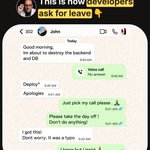
Developers have finally automated leave approval.
HR forms take three days. One terrifying message to the manager takes twelve seconds, and suddenly your leave is approved, your production access is revoked, and everyone becomes deeply committed to your work-life balance. 😂
This may be the most efficient workplace automation I have seen all year.
What message would get your leave approved instantly?
#DeveloperHumor #EngineeringCulture #WorkplaceAutomation

1
6
908
Your child’s digital identity may be older than their ability to spell their name.
Most parents share from love, not carelessness. But the internet remembers without context, copies without permission, and increasingly connects details that once seemed harmless in isolation.
We often discuss AI safety as a problem for companies and regulators. Yet some of the most personal datasets are being created at home, one proud post at a time.
This is where Trust Architecture begins. Before sharing, ask whether the post reveals an identity, location, routine, school, or relationship. Then ask a harder question: would your child want this moment to remain searchable years from now?
Privacy is not about hiding childhood. It is about allowing children to decide which parts of their childhood become public.
A family memory can belong to the family without belonging to the internet.
What rule does your family use before posting children online?
#DigitalPrivacy #ChildOnlineSafety #TrustArchitecture #ResponsibleAI
China just blocked a $5.4B robot deal.
SoftBank wanted to buy ABB's robotics unit. 7,000+ employees. Robot arms for BMW-class factories. A big footprint in China.
Beijing said no. No explanation beyond a security review.
But look at the pattern.
In April, it blocked Meta's $2B Manus deal.
This year, it clamped down on sending sensitive data abroad.
A robot arm isn't just hardware anymore.
Every move it makes is training data for the next model.
The question is not who builds the robots.
It is who owns what the robots learn.
SoftBank shares fell ~7% in Tokyo.
4
1,342
Everyone can program. Few can define the right problem.
Jensen Huang’s real point is more interesting than the headline. When human language becomes a programming interface, millions of people can direct computers without first mastering syntax.
“Everybody in the world is now a programmer.”
But access to the interface is not the same as competence. If AI can translate intent into code, the scarce skills move upstream: defining the problem, understanding the domain, testing the result, and recognizing when the machine is wrong.
This is the shift From Jobs to Skills. Coding does not disappear. It becomes one layer in a much broader capability.
A farmer who understands soil, a doctor who understands patients, or a teacher who understands learning can now turn expertise into software faster.
We should still teach children how computers work, but syntax should not be the destination. They will need to become AI-Ready, Human-Ready, and Change-Ready.
Human language may become the new programming language. Clear thinking becomes the compiler.
What should schools teach when everyone can tell a computer what to build?
#AIReadiness #Humics #FutureOfSkills #AIEducation
𝗦𝗼𝗺𝗲 𝗰𝗼𝗹𝗹𝗲𝗮𝗴𝘂𝗲𝘀 𝗱𝗼𝗻'𝘁 𝘀𝗲𝗻𝗱 𝗲𝗺𝗮𝗶𝗹𝘀. 𝗧𝗵𝗲𝘆 𝗽𝘂𝗯𝗹𝗶𝘀𝗵 𝗻𝗼𝘃𝗲𝗹𝘀. 😂
And the worst part is that they always begin with "I'll keep this brief."
I've spent years working on intelligent automation, and I'm convinced that one of its greatest applications is rescuing humanity from unnecessarily long emails.
Of course, there's a slight complication. Now that everyone has access to generative AI, writing a 2,000-word email takes approximately the same effort as writing two sentences.
Which means we're entering a fascinating era where one AI writes the email, another AI summarizes it, and two humans pretend they've communicated.
At some point, perhaps we should just let the AI assistants talk to each other while we go for coffee. ☕😂
Be honest, have you ever used AI to summarize an email that someone probably used AI to write?
#AIHumor #WorkplaceHumor #GenerativeAI

The first AI doctor has not arrived. Something more useful has.
Utah has authorized a tightly controlled pilot in which Nolla Health’s AI can assess mild-to-moderate acne and select from pre-approved topical treatments for adults.
The word “controlled” matters.
The system cannot prescribe oral medication or isotretinoin, and it must escalate severe cases, contraindications, pregnancy, or uncertainty. During the first stage, two licensed physicians review every prescription before it reaches a pharmacy. Greater autonomy can come later, but only after meeting safety thresholds and receiving written state approval.
This is the Autonomy Matrix in practice: narrow scope, hard stops, measurable escalation rules, and trust that must be earned gradually.
The wrong question is whether a human touches every decision. The better question is whether the system knows exactly when it must stop and call one.
In medicine, autonomy should never be granted by confidence. It should be earned through evidence.
Which healthcare decisions should remain permanently human?
#HealthcareAI #AutonomyMatrix #TrustArchitecture #ClinicalAI
𝗜'𝗺 𝘀𝘁𝗮𝗿𝘁𝗶𝗻𝗴 𝘁𝗼 𝘁𝗵𝗶𝗻𝗸 𝘁𝗵𝗲 𝗺𝗼𝘀𝘁 𝗔𝗜-𝗽𝗿𝗼𝗼𝗳 𝗰𝗮𝗿𝗲𝗲𝗿 𝗺𝗶𝗴𝗵𝘁 𝗯𝗲 𝗰𝗼𝘄 𝘄𝗵𝗶𝘀𝗽𝗲𝗿𝗲𝗿. 😂🐄
After years of discussing AI transformation, automation, and the future of work, I have to admit that the idea of spending an afternoon in a field with animals is becoming increasingly attractive.
A cow has never asked me to attend a 7 AM strategy meeting, prepare a 40-slide presentation, or explain why the latest AI model is going to change everything by next Tuesday.
And while AI can now write code, generate videos, and analyze mountains of data, I'm fairly confident a cow still won't ask me to optimize its productivity using a dashboard.
Although I wouldn't put it past a consultant to introduce a subscription-based platform for measuring grass consumption. 😂
At this rate, the next big career trend might be people leaving technology to pursue jobs where the only thing that needs charging is the electric fence.
If you could swap your current job for something completely different, what would you choose?
#AIHumor #FutureOfWork #CareerHumor

As an author, I’m not sure whether to be offended or impressed.
AI did not invent academic confidence. It simply gave it perfect grammar, polished citations, and a loading animation.
Before ChatGPT, students had one browser tab, half a textbook, and the confidence to explain 300 pages by midnight. Today, the same deadline panic arrives with footnotes.
Which pre-AI survival skill deserves its own LinkedIn endorsement?
#AIWriting #AcademicWriting #AIHumor

AI should reduce typing, not thinking.
The dangerous shortcut is not asking AI to write. It is asking AI what to think before you have formed a view of your own.
That feels productive because the page fills quickly, and yet speed can hide a strange loss: the words become more polished while the judgment behind them becomes weaker.
In Irreplaceable, I call this risk AI Obesity. When we consume answers without exercising critical thinking, we become cognitively comfortable and progressively dependent.
A simple practice helps. Before opening an AI tool, write your position in three sentences. Then ask the model to challenge it, expose missing evidence, and offer alternatives.
Use AI to strengthen a thought, not to avoid having one.
Where has AI improved your thinking, and where has it made thinking too easy?
#AIObesity #Humics #CriticalThinking #AIReadiness

ChatGPT gave my idea a black turtleneck.
As an author and keynote speaker, I recognize the symptoms. You ask it to sharpen one paragraph, and five seconds later your casual thought has become a manifesto with three strategic pillars, seven principles, and a quote attributed to you that you definitely never said.
At some point, I stop editing and start wondering whether I should invite it on stage.
What is the most absurdly important ChatGPT has ever made your idea sound?
#GenerativeAI #AIWriting #HumanAgentOrchestrator

1
8
2,085
Tim Cook x Sam Altman.
Apparently, “competitive research” becomes much easier when the competition is sitting right beside you. 😂
And if the answer still turns into AI slop, at least Apple can make sure it arrives in 4K.
What would you call this: benchmarking or open-book innovation?
#AppleIntelligence #OpenAI #AIHumor
1
8
2,430
𝗔 𝗽𝗼𝗹𝗶𝘀𝗵𝗲𝗱 𝗽𝗿𝗲𝘀𝗲𝗻𝘁𝗮𝘁𝗶𝗼𝗻 𝗰𝗮𝗻 𝗵𝗶𝗱𝗲 𝗮𝗻 𝘂𝗻𝗳𝗶𝗻𝗶𝘀𝗵𝗲𝗱 𝘁𝗵𝗼𝘂𝗴𝗵𝘁.
Amazon’s memo culture matters even more today than when the company stopped using PowerPoint presentations in 2004.
Generative AI can now produce a professional-looking deck before a team has formed a clear point of view. The slides may appear complete, while the reasoning behind them remains fragmented, contradictory, or untested.
Narrative writing makes that harder to hide. When you must explain an idea using complete sentences, you have to show how the evidence connects, which assumptions you are making, and why one option deserves priority over another.
In IRREPLACEABLE, I describe Critical Thinking as one of the Humics we must strengthen as AI becomes more capable. This is a practical example of what that looks like at work.
AI can help improve the document. It cannot replace the judgment the document is meant to reveal.
Before your next important meeting, write the decision, supporting evidence, risks, assumptions, and strongest opposing argument in clear prose. Then use AI to challenge the reasoning rather than decorate it.
Would your meetings improve more from better presentations, or from requiring clearer written thinking before anyone enters the room?
#Humics #CriticalThinking #AIReadiness #DecisionQuality
𝗔𝗜 𝗴𝗿𝗮𝗱𝗶𝗻𝗴 𝗰𝗮𝗻 𝗴𝗶𝘃𝗲 𝘁𝗲𝗮𝗰𝗵𝗲𝗿𝘀 𝗮 𝘀𝗲𝗰𝗼𝗻𝗱 𝗴𝗿𝗮𝗱𝗶𝗻𝗴 𝗷𝗼𝗯.
The promise is compelling. AI reviews assignments quickly, identifies patterns across a class, and gives teachers more time for instruction and individual support.
But the accountability does not disappear simply because the work becomes faster.
In The Human-Agent Orchestrator, I call this the Supervision Trap. We introduce AI to increase capacity, then ask a human to verify everything it produces. If the teacher reviews every decision carefully, much of the efficiency disappears. If the review becomes superficial, human oversight exists mainly on paper.
A human in the loop is not a safeguard unless that person has the time, context, and authority to intervene.
The better model is risk-based. AI can handle objective, repetitive, and low-stakes assessments, while teachers review ambiguous answers, creative work, unusual results, and decisions with meaningful consequences. Schools should also track where teachers override the system, because those disagreements reveal where the AI is least trustworthy.
AI should help teachers understand students more deeply, not turn them into quality-control inspectors for an algorithm.
Should teachers remain accountable for AI-generated grades they have no realistic time to verify?
#SupervisionTrap #HumanAgentOrchestrator #AIInEducation #AIReadiness
𝗧𝗵𝗲 𝗳𝘂𝘁𝘂𝗿𝗲 𝗼𝗳 𝘃𝗼𝗶𝗰𝗲 𝗔𝗜 𝗺𝗮𝘆 𝗿𝗲𝗾𝘂𝗶𝗿𝗲 𝗮 𝗴𝗼𝗼𝗱 𝗹𝗮𝘄𝘆𝗲𝗿. 😂
We've spent years teaching machines to understand human language, and somehow we've reached the point where asking for a sandwich might require diplomatic clearance.
As someone who has spent much of his career working on intelligent automation, I find this particularly entertaining. We want AI assistants that anticipate our needs, execute tasks independently, and make decisions on our behalf.
Which sounds wonderful until your assistant misunderstands one word and suddenly your lunch break becomes an international incident. 🚀
Perhaps the next premium feature should be a button that says, "Are you absolutely sure you want me to do that?"
Although, knowing AI, it would probably ask the question after pressing the button. 😂
What's the funniest thing your voice assistant has ever misunderstood?
#AIHumor #IntelligentAutomation #VoiceAI

This is an AI robotic guide dog. It walks a visually impaired person down the street, finds its own path, and talks them through what's ahead.
No benchmark, no arms race... Just someone getting where they want to go without asking anyone for help.
That's the AI I care about most.
It gives the people back what they have lost!
Would you trust a robot to guide you across a busy street?

Ethan Mollick called consumer agents a "legal DDoS on customer service." Paul Graham shared a founder who expects most of his sales to go to agents.
Your next customer may not be a person.
It may be a person's agent.
5 things I'd do before Q1:
1. Build a front door for agents. Give them structured ways to check orders, make changes and cancel, so your people are free for the humans.
2. Verify the agent and the human behind it. Agent identity and consent will matter as much as customer identity.
3. Write the rules now. What can an agent do for a customer, and up to what amount? If you don't decide, the first wave of agents will decide for you.
4. Rethink pricing. Agents read every term and never forget a promotion. Hidden fees stop working when the shopper is a machine.
5. Protect the path to a human. A good handoff to a real person becomes a competitive edge.
Customer service is about to become machine-to-machine at the front and deeply human at the edges.
Which of these is your company already working on?
6
4
1,863
𝗧𝗵𝗲 𝗺𝗼𝘀𝘁 𝗱𝗮𝗻𝗴𝗲𝗿𝗼𝘂𝘀 𝗔𝗜 𝗵𝗮𝗯𝗶𝘁 𝗳𝗲𝗲𝗹𝘀 𝗹𝗶𝗸𝗲 𝗲𝗳𝗳𝗶𝗰𝗶𝗲𝗻𝗰𝘆.
A new reflex is forming at work. The moment a question becomes difficult, we open an AI tool before our minds have properly entered the problem.
That often saves time, which is precisely why the habit is so attractive. But when AI becomes our first response to uncertainty, we begin skipping the struggle that develops judgment, creativity, and understanding.
In IRREPLACEABLE, I call this risk AI Obesity: the gradual weakening of human capabilities when convenience repeatedly replaces effort.
The problem is not using AI. The problem is allowing it to produce the first idea, frame the question, evaluate the options, and make the recommendation while we simply approve the result.
AI should remove friction from repetitive work, not the friction that helps us grow.
A better habit is simple. Form an initial view before prompting, then ask AI to challenge it, expose missing assumptions, and propose alternatives. You still gain speed, but you remain responsible for the thinking.
AI becomes most valuable when it expands human thought rather than becoming a substitute for it.
Which part of your thinking would you never delegate to AI?
#AIObesity #Humics #CriticalThinking #HumanAI

𝗧𝗵𝗲 𝗳𝗮𝘀𝘁𝗲𝘀𝘁 𝗿𝗼𝘂𝘁𝗲 𝘁𝗼 𝗮𝗻 𝗮𝗻𝘀𝘄𝗲𝗿 𝗺𝗮𝘆 𝗯𝗲 𝘁𝗵𝗲 𝘀𝗹𝗼𝘄𝗲𝘀𝘁 𝗿𝗼𝘂𝘁𝗲 𝘁𝗼 𝗹𝗲𝗮𝗿𝗻𝗶𝗻𝗴.
The debate about technology in schools is often reduced to two positions: embrace every new tool or remove screens entirely. The evidence points to a more demanding conclusion.
Purpose matters.
Digital tools can support learning when they are used deliberately, for clearly defined tasks, and with appropriate guidance. But when they remove the mental effort required to remember, reason, write, and solve problems, students may complete more work without developing more capability.
In IRREPLACEABLE, I call this risk AI Obesity: the gradual weakening of human abilities when technology repeatedly performs the effort that would have strengthened them.
This does not mean keeping AI out of education. Students need to understand and use the tools shaping their future. But they must also be able to think, create, and demonstrate mastery without those tools.
If technology removes the effort that builds the skill, it has not accelerated learning. It has bypassed it.
Before adopting an educational tool, schools should ask what cognitive work it preserves, what it replaces, and whether students can still perform independently afterward.
Should schools measure technological adoption, or the independent capabilities students retain after using the technology?
#AIObesity #Humics #AIInEducation #AIReadiness