

building @psumvc @colossusmag hosting @investlikebest
New York, NY
Joined June 2013
- Tweets23.9K
- Following2.5K
- Followers365K
- Likes42.5K




Pinned Tweet
My conversation with Zach Reitano (@ZReitano), co-founder and CEO of Ro
In four years he took Ro from a $250M run rate to over $3B, with about a third fewer people
Zach rarely does long conversations like this, so it was fun to talk about the details of what that took and everything happening in healthcare
Plus, his answer to the closing question is amazing
We discuss:
- the state of the US healthcare system
- refounding Ro
- strong attract, strong repel culture
- the notion of jobs over lives
- the power of celebrities in marketing
- the importance of tailwinds (AI, GLP-1s)
- trying to recreate his dad in software
Enjoy!
TIMESTAMPS
0:34 How Much Should We Spend on Health
4:59 The Patient Is Not the Customer
10:24 Inside Ro's Business
18:28 The Future of GLP-1s
25:46 Jobs Over Lives
30:02 The Turnaround
47:43 Where Healthcare Goes Next
1:00:27 Recreating His Dad in Software
1:06:33 Marketing Into Stigma
1:19:06 Zach's Hottest Take
1:20:58 The Kindest Thing
I've asked my closing question hundreds of times
Zach's answer about his dad was beautiful
"He goes I didn't want your last words to me to be an argument. I wanted them to be I love you.
The gift that he gave me was to never let the love that you feel for people go unspoken."

My conversation with Zach Reitano (@ZReitano), co-founder and CEO of Ro
In four years he took Ro from a $250M run rate to over $3B, with about a third fewer people
Zach rarely does long conversations like this, so it was fun to talk about the details of what that took and everything happening in healthcare
Plus, his answer to the closing question is amazing
We discuss:
- the state of the US healthcare system
- refounding Ro
- strong attract, strong repel culture
- the notion of jobs over lives
- the power of celebrities in marketing
- the importance of tailwinds (AI, GLP-1s)
- trying to recreate his dad in software
Enjoy!
TIMESTAMPS
0:34 How Much Should We Spend on Health
4:59 The Patient Is Not the Customer
10:24 Inside Ro's Business
18:28 The Future of GLP-1s
25:46 Jobs Over Lives
30:02 The Turnaround
47:43 Where Healthcare Goes Next
1:00:27 Recreating His Dad in Software
1:06:33 Marketing Into Stigma
1:19:06 Zach's Hottest Take
1:20:58 The Kindest Thing
Zach on refounding Ro after five years of building
“The best company cultures are strong attract, strong repel. It knows who it is, and it continues to try and double down on the features and eliminate the bugs.”
Lessons and surprising stats from how they did it:
- Ro has patients in every US county but one: Kalawao County, Hawaii, population 82
- In December 2021, Ro was growing 9% a year at a $270M run rate
- Today Ro is at a $3B+ run rate after growing 100%+ a year for three years
- It did that with fewer people, going from 463 to 406
- ARR per employee is up more than 10x
- 95 of the first 100 hires were people the founders already knew
- Ro parted with ~7 VPs, then let go of ~20% of the company
- Everyone was asked to opt in or opt out of the new culture, and 6–8% left
- The founders met with top talent for breakfast, lunch and dinner for 30 straight days
- They gave top performers more equity and asked for 90 days. If nothing changed, they’d help them find their next job
- Ro shut down 10+ products and cut $50M+ of unprofitable revenue
- Seven brands were folded into one: Ro
- He told investors that asking for his team’s time would reduce shareholder value
- Zach would sooner consider a 7-day week than a 4-day one
- They killed long-term roadmaps and plan in 90-day horizons
- Every open role was eliminated, and new headcount needs sign-off from the CFO and founders
- A daily 8:50am meeting for two straight years made Ro the largest GLP-1 provider in the US
- Ro is one of a handful of companies with $2B+ in revenue growing 50%+ this year and next
My conversation with Zach Reitano (@ZReitano), co-founder and CEO of Ro
In four years he took Ro from a $250M run rate to over $3B, with about a third fewer people
Zach rarely does long conversations like this, so it was fun to talk about the details of what that took and everything happening in healthcare
Plus, his answer to the closing question is amazing
We discuss:
- the state of the US healthcare system
- refounding Ro
- strong attract, strong repel culture
- the notion of jobs over lives
- the power of celebrities in marketing
- the importance of tailwinds (AI, GLP-1s)
- trying to recreate his dad in software
Enjoy!
TIMESTAMPS
0:34 How Much Should We Spend on Health
4:59 The Patient Is Not the Customer
10:24 Inside Ro's Business
18:28 The Future of GLP-1s
25:46 Jobs Over Lives
30:02 The Turnaround
47:43 Where Healthcare Goes Next
1:00:27 Recreating His Dad in Software
1:06:33 Marketing Into Stigma
1:19:06 Zach's Hottest Take
1:20:58 The Kindest Thing
Zach Reitano on why we shouldn't prioritize jobs over lives:
"About 40,000 people a year die from car accidents. That is almost the same exact number as the people who die from breast cancer every single year.
Driverless cars have proven to be 10, 20 times safer than a human driver. So we basically for certain types of cancer have a cure, and the conversation is not, how do we have Operation Warp Speed for this cure for cancer. It is more about job displacement.
It's not that I want to diminish job displacement. It's that we cannot prioritize jobs over lives.
We were talking about a cure for cancer and someone said, 'what about the people currently treating cancer patients without the cure? I don't even know that they would be able to.' It was the stupidest idea ever."
My conversation with Zach Reitano (@ZReitano), co-founder and CEO of Ro
In four years he took Ro from a $250M run rate to over $3B, with about a third fewer people
Zach rarely does long conversations like this, so it was fun to talk about the details of what that took and everything happening in healthcare
Plus, his answer to the closing question is amazing
We discuss:
- the state of the US healthcare system
- refounding Ro
- strong attract, strong repel culture
- the notion of jobs over lives
- the power of celebrities in marketing
- the importance of tailwinds (AI, GLP-1s)
- trying to recreate his dad in software
Enjoy!
TIMESTAMPS
0:34 How Much Should We Spend on Health
4:59 The Patient Is Not the Customer
10:24 Inside Ro's Business
18:28 The Future of GLP-1s
25:46 Jobs Over Lives
30:02 The Turnaround
47:43 Where Healthcare Goes Next
1:00:27 Recreating His Dad in Software
1:06:33 Marketing Into Stigma
1:19:06 Zach's Hottest Take
1:20:58 The Kindest Thing
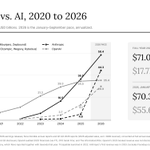
GLP-1s still out-earn OpenAI and Anthropic combined
The two drugs behind Ozempic and Mounjaro did $71B in 2025 vs $18B for OpenAI + Anthropic
But through September this year it’s $70B vs $56B

My conversation with Zach Reitano (@ZReitano), co-founder and CEO of Ro
In four years he took Ro from a $250M run rate to over $3B, with about a third fewer people
Zach rarely does long conversations like this, so it was fun to talk about the details of what that took and everything happening in healthcare
Plus, his answer to the closing question is amazing
We discuss:
- the state of the US healthcare system
- refounding Ro
- strong attract, strong repel culture
- the notion of jobs over lives
- the power of celebrities in marketing
- the importance of tailwinds (AI, GLP-1s)
- trying to recreate his dad in software
Enjoy!
TIMESTAMPS
0:34 How Much Should We Spend on Health
4:59 The Patient Is Not the Customer
10:24 Inside Ro's Business
18:28 The Future of GLP-1s
25:46 Jobs Over Lives
30:02 The Turnaround
47:43 Where Healthcare Goes Next
1:00:27 Recreating His Dad in Software
1:06:33 Marketing Into Stigma
1:19:06 Zach's Hottest Take
1:20:58 The Kindest Thing

Worth a revisit

Mark, by @colossusjeremy.
This is a story about the head of history's largest nonterritorial empire, who nonetheless remains a prisoner of his rivals. Has he finally found a way out?
The profile has been nearly a year in the making. Stern interviewed three dozen people, including Zuckerberg, his MMA coach, and his critics and competitors at the frontier AI labs. He spoke with his parents, Karen and Ed, and watched their son get punched in the face.
The story spans Meta HQ in Menlo Park, the Zuckerbergs' homes in Palo Alto and Lake Tahoe, and a party in a Manhattan warehouse with Kylie Jenner and Timothée Chalamet. There is also a sneak peek of Aaron Sorkin's forthcoming sequel about Zuckerberg, sourced via a Hollywood fixer Stern first encountered in Russia.
The result is a profile unlike one you've read before.
colossus.com/article/mark-zu…

The gap between investors who’ve embraced ai (especially in research + admin) and those who haven’t is staggering
One of the best I know said 90%+ of firms work is now Ai / automated
Another sole practitioner has a whole firm run by grok bots
Era of agentic investing is here
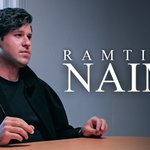
Ramtin Naimi on the pace of capital deployment in venture:
"I know one fund that raised $2.5B and started deploying in July and they're gonna be back in market in January.
The deployment periods are about 3x faster than they thought they would be.
This is the first time I started to see this in this cycle, where the VCs are giving them term sheets and saying, 'Hey, we wanna put $150 million in your company. Is it okay if we fund it in like mid-January, which is three months from now?'
All the money in our current fund is already committed to existing companies, and we're in the middle of closing a new fund."
40 feverish minutes of zoomed in detail on what’s happening in venture markets, with @ramtinnaimi
We discuss:
- cuck tranches
- why rounds are moving so fast
- how today compares to 2021
- what record deployment means for LPs
- the Anthropic S-1 and compute
- seed risk at Series D prices
The full episode is available everywhere you get podcasts (links in comments)
Enjoy!
Links
Youtube: youtube.com/watch?v=r95bEutZ…
Spotify: open.spotify.com/episode/2jY…
Apple: podcasts.apple.com/us/podcas…

Ben Thompson (@benthompson) on why we might run out of capital before we run out of demand for compute:
"I'm worried about the timing mismatch in terms of the actual return on investment producing enough revenue to fuel investment.
We're working our way down the capital curve.
We started with free cash flow. The speed with which the tech companies blew through the debt markets is kind of incredible.
It took like a year, and now Google's issuing equity. Nvidia's putting together this $500 billion thing to tap into pension funds and insurance floats and things like that.
What's after that? Where does the money come after that?
Ideally we actually flip back to free cash flow funding this, but if there's a gap there, if we don't get there soon enough, then we could have a big blowup.
We don't have enough compute because there was insufficient investment made in 2023 and 2024.
So today, when you say there's not enough compute, all the money companies are putting in today doesn't equal compute tomorrow. It all goes into compute in 2029.
I believe in AI. I think it's a real thing. I think the economic impact is going to be astronomical.
You can believe all that and be worried about, are we going to make the bridge to this actually generating the level of returns necessary to continue to fuel this going forward?"
Martin Casado:
"I really think the big disruption of AI is the fact that you can throw capital at problems. In the history of tech, you haven't been able to do that, because it was always an engineering problem, which just doesn't scale.
The biggest shift with AI is I can take 20 people, give them a billion dollars, and they can use that. Do they make 500 million from that billion or two billion? I have no idea. But the fact that you can productively use that money is so new.
We've turned this into a capital resourcing problem, and we're capital allocators. We're in this very strategic position to help drive the future in a much more direct way than we ever have been before.
If you look at Anthropic and OpenAI, they've probably raised more money in aggregate than the entire downstream ecosystem combined.
They are these mechanisms of turning money into growth."
My third conversation with Martin Casado (@martin_casado), general partner at @a16z.
- The case for consensus investing
- Why moats are overrated
- Frontier model economics
- What happens when AI growth slows
- Why private markets are efficient
- Lessons from Cursor, OpenRouter, and World Labs acquisitions
Enjoy!
TIMESTAMPS
Intro
Four Types of Venture Investors
What Everyone Gets Wrong About Network Effects
Moats, Market Growth, and Disruptive Technologies
How AI Is Rebuilding Computing Infrastructure
Anthropic, Frontier Models, and the Future of AI Competition
Why AI Is Bigger Than Software
AI's Capital Revolution and Infrastructure Bottlenecks
Market Efficiency, Valuations, and Venture Capital
Lessons from AI's Biggest Acquisitions and the Future of VC
Martin Casado (@martin_casado) explains his tweet on non-consensus investing:
"The idea that non consensus investing is where the alpha is, is actually quite dangerous in the early stage.
Follow on capital tends to be more and more consensus aligned."
"There's something tied to the ego and the identity of investors that they have to believe that they can truffle hunt and find the non-consensus thing.
But the reality is, if you look at our portfolio, the ones that returned money were actually very, very competitive in general."
My third conversation with Martin Casado (@martin_casado), general partner at @a16z.
- The case for consensus investing
- Why moats are overrated
- Frontier model economics
- What happens when AI growth slows
- Why private markets are efficient
- Lessons from Cursor, OpenRouter, and World Labs acquisitions
Enjoy!
TIMESTAMPS
Intro
Four Types of Venture Investors
What Everyone Gets Wrong About Network Effects
Moats, Market Growth, and Disruptive Technologies
How AI Is Rebuilding Computing Infrastructure
Anthropic, Frontier Models, and the Future of AI Competition
Why AI Is Bigger Than Software
AI's Capital Revolution and Infrastructure Bottlenecks
Market Efficiency, Valuations, and Venture Capital
Lessons from AI's Biggest Acquisitions and the Future of VC
The inside story of Cursor's $60 billion sale to SpaceX
My third conversation with Martin Casado (@martin_casado), general partner at @a16z.
- The case for consensus investing
- Why moats are overrated
- Frontier model economics
- What happens when AI growth slows
- Why private markets are efficient
- Lessons from Cursor, OpenRouter, and World Labs acquisitions
Enjoy!
TIMESTAMPS
Intro
Four Types of Venture Investors
What Everyone Gets Wrong About Network Effects
Moats, Market Growth, and Disruptive Technologies
How AI Is Rebuilding Computing Infrastructure
Anthropic, Frontier Models, and the Future of AI Competition
Why AI Is Bigger Than Software
AI's Capital Revolution and Infrastructure Bottlenecks
Market Efficiency, Valuations, and Venture Capital
Lessons from AI's Biggest Acquisitions and the Future of VC
Links
Youtube: youtube.com/watch?v=XZxDawMm…
Spotify: open.spotify.com/episode/1x5…
Apple: podcasts.apple.com/us/podcas…

Netflix had a slide in its original culture deck that said "adequate performance gets a generous severance package."
Reed Hastings explains why Netflix paid 4-9 months severance packages and how the Keeper Test worked:
"One of the best things is to do large severance packages like four to nine months of salary. It feels expensive at first, but it makes the person who's let go feel better because they've got a bunch of money in their pocket.
Two, it helps the manager do their job because then they don't feel as bad in letting the person go.
It's like a professional sports player. The test that we encourage people to use is, if someone were quitting, would you try to keep them.
Honestly, if you quit, I wouldn't try to change your mind to stay. The reason is I think I could get someone in your role that could do what you're doing plus even more, and here's why."
.@reedhastings built Netflix around two ideas that everyone talks about, but are extremely hard to do in practice.
The first is finding a simple idea and taking it extraordinarily seriously. Even from Netflix's inception in 1997, Reed explains how the DVD business was always just a bridge to streaming and why the company stayed relentlessly focused on that core model for decades rather than expanding into to new areas.
The second is talent density. Netflix intentionally maintained a wide hiring funnel and accepted ~20% first-year attrition. Reed shares how he sustained an exceptionally high bar as the company scaled through the "Keeper Test," paying generous severance packages and guaranteeing employees worked on hard problems alongside other talented people.
We explore Netflix's content strategy -- why it treats content like a venture portfolio and how it competes with YouTube -- and what Reed learned from serving on the boards of Microsoft, Meta, Anthropic, and Bloomberg.
We also discuss lessons from the Qwikster failure, why Reed believes AI won’t identify the next K-Pop Demon Hunters, and how he's spending his time today focused on education and Powder Mountain.
Enjoy!
0:00 Intro
02:00 Talent Density
05:23 Professional Sports Team Model
09:07 Managing on the Edge of Chaos
10:17 The Keeper's Test
12:46 Qwikster
16:30 Contrarian Thinking & Idea Generation
20:04 Lessons from Boards
26:25 The Open Compensation Experiment
28:24 The Strategy Behind Original Content
37:06 AI's Impact on Storytelling
44:53 Power
48:34 Powder Mountain
54:19 AI in Education
57:27 Future Risks & Upside of AI
59:34 The Kindest Thing
"Starship is going to change the space economy in ways we cannot imagine. Particularly if regulation becomes a constraint to data centers, none of it's going to matter. You're going to sell as much orbital compute as you can make." –– @GavinSBaker

Gavin Baker (@GavinSBaker) on orbital compute:
"The most important thing in the next 3-4 years is data centers in space.
In space, you can keep a satellite in the sun 24 hours a day. So you don't need a battery. Space cooling is free.
In every way, data centers in space, from a first principles perspective, are superior to data centers on earth."
"@elonmusk operates two of the largest coherent GPU clusters in the world, SpaceX is responsible for over 90% of mass to orbit and SpaceX operates the largest satellite constellation in the solar system.
More than 10 years later, no other company or country can consistently land and reuse orbital rockets."
"Starship should be able to lift 10 to 15 megawatts to sun-synchronous orbit per flight."
"Starship is going to change the space economy in ways we cannot imagine.
Particularly if regulation becomes a constraint to data centers, none of it's going to matter. You're going to sell as much orbital compute as you can make."
A collection of Gavin's quotes from his conversations on Invest Like the Best (EP.451 and EP.473) and his own posts on X.
Cliff Sosin on why demand for frontier AI may narrow as models get smarter:
"It's like this diamond-shaped demand frontier, where initially, you get wider and wider uses, and then it starts to get more and more rarefied. How often do you really need a 300 IQ?
It strikes me as totally reasonable that there are very few use cases for super elite intelligence.
There are lots of use cases for very good intelligence. That very good intelligence is highly competitive and commoditized.
How big is the market if good enough intelligence is very, very cheap?"
Cliff Sosin (@CliffordSosin) is one of my favorite people to call, ask some big questions, and then shut up and listen.
This conversation is a version of one of those calls.
We discuss:
- The limits of intelligence
- Owning the complements to it
- Meta, the frontier labs, and the AI build-out
- Capital markets
- Why he's comfortable with 80% of his portfolio in Carvana.
TIMESTAMPS
0:00 Intro
10:41 The Limits of Intelligence
18:03 Investing Beyond Cheap Intelligence
24:03 Will AI Become Commoditized?
35:10 Who Profits From AI?
43:00 AI Agents Reshape Competition
52:06 America's Capital Markets
58:04 Transforming Companies With AI
68:19 AI and Portfolio Concentration
73:16 Education in the AI Era
“Best way to sandbox an AI,” Musk said. “Put it on a Delta flight.”
A few weeks ago, the Secret Service locked Jensen Huang, Elon Musk, Sergey Brin, Satya Nadella, Lisa Su, and Michael Dell in a room in Washington, DC.
While they waited for President Trump, Huang—who chooses not to own a jet—complained about a recent commercial plane ride. It had no Wi-Fi.
“Best way to sandbox an AI,” Musk said. “Put it on a Delta flight.”
All six were about to receive national medals from the President. The ceremony was the idea of Michael Kratsios, Trump's chief science advisor. He is 39, a Peter Thiel protégé, and has worked for Trump every day of both terms.
For decades, the office Kratsios runs was known mostly for reports on things like algae blooms. Kratsios himself was barely known in Trump's first term. Now he sits between the President and tech royalty. He is one of a handful of people shaping America's AI policy, and the White House's point man on nuclear, space, and quantum.
In our latest feature, @harrytlambert shows how the fight to regulate AI and reform American science runs through his office.
colossus.com/article/michael…
