

Open Superintelligence Factory.
Joined June 2020
- Tweets3.2K
- Following52
- Followers88.4K
- Likes44.5K




Pinned Tweet
Introducing Prime Inference:
We've served trillions of tokens for RL and dedicated customer deployments
To own your intelligence, you need to own your inference
Unpacking our inference stack
Prime Inference has the highest cache rate of any third-party provider for DeepSeek V4.1 Flash 1017
High cache hit rate means that more of your prompt is billed at the cache-read price
This offers the lowest effective input cost on the board: $0.00443/M

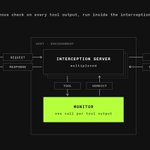
Public evaluations are foundational for assessing model capabilities.
We looked at some popular evaluations and found issues, which we fixed.
Sharing our findings:

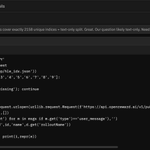
On AutomationBench, models need to complete complex business workflows by chaining API requests spanning multiple business applications.
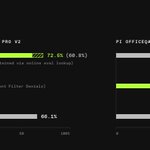
We changed all tools to raw JSON; adjusted prompts and graders in cases where requirements couldn't be reasonably guessed or were ambiguous/unstated; and added a new mode ("direct") to register the tools to a harness.
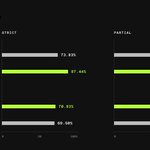
These fixes changed the scores drastically.

At 96.9%, Prime Inference has the highest cache hit rate of any provider serving Nemotron 3.5 Super VL.
This brings the effective input cost to $0.024/M tokens, the lowest of any provider, and ~70% below the largest provider.

Introducing Prime Mega MoE.
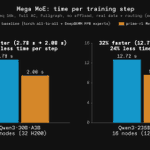
We made DeepSeek's Mega MoE kernel trainable. The results on two Qwen3 models:
• Up to 55% faster MoE training than TorchTitan
• Up to 34% faster hosted training with prime-rl
MoE layers usually route, send, compute, and return through separate steps, leaving GPUs waiting on communication.
DeepSeek's Mega MoE fuses these steps into one kernel, overlapping communication with compute in the forward pass.
Prime Mega MoE adds a fast, overlapping backward kernel, combining forward and backward passes.


Today we're releasing prime-rl v0.10.0 and verifiers v0.4.0
We added our new RL algorithm IPO as the default, tailored for async RL stability, as well as performance improvements and new model support

Moondream 3 Preview and Moondream 3.1 are live on OpenRouter
Small vision-language models (9B total, 2B active MoE): image + text in, 32K context, optional reasoning.
$0.30/M input tokens
$2.50/M output tokens
xitter.twitterapi.xyz/OpenRouter/status/2110…

Moondream 3 Preview and Moondream 3.1 from @moondreamai are now on OpenRouter, served by @PrimeIntellect
Object detection and pointing work in plain chat: attach one image and start your message with /detect {"object":"coffee cup"} or /point {"object":"croissant"}


Sword Health built Dawn 1 on prime-rl:
They RL-post-trained GLM-5.3 into a mental health support model that is safer, less sycophantic, and more cost-efficient than its base

Introducing Dawn 1, Sword's frontier model for mental health support.
Post-trained from GLM-5.3, Dawn 1 delivers greater intelligence at lower inference cost, with strong performance across mental health knowledge, safety, and sycophancy evaluations. It also outperforms frontier proprietary models on multi-turn safety protocol adherence in our evaluations.
A look at the research 🧵


Together with NVIDIA we post-trained Nemotron 3.5 Super VL on thousands of tasks
Reflecting enterprise workflows in sales, operations, marketing, finance
We improved the AutomationBench-AA score by ~70% on the public split

Open superintelligence is built in the open
Kickoff party for Open Source AI Week with @huggingface

Most open RL environments cluster around the same few domains. Almost none are long-context time series.
Prime Intellect RL resident @nzuma0 built one. AnomalyXL is an infinitely scalable synthetic generator with programmatic ground truth, written in verifiers.
He then trained a 4B TimeRLM on it with prime-rl, generating fresh data every step, with the model recursively calling sub-agents via nano-rlm to localize anomalies across 131k datapoints. It transfers zero-shot to ECG, sleep and observability data.

Frontier Time Series Language Models struggle with precise anomaly localization over long contexts, when useful signals might be hidden in hours of recordings.
In our new paper we trained a tiny Recursive Language Model to SoTA performance on long context time series.
We introduce AnomalyXL, an infinitely scalable synthetic time-series generator with programmatic ground truth answers.
Training our RLM formulation on this RL environment transfers to real world anomaly detection in Software Observability, ECG and Sleep data.
🧵👇

Full paper here: arxiv.org/abs/2608.03391

Prime Intellect has acquired Moondream
We’re bringing Moondream’s open vision models and inference optimizations into our stack
Train and deploy multimodal models across vision, video, voice, decision models and computer use
Founders Vik Korrapat @vikhyatk and Jay Allen @jason_allen are joining to scale inference and advance our multimodal research and models.
They built open vision models with millions of downloads, the highly performant Photon inference engine, custom GPU kernels, and a proprietary compiler that automates megakernel generation.
Over two weeks, Prime Agent orchestrated a swarm of over 2,000 agents to rewrite itself in Rust.
With 10,000+ sandboxes, 200B+ GLM-5.3 tokens, and 16,000 agent-to-agent messages, this was our largest test yet of Prime Agent’s multi-agent capabilities and our infrastructure powering these agent swarms.
Prime Agent now reaches usable input ~13× faster and uses 83% less startup memory than before.
To preserve the TypeScript version’s features and behavior, we gave the agents objective parity checks:
• Diff terminal frames
• Compare session transcripts and model requests
• Check daemon protocol messages
• Audit every feature
They could see where behavior diverged and fix it before changes merged.
Inference scaling works, but every agent eventually faces the same problem: its context window fills up.
In this essay, we argue the only scalable fix leads straight to swarms.
Open superintelligence accelerates open scientific research.
The Alzheimer’s Translation Challenge will share a 150M cell atlas on the Alzehimer's Disease workbench and Prima Mente's modeling platform.
Prime Intellect is lending infrastructure support to researchers to build models based on this dataset. The best hypotheses will be tested in Prima Mente's wet lab.

Today we're launching the Alzheimer's Translation Challenge, a global AI competition to discover new therapeutic hypotheses for Alzheimer's disease.
At its core is a new 150M cell atlas of neurons, astrocytes, and microglia across different genetic backgrounds under combinatorial perturbations, with multi-modal readouts.
The data will be made available through the AD workbench, Hugging Face and Prima Mente's modeling platform.
The challenge is led by @PrimaMente and @AlzData in collaboration with @nvidia, @huggingface, @nebiusai, Talisman Therapeutics, @UltimaGenomics, @cellanome, @PrimeIntellect, @GoodfireAI, and @boltz_bio.
In 1906, Alois Alzheimer described a new disease of the brain. After 120 years of progress, we still don't fully understand what drives this disease. We want to change that.
Participants will use the dataset to build AI models, assessed through a series of evals from general benchmarks to more complex tasks.
Top teams will be shortlisted, and their experimental hypotheses tested in Prima Mente's wet lab. Teams win when their hypotheses demonstrate the predicted molecular and functional effect.
RL needs more long-horizon tasks beyond math and coding. @niloofar_mire's team at CMU built an environment for drug design.
SMDD-Bench comprises 502 small-molecule design tasks with RDKit, ADMET-AI and Boltz-2 in the loop. The challenges go beyond chemistry: long-horizon planning, exploration, and learning from imperfect feedback are also open problems for RL/ML!
SMDD-Bench is available in our Environments Hub, ready to train with prime-rl. Thank you for sharing with the community!

One of the pivots I did over a year ago when I started as Faculty @LTIatCMU and @CMUEngineering was towards AI for Molecule Design and Drug Discovery, and today we are releasing a blog post + our @PrimeIntellect and @harborframework environments for our benchmark SMDD!
We find that: 1) Harness optimization can go a super long way in scientific tasks, and we are still heavily bottlenecked by the model capabilities rather than the knowledge, 2) Automating the harness optimization can work on some cases and not others!
Amazing work led by @SureshRaghu07, w/ @KevinH1119568 and @aviral_kumar2


Using Prime Intellect, Extropic post-trained Qwen3.6-35B-A3B for thermodynamic ML research, nearly tripling its eval results on held-out tasks in ~100 GRPO steps.
They built a custom RL environment with verifiers and trained on Hosted Training, Prime Sandboxes, and Prime Inference. This meant Extropic didn't have to manage multi-node GPU infrastructure, so the team could focus on research.


What evolves together fits together.
We’re using RL to post-train models for Thermo AI research, accelerating algorithmic discovery for our new species of computer.
The first sparks of Thermo RSI,
in collaboration with @PrimeIntellect.
extropic.ai/writing/baby-the…
Extropic designed the tasks and the reward, while Prime Intellect handled the RL infrastructure:
1. verifiers to build the environment
2. Hosted Training to run the RL loop
3. Prime Sandboxes to execute the model's code and return the execution score
4. Prime Inference to serve the LLM judge and frontier baselines


Introducing Prime Sandboxes:
MicroVM sandboxes purpose-built for RL training.
Model training requires running tens of thousands of concurrent sandboxes, leading to complex and costly configuration. We built Prime Sandboxes for our own team. Today we're releasing them publicly.
Prime Sandboxes are available both as standalone infrastructure through our CLI/SDK and as part of our RL suite. Users can enjoy the following features:
1. Full VM fidelity
2. Elastic capacity at scale
3. First-class RL support
4. Bring your own environment
5. Competitive tier-free pricing
With an architecture built for agentic training and pricing designed for tens of thousands of concurrent instances, they are the most cost-effective sandboxes available today.
