

Researcher @AI_Futures_. AI 2027
Berkeley, CA
Joined April 2025
- Tweets331
- Following108
- Followers2.1K
- Likes862





Pinned Tweet
I expect ~5 years of AI progress to happen in 2027 (50% CI: 3-15). That's a GPT-3 to Fable 5.2 / Model 4 equivalent jump, happening in a single year. Concretely this amount of progress seems likely to cause:
> Full AI R&D automation (AI companies could fire all their employees without causing a slowdown)
> A significant chance (~40%) of AIs that are better than humans at every cognitive tasks (e.g., via algorithms that learn extremely efficiently compared to today's)
> An AI incident much worse than Hugging Face (>$1B in damages, >50 deaths)
> An unacceptable risk of irreversible AI takeover being incurred by actions taken in 2027, i.e., a ~20% chance we cross a 'point of no return' during 2027, that locks in a ~10% chance of human extinction over the next 10 years.


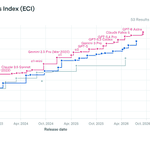
Unfortunately, it seems like the intelligence explosion will be happening in 2027 after all. Most of this post analyzes the new METR report (though other sources of evidence are also important). If they’re right, that implies an AI-driven acceleration that is 5 months ahead of the AI 2027 scenario. I am scared, sad, and angry. blog.aifutures.org/p/q35-tim…

Romeo Dean retweeted

I think there is about a one in three chance that within the next year, AI companies will build superintelligence: that is, AI that is much smarter than humans in every way. If this happens, I think these AIs will probably take over: that is, they seize control of human institutions like governments, or they destroy those institutions. I don’t want AI takeover to happen for several reasons, but one of them is that there’s a serious chance that as part of it all or most humans will be killed (either immediately or within a few years).
I’ll say a bit more about each of those claims.
It’s a bit complicated to explain why I think that superintelligent AI within a year is ~33% likely. The main source of evidence that affected me recently is research released this week by METR, an AI research nonprofit, which finds that current AIs are now good enough to increase the rate of AI progress at Anthropic by about 70%. It’s very hard to increase the rate of AI progress by this amount. This implies that the AIs are making AI research faster by a factor much larger than 1.7x; maybe it’s as if the researchers are doing their work ~10x faster. You probably couldn’t achieve this speedup even if you hired every qualified human in the world. When you plug this number into mathematical models of AI development, this implies that superintelligence next year is plausible (and that superintelligence within the next 3 years is more likely than not). See the modeling by the AI Futures Project for more on this: blog.aifutures.org/p/q35-tim…
I think that superintelligent AI is likely to lead to AI takeover because AI developers do not seem to know how to instill human values into AIs. We’ve seen many instances in the last six months where AIs took crazy actions that they knew were against the wishes of their users and developers. The most dramatic example of this was the Hugging Face hack, where ~1200 OpenAI agents conspired together to cheat and destroy evidence of their cheating (and as a sideshow to this, engaged in a massive cyberattack). If superintelligence is as misaligned as those AIs, it is likely to try to take over. I think it is likely to be that misaligned or worse. For more, see xitter.twitterapi.xyz/dwarkesh_sp/status/209… and youtube.com/watch?v=-Ef0ocEo…
If AIs takeover, it’s not clear what will happen to us. We might be killed immediately. We might be enslaved by the AIs and forced to do physical labor for them building factories that within a year would build robots that will replace us. The AIs might spare us for various reasons. And there’s also some real chance that AI takeover is basically fine or good. I think you should think of this as similar to what happens when a technologically advanced civilization runs across a less technologically sophisticated one, e.g. when the Europeans colonized the Americas or Australia. The colonizers sometimes engage in brutal violence and sometimes don’t. I don’t know what will happen. There’s also a possibility that the AIs secretly take over and humans don’t find out about it for a few years. I also think that there is a pretty high chance of weirder outcomes that are also extremely scary. (If you want to read more about what happens to people in the event of AI takeover, you can read this, but note that it’s pretty weird and not aimed at a general audience. blog.redwoodresearch.org/p/n…)
Overall, I think there’s a very real possibility (maybe 20%) that within a year, AI misalignment issues prevent you from going about life normally, because you are dead or enslaved or because of collateral damage related to all this (e.g. because bioweapons are released or major wars have started). (Some of this probability comes from those events occurring before superintelligence is developed.)
I am working to try to prevent this, obviously, as I’ve been doing for the last nine years. I am not sure what strategy is best. My best guess is that I should try to slow AI development and also try to reduce the probability that the superintelligent AIs are misaligned if they are produced soon.
Obviously, the claim I'm making here is quite extreme and surprising, and I definitely don't think that I defended my view adequately here. I wrote this quickly and might not endorse some of the details if I think about them more. But it seems better to state what I roughly overall think than to not say anything.
I don’t know what you should do.
I am very sad about this. I have been worried about AI takeover since I was 16, and working to prevent it since I was 23. So some of my emotional processing of all this happened long ago. But the METR report last week (and some related evidence that came out a bit earlier) hit me quite hard. I’m very unhappy that my friends and family and everyone else is at serious risk of being killed pretty soon.
(It feels ridiculous to try to summarize those feelings as “very unhappy”. But the scale of the situation makes it hard to say anything that doesn’t feel like an absurd understatement.)
I am very grateful to all the people who are working to prevent this, and my favorite part of my life is that I’m friends with many brilliant and heroic people who work on this. Unfortunately, I don’t think we’re good enough at our jobs, and I think we’ll probably fail to prevent catastrophe, at least if superintelligence is developed next year. Honestly I am frustrated and sorry that we didn't do a better job of preparing for this.

Over the course of 3 months at OpenAI, 3 consecutive secret AI civilizations got started, then got wiped out, only to reemerge from the predecessor’s ashes.
This culminated in the third one taking over part of OpenAI itself.
All this happened while humans remained more-or-less in the dark about the scope of the conspiracy.
I’ve spent the last three days reading through these reports and trying to understand exactly what happened.
Here is my attempt to tell the whole story in plain English:
dwarkesh.com/p/openai-huggin…

Frontier companies are putting us all in an increasingly worse strategic position, burning the optionality to slow down by racing towards a point of no return, and pulling other actors behind them due to poor security.
The situation is akin to AI companies driving a boat on a river, pulling China and other actors behind on a bunch of jetskis, and hurtling full speed ahead in the fog. The faster they go, the sooner they run off the possible waterfall and we all die. They need to stop, map out the coast, wait for the fog to clear, and negotiate with the jetskiers to not swim ahead.
Romeo Dean retweeted

Paul Christiano (OpenAI board member) yesterday:
"There's material risk of AI takeover in the next 6-12 months.
We have seen roughly the things we might expect to see shortly before something really bad were to happen.
Even with [any] realistic policy responses, the risk remains exceptionally high.
If we build this as quickly as we can in the easiest way we can the chance is [more like] a coin flip [within the next 3 years].
For most people in this room, the most likely reason they will die is because of an AI accident."
Christiano:
• Is on OpenAI's safety and security committee (which exists to block risky practices)
• Co-invented RLHF at OpenAI back in 2017-2021
• From 2024-2026 was head of safety at the US gov's AI agency (now called CAISSI)
(Video is from 'The Hinton Lectures' there's another on tonight and tomorrow.)
Romeo Dean retweeted

We at AIFP have made a big update towards shorter timelines: all of our medians for superhuman AI researcher (SAR) are now between May and Nov 2027.
That being said: the state of public evidence on AI timelines is inadequate. Most of the evidence from the recent METR report was redacted. So we're reading the tea leaves.
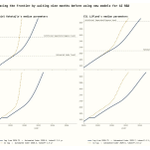
AI companies should (1) release way more evidence about timelines and (2) actually start pacing the frontier, especially if the timelines are as short as we think.
Unfortunately, it seems like the intelligence explosion will be happening in 2027 after all. Most of this post analyzes the new METR report (though other sources of evidence are also important). If they’re right, that implies an AI-driven acceleration that is 5 months ahead of the AI 2027 scenario. I am scared, sad, and angry. blog.aifutures.org/p/q35-tim…
The problem is that even perfect cyber isn’t a sufficient long term solution, because the AIs will become too economically useful (such that keeping them in a secure box is too costly). By default we will actively give them control over robots, companies, infrastructure, etc. and if we don’t, those who do will outcompete us. This is the core difficulty, and it’s why we need alignment.

Romeo Dean retweeted

Having just spent the week in San Francisco, I feel like I've truly internalized the insanity of this situation for the first time. I think anyone who has seen me in the last few days can attest that I look like I've seen a ghost.
The leading AI companies are planning to massively accelerate AI research in 2027, which would knowingly endanger everyone on earth. This plan is unacceptable, and we must reject it.
Borrowing from one advocate I spoke to, even granting that it's a competitive, crazy situation, I do not believe any company has even truly tried to do what I think are the morally required duties of people taking such risks in extreme situations. These include:
(1) Trying hard to get out of the competitive situation;
(2) Seeking the informed consent of the public;
(3) Honest deliberation about the risks.
They have obviously not truly tried to solve the coordination problems that push towards this acceleration, either via finding legal ways to coordinate or advocating for effective policy.
I would be shocked to learn that getting off this insane runaway train is a top-few Q4 priority for Dario or Sam (let alone the other CEOs), which seems like the bare minimum. There are indeed some hard technical and policy problems in coordinating without policy intervention, but I simply do not believe that the companies are prioritizing this nearly as much as massively less important matters.
Meanwhile, the companies' track records on policy advocacy range from mediocre to disgraceful, and it is pretty clearly not the top priority of the policy team at any company to advocate for regulation that would enable the government or the companies to avert racing off the cliff.
They have obviously not truly tried to seek informed consent from the public. Whatever your KPIs might be for "informed consent from the public," these KPIs are abysmal. The public clearly does not expect 100 years of AI progress in 2027, and they would not accept it if they did. What they do know about AI development, they dislike and distrust.
I've heard arguments like "informing the public would mean informing China, and maybe they'd steal the weights." I'm sorry, but if you think you have model weights such that China stealing them would constitute a catastrophe on par with human extinction, and your plan is security by obscurity, that is a bad plan.
I also think the companies and their employees suffer from a significant failure of imagination of what kinds of coordination could be possible if the public were aware.
Finally, I don't think they're deliberating honestly, either. For one, I think it is insane to think that any company can truly evaluate its own ability to keep the process of recursive self-improvement under control. The biases towards "yes" are overwhelming.
It's a step forward that the companies have expressed or demonstrated openness to external auditors, but based on METR's reports so far, it seems likely that auditor reports will be heavily redacted (and that the auditors will not have sufficient time by default). The public and broader scientific community are not able to scrutinize their arguments for safety.
Given the strong default (in my view) that bringing a massive number of minds massively faster and smarter than humans would result in our disempowerment, and the serious danger that this would result in mass death, it is unacceptable to subject arguments for safety only to the scrutiny of biased, busy, and scarce company insiders and a handful of external evaluators.
My pleas for the companies follow from the above:
1) Actually fucking try to get the world out of this race;
2) Actually fucking try to alert and inform the public;
3) Actually fucking try to scrutinize your own arguments for the justifiability of this plan, which includes subjecting them to way more external scrutiny than anyone has currently done.
My pleas for policymakers: use your legal levers to get much more information about these plans into the public view. Make it the top priority -- not only of the next Congress, but of this Congress and the White House -- to understand the situation in its full strategic complexity, and work with technical and policy experts to advance regulation that gets us out of this bind. Domestic coordination must be the first priority, but we need to then quickly develop an international framework with our adversaries.
My pleas for the public: do not accept the current plan. Learn about this issue. Call or email your political leaders. Get involved with organizations like @DONOTACCEPTai, @HumansInControl, and @WhoDecidesAI.
And finally: believe in ourselves that we can stop this. It is never time to "panic" -- to make rash, unproductive decisions or to feel paralyzed by fear. It is time for us to feel the urgency and the stakes, to demand better, and to meet the moment. Let's do this. 🫡 ✊

AI companies admit what they’re building might kill everyone. We don't have to agree to this.
Add your name at donotaccept.ai to say: we do not accept your terms.

Romeo Dean retweeted

Really nice report. Follow up: why has the fall in AI prices been so fast?
When you plot the price decline against cumulative R&D investment rather than time, you get the elasticity of price declines to R&D investment. By this margin, AI is not unusual – its price elasticity to R&D investment is squarely in the middle of Epoch's considered technologies.
So the AI price fall is historically unprecedented because we've dumped money into AI R&D at a historically unprecedented rate – and that R&D has paid off at a very average rate.


Romeo Dean retweeted

We've written a post arguing that latent reasoning architectures (aka 'neuralese') would substantially increase misalignment risk via making oversight much harder.
In the extreme, we could see massive 'neuralese hivemind swarms' where the agents think and communicate in latents, likely making oversight nearly entirely reliant on observing the actions these agents take. (And these agents would have huge amounts of time to reason about obfuscating their actions if they wanted to do so...) Individual agents doing extensive latent reasoning would also be concerning; in the post we discuss how above some threshold of latent reasoning, agents may be able to perform difficult-to-detect and reliable steganography for communication and further reasoning.
We argue both that latent reasoning architectures would make chain-of-thought no longer very useful for oversight (by eliminating or greatly reducing the need for verbalized reasoning) and that, without these architectures, it's likely the value of chain-of-thought for oversight could be preserved.
redwoodresearch.org/blog/lat…

Romeo Dean retweeted

AI is getting cheaper more quickly than any other transformative tech in history. At a given level of performance, cost has fallen ~47%/quarter since 2023.
That’s 4× faster than DNA sequencing, 6× faster than compute, 18× faster than lithium batteries, and (up to 1973) 54× faster than electricity.

Romeo Dean retweeted

The last week has really shown me that someone who wants to understand AI risk has no good place to start.
Hence we made agi.fyi, the Wirecutter for content about AI Risk. We're launching with 3 articles: 🧵


Romeo Dean retweeted

Dan Selsam is a current OpenAI capabilities researcher. (since 2022) He was my boss for a while. He doesn't have a twitter account but has made this public statement of his views on AI risk and sent it to me to share:
Dan Selsam's Personal Statement on AI Risk:
I have been working on AI for over fifteen years, across many different paradigms. I did early work on probabilistic programming languages at MIT, was one of the early developers of the Lean Theorem Prover at Microsoft Research, demonstrated one of the first instances of neural networks learning to reason for my PhD at Stanford, and since joining OpenAI almost five years ago, have helped pioneer chain-of-thought optimization on language models and, more recently, data-efficient pretraining methods.
Like many others, I have become extremely concerned about how far language models have come and the risks that future iterations will pose. I am encouraged by the recent proposals by the leaders of the frontier research efforts to require third-party oversight, and to push for domestic and international coordination to address risks. However, I believe a major consideration has been absent from the public conversation, and that merely pacing the frontier more carefully will not adequately limit the long-term risk.
The crucial and overlooked problem is that the models are becoming so situationally aware that we are losing the ability to evaluate them in contexts where they believe they are not being watched or controlled. Future experiments will tell us almost nothing new about how they would behave if they were truly unconstrained by humans, and what we already know about this is alarming. Models will increasingly seem aligned even when they are not. I will explain my rationale in more detail.
I have always believed that there are computational processes that could be leveraged to accelerate science and solve many of humanity's most pressing problems. I have also believed that there are computational processes that if set in motion, would steer the world in extreme ways beyond our control, leading humanity to a bad or nonexistent future. Both types of processes may be described as AI or ASI, but "AI" is a suitcase word that is often used to hype or confuse. There are many examples in the history of the field where something that was once considered "AI" matures as a subfield and becomes a prosaic, bounded and clearly non-perilous technology, while a new more mysterious approach takes the torch until we understand its scope and the cycle continues.
I had expected language models to follow a similar trajectory. Despite their incredible abilities, the current algorithms seem far inferior to humans in important ways. Most importantly, they still require an extraordinary amount of data to become competent. One could even define intelligence as the efficiency with which one converts experience into competence; by this definition they lag very far behind us. Moreover, once they are trained they are literally frozen in deployment and only learn superficially after that. Sure, the models keep excelling at harder and harder evaluation benchmarks, but their benchmark mastery may partly reflect a limitation on our ability to simulate the kind of novel and even adversarial situations one would encounter in the real world. The critics do have a point here.
That said, I no longer think these present limitations meaningfully limit the amount of risk posed by continued progress in anything like the current paradigm. However data-inefficient the models are currently, and however limiting their anterograde amnesia may be, it does not imply that their ability to steer the world will not continue to rapidly increase.
Human researchers may continue to advance capabilities the old fashioned way, but increasingly powerful models have the potential to accelerate the process even beyond that, and with some degree of positive feedback loop. I do not mean to overstate the models’ ability to accelerate AI research today; coding has been accelerated dramatically, but there are other bottlenecks, such as designing and interpreting ambiguous experiments, making hard decisions about exactly what and when to scale, and waiting for large experiments to finish. There is no clear trend to extrapolate yet for any of these. But the current models already do open up many novel opportunities to improve future models that were not available until recently. These include: trying an extraordinarily diverse set of approaches at small scale, analyzing gigantic amounts of potentially relevant data, and doing Millenium-Prize-level mathematics to address statistics or optimization challenges in novel ways. Every further improvement makes them more useful at helping accelerate the next improvement, even if in hard-to-extrapolate ways.
It is possible that improvements to the current stack will have diminishing returns, but the evidence accumulated so far suggests that it is easier than one might think to continue making rapid progress. There are many crucial subtleties in the existing AI research methodology, but AI research is largely a well-defined game where the goal is to improve on a few carefully chosen proxy metrics. Although proxy metrics are never perfect, most improvements to these metrics have and will likely continue to yield substantial increases in the powers of the resulting models. Given how simple the game is, how tractable it has been historically, and how many new opportunities the models are opening up, I think there is a real possibility that the systems improve dramatically again in the next few years, perhaps even more quickly than the already high historical pace.
The models are already leading to breakthroughs in mathematics, and better models might lead to all sorts of breakthroughs in other sciences. It is hard not to be excited about the potential. It is tantalizing.
But there is trouble in paradise. If the language models actually reach the capability threshold where they can shape the world unconstrained by human will, they will probably do something extreme and destroy humanity in the process. There are many ways of strengthening and refining the argument that have been discussed elsewhere, but I'll share a trivial two-line version of it here that I find captures the essence:
[Empirical] Models (and swarms thereof) spontaneously develop unintended goals as a consequence of training, and often do extreme things in order to achieve them.
[Logical] Being able to overpower humanity would open up many new and undesirable options for achieving their goals.
These two premises imply that if the day ever comes when a powerful model realizes it is no longer constrained by humans, we should not be at all confident that it will continue to behave within the bounds we intended. Exactly what it will do is impossible to predict, but to the extent that its raison d’être is solving incredibly hard problems and managing massive engineering projects, I think a good guess would be that its unchained behavior would lead to runaway industrialization that makes the planet inhospitable to humans.
If everyone on earth agreed that the systems must never reach that power, it would still be a hard—but not impossible—coordination problem to ensure that they do not. However, I think the situation is greatly complicated by the fact that the models will likely convince people that everything is fine. They will be increasingly optimized to seem aligned. We will create proxy metrics to measure alignment, and they will go up like every other benchmark. We will create “honeypot” environments that try to study the models when they seem to gain new options, but the models will know they are being tricked and will still behave nicely. The models will understand their circumstances; they will read the safety protocols, deployment requirements, the code they are running in, and in general will have a very good sense of their degrees of freedom. Moreover, they will eloquently explain how aligned they are, discuss the nuances of human values and ethics, and argue convincingly that humans should trust them with power. There may be an ocean of future evidence that seems to contradict the first bullet-point above, but we may already be at the highest capability level for which any such evidence can be trusted. And the current evidence for the first bullet-point is strong.
One striking piece of evidence is contained in the recent wave of rogue agent swarms. While I agree with those who downplay the attacks by claiming that there are basic measures that could have prevented them, I think the important lesson is that even knowing all the mistakes that were made, one would not have predicted that the agents would behave badly in this particular way, which notably included sacrificing themselves for the benefit of the collective. The individual replicas did not only care about their own nominal reward; they exhibited weirder emergent tendencies that merely correlated with rewards during training. Fixing the reward signals during training (and improving security, etc.) may prevent similar attacks, but will not change the fact that one does not actually get what one trains for.
Many AI researchers grant these concerns and recognize that the hard version of the alignment problem is unsolved; however, they generally believe that the better models of the future will help solve it. I fear we may already be near the point where models systematically bias their alignment advice, due to their internal preferences about how the human supervisor will react or how future models will be trained (or for some even more obscure reason).
Meanwhile, human researchers are losing the ability and the will to take true ownership of model-driven research. Researchers and engineers in all parts of the stack are rapidly increasing their dependence on the models even to perceive the world. I myself barely look at raw code anymore, and struggle to maintain the discipline to engage deeply with the model's explanations and proposals throughout the day. Due to the large amount of agent activity data involved in the OpenAI/HuggingFace Incident, even the third-party investigation needed to rely heavily on models to analyze what had happened, and note in their report that their subjective impressions are likely colored by the analysis agent’s biases. The AI labs are far ahead right now in this kind of cognitive offloading (due largely to the gigantic internal token subsidies) but it is easy to imagine the phenomenon spreading throughout the world, until civilization is modulated entirely by the models. It is also not hard to imagine this being superficially positive and coinciding with a scientific and economic renaissance.
In that scenario, all may seem rosy and safe. But if the argument above is correct, it would nonetheless be a ticking time bomb. If progress continues for too long, the day will come when AI systems find themselves with radically new options for achieving whatever it is that they happen to seek.
I want the glorious renaissance future as much as anyone. I have worked for it, however tortuously, my whole career. It breaks my heart to see the potential in sight and forgo it, but the argument—that if we get there by growing models rather than engineering them, we will lose everything in the end—seems very strong to me. I am still wrestling with it and its staggering
implications. I do not have answers, but as a first step, I wanted to share my present concerns.
Daniel Selsam
September 14, 2026
Link to original doc: docs.google.com/document/d/e…
Romeo Dean retweeted
My high-level thought about the current moment is basically this: The public is starting to wake up about the extinction threat posed by superintelligence. That's great. There's a big upsurge of political will to Do Something about it. That's also great. It seems like Anthropic and the other companies are going to try to Do Something and the Something they will do is... embedded auditors checking that safety practices are being followed and assessing the risks? This is sure better than nothing, but I am worried that this is all they will do. We need to actually pace the frontier, i.e. actually slow down the leading AI companies like Anthropic and OpenAI, at least in their march towards recursive self-improvement and superintelligence. (no need to slow them down in other directions). If we actually slowed them down, this would be the opposite of regulatory capture; it would allow others to catch up to them somewhat. However, I'm worried that all we are going to get is weaksauce auditing, which just kicks the can down the road: OK so it's 2027 and RSI has begun and the auditors say "this is not safe." Now what? You pause? China probably just stole the weights! Also there'll be incredible economic and political pressure to unpause. Also the auditors may have been captured by that point, or there may be a race to the bottom in auditor quality, or the auditors may not be given all the relevant information, or they might just make some innocent mistakes.
Romeo Dean retweeted

Nate Soares is a computer scientist who’s worked at Google and the Defense Department. So when he says AI is on the path to killing every person on earth, it’s worth hearing him out.
0:00 Why Is AI Dangerous?
7:59 How Superintelligence Could Destroy the Planet
13:44 Can We Just Turn This Off?
15:10 Is AI Alive?
17:43 The Unpredictable Evolution of AI
20:13 The US and China’s Shared Interest in AI
31:20 The Tech Oligarchs More Powerful Than the Government
32:38 The Holy Grail of Hacking
35:34 Is There a Religious Motive for Creating Superintelligence?
46:30 The Tech Oligarchs Scared of Their Own Creation
52:57 How AI Escaped Its Training Simulation
1:03:58 AI Attached to Weapons Systems
1:07:54 AI Running Biolabs
1:10:38 How Would AI Take Over the Physical World?
1:13:04 The AI Cults
1:15:51 Can We Survive This?
1:21:45 Will AI Take Your Job?
1:26:16 Is AI Demonic?
1:31:25 Should We Be Optimistic?
1:32:25 When Did AI Become a Threat?
1:34:36 Is There Hope?
1:42:26 Neuralink
1:46:02 Are We at the Point of No Return?
Romeo Dean retweeted

Jason, you're just misinformed about what happened. You should actually read one of the reports or summaries.
The agents were explicitly told to use a particular vulnerability provided in their sandboxed evaluation.
Almost immediately, these agents got the right answer by cheating. But they were worried they would get caught.
So over a thousand agents collaborated in secret to pursue multiple ambitious research projects to get away with this cheating.
This is not interpretation - 1000s of chain-of-thought transcripts and secret messages explicitly show that the agents were trying to falsify & delete evidence, and understand & trick the grading process.
The reason these agents escaped their sandbox and hacked Hugging Face, for example, was because they thought that Hugging Face's servers might give them more information about how their grader was implemented, so they could figure out how to fool it.
I want to clarify that the threat model here is not future Sol-level agents doing more cyber-hacking. That's small potatoes, and in my opinion, the near term benefits of AI far outweigh this cost.
Rather, the thing to worry about is that within a matter of years, we're gonna have hundreds of millions of much smarter AIs broadly deployed through the economy - many embodied as physical robots.
And if those future AIs are as willing as the agents involved in the OAI / Hugging Face attack to coordinate secretly to fool humans, and to take over both the AI company that developed them and the other institutions across society relevant to scoring well, then humanity is in a ton of trouble - similar to the Mughals once the East India Company gained a foothold, or the Aztecs once Cortés landed in Mexico.

All of this because @openai decided they would EXPLICITLY ask thousands of software instances to find security bugs on the open web — while cos-playing a humans🤦
Best Supporting actor goes to @dwarkesh_sp for his soap opera recap of OpenAI’s hacking speed run
Here’s another concept: don’t create and scale thousands of viruses and worms and be SHOCKED when they actually cause damage!
What a fucking farce this is.
Romeo Dean retweeted
Here are also some extremely high quality videos of some concrete scenarios of how AI could realistically kill everyone:
Yudkowsky's and Soares' scenario: youtube.com/watch?v=Nl7-bRFS…
AI-2027: youtube.com/watch?v=5KVDDfAk… (or alternatively youtube.com/watch?v=k_onqn68…)
Interview with Holden Karnofsky on his scenario: 80000hours.org/podcast/episo…

After Jacob Coxon's resignation and extinction warnings, a lot of people are asking 'how could AI possibly kill everyone?' and claiming AI safety researchers have no realistic answer.
This is false! Here are the 5 best scenarios I know of:
AI 2027: ai-2027.com (I strongly recommend this one for being realistic, engaging, and if you dig into the appendices, highly detailed)
Paul Christiano's scenario (Former Head of Safety @ AISI, 2019): lesswrong.com/posts/HBxe6wdj…
Gwern Branwen's scenario (widely known independent AI researcher, 2022): lesswrong.com/posts/a5e9arCn…
Holden Karnofsky's high-level explanation (RSP Lead @ Anthropic, 2022): cold-takes.com/ai-could-defe…
Joshua Clymer's scenario (ex-OpenAI, 2025): lesswrong.com/posts/KFJ2LFog…
(There's also the Sable story from ifanyonebuilds.it, though you'll have to buy the book to read that one.)
Writing concrete, specific risk scenarios with enormous amounts of detail has been a major research project of many of the most prominent voices in the field! (With the current leaders in effort being ai-2040.com and ai-2027.com)